 listicle
Is Modular Furniture Worth It for Apartments
Table of Contents
- What Makes Modular Furniture Different
- Modular Sofa Pros and Cons
- Modular vs Sectional Sofa: Which Fits Your Space
- How to Arrange Modular Furniture for Maximum Impact
- Durability and Long-Term Value
- Space-Saving Benefits for Small Apartments
- Hidden Costs and Expansion Expenses
- Is Modular Furniture the Right Choice for You
- Frequently Asked Questions
Last Updated: October 4, 2026
What Makes Modular Furniture Different
Modular furniture is built from individual, self-contained pieces that connect together to form larger seating arrangements. Unlike traditional sectionals that arrive as one fixed unit, modular components can be rearranged, expanded, or reconfigured based on your space and needs. Each piece typically stands alone, you might have individual seats, corner modules, chaise lounges, or ottomans that snap, bolt, or latch together in various combinations.
The core appeal is flexibility. If you move to a smaller apartment, you can take some modules with you and leave others behind. If your living room layout changes, you can rotate pieces around without buying new furniture. This adaptability makes modular furniture particularly practical for renters and people who move frequently, though the real question is whether that flexibility justifies the cost and potential durability trade-offs.
We've analyzed whether modular furniture is worth it for apartments by examining what makes it worth considering for apartment living. The answer depends heavily on how you plan to use your space, how often you move, and whether you prioritize flexibility over long-term durability. Below, we'll walk through the genuine advantages and real drawbacks so you can decide if modular is right for you.
Modular Sofa Pros and Cons
Key Advantages for Apartment Living
Modular sofas solve specific problems that fixed sectionals don't. The most obvious benefit is portability. A traditional sectional measuring 8 feet wide might require disassembling doorways or leaving it behind entirely when you move. Modular pieces, by contrast, typically fit through standard apartment doorways and hallways. You can carry individual modules up narrow staircases or through tight corners, something impossible with one-piece furniture.
Reconfigurability matters more than marketing suggests. If you start with an L-shaped layout and later want a U-shape or straight line, modular furniture lets you do that without buying new pieces. This adaptability extends the life of your investment across different apartments and life stages. You're not locked into a single room configuration.
Customization options are genuinely useful. Many modular systems let you choose upholstery, cushion density, and specific components before purchase. You can start small, perhaps with two seats and a chaise, then add modules later as your budget allows. This staged approach works well for people furnishing their first apartment or gradually upgrading their living space.
Storage integration is a practical advantage some modular systems offer. Pieces with hidden compartments or integrated shelving add functionality without consuming additional floor space, which matters significantly in smaller apartments where every square foot counts.
Real Drawbacks to Consider
The structural integrity of connectors deserves serious attention. Modular pieces rely on brackets, latches, or bolts to stay connected. Over years of use, especially with frequent reconfiguration, these connection points can weaken, loosen, or wear out. A sofa that wobbles or feels unstable after three years of regular use is a real problem, and replacing connector hardware isn't always straightforward or affordable.
Assembly friction is underestimated. Even "tool-free" systems require time and effort to connect modules properly. Getting connectors aligned and secured takes patience. If you move frequently, you'll repeat this process multiple times, which becomes tedious. Some people find the assembly process frustrating enough that they never actually reconfigure their furniture, defeating the main purpose of buying modular in the first place.
Weight distribution challenges emerge with certain configurations. Modular pieces aren't always designed to perform equally well in every arrangement. An L-shaped setup might feel stable, but a U-shape with extended chaises could create uneven weight distribution that stresses certain connectors more than others. This isn't always obvious until you've lived with the configuration for a while.
Resale value is surprisingly weak. Modular furniture doesn't hold its value well in secondary markets. When you eventually upgrade or move to a permanent home, selling individual modules proves difficult. Buyers want complete sets, not random pieces, which limits your options for recovering money from the investment.
Modular vs Sectional Sofa: Which Fits Your Space
The choice between modular and traditional sectional sofas comes down to your priorities and living situation. A sectional is one unified piece designed to fit a specific space. It arrives fully assembled, requires no connectors, and distributes weight evenly across a rigid frame. You get stability and longevity, but zero flexibility.
Modular furniture trades that stability for adaptability. You gain the ability to reconfigure, expand, and move individual pieces. You lose the durability assurance that comes with a single-frame design. Sectionals work best if you're staying in one place for years and want furniture that will last without maintenance. Modular works best if you move frequently, need flexibility, or want to start small and expand gradually.
Consider your apartment's layout. If you have an awkward corner or unusual wall configuration, modular pieces might fit better than standard sectional dimensions. Conversely, if your living room is straightforward and you plan to stay put, a sectional's stability and lower maintenance might be the smarter choice.
For renters especially, modular has a real advantage: you can take it with you. A sectional purchased for one apartment might not fit the next one. Modular pieces adapt to different spaces, making them genuinely renter-friendly in ways fixed furniture isn't.
How to Arrange Modular Furniture for Maximum Impact
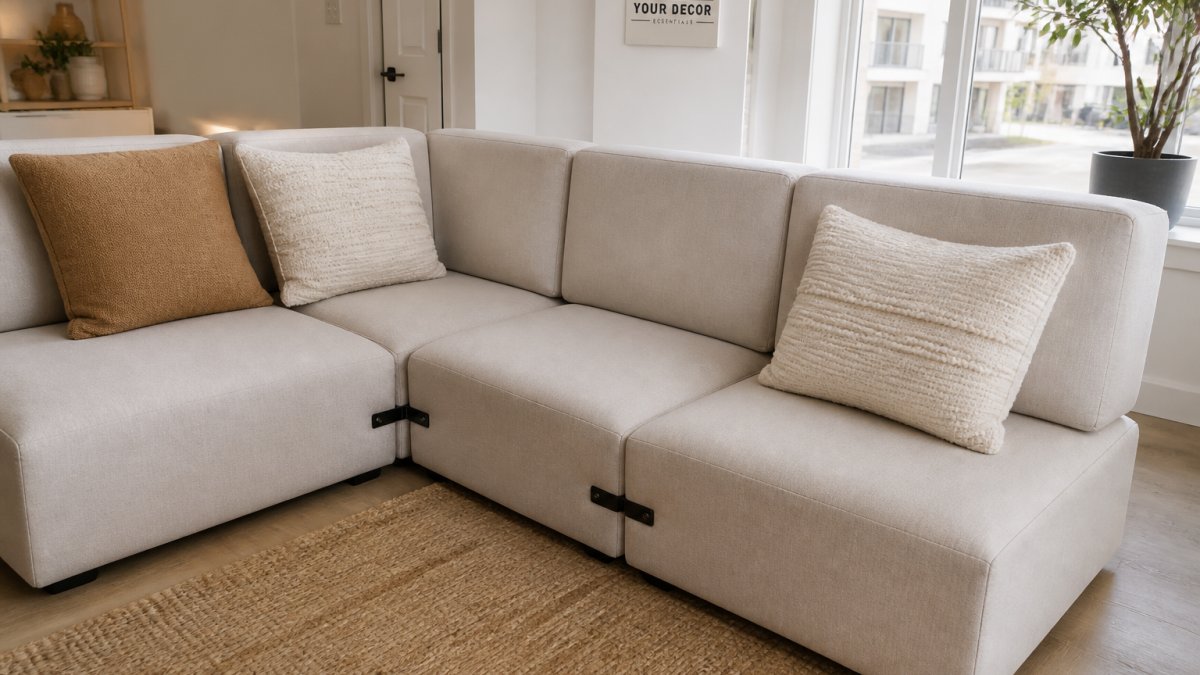
Start by measuring your space precisely. Modular furniture only works well if you understand your exact dimensions, wall lengths, doorway widths, window placements, and traffic flow patterns. Sketch your room layout and experiment with different module arrangements on paper before purchasing. This prevents buyer's remorse when pieces don't fit the way you imagined.
Consider traffic patterns first, aesthetics second. Your arrangement should let people move through the room naturally without climbing over furniture or squeezing through tight gaps. An L-shaped configuration works well for most apartments because it anchors one corner while leaving the rest of the room open. A U-shape maximizes seating but consumes significant floor space, which works only in larger apartments.
Balance visual weight. If you push all modules to one wall, the room feels lopsided. Floating furniture in the center of the room creates a more intentional, designed look, though this works better in apartments with defined living spaces rather than open-concept layouts. The goal is making the modular arrangement feel deliberate, not like furniture you couldn't arrange anywhere else.
Anchor with a focal point. Position your modular sofa to face a TV, fireplace, or window. This creates a natural gathering point and makes the room feel organized. Modular furniture without a clear focal point can look scattered or incomplete, especially if you're not using all available modules.
Layer with complementary pieces. Adding abstract sculptures, accent lighting, or resin decor elements can define the space around your modular furniture. These curated pieces introduce visual interest and help tie together a flexible furniture arrangement that might otherwise feel disconnected.
Durability and Long-Term Value
Modular furniture's durability depends almost entirely on connector quality and how often you reconfigure pieces. Systems with heavy-duty brackets and precise latching mechanisms hold up better than cheaper alternatives. If you plan to reconfigure frequently, invest in modular systems specifically engineered for repeated assembly and disassembly.
Understanding Connector Wear and Failure Modes
The connectors holding modular pieces together experience cumulative stress that most buyers don't anticipate. Each time you disconnect and reconnect modules, the latch mechanism, bolt threads, or bracket alignment tolerances degrade slightly. After 10 to 15 reconfigurations over three to four years, connectors that felt tight initially may develop play, a subtle wobbling or shifting when you sit down. This isn't catastrophic failure; it's progressive loosening that makes the sofa feel unstable and unreliable.
Bracket systems vary widely in durability. Heavy-duty steel brackets with reinforced connection points resist wear better than plastic clips or thin aluminum. Look for connectors that use threaded bolts rather than press-fit latches; threaded systems allow tightening over time, while press-fit designs can't be adjusted once they loosen. Some premium modular systems use proprietary connector hardware that's difficult or expensive to replace, which means a worn connector can render an entire module unusable if the manufacturer discontinues that part.
Weight distribution stress is often overlooked. A two-seat module with a chaise extension creates uneven loading on the connector points nearest the chaise. Over time, those specific connectors experience more stress than others in the configuration, leading to asymmetrical wear. A U-shaped arrangement with extended chaises on both ends distributes stress across more connectors but concentrates it on the corner pieces, which can weaken faster than end modules.
Frame Construction and Long-Term Stability
Frame construction matters significantly. Solid wood frames (typically hardwood like kiln-dried pine or oak) last longer than particleboard or engineered wood, which can sag or warp after five to seven years of regular use. Steel frame systems offer exceptional longevity but add 30 to 50 pounds per module, which complicates moving and increases shipping costs. High-density foam cushions resist sagging better than low-density alternatives.
The real durability question is whether your modular sofa will feel solid and comfortable after five years of use. Connectors loosen, cushions compress, and fabrics wear. A modular sofa with plastic connectors and particleboard frame might feel unstable after three years of regular reconfiguration, while a sectional with a hardwood frame and steel support system remains solid for a decade. The modular piece was cheaper initially but delivered worse long-term value and required earlier replacement.
Fabric Durability and Maintenance Costs
Fabric durability varies widely and directly impacts total cost of ownership. Performance fabrics (polyester blends engineered for stain resistance and durability) resist wear better than standard upholstery. If you have pets or children, performance fabric becomes a practical necessity rather than an upgrade. Standard fabrics might show visible wear, pilling, or fading within two to three years of heavy use, necessitating professional cleaning or cover replacement.
Cushion replacement is easier with modular furniture than with sectionals, which is one genuine advantage. If cushions compress or covers wear out, you can often replace individual modules rather than the entire piece. However, replacement modules may cost a significant portion of the original module price, depending on the brand. If you need to replace cushions after five years, you're looking at additional expenses, a significant hidden cost that erodes the initial savings modular furniture promised.
When evaluating durability, ask manufacturers directly: What is the expected lifespan of connector hardware? Can connectors be tightened or replaced individually? What is the warranty on frame components versus cushions? Does the warranty cover connector wear from normal reconfiguration? Answers to these questions reveal whether you're buying furniture designed for long-term flexibility or a budget option that prioritizes initial affordability over durability.
Space-Saving Benefits for Small Apartments
Modular furniture's primary space-saving advantage is its footprint flexibility. A traditional sectional measuring 8 feet by 8 feet occupies that exact space, period. Modular pieces let you configure a 6-foot by 7-foot arrangement, or a 5-foot by 9-foot layout, adapting to your specific dimensions rather than forcing your room to adapt to standard furniture sizes.
The ability to use corner space efficiently is genuinely valuable in small apartments. Modular corner pieces fit snugly into awkward angles where standard sectionals would waste space or look wrong. This lets you maximize seating in a small footprint.
Removing modules when you need open space is another practical benefit. If you're hosting a dinner party or need floor space for exercise, you can temporarily relocate a chaise or ottoman. This flexibility is impossible with a fixed sectional. You're not rearranging the entire living room, you're simply removing one module.
Low-profile modular designs work well in apartments with lower ceilings. Pieces with clean lines and minimal visual bulk make small spaces feel less cramped. The modular design itself contributes to this effect because individual pieces look less imposing than one massive sectional.
However, space-saving benefits diminish if you're using all available modules. A fully configured modular system occupies as much space as any sectional. The advantage exists only if you're willing to use fewer pieces or reconfigure regularly.
Hidden Costs and Expansion Expenses
The initial purchase price is rarely the full cost of modular furniture. Understanding the true cost of ownership requires accounting for delivery, assembly, expansion, and maintenance expenses that accumulate over the years you own the pieces.
Delivery, Assembly, and Setup Fees
Delivery and assembly fees add significant expense, especially if you're buying from brands that charge separately for setup. Some retailers include assembly in the purchase price; others charge depending on the number of modules and your location. White-glove delivery (where the delivery team unpacks, assembles, and positions furniture) can incur additional costs for a modular system. If you're moving the furniture yourself or hiring movers, you'll pay by weight and volume, modular pieces often weigh 40 to 80 pounds per module, and a five-module configuration can incur significant costs to move across town or to a new apartment.
The Expansion Module Penalty
Expansion modules are disproportionately expensive, creating a financial penalty for staged purchasing. If you start with a two-seat configuration and later want to add a chaise module, that single chaise might cost nearly as much as buying it as part of the original configuration would have cost. Over time, this staged approach can cost more than purchasing the full system upfront.
For renters, this penalty is particularly painful. You might buy a two-seat plus chaise configuration for your first apartment, then move to a larger space and want to expand to an L-shape or U-shape. Adding more modules can bring your total investment to significantly more than if you'd purchased the full five-module system initially. This cost structure incentivizes buying more than you need upfront, which defeats the flexibility advantage modular furniture promises.
Replacement Parts, Hardware, and Maintenance
Replacement parts and hardware accumulate costs over time. If connectors wear out or need tightening, replacement connector sets typically incur costs depending on the brand and connector type. Cushion covers that wear or stain can be replaced. If you need to replace connector hardware on modules after years of regular reconfiguration, you're looking at maintenance costs. Over a seven-year ownership period, maintenance and replacement hardware can total a significant amount.
Professional cleaning is another hidden cost. Performance fabrics resist staining but still require periodic professional cleaning, which incurs costs depending on the number of modules. Standard fabrics need cleaning more frequently, especially if you have pets or children. Over five years, professional cleaning can total a significant amount.
Storage and Moving Expenses for Renters
If you reconfigure frequently, you'll need somewhere to store unused modules. Renting a climate-controlled storage unit incurs monthly costs, which adds to annual expenses. Over three years in an apartment, that's a significant amount in storage costs for modules you're not actively using. This expense is often overlooked but can exceed the cost of the modules themselves.
Moving companies charge by weight and volume, so hauling modular pieces to a new apartment costs money. A five-module configuration might incur significant costs to move locally, or for a long-distance move. If you move every two to three years, you're paying for furniture transportation. Over seven years with two or three moves, that's a substantial amount in moving expenses.
Warranty Limitations and Out-of-Pocket Repairs
Warranty limitations matter more than most people realize. Many modular sofas come with warranties covering frame defects for one to three years but explicitly exclude connector wear, cushion compression, and fabric fading. You're often responsible for maintenance costs after the first year, which can be substantial if connectors need replacement or cushions need recovering. Some manufacturers void warranties if you reconfigure the furniture more than a certain number of times per year, which defeats the purpose of buying modular.
Total Cost of Ownership: A Renter's Perspective
For a renter planning to stay in apartments for seven years with two moves, the true cost of a modular system includes:
- Initial purchase
- Delivery and assembly
- Moving costs (two moves)
- Expansion modules (if purchased)
- Maintenance and replacement hardware
- Professional cleaning
- Storage (if needed)
By comparison, a mid-range sectional sofa with a solid frame and performance fabric would include:
- Initial purchase
- Delivery and assembly
- Moving costs (two moves, but less flexible)
- Professional cleaning
- Maintenance
The modular system offers flexibility but often costs more over seven years when all expenses are included. This calculation changes significantly if you move only once or don't expand modules, but it illustrates why understanding hidden costs is critical before committing to modular furniture.
Is Modular Furniture the Right Choice for You
Whether is modular furniture worth it for apartments depends on whether you move every two to three years, value flexibility over stability, and are willing to invest in quality connectors and frame construction. It works well for renters who can't commit to a fixed sectional, people in transition between life stages, and anyone who genuinely enjoys reconfiguring their space.
It's less practical if you plan to stay in one apartment for five or more years, prioritize long-term durability, or want furniture that requires minimal maintenance. In those situations, a high-quality sectional with a solid frame delivers better value and longevity.
Consider your actual behavior, not your imagined behavior. Many people buy modular furniture thinking they'll reconfigure it frequently, then never do. If you're the type to rearrange furniture once and leave it, the flexibility advantage disappears and you're simply paying more for a less durable option.
Budget matters significantly. If you can afford a premium modular system with excellent connectors and solid wood frames, the flexibility advantage justifies the cost. Budget modular furniture often disappoints because connector quality is poor and cushions compress quickly. You're better off buying a mid-range sectional than a cheap modular system.
Your living situation is the deciding factor. Renters benefit most from modular furniture because they can take it between apartments. Homeowners with permanent living spaces usually get better value from sectionals. If you're furnishing your first apartment and uncertain about your next move, modular offers practical flexibility that standard furniture doesn't.
Choosing between modular and traditional seating depends on whether you value adaptability or durability more. If you move frequently or want furniture that grows with your needs, modular furniture is worth the investment, provided you choose a system with quality connectors and solid construction. We help you create personalized interiors by pairing flexible furniture with curated abstract sculptures and accent lighting that define your space and reflect your individual style. Explore our collection of distinctive home decor pieces designed to complement any seating arrangement and transform your apartment into a thoughtfully styled environment that truly reflects who you are.
Frequently Asked Questions
What is the main advantage of modular furniture for apartments?
Modular furniture allows you to adapt your layout as your needs change, making it ideal for renters and those in smaller spaces. Unlike fixed sectionals, modular pieces can be rearranged, separated for moving, and expanded over time. This flexibility means you're not locked into one configuration, and if you relocate, each module fits through doorways and hallways more easily than a traditional sofa.
How does modular furniture compare to a traditional sectional sofa?
Modular sofas consist of independent pieces that connect with brackets or latches, while traditional sectionals are permanently attached. Modular designs offer greater flexibility and easier transport, but may have gaps between modules or less stability. Traditional sectionals provide seamless seating and typically feel more stable, but cannot be reconfigured and are much harder to move through narrow spaces.
Is modular furniture durable enough for long-term use?
Durability depends heavily on frame construction and connector quality. High-end modular pieces with steel frames and premium cushion density can last 7-10 years or longer. However, cheaper options may show wear in connectors and cushions within 3-5 years. Check for solid wood or steel bases, high-density foam cushions, and reinforced latching systems to ensure your investment holds up over time.
What should I consider before buying modular furniture for an apartment?
Measure your doorways, hallways, and apartment entrance to ensure modules fit through. Consider your lease length and whether you plan to move soon. Evaluate the connector system's durability and ease of assembly. Think about whether you'll want to expand later and what that costs. Finally, assess whether the modular style matches your design preferences, since pieces that feel disconnected or misaligned can hurt your room's aesthetic.