 listicle
Best Materials for Foyer Sculptures: A Practical Guide
Table of Contents
- Why Material Matters More in a Foyer Than Anywhere Else
- Stone: Marble and Other Natural Options for a Substantial Presence
- Metal Sculptures: Bronze, Brass, Stainless Steel and Treated Metal
- Wood and Other Natural Materials for a Warmer Entry
- Modern Resin Sculpture Decor: Lightweight, Versatile and Easy to Place
- Ceramic, Stoneware and Fiberglass: Less Common Choices Worth Considering
- Floor Loading, Stability and Tip-Over Safety
- Matching Material to Foyer Size, Style and Traffic
- Maintenance of Foyer Sculptures by Material
- How to Style Abstract Sculptures in Your Living Room After the Entryway
- Frequently Asked Questions
Last Updated: November 3, 2026
Choosing the right material for foyer sculptures matters more than in almost any other room. The entryway is the first thing guests see, it takes the most foot traffic, and it often has less space and uneven light than a living room. This guide walks through the main materials and how each one behaves in a real foyer. Start with the three questions that decide most choices: how heavy can the surface and floor safely hold, how much handling will the piece get, and how much visual weight does the space need.
Why Material Matters More in a Foyer Than Anywhere Else
Foyer sculptures sit in a high-traffic zone, often near doors, coats and bags. A piece that gets bumped, dusted constantly or moved for cleaning needs a different material than one that stays on a mantel. Scale also changes the decision for foyer sculptures. In a two-story entry, a light piece can look flimsy, while the same piece in a small hallway can overwhelm the space.
Foyers also get varied light. Sunlight through a glass door can fade some finishes and show dust on others. Picking a material with the right visual tone and durability for that light saves rework later.
Stone: Marble and Other Natural Options for a Substantial Presence
Stone gives foyer sculptures a grounded, permanent look. But "stone" is not one material, marble, granite, limestone, and alabaster behave very differently in an entryway, and the right choice depends on traffic, light, and how much maintenance you will tolerate.
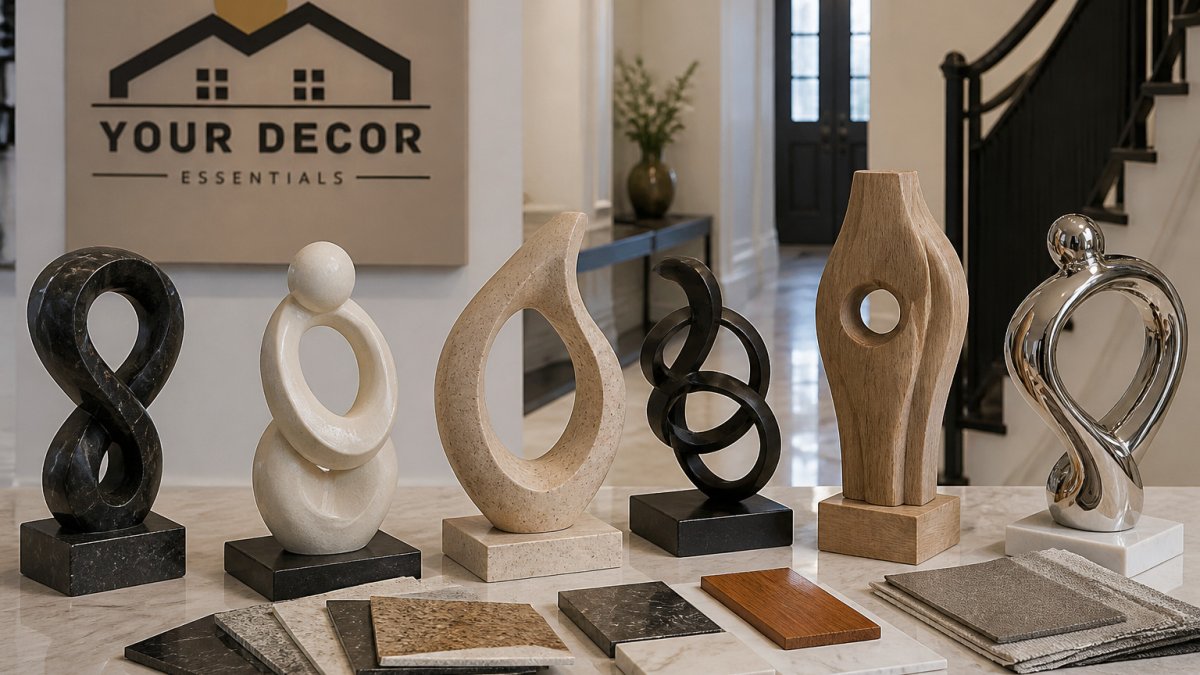
Marble is the most recognizable sculpture stone. It is softer than granite (roughly 3-4 on the Mohs hardness scale), which makes it easier to carve into fine detail and gives it a translucent, luminous surface. In a foyer, that softness is a trade-off: marble scratches and etches more readily than granite, and acidic spills, wine, vinegar, citrus, can dull a polished face. A marble piece belongs on a stable pedestal or console away from the direct path of bags and keys, and it benefits from a penetrating sealer reapplied per the fabricator's schedule.
Granite is harder (roughly 6-7 on Mohs) and far more stain-resistant, which suits a high-traffic entry where a sculpture might get brushed constantly. Granite sculptures tend to read as darker and more massive, so they work best when the foyer already has strong architecture or you want a deliberate anchor. Granite is heavy, expect a piece to weigh substantially more than a comparable marble form, so confirm the floor and pedestal rating before purchase.
Limestone is softer and more porous than either marble or granite. It carves well and takes a matte, chalky finish that suits rustic and Mediterranean interiors, but it stains and absorbs moisture more readily. In a foyer near an exterior door, limestone needs a sealer and a spot away from direct dampness.
Alabaster is the most delicate option: it is soft enough to scratch with a fingernail and can be translucent when backlit. It is beautiful in a low-traffic foyer on a protected surface, but a poor choice for a busy entry with children or pets.
Weight is the first practical question. A stone sculpture can be difficult to move and may need a sturdy pedestal or a floor rated for the load. Check both the floor and the surface it sits on before you commit, and plan how you will move the piece for cleaning. Stone is generally a good fit when you want a focal point that looks like it has always belonged in the room, and you are willing to seal, dust, and protect it.
Watch out: a polished marble or limestone piece placed directly beside a door can collect water rings and grit from shoes; a felt pad or a raised base prevents most of that damage.
Metal Sculptures: Bronze, Brass, Stainless Steel and Treated Metal
Metal foyer sculptures bring a crisp, architectural edge. Bronze is a common sculpture material with a warm, aged appearance that develops character over time. Brass gives a brighter, more golden finish. Stainless steel offers a sleek, contemporary look.
Wood and Other Natural Materials for a Warmer Entry
Wood softens a foyer that might otherwise feel cool or hard, and foyer sculptures in wood add warmth. Wood is an established sculpture material, and the grain, color and carving style vary widely from piece to piece. Richly figured woods such as walnut and burl wood are often chosen for their depth and warmth.
Wood responds to humidity and direct sun, so keep it away from heating vents and bright windows where possible. A wood sculpture pairs well with stone or metal accents, adding texture where the other materials feel smooth.
Modern Resin Sculpture Decor: Lightweight, Versatile and Easy to Place
Resin is one of the most practical choices for foyer sculptures. Resin is lightweight, which makes it easier to reposition and less demanding on the floor than heavy stone or metal. Resin is also versatile in color and form, so it works well for bold, abstract shapes.
Resin is a strong option for renters or anyone who redecorates often. Look for pieces with a finished, even surface and check the product description for weight and dimensions before buying.
Ceramic, Stoneware and Fiberglass: Less Common Choices Worth Considering
Ceramic and stoneware sculptures add a handmade, tactile quality. They suit warm, earthy interiors and can bring subtle glaze variation to an entry. They are more fragile than metal or stone, so they are best placed where they will not be knocked by bags or doors.
Floor Loading, Stability and Tip-Over Safety
Most foyer-sculpture guides stop at "make sure it is stable." That is not enough. A large entryway piece is a structural and safety decision, and the practical questions, how much weight the floor can take, how to anchor a tall piece, and how to protect children and pets, are where most buyers get into trouble.
Floor loading. A sculpture concentrates its weight on a small footprint, so a 150-pound stone piece on a 12-inch-wide base can exceed the local capacity of a wood-framed floor, especially on a second-story landing or near a stair opening. Before buying a heavy piece, weigh it, measure the base footprint, and, if the piece is very heavy or the floor is framed wood, consult a structural engineer or contractor. A simple test: if the piece weighs more than a fully loaded bookshelf of the same footprint, get advice.
Stability and tip-over. A tall, narrow sculpture is a tip-over risk in a busy entry. The rule of thumb is that the base should be wider than the piece is tall, or the piece should be anchored. Options include:
- Museum putty or wax for small, light pieces on a console, it resists bumps without damaging the surface.
- Base plates and weighted pedestals for medium pieces; a pedestal that is heavier than the sculpture lowers the center of gravity.
- Wall or floor anchors for tall pieces. A furniture-style anti-tip strap or a bracket secured to a stud is the standard approach; follow the manufacturer's hardware and the anchor rating for drywall versus masonry.
- Museum-style mounts for valuable pieces; a conservator or display fabricator can build a custom mount that locks the base to the pedestal.
Children and pets. A foyer is a pass-through zone, and a running child or a wagging tail can topple a piece that looks secure. Keep sculptures out of the direct path between the door and the rest of the house, avoid glass or ceramic pieces at tail height, and consider a closed display case for small, fragile items. For floor-standing pieces, a wider base and a low center of gravity matter more than weight alone.
High-traffic paths. Place the sculpture so it does not narrow the walking path below about 36 inches, and keep it clear of door swings and closet doors. A piece that is bumped daily will show wear no matter the material, so a durable finish, sealed stone, powder-coated metal, or resin, holds up better in that spot.
Watch out: a piece that feels stable on a carpeted floor can slide on tile or hardwood; add a non-slip pad under the base and recheck stability after cleaning.
Matching Material to Foyer Size, Style and Traffic
Use a simple checklist to narrow your choices:
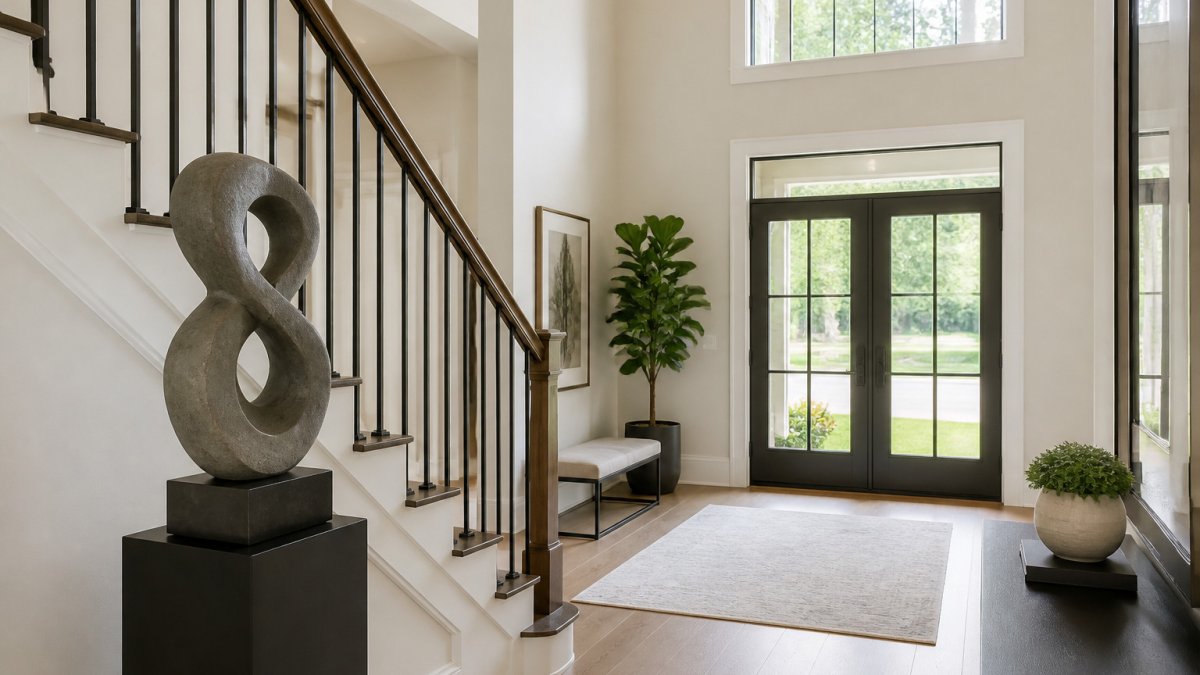
- Measure the space. A two-story entry can handle a tall or heavy piece. A narrow hallway needs something slimmer.
- Check the floor and surface. Heavy stone and metal need a sturdy base. Lightweight resin and fiberglass suit more surfaces.
- Consider traffic. High-traffic spots favor durable finishes and stable placement.
- Match the style. Stone and bronze suit classic interiors. Stainless steel and resin lean modern. Wood and ceramic add warmth.
- Plan the light. Test how a finish looks by the door in daylight and in the evening.
Maintenance of Foyer Sculptures by Material
Each material needs different care. Dust stone and metal regularly with a soft cloth, and avoid harsh cleaners that can dull finishes. Wood benefits from occasional dusting and protection from direct sun and humidity. Resin should be wiped gently; avoid abrasive pads that scratch the surface. Ceramic and stoneware need careful handling and a soft brush for dust in crevices. Fiberglass can be cleaned with a damp cloth and mild soap.
Check the care instructions from the seller for each piece, and reapply any protective finish if the manufacturer recommends it.
How to Style Abstract Sculptures in Your Living Room After the Entryway
Once you have a foyer piece you love, you can carry the same logic into the rest of the home. A smaller resin or ceramic accent suits a bookshelf or side table, while a larger stone or metal piece can anchor a living room wall or corner. Repeat one material or color across rooms to create continuity, or contrast a bold abstract form with softer textures for balance.
For more on styling and sourcing, browse the curated pieces at Your Decor Essentials, where you can find abstract sculptures and resin accents for a range of spaces.
Frequently Asked Questions
What is the best material for a foyer sculpture?
There is no single best material, but resin, fiberglass and treated metal are commonly chosen for entryways because they are lighter and easier to reposition, while stone and bronze suit homes where a heavy, permanent focal point is wanted. Start with your floor's load capacity, the amount of foot traffic and how often you plan to move the piece, then compare durability and care needs. Pricing depends on size, finish and order details, so check current prices directly with Your Decor Essentials before deciding.
Are resin sculptures durable enough for a home entryway?
Resin sculptures are lightweight and generally weather resistant, which makes them practical for indoor entryways where they may be bumped or moved for cleaning. Durability depends on the resin formulation, the finish and whether the piece is placed away from direct sun, which can fade some finishes over time. Dust regularly with a soft cloth and avoid abrasive cleaners to keep the surface intact.
How do I keep a foyer sculpture stable and safe?
Check that the floor or pedestal can carry the sculpture's weight and that the base is wide enough to resist tipping, especially in a high-traffic area or where children and pets pass by. Heavier materials like stone need a sturdier support than lightweight resin or fiberglass. Anchor or position tall, narrow pieces away from doors and walkways, and consider a low, wide base for stability.
How do I choose a sculpture material for a high-traffic foyer?
Prioritize materials that resist scratches, moisture and handling, such as treated metal, resin and sealed stone, and avoid unfinished wood or fragile ceramic if the entry sees daily use. Consider weight so the piece is easy to move for cleaning, and pick a finish that hides fingerprints. Match the scale to the wall and floor space so the sculpture is not crowded by foot traffic.