 listicle
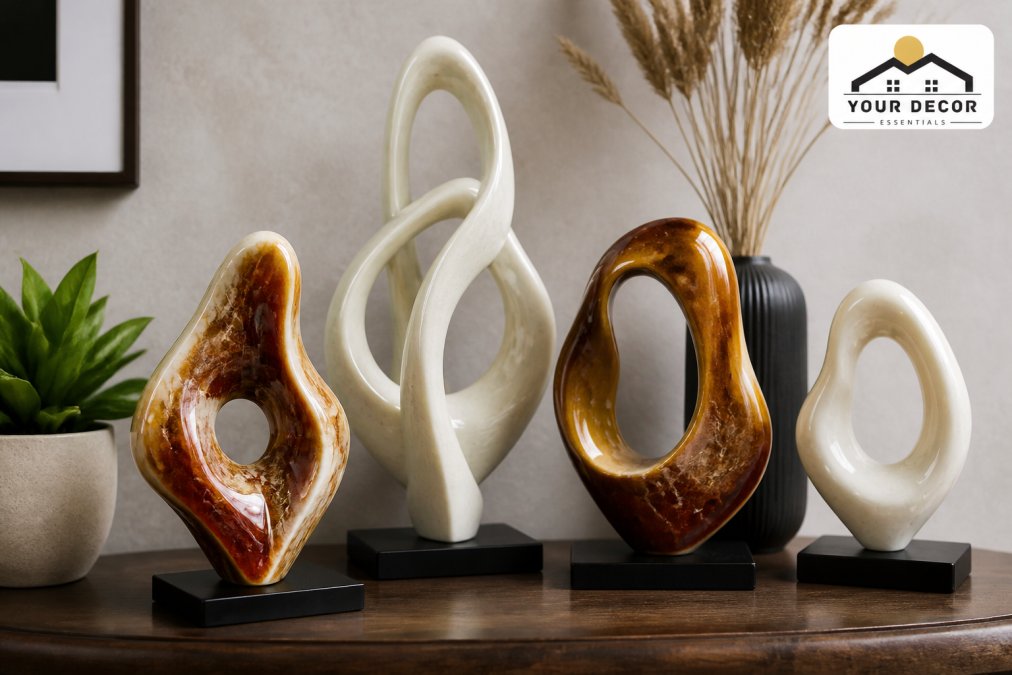
Buy Unique Abstract Resin Sculptures for Your Home
Table of Contents
- Why Abstract Resin Sculptures Are the Accent Piece Your Room Needs
- Artisan-Made vs. Mass-Produced: What Makes a Sculpture Unique
- How to Style Abstract Sculptures in Living Room Spaces
- Material Fusion: Resin and Wood Combinations Worth the Investment
- Choosing the Right Size and Finish for Your Space
- Resin Sculpture Care and Maintenance That Keeps Them Looking New
- The Artist's Process: Why Handcrafted Pieces Carry a Different Energy
- Sustainability and Ethical Sourcing in Resin Art
- What to Ignore When Shopping for Resin Sculptures
- Conclusion: Bring Home a Sculpture That Speaks to You
- Frequently Asked Questions
Last Updated: September 5, 2026
Why Abstract Resin Sculptures Are the Accent Piece Your Room Needs
A single sculptural form can change how an entire room feels, yet most homes stop at throw pillows and framed prints. Abstract resin sculptures deliver the visual anchor those softer accents cannot, giving a space weight, texture, and a point of view without saying a word. If you want to buy unique abstract resin sculptures that elevate a room rather than merely fill it, the material and the maker matter more than the silhouette.
At Your Decor Essentials, we have watched the shift toward sculptural decor accelerate as homeowners move away from matching sets and toward pieces with personality. A well-placed abstract form acts as a conversation starter, a way to introduce organic shapes and artistic expression into what can otherwise feel like a catalog showroom. The key is choosing a piece that feels intentional rather than decorative filler.
The market splits into two camps: mass-produced polyresin casts available by the thousands, and handcrafted works where no two pieces come out identical. That difference is not snobbery, it is the entire point. When you buy unique abstract resin sculptures, you are investing in a piece with a story, a maker's hand, and a finish that reflects light differently depending on where it sits.
Below, we walk through what separates a worthy investment from a dust collector, how to style these pieces so they look curated rather than cluttered, and the maintenance habits that keep resin looking fresh for decades.
Artisan-Made vs. Mass-Produced: What Makes a Sculpture Unique
Mass-produced resin decor follows a predictable pattern: a mold is filled, the cast is popped out, and hundreds of near-identical copies ship to big-box shelves. Nothing is wrong with that approach for budget styling, but it cannot deliver what most people actually want when they say they want art in their home: something that feels personal.
An artisan-made abstract resin sculpture carries small irregularities, subtle color shifts, and a surface quality that factory casting rarely replicates. These variations are not flaws; they are evidence of process. When you buy unique abstract resin sculptures from a maker, you are paying for that process, the hours of layering, sanding, and finishing that a production line cannot justify.
The practical difference shows up in durability too. Handcrafted pieces typically use higher-grade casting resin with UV stabilizers, which resist yellowing and clouding over time. Mass-market polyresin, by contrast, is formulated for cost, and cheaper formulations can degrade when exposed to direct sunlight for years.
How to Style Abstract Sculptures in Living Room Spaces
Abstract resin sculptures earn their place in a living room when they respond to the architecture around them, not when they compete with it. The most common mistake is treating a sculpture like a knickknack, setting it anywhere there is an empty inch of shelf. These pieces need breathing room to read as intentional art.
Abstract resin sculptures work best when placed at eye level or slightly below, where the form feels present without looming. A console table behind a sofa, a mantel with nothing else competing for attention, or a floating shelf with a single sculptural object and a small stack of books are all reliable staging grounds.
Placement by Room Size and Layout
Small living rooms benefit from one medium-scale piece rather than several small ones. A cluster of tiny figurines reads as clutter; a single substantial form anchors the eye and makes the space feel composed. In larger, open-plan rooms, scale up. A sculpture that looks proportionate on a console in a compact apartment will vanish against a long wall in a loft.
Consider sight lines. A sculpture placed where it is glimpsed from a hallway or doorway creates curiosity and pulls people into the room. Placing it directly in front of a window, however, works against the piece, backlighting the form and washing out its surface detail.
Pairing Sculptures with Lighting and Furniture
Lighting determines whether a resin piece looks dimensional or flat. A directional spot or picture light raking across the surface reveals the depth of the material, the subtle undulations, and the interplay between glossy and matte areas. Ambient overhead light alone makes even a beautiful sculpture look ordinary.
When pairing with furniture, look for contrast rather than matchy-match coordination. A smooth, organic resin form softens the hard lines of a minimalist metal-and-glass console. A textured, geometric piece adds energy to a room full of soft upholstery. The goal is visual balance, not thematic repetition.
Material Fusion: Resin and Wood Combinations Worth the Investment
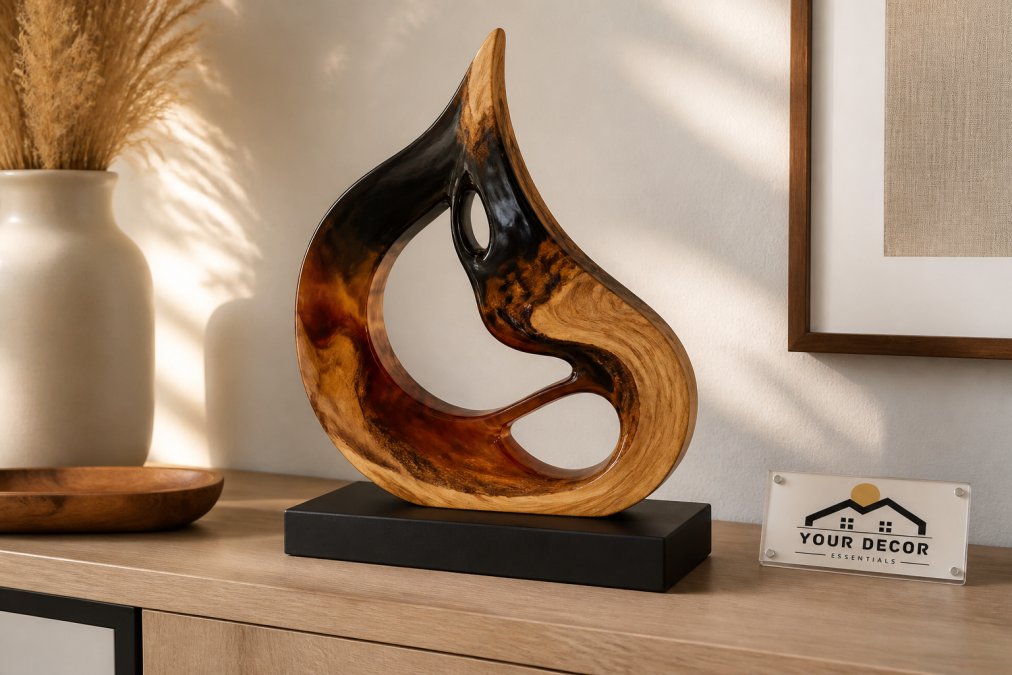
Resin and wood combinations have become a favorite among designers because the two materials do something neither can do alone. Wood brings warmth, grain, and a natural irregularity; resin adds depth, translucency, and a glossy counterpoint. The contrast between the organic and the polished creates a sculptural presence that reads as genuinely contemporary.
What makes these fusion pieces worth seeking out is the craftsmanship involved. The wood is typically shaped, sealed, and then set within or against cast resin, a process that requires careful planning to avoid air bubbles and ensure proper bonding. When done well, the joint between materials is seamless, and the piece feels like a single object rather than two parts glued together.
These sculptures carry a different energy than pure resin forms. The wood anchors them in nature, which makes them easier to integrate into rooms with warm tones, leather, linen, and natural fiber rugs. A resin-and-wood piece is often the smarter choice for a first sculpture purchase because it bridges contemporary styling and traditional warmth.
Choosing the Right Size and Finish for Your Space
Size is the decision that most often separates a sculpture that elevates a room from one that overwhelms or disappears. A useful rule of thumb: the piece should occupy roughly one-third to one-half of the width of the surface it sits on. Anything smaller looks lost; anything larger starts to crowd the space.
But to move beyond a rule of thumb, you need to measure the visual weight, not just the physical dimensions. A dark, matte, or heavily textured sculpture reads as heavier than a glossy, light-colored one of the same size. A common pattern in interior staging is to use the '1/3 to 2/3' ratio: if your console table is 60 inches wide, a sculpture with a footprint of roughly 20 inches will feel balanced without dominating. For a mantel, the sculpture's height should not exceed two-thirds of the distance between the mantel and the ceiling, otherwise it visually compresses the room.
Height matters just as much. A sculpture that rises above eye level when seated becomes a different object than one that sits below it. For a console behind a sofa, a piece that reaches 18 to 24 inches tall creates presence without blocking sight lines. For a bookshelf or mantel, shorter, wider forms often work better because they echo the horizontal line of the surface.
Where this section gets interesting is when you align the finish to a specific interior design style. This is the angle most shopping guides miss. Instead of just choosing a finish in a vacuum, match it to the room's architectural language:
- Japandi or Wabi-Sabi: Look for matte, low-gloss finishes with visible organic texture. The resin should mimic natural stone or water, with muted, earthy pigments. A high-gloss piece will fight the quiet, imperfect aesthetic of these styles.
- Mid-Century Modern: A semi-gloss finish with warm, amber or honey-toned resin (often fused with walnut wood) complements the teak and brass accents typical of this style. The finish should have a slight reflective quality to echo the era's love of polished surfaces.
- Industrial or Brutalist: Lean toward matte, raw, or textured finishes in concrete-gray, charcoal, or rust tones. The resin should look dense and structural, not delicate. A high-gloss finish here would feel out of place against exposed brick and steel.
- Hollywood Regency or Glam: This is where high-gloss, mirror-like finishes shine. A resin piece with a deep, glossy lacquer finish and metallic pigments (gold, copper) will catch the light and act as a jewel in the room.
Finish choice shapes how the piece interacts with light, and this is a technical detail that separates a good purchase from a great one. A high-gloss finish reflects the room around it, picking up colors from nearby furniture and making the sculpture feel integrated. However, a high-gloss finish will also magnify every fingerprint and dust mote, requiring more frequent cleaning. A matte or textured finish absorbs light, giving the piece a softer, more grounded appearance that suits minimalist and organic interiors, and it is far more forgiving of daily handling.
Finally, consider the scale of the room's other objects. A sculpture that looks proportionate on a console in a compact apartment will vanish against a long wall in a loft. In a large, open-plan room, you may need a piece that is 36 inches or taller to hold its own against a large sofa. When in doubt, measure the negative space around the piece, the empty wall or surface area, and ensure the sculpture occupies a deliberate portion of that void, not just a leftover corner.
Resin Sculpture Care and Maintenance That Keeps Them Looking New
Resin sculpture care and maintenance is simpler than most buyers expect, but it does require consistency. The material is durable and water-resistant, yet it is not indestructible. A few habits will keep a piece looking gallery-quality for years.
Dust accumulates in crevices and textured surfaces, so regular dusting with a soft, dry microfiber cloth is the primary maintenance task. For deeper cleaning, a cloth slightly dampened with mild soap and water works well. Avoid harsh chemical cleaners, which can dull the surface finish over time.
The two threats to resin are prolonged direct sunlight and temperature extremes. UV exposure causes yellowing and can make some resins brittle. Keep sculptures out of south-facing windows or rotate them periodically if they must sit in bright light. Extreme heat can soften or warp resin, so avoid placing pieces near fireplaces, radiators, or heat vents.
The Artist's Process: Why Handcrafted Pieces Carry a Different Energy
Understanding how an abstract resin sculpture is made changes how you see it. The process begins with the artist mixing resin and hardener, often adding pigments, dyes, or metallic powders to create depth. The liquid is then poured in layers, each one allowed to partially cure before the next is added, which is how internal color gradients and suspended textures form.
Timing is everything in this work. Resin has a working window measured in minutes, and the artist must pour, manipulate, and place materials before the mixture begins to set. There is no undo button. A piece that looks effortless and fluid is the result of precise choreography under deadline pressure.
That process leaves traces. Tiny air bubbles caught beneath the surface, subtle variations in color density, the exact curve of a hand-sanded edge. When you buy unique abstract resin sculptures, these traces are what make your piece genuinely one of a kind, and they are worth looking for. A piece that looks too perfect, too uniform, may have been molded rather than made.
Sustainability and Ethical Sourcing in Resin Art
Buyers increasingly want to know where their decor comes from, and resin art presents a complicated picture. The material itself is a petroleum-based plastic, which raises legitimate environmental questions. However, the sustainability calculus is not as simple as the material's origin.
Handcrafted pieces are typically made in small batches by individual artists, which means far lower production waste than factory molding. Many artists also reuse scraps, recycle failed pours, and source wood from sustainable or reclaimed suppliers. The longevity of a quality piece matters too: a sculpture that lasts decades and never ends up in a landfill has a different environmental profile than a disposable decor item replaced every few seasons.
When shopping, ask sellers about their sourcing and studio practices. Artists who work sustainably are usually happy to discuss their material choices, and their answers reveal a level of care that often shows up in the finished piece. Supporting independent makers also keeps production local and small-scale, which carries its own ethical weight.
What to Ignore When Shopping for Resin Sculptures
Shopping for abstract resin sculptures online means filtering out noise. Certain signals that seem important actually tell you little about quality, and learning to ignore them saves time and prevents disappointment.
Trend-driven designs are the first thing to approach with caution. A sculpture that dominates social media feeds today will feel dated quickly, and resin's durability means you will live with that decision for a long time. Choose forms that resonate with your space and taste rather than what is currently viral.
Stock photography with identical backgrounds across multiple listings signals mass production. When the same image appears on dozens of retailer sites, the piece is likely a factory cast available everywhere. Genuinely unique pieces are photographed individually, often in the maker's studio, with variations visible between examples.
Generic product descriptions that could apply to any sculpture tell you the seller does not know or care about the work. Look for listings that describe the specific materials, the finishing process, and the artist behind the piece. That specificity is the strongest signal of authenticity and quality.
But the most important thing to ignore is the visual gloss of the product photo itself. A high-polish, glossy finish photographs beautifully but can hide structural flaws. Instead, focus on what the listing does not show. Here is the technical checklist that most buyers miss, which directly addresses the durability and longevity of the resin itself:
- Look for the resin type. The two dominant types in art-grade sculpture are polyester resin and epoxy resin. Epoxy resin is generally more durable, has better clarity, and is less brittle over time. Polyester resin is cheaper and more common in mass-produced items but is more prone to yellowing and cracking. A listing that does not specify the resin type is often using the cheaper polyester variant.
- Check for a mention of 'casting resin' vs. 'coating resin.' Casting resin is formulated for thick, three-dimensional pours and cures evenly without excessive heat. Coating resin is thinner and meant for surface layers. A sculpture made with coating resin in a thick mold will be more prone to internal stress fractures.
- Ask about the curing process. A proper cure takes days, not hours. If a seller mentions a fast demold time (under 24 hours), the piece may have been rushed, leading to internal bubbles or a soft, tacky surface that never fully hardens. Quality makers typically cure for 72 hours or more before finishing.
- Inspect the base. A well-made sculpture has a flat, sanded, or felted base. If the listing shows a rough, uneven bottom, it indicates a lack of finishing care, and the piece may rock or scratch your furniture.
- Ignore the 'one-of-a-kind' label if the photos are identical. True uniqueness means the listing shows the actual piece you will receive, with its specific color variations and inclusions. If the listing uses a single photo to represent 'multiple available,' it is a cast from a mold, not a unique pour.
| What to Look For | What to Ignore | Why It Matters |
|---|---|---|
| Individual photos, studio setting | Identical stock images across sites | Signals handcrafted vs. mass-produced |
| Specific material and process details | Vague, reusable descriptions | Shows maker knowledge and care |
| UV-stabilized resin mentioned | No material information | Determines long-term clarity |
| Artist attribution or signature | Trend-chasing designs | Affects longevity and authenticity |
| Epoxy or casting resin specified | Polyester resin or unspecified type | Determines structural durability and resistance to cracking |
| Flat, finished base | Rough or uneven base | Indicates finishing quality and prevents surface damage |
By ignoring the superficial signals and focusing on the technical specifications of the resin and the maker's process, you can confidently identify a piece that will retain its beauty and structural integrity for decades, rather than a decor item that degrades in a few seasons.
Conclusion: Bring Home a Sculpture That Speaks to You
The right abstract resin sculpture does not decorate a room; it gives the room a voice. Whether you are drawn to the warmth of resin and wood fusion, the clean lines of a minimalist form, or the bold statement of a large-scale piece, the goal is the same: find something that feels like it belongs in your home because it reflects how you want to live.
At Your Decor Essentials, we curate abstract resin sculptures and resin accents that bring visual interest and a thoughtfully styled look to your space. Our collection focuses on pieces that read as art rather than inventory, helping you create an interior that feels personal and distinctive.
Browse our selection and find a sculpture that speaks to you. Shop now and give your home the accent piece it has been missing.
Frequently Asked Questions
Are resin sculptures durable enough for everyday home decor?
Yes. Quality resin sculptures are built to last. High-grade casting resin resists chipping, fading, and moisture when properly cured. Unlike ceramic or plaster, resin won't shatter if knocked over. For everyday spaces like living rooms or entryways, look for pieces with a solid base and smooth, sealed finish. Avoid placing them in direct, constant sunlight for years on end, as this can dull the color over time. With basic care, a well-made resin sculpture stays a lasting part of your decor.
How can I tell if a resin sculpture is high quality?
Check the weight first. Dense, heavy resin signals solid construction, while hollow or overly light pieces feel cheap. Inspect the surface for air bubbles, rough edges, or uneven texture. A quality piece has clean lines and a consistent finish. Look at the base: it should sit flat without wobble. Ask about the casting process. Hand-poured pieces with layered colors or embedded materials show more craftsmanship than single-mold production. Clear photos of the actual item, not just stock images, help verify quality before purchase.
What is the difference between cast resin and hand-carved resin art?
Cast resin starts as liquid resin poured into a mold, allowing for smooth, repeatable shapes and precise geometric forms. Hand-carved resin art begins as a solid block that an artist shapes with tools, leaving subtle tool marks and organic irregularities. Cast pieces offer clean, modern lines and consistency, while carved works show more texture and artistic expression. For abstract decor, both have merit. Cast resin suits minimalist interiors, while hand-carved pieces add warmth and a bespoke feel that mass-produced items cannot match.
How do I clean and maintain my resin sculpture at home?
Dust your sculpture weekly with a soft, dry microfiber cloth to prevent buildup. For deeper cleaning, use a slightly damp cloth with mild soap and water, then dry immediately. Avoid harsh chemicals, alcohol-based cleaners, or abrasive pads, as these can dull the finish. If your piece has a matte surface, skip wax-based polishes. Keep sculptures away from radiators and fireplaces, since extreme heat can warp resin. With these simple habits, your sculpture keeps its color and finish for years.
This article was written using GrandRanker
Frequently Asked Questions
Are resin sculptures durable enough for everyday home decor?
Yes. Quality resin sculptures are built to last. High-grade casting resin resists chipping, fading, and moisture when properly cured. Unlike ceramic or plaster, resin won't shatter if knocked over. For everyday spaces like living rooms or entryways, look for pieces with a solid base and smooth, sealed finish. Avoid placing them in direct, constant sunlight for years on end, as this can dull the color over time. With basic care, a well-made resin sculpture stays a lasting part of your decor.
How can I tell if a resin sculpture is high quality?
Check the weight first. Dense, heavy resin signals solid construction, while hollow or overly light pieces feel cheap. Inspect the surface for air bubbles, rough edges, or uneven texture. A quality piece has clean lines and a consistent finish. Look at the base: it should sit flat without wobble. Ask about the casting process. Hand-poured pieces with layered colors or embedded materials show more craftsmanship than single-mold production. Clear photos of the actual item, not just stock images, help verify quality before purchase.
What is the difference between cast resin and hand-carved resin art?
Cast resin starts as liquid resin poured into a mold, allowing for smooth, repeatable shapes and precise geometric forms. Hand-carved resin art begins as a solid block that an artist shapes with tools, leaving subtle tool marks and organic irregularities. Cast pieces offer clean, modern lines and consistency, while carved works show more texture and artistic expression. For abstract decor, both have merit. Cast resin suits minimalist interiors, while hand-carved pieces add warmth and a bespoke feel that mass-produced items cannot match.
How do I clean and maintain my resin sculpture at home?
Dust your sculpture weekly with a soft, dry microfiber cloth to prevent buildup. For deeper cleaning, use a slightly damp cloth with mild soap and water, then dry immediately. Avoid harsh chemicals, alcohol-based cleaners, or abrasive pads, as these can dull the finish. If your piece has a matte surface, skip wax-based polishes. Keep sculptures away from radiators and fireplaces, since extreme heat can warp resin. With these simple habits, your sculpture keeps its color and finish for years.