 listicle
Renwil Alternative for Modern Lighting: 4 Picks
Table of Contents
- Why Look Beyond Renwil for Modern Lighting?
- Renwil Alternatives: Feature Comparison
- Capital Lighting: Accessible Designer Aesthetics
- Hammerton: Handcrafted Sculptural Statements
- Bethel International: Contemporary Polish for Modern Homes
- MOD Lighting: Minimalist Fixtures for Small Apartments
- How to Choose Lighting for Small Apartments
- Tips for Layering Modern Lighting in Any Room
- Material Durability and Maintenance: What to Check
- Integrating Smart Home Ecosystems with Your Fixtures
- Frequently Asked Questions
Last Updated: September 6, 2026
Renwil is known for sculptural accents and high-end styling, but its price points and trade-focused distribution leave many homeowners searching for a more accessible path to the same look. A Renwil alternative for modern lighting should deliver that gallery-like presence without the gallery-level wait or markup. At Your Decor Essentials, we curate decor that brings this exact sculptural sensibility into everyday homes, pairing statement pieces with practical guidance on fixtures, finishes, and layout.
The gap in the market is real. Most big-box retailers stock either generic builder-grade fixtures or trend-driven pieces that date quickly. The alternatives below sit in a smarter middle zone: they offer designer aesthetics, durable construction, and styles that transition cleanly from traditional to contemporary spaces. We evaluated each on design range, build quality, and how well they suit real rooms rather than showroom photographs.
Below, we break down four brands that fill the void left by Renwil's limited retail availability, plus the practical details on sizing, layering, and maintenance that most product pages skip. The goal is simple: help you find fixtures that look intentional, last for years, and actually fit the way you live.
Why Look Beyond Renwil for Modern Lighting?
The main reason shoppers seek an alternative is access. Renwil's collection is distributed heavily through interior designers and trade showrooms, which means browsing in person is difficult and timelines can stretch for custom orders. For a homeowner finishing a renovation or styling a first apartment, that friction is often a dealbreaker.
There is also the matter of aesthetic range. Renwil leans into a specific sculptural, art-gallery look that works beautifully in spacious, high-ceilinged rooms. In a compact apartment or a standard 8-foot-ceiling living room, those oversized statement pieces can overwhelm the space rather than elevate it. A practical alternative offers comparable visual interest in proportion to typical residential rooms.
Finally, budget matters. Commissioning a handcrafted, artisan piece is a significant investment, and many shoppers want the same emotional impact from a fixture that costs a fraction of the price. The brands below answer that need with strong design DNA, quality metalwork, and finishes that hold up over time.
Renwil Alternatives: Feature Comparison
Each brand below approaches the modern lighting category differently, and the right choice depends on your space, budget, and design priorities. This comparison summarizes the key differences before we explore each option in depth.
| Brand | Starting Price | Design Focus | Best For | Key Limitation |
|---|---|---|---|---|
| Capital Lighting | $98 | Updated classic silhouettes with modern finishes | Accessible designer looks | Limited big-box retail availability |
| Hammerton | Custom quote | Handcrafted, sculptural, large-scale | Luxury statement installations | Significant investment required |
| Bethel International | $150 | Contemporary polish, sleek lines | Modern and transitional interiors | Less traditional or rustic range |
| MOD Lighting | $85 | Minimalist, space-neutral designs | Small apartments and compact rooms | Minimalist aesthetic only |
The pricing figures above reflect published starting points for each manufacturer's retail line. Your Decor Essentials does not carry these brands; our own collection focuses on curated abstract sculptures, resin accents, and functional lighting that bring a similar artful presence to your home. For current pricing on our pieces, visit our website.
Capital Lighting: Accessible Designer Aesthetics
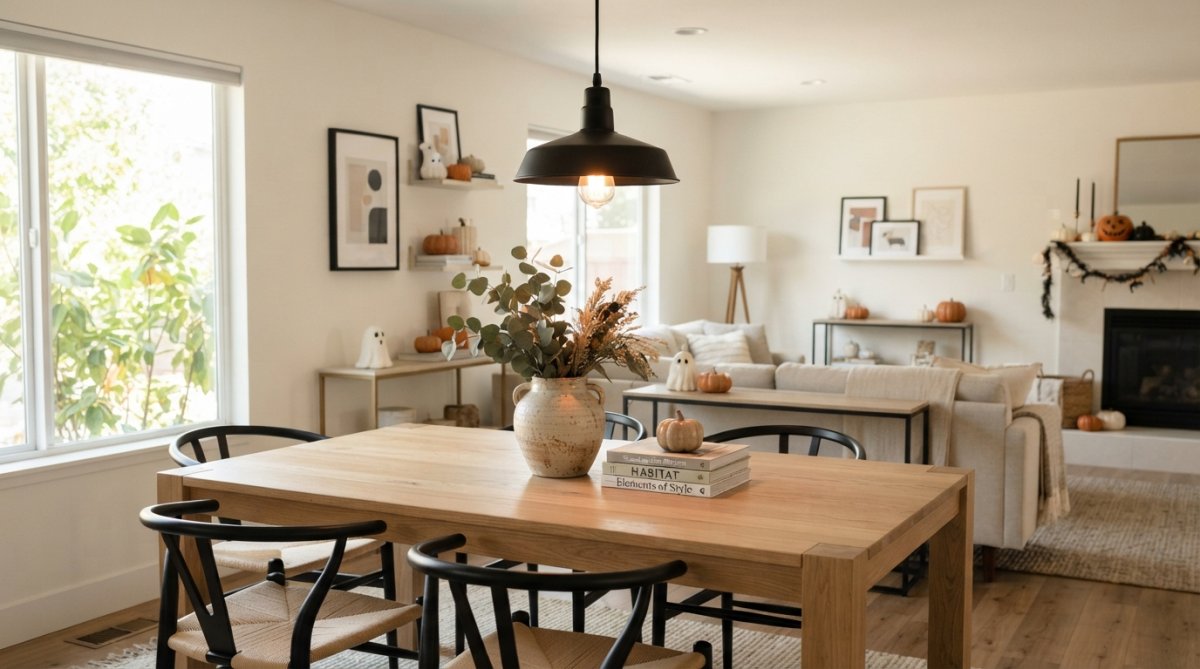
Capital Lighting is the strongest answer for shoppers who want Renwil's polished, design-forward look without the trade-only hassle. The brand builds its catalog around updated classic silhouettes, schoolhouse pendants, and lantern styles, then applies modern finishes like aged brass and matte black that keep them feeling current rather than nostalgic.
What sets Capital apart is the value-to-design ratio. You get the visual sophistication of a designer fixture at a price point that suits a first home or a single-room redo. The metalwork is consistently good, with clean seams and durable finishes that resist the chipping and tarnishing common in cheaper imports.
Where it falls short is availability. You will rarely find Capital's full line in big-box stores, so most purchases happen through lighting showrooms or online retailers. That is a minor inconvenience, though, when the catalog breadth is this strong. The brand covers pendants, chandeliers, sconces, and bath fixtures, so you can carry one aesthetic through an entire home.
For a kitchen island or entryway where you want immediate visual impact, a Capital pendant in matte black or aged brass delivers the contemporary aesthetic you are after. Pair it with a sculptural accent on the counter below, and the composition reads as intentionally styled.
Hammerton: Handcrafted Sculptural Statements
Hammerton occupies the true luxury end of this comparison. Every fixture is custom-made and artisan-crafted, with a focus on large-scale sculptural lighting that functions as the centerpiece of a room. If your project demands a piece with genuine emotional weight, this is the brand that delivers it.
The craftsmanship is unmatched in this group. Hammerton works with hyper-tactile textures and unusual materials, creating metalwork that invites touch and rewards close inspection. These are fixtures you notice before you notice the light they cast, which is exactly the point for a statement installation over a stairwell, dining table, or grand entry.
The trade-off is cost and lead time. Hammerton operates on a custom-quote model, and the investment required is substantial compared with mass-market brands. You are also waiting longer for the piece, since it is built to order rather than pulled from a warehouse shelf.
This option suits homeowners who view lighting as art and are willing to budget accordingly. If you are styling a primary residence you intend to keep for decades, a Hammerton piece can anchor a room the way a painting or sculpture would. For a rental or a first apartment, the investment is harder to justify.
Bethel International: Contemporary Polish for Modern Homes
Bethel International delivers the most consistent contemporary polish in this lineup. The brand carries a broad range of modern chandeliers, vanity lights, and ceiling fixtures with sleek lines and clean proportions that suit transitional and contemporary interiors alike.
What makes Bethel valuable is its inventory depth. The brand supplies residential and commercial projects, which means the catalog is extensive enough to outfit an entire home in one aesthetic. Designers and homeowners working on larger renovations will appreciate being able to source dining room, bedroom, and bathroom fixtures that all speak the same visual language.
Guidance on lighting layout and fixture spacing from the American Lighting Association emphasizes matching fixture scale to room dimensions, and Bethel's range makes that easier because sizes are consistent across collections.
The one gap is stylistic range. Bethel does not chase traditional, rustic, or farmhouse looks, so if your home leans heavily in that direction, you will find fewer options here. But for a modern or transitional space, the selection is hard to beat at this price level.
MOD Lighting: Minimalist Fixtures for Small Apartments
MOD Lighting solves a problem the other brands barely address: making a small space feel open and well-lit without visual clutter. The retailer focuses on minimalist, space-neutral designs, including recessed options and ambient lighting that recede into the ceiling rather than dominating the room.
For apartment dwellers, this is the most practical Renwil alternative for modern lighting because the fixtures work with compact proportions instead of fighting them. A sculptural chandelier that looks stunning in a 12-foot-ceiling loft will overwhelm a 650-square-foot one-bedroom. MOD's pendants and flush mounts deliver contemporary style at a scale that suits tighter footprints.
The website is also genuinely useful for inspiration, organizing products by room and by the kind of ambiance each fixture creates. That helps first-time buyers who are still developing their eye for what works where.
The limitation is philosophical. MOD commits fully to minimalism, so if your taste runs toward warmer, more decorative, or more sculptural pieces, this is not the brand for you. It is a focused solution for a specific problem, and within that lane it performs excellently.
How to Choose Lighting for Small Apartments
Choosing lighting for a small apartment is less about square footage and more about visual weight and proportion. The common mistake is treating a compact room like a scaled-down version of a large one. Instead, think in terms of design languages that inherently suit tighter footprints. Here is a direct comparison of three aesthetic approaches that work well in small spaces, each offering a distinct path to a sculptural look without the visual bulk.
The Minimalist Path: Recessed and Flush-Mount Focus
This approach prioritizes the ceiling plane. By using flush mounts or recessed fixtures, you reclaim visual height and keep the eye moving horizontally, which makes a room feel wider. The design language is clean, with an emphasis on geometric forms and matte finishes like white or black. This is the most effective choice for a 650-square-foot one-bedroom where every inch of visual clearance counts. It is a space-neutral strategy that lets your furniture and decor provide the personality.
The Sculptural Accent Path: One Statement, Many Supports
This is where you can bring in a Renwil-like sensibility. Instead of a large chandelier, choose a single, smaller-scale sculptural pendant with a diameter of 12 to 16 inches. Hang it low over a side table or a reading nook, not in the center of the room. This creates a deliberate focal point that draws the eye to a specific zone, making the space feel curated rather than cluttered. The key is to support it with recessed or track lighting so the pendant is an accent, not the sole source of illumination.
The Layered Ambient Path: Wall-Mounted and Vertical Light
When floor space is scarce, think vertically. Wall-mounted sconces with swing arms or adjustable heads free up surface area and create layered ambient light. A common pattern is to use two sconces flanking a mirror or a piece of art to create the illusion of depth. This approach works best with a modern or transitional aesthetic, where the fixtures themselves act as sculptural elements. Look for sconces with articulated joints or unique shade materials to add visual interest without taking up a single square foot of floor space.
To decide which path is right for you, measure the room's width and ceiling height. For a room under 10 feet wide, the minimalist path is usually safest. For a room that is 10 to 12 feet wide, the sculptural accent path adds character without overwhelming. For any room with 8-foot ceilings, avoid any pendant that hangs lower than 18 inches from the ceiling unless it is directly over a table or counter. The goal is to make the light fixture work with the architecture, not against it, and to give you a clear design language to follow rather than a vague sense of what might fit.
Tips for Layering Modern Lighting in Any Room
Layering modern lighting means combining ambient illumination, task lighting, and accent fixtures so a room works at every hour of the day. Ambient light fills the space, task light supports specific activities like reading or cooking, and accent fixtures draw the eye to architectural details or decor pieces.
Start with the ceiling fixture as your ambient base, then add task lighting where you actually perform activities. A floor lamp beside a reading chair, under-cabinet lights in the kitchen, or a desk lamp in the home office all qualify. Accent lighting comes last: wall-mounted sconces highlighting a piece of art, or a small spotlight washing a sculptural object.
Sconce placement deserves attention because it is easy to get wrong. Mount sconces at eye level, roughly 60 to 66 inches from the floor, and space them evenly along a hallway or flanking a mirror. In a bedroom, sconces mounted on either side of the bed replace bulky table lamps and free up nightstand surface.
The goal is flexibility. With dimmable technology and multiple light sources, you can shift a room from bright and energetic in the morning to warm and intimate by evening without changing a single fixture.
Material Durability and Maintenance: What to Check
Material quality determines whether a fixture looks great for two years or twenty. Before buying, check the metal finish and how it is applied. Powder-coated finishes resist chipping better than painted surfaces, and aged or distressed finishes hide everyday wear more gracefully than high-polish chrome.
Brushed metal and matte black finishes are the most forgiving for busy households because they do not show fingerprints or smudges the way glossy surfaces do. Glass diffusers should be easy to remove for cleaning, since dust buildup noticeably dims light output over time.
Consider the environment where the fixture will live. Bathroom fixtures need moisture-resistant construction, while outdoor-rated finishes are essential for covered porches or entryways exposed to humidity. Matching the fixture to its environment prevents premature aging and keeps your lighting safe.
UL certification standards for lighting fixture safety matter here. Fixtures with UL listing have been tested for electrical safety, which is non-negotiable for anything hardwired into your home.
Integrating Smart Home Ecosystems with Your Fixtures
Modern lighting is increasingly smart, and the ability to integrate a new fixture into your existing ecosystem is a major value-add. The challenge is that the technology layer is separate from the fixture itself. Here is a practical breakdown of how to bridge that gap, focusing on the mechanisms that actually work in a standard home.
The most common integration point is the switch, not the bulb. A smart dimmer switch, such as those using protocols like Zigbee or Z-Wave, replaces your existing wall switch and controls the connected fixture. This is the most reliable method because it works with any bulb type, including LED, and does not require the fixture to have any built-in intelligence. When choosing a smart switch, verify it is rated for the total wattage of the fixture and that it supports a neutral wire, which is required by most smart switches built after 2020.
The second integration point is the bulb itself. Smart bulbs, which connect directly to your Wi-Fi or a hub via Bluetooth, are a simple retrofit. However, they have a limitation: if the wall switch is turned off, the bulb loses power and becomes unresponsive. To avoid this, you must ensure the wall switch is left in the 'on' position at all times, which can be a behavioral change. The benefit is that smart bulbs offer tunable white light, allowing you to shift color temperature from a warm 2700K to a cool 5000K, which is excellent for a room that serves multiple purposes.
The third, and most seamless, integration point is a fixture with a built-in driver and wireless module. These are less common but increasingly available. They connect directly to a hub or your Wi-Fi and are controlled via the manufacturer's app. The advantage is that they often support the Matter standard, which is a unified protocol designed to ensure compatibility across Amazon Alexa, Google Home, and Apple HomeKit. When you see the Matter logo, it means the device is designed to work across these ecosystems without needing separate bridges.
Before purchasing any fixture, check the product specifications for the communication protocol. If it lists Wi-Fi, it is likely a standalone device. If it lists Zigbee or Z-Wave, it will need a compatible hub, such as those from Amazon or other ecosystem-specific controllers. The most future-proof choice is a fixture that explicitly states Matter support, as this reduces the risk of it becoming obsolete as platforms evolve. For a standard 120-volt household circuit, a smart dimmer switch is the most robust and cost-effective solution, providing app control, voice commands, and scheduling without compromising the fixture's design.
Frequently Asked Questions
Is Renwil a Canadian company?
Yes, Renwil is a Canadian company based in Toronto. They are known for their wall art, mirrors, and lighting. This guide focuses on alternatives available in the US market, like Capital Lighting and MOD Lighting, which offer comparable modern aesthetics without the import considerations.
Are there affordable alternatives to designer lighting brands?
Yes. Brands like Capital Lighting and MOD Lighting offer designer-level aesthetics at more accessible price points. These provide a strong alternative to high-end custom brands like Hammerton.
How do I choose modern lighting fixtures that match my home decor?
Start by identifying the dominant finish in your room, like matte black or brushed metal. Then, decide on the role of the light: ambient, task, or accent. For a cohesive look, match the fixture's color temperature to your decor; warm white works for cozy spaces, cool white for modern ones.
What are the best high-end alternatives to Renwil lighting?
For high-end sculptural pieces, Hammerton is a top choice. They specialize in custom, handcrafted metalwork that serves as a statement piece. For a more accessible but still design-forward option, Bethel International offers contemporary chandeliers that add a polished look without the custom price tag.
How can I mix and match lighting brands for a cohesive look?
Stick to a consistent finish across different brands, such as all matte black or all brushed nickel. Vary the fixture types to create layers, like a pendant cluster for ambient light and a wall-mounted sconce for accent. This approach creates a unified design even when you shop from multiple sources.
Frequently Asked Questions
Is Renwil a Canadian company?
Yes, Renwil is a Canadian company based in Toronto. They are known for their wall art, mirrors, and lighting. This guide focuses on alternatives available in the US market, like Capital Lighting and MOD Lighting, which offer comparable modern aesthetics without the import considerations.
Are there affordable alternatives to designer lighting brands?
Yes. Brands like Capital Lighting and MOD Lighting offer designer-level aesthetics at more accessible price points. These provide a strong alternative to high-end custom brands like Hammerton.
How do I choose modern lighting fixtures that match my home decor?
Start by identifying the dominant finish in your room, like matte black or brushed metal. Then, decide on the role of the light: ambient, task, or accent. For a cohesive look, match the fixture's color temperature to your decor; warm white works for cozy spaces, cool white for modern ones.
What are the best high-end alternatives to Renwil lighting?
For high-end sculptural pieces, Hammerton is a top choice. They specialize in custom, handcrafted metalwork that serves as a statement piece. For a more accessible but still design-forward option, Bethel International offers contemporary chandeliers that add a polished look without the custom price tag.
How can I mix and match lighting brands for a cohesive look?
Stick to a consistent finish across different brands, such as all matte black or all brushed nickel. Vary the fixture types to create layers, like a pendant cluster for ambient light and a wall-mounted sconce for accent. This approach creates a unified design even when you shop from multiple sources.