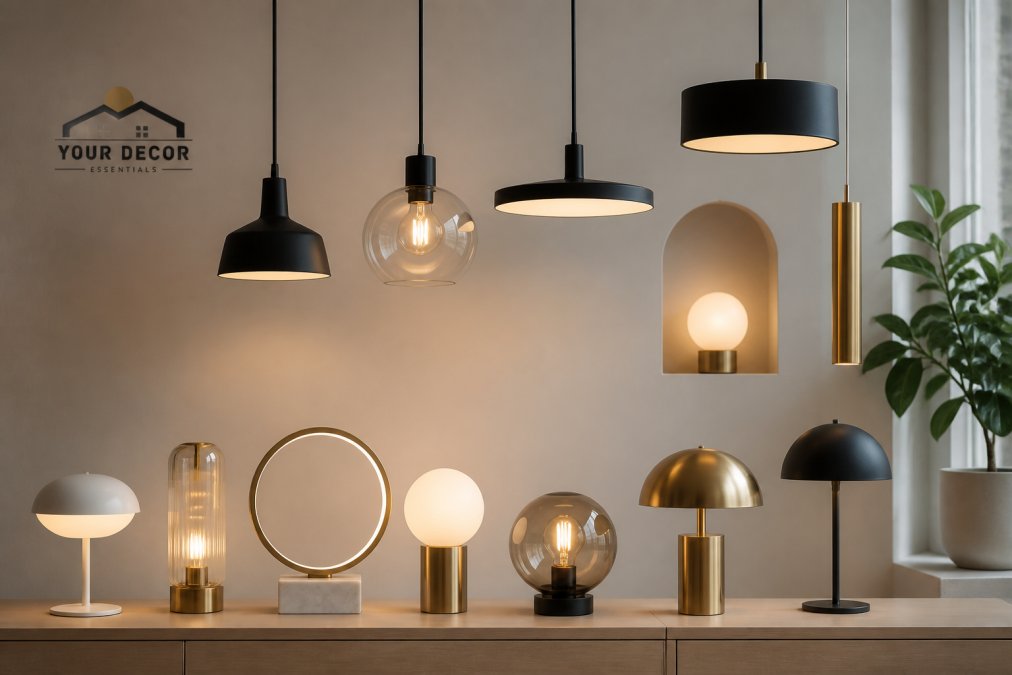
 listicle
Shop Curated Modern Lighting Fixtures: 2026 Guide
Table of Contents
- What Makes Curated Modern Lighting Fixtures Worth Your Investment
- How to Layer Lighting in a Living Room for Depth and Function
- Statement Chandeliers and Sculptural Pendant Lights
- Architectural Wall Sconces and Task Lighting Solutions
- Floor and Table Lamps: Functional Art for Any Space
- How to Choose Lighting for Small Apartments
- Modern Lighting Design Trends Shaping 2026
- Outdoor and Landscape Lighting to Complete Your Design
- Finding Your Perfect Fixtures: Selection Criteria and Design Confidence
- Frequently Asked Questions
Last Updated: September 1, 2026
What Makes Curated Modern Lighting Fixtures Worth Your Investment
When you're furnishing a home or redesigning a space, lighting often feels like an afterthought. But curated modern lighting fixtures do something generic options simply can't: they anchor a room's entire aesthetic while solving real functional problems. The difference between grabbing whatever's on sale and investing in thoughtfully selected pieces shows immediately.
At Your Decor Essentials, the right lighting transforms spaces. A well-chosen fixture introduces visual interest, creates depth, and sets the mood in ways that paint or furniture alone can't achieve. Modern lighting design prioritizes both sculptural form and refined function, meaning your fixtures work as hard as they look.
Here's what separates curated selections from mass-produced alternatives: intentionality. Curated modern lighting fixtures are chosen for how they perform, how they finish a space, and how they coordinate with contemporary design principles. You're not buying what's available, you're selecting from a thoughtfully edited collection where every piece earns its place.
How to Layer Lighting in a Living Room for Depth and Function
Layering lighting is the secret most design guides skip. Your living room needs at least three types of light working together: ambient lighting that fills the space, task lighting for reading or focused activity, and accent lighting that highlights architectural features or artwork.
Start with ambient lighting as your foundation. This comes from overhead fixtures, chandeliers, or flush mounts that provide general illumination. Then add task lighting, floor lamps, table lamps, or wall sconces positioned where people actually sit and need to see. Finally, incorporate accent lighting: a small pendant above a console table, a sculptural wall sconce highlighting a gallery wall, or uplighting on architectural details.
The magic happens when these layers work on separate switches or dimmers. You control the mood and function. Movie night? Dim the ambient, keep the accent subtle. Reading? Bring up the task lighting. Entertaining? Full ambient plus accent creates depth and visual interest.
Most rooms fail at layering because they rely too heavily on one source. A single overhead light creates harsh shadows and feels institutional. Distribute your fixtures across the room at different heights, overhead, mid-wall, and table level, to create dimension.
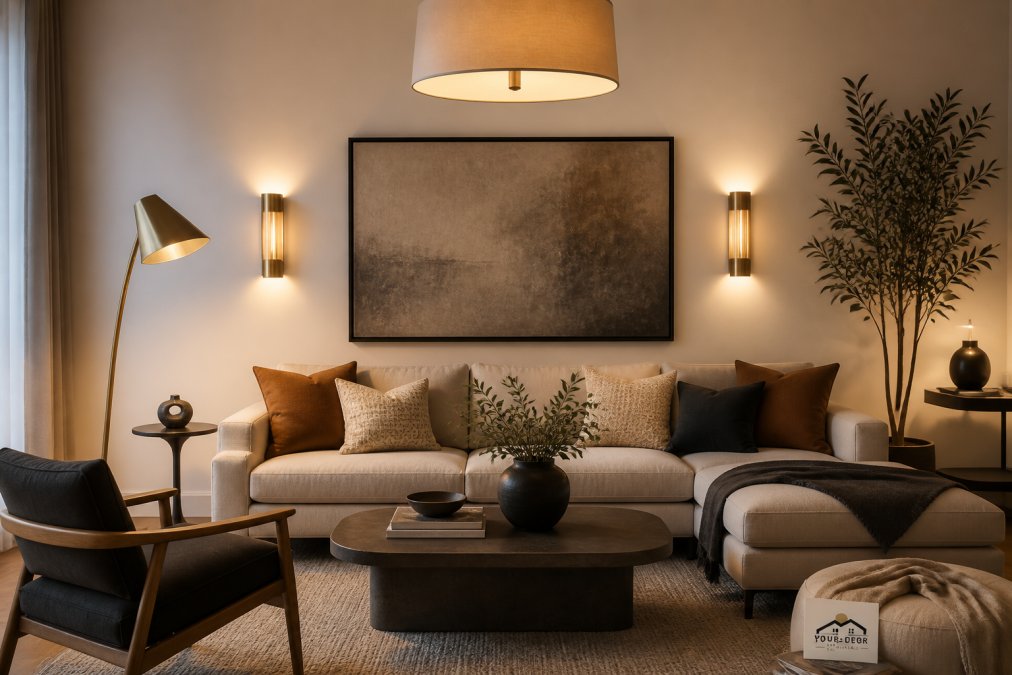
When selecting fixtures for layering, think about color temperature. Warmer light (around 2700K) feels inviting; cooler light (3000K+) energizes. Mix warm ambient with slightly cooler task lighting to keep the space functional without feeling cold.
Statement Chandeliers and Sculptural Pendant Lights
A statement chandelier or sculptural pendant light is the jewelry of a room. It's where you make a bold design choice and let the fixture do the talking.
Statement chandeliers work best in dining rooms, entryways, or primary bedrooms where they become the focal point. Look for designs that balance sculptural form with refined function, glass globes, angular metal frames, or multi-arm configurations that create visual complexity. The fixture should complement your ceiling height: higher ceilings (10+ feet) can handle larger, more dramatic pieces; standard 8-foot ceilings need more restrained proportions.
Sculptural pendant lights are more versatile. Hang them singly over a kitchen island, in pairs flanking a console, or in clusters above a dining table. The key is selecting a finish that anchors the space. Brushed brass feels warm and sophisticated. Matte black reads contemporary and grounding. Polished nickel adds brightness and works in minimalist schemes.
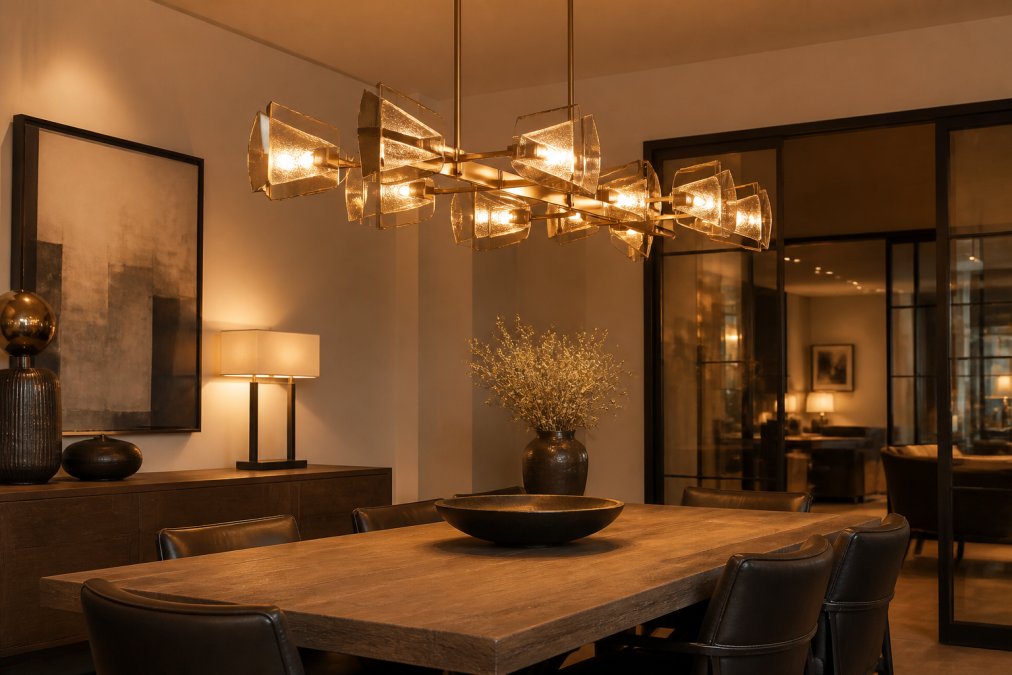
When you're choosing a statement piece, consider the scale carefully. A chandelier that's too small disappears; one that's too large overwhelms. A good rule: the fixture's diameter should be about one-third the width of your table or room. For a 48-inch dining table, aim for a 16-18-inch chandelier.
Your Decor Essentials carries statement pieces designed to anchor a room without requiring an interior designer to make them work. These fixtures balance bold design with the restraint that keeps them timeless.
Architectural Wall Sconces and Task Lighting Solutions
Wall sconces do double duty: they provide functional light while adding architectural interest to walls. Unlike pendants that hang from above, sconces mount directly to the wall, making them ideal for spaces where ceiling fixtures won't work or where you need directional light.
Architectural sconces work best in pairs, flanking mirrors, artwork, or architectural openings. They create symmetry and visual balance while providing focused light where you need it. Bathroom vanities benefit enormously from proper sconce placement, one on each side of the mirror eliminates shadows on your face, something a single overhead light never achieves.
Task lighting sconces serve specific functions. Reading sconces beside a bed or chair should be adjustable or dimmable so you control brightness. Kitchen sconces above a counter provide focused light for food prep. Living room sconces can highlight artwork or create ambient pools of light.
The finish matters here more than anywhere else. Matte black sconces read contemporary and disappear into dark walls. Brushed brass or polished nickel fixtures stand out and become design elements themselves. Choose based on whether you want the sconce to blend or command attention.
Most people underestimate how many sconces a room actually needs. A bedroom typically benefits from sconces on both sides of the bed plus additional sconces near dressing areas. A living room might include sconces flanking the sofa, near reading chairs, and highlighting architectural features.
Floor and Table Lamps: Functional Art for Any Space
Floor and table lamps are where curated modern lighting gets personal. These are the pieces that move with you, adjust to different spaces, and become objects you genuinely enjoy looking at.
Floor lamps serve multiple purposes depending on placement. An arc floor lamp extending over a seating area provides task lighting for reading without requiring a side table. A sculptural floor lamp in a corner becomes a design accent that also illuminates the space. Tripod-base lamps feel mid-century modern and work well in contemporary settings.
Table lamps belong on nightstands, console tables, desks, and side tables. They should be proportional to their surfaces, a large, dramatic lamp on a small side table looks awkward; a delicate lamp on a substantial desk disappears. The lamp's height matters too: when seated, the bottom of the shade should be at eye level so you don't stare directly into the bulb.
The shade changes everything. A sculptural base with no shade reads as art. A shade in linen or fabric softens light and creates a more intimate glow. Colored or textured shades add personality, a matte black shade on a brass base feels industrial; a natural linen shade on a ceramic base feels organic.
Consider where you'll actually use the lamp. Bedside lamps need to be dimmable and positioned so light doesn't shine directly in your eyes. Desk lamps should provide bright, focused task lighting without glare. Accent lamps in living spaces can be dimmer, they're about mood and visual interest as much as function.
How to Choose Lighting for Small Apartments
Small spaces demand strategic lighting choices that serve double duty: they must function brilliantly while making the room feel larger and less cluttered. This is where curated modern lighting becomes essential, because one poorly chosen fixture can overwhelm a compact space, while the right pieces create depth and visual breathing room.
Start by mapping your functional zones. A small bedroom needs a bedside reading light and ambient overhead light, but a bulky chandelier will dominate the ceiling. A compact living room needs layering, ambient, task, and accent, but can't accommodate oversized floor lamps. A galley kitchen needs focused task lighting without a fixture that eats visual space. The key is identifying these zones first, then selecting fixtures scaled appropriately to each.
Wall-mounted solutions are your strategic advantage in small apartments. Sconces take zero floor space and provide light exactly where you need it, flanking a mirror, above a desk, beside a reading chair. Pendant lights hung at the right height (typically 30-36 inches above a surface) feel less bulky than chandeliers and create visual interest without consuming floor real estate. Recessed lighting or track systems keep the ceiling clean and open, which makes small spaces feel larger by reducing visual clutter overhead.
Fixture scale matters more in small spaces than anywhere else. A slim pendant with a 6-8 inch shade reads better in a compact room than a heavy, oversized fixture. A minimalist floor lamp with a thin tripod base takes up less visual weight than a traditional arc lamp with a thick stem. Conversely, fixtures that are too small disappear entirely, a 4-inch pendant over a desk in a small apartment looks timid. Aim for proportional balance: a fixture should be noticeable enough to feel intentional, but refined enough not to dominate.
Finish choices directly affect how spacious a room feels. Matte black and brushed brass fixtures recede into backgrounds and feel less visually heavy. Polished finishes reflect light and make spaces feel brighter, which can make them feel larger, but they also show dust and fingerprints more readily, creating visual clutter. In a small space, matte finishes typically work better because they reduce visual noise.
Dimmable lighting is non-negotiable in small apartments. You need the flexibility to brighten the room for function (cooking, working, reading) and dim it for mood (evening relaxation, entertaining). What feels bright and energizing during the day becomes overwhelming at night in a compact space. Smart bulbs or fixtures with built-in dimming give you this control without requiring expensive rewiring.
Layering is critical even in small apartments, but the execution differs. Instead of multiple large fixtures, use smaller pieces strategically positioned. A small table lamp on a console table (8-12 inches tall), a wall sconce above a desk (providing task light without floor clutter), and a pendant over the dining area (creating a focal point) create depth and visual interest without making the space feel crowded. The key is using fixtures that don't consume floor or surface space, wall-mounted and overhead solutions dominate small-space design.
Consider vertical lighting paths. In a small bedroom, instead of a bulky nightstand lamp, a wall-mounted reading sconce saves surface space and provides focused light exactly where you need it. In a small living room, uplighting on a corner (a floor lamp with an upward-facing shade) illuminates the ceiling and makes the space feel taller without taking up visual weight. These vertical solutions create dimension without horizontal clutter.
One often-overlooked strategy: use accent lighting to draw the eye outward. A small pendant above a console table, a sconce highlighting a gallery wall, or uplighting on a corner architectural detail pulls attention away from the room's compact footprint and creates visual expansion. This is psychological, but it works, your eye follows the light, and the space feels less confined.
Finally, avoid mixing too many finishes in a small space. One or two coordinated finishes (brushed brass throughout, or matte black with natural wood accents) create cohesion and feel intentional. Three or more finishes in a compact room create visual fragmentation and make the space feel busier and smaller.
Modern Lighting Design Trends Shaping 2026
Current lighting design emphasizes sculptural form paired with energy-efficient technology. Designers are moving away from purely functional fixtures toward pieces that function beautifully while delivering measurable performance gains.
LED integration has fundamentally changed what's possible in designer fixtures. Modern LED technology now allows for color temperature adjustability (typically 2700K to 4000K in a single fixture), dimming without flicker, and dramatically extended lifespan, most quality LED fixtures last 25,000 to 50,000 hours, roughly 25 years of typical household use. This longevity matters: a statement chandelier with integrated LEDs becomes a permanent design investment rather than a trend piece you'll replace. The real value of curated modern lighting is that these pieces don't become obsolete when bulb technology shifts.
Metallic finishes continue evolving beyond the basics. Brushed brass remains popular for its warmth and sophistication, developing a natural patina over time that adds character. Matte black persists as the contemporary neutral, resisting fingerprints and dust visibility better than polished finishes. But designers are increasingly exploring mixed finishes, a fixture combining brass and matte black, or brass with natural wood, for added complexity and visual depth. These combinations signal intentionality and feel more curated than single-finish pieces.
Sculptural forms are getting bolder. Angular shades, geometric bases, and abstract silhouettes that feel like functional art are replacing the minimalist simplicity of the past decade. Lighting fixtures are becoming focal points rather than invisible infrastructure. However, this boldness is balanced with restraint; the most successful contemporary pieces avoid trend-driven extremes in favor of forms that will read as sophisticated in five years, not dated.
Sustainability is influencing material choices in meaningful ways. Fixtures made from recycled metals, reclaimed wood, and responsibly sourced materials appeal to design-conscious buyers. But sustainability goes beyond material sourcing, it's about fixture longevity and repairability. A well-made fixture you'll keep for 20 years beats a trendy piece you'll replace in five. Look for brands that offer replacement parts (shades, sockets, cords) rather than forcing you to discard an entire fixture when one component fails. This approach reduces waste and keeps your curated pieces functional across decades of design evolution.
Color temperature control is becoming standard even in mid-range fixtures. The ability to shift light from warm (2700K, which mimics incandescent warmth) to cooler tones (3000K-4000K, which energizes and clarifies) allows a single fixture to serve different moods and times of day. This flexibility is particularly valuable in open-plan spaces where one fixture needs to feel intimate at dinner and functional during work hours.
Outdoor and Landscape Lighting to Complete Your Design
Outdoor lighting extends your home's design language beyond interior walls. It serves security functions while creating ambiance for entertaining and everyday enjoyment.
Landscape lighting highlights architectural features, trees, and pathways. Uplighting on a tree or architectural detail creates drama at night. Path lights guide movement safely while adding visual interest. Wall-mounted fixtures on the exterior echo interior sconces and create continuity between inside and out.
Patio and deck lighting should layer like interior spaces. Overhead fixtures provide ambient light. String lights or pendant fixtures add warmth and visual interest. Accent lighting on landscaping or architectural features creates depth.
The finish matters outdoors just as much as inside. Weather-resistant materials are essential, but so is aesthetic cohesion. Brass fixtures oxidize beautifully outdoors and develop patina. Matte black fixtures resist showing weathering. Stainless steel and powder-coated finishes offer durability with clean lines.
Dimmers and smart controls work outdoors too. The ability to adjust brightness and color temperature for different occasions, bright for entertaining, dimmed for intimate evenings, makes outdoor lighting feel intentional rather than utilitarian.
Finding Your Perfect Fixtures: Selection Criteria and Design Confidence
Choosing curated modern lighting fixtures comes down to answering a few clear questions. First: what's the room's primary function? A bedroom prioritizes relaxation and reading light. A kitchen demands task lighting. A living room benefits from flexibility and layering.
Second: what's your ceiling height and room size? Standard 8-foot ceilings limit fixture scale. Vaulted or cathedral ceilings can handle larger, more dramatic pieces. A compact apartment needs visual restraint; an open loft can accommodate bolder statements.
Third: what finishes dominate your existing decor? If you have brass hardware and warm wood, brushed brass fixtures coordinate beautifully. If your space is primarily matte black and cool tones, polished nickel or blackened brass work better. Mixing finishes intentionally (brass with matte black, for example) creates curated depth. Mixing them accidentally creates visual chaos.
Fourth: what's your actual lighting need? Task lighting requires brighter bulbs and focused direction. Ambient lighting can be dimmer and more diffused. Accent lighting is purely about visual interest and can be quite dim.
Your Decor Essentials helps you navigate these decisions by curating fixtures that work together. Rather than shopping individual pieces from different retailers and hoping they coordinate, you're selecting from a thoughtfully edited collection where every item has been chosen for both aesthetic and functional merit.
The confidence to choose modern lighting comes from understanding that good design isn't about following rules, it's about understanding your space, your needs, and your aesthetic, then selecting pieces that serve all three.
Modern lighting fixtures anchor a room's entire design while solving real functional problems. Your Decor Essentials curates a selection of contemporary lighting pieces, from sculptural statement chandeliers to minimalist wall sconces to functional floor lamps, that introduce visual interest and refined function to any space. Whether you're furnishing a first apartment or redesigning an established home, the right curated fixtures transform how your space looks and feels. Shop Now to explore a collection designed for homeowners who want their lighting to be as beautiful as it is functional.
Frequently Asked Questions
What defines modern lighting design?
Modern lighting design combines sculptural form with refined function, emphasizing clean lines, innovative materials, and purposeful aesthetics. Contemporary fixtures prioritize both visual impact and practical illumination, often featuring minimalist silhouettes, bold metallic bases, and dimmable LED integration. The goal is creating fixtures that serve as functional art while supporting your home's overall design vision.
How do I choose the right size lighting fixture for my room?
Fixture size depends on ceiling height and room dimensions. For rooms with standard 8-foot ceilings, select chandeliers or pendants with diameters 12-24 inches below the ceiling. In larger spaces with higher ceilings, proportionally larger fixtures with sculptural presence work better. Consider the fixture's visual weight relative to furniture and wall space. Oversized fixtures in compact rooms overwhelm the space, while undersized pieces disappear. Measure your room and check installation hardware requirements before purchasing.
How can curated lighting improve the ambiance of a home?
Curated modern lighting fixtures transform spaces through intentional design choices. Statement pieces draw the eye and establish focal points, while layered lighting using ambient, task, and accent sources creates mood and depth. Contemporary fixtures with refined finishes like brushed brass or matte black add sophistication. Dimmable options let you adjust color temperature and brightness throughout the day, enhancing comfort and functionality in every room.
What should I look for when buying high-end modern lighting online?
Prioritize fixtures with detailed product photography showing multiple angles and installation context. Verify material quality, finish durability, and LED compatibility. Check fixture finish options like polished nickel or matte black to ensure they match your existing decor. Review installation hardware requirements and ceiling height compatibility. Look for designer credentials and artisan craftsmanship details. Confirm return policies and shipping protection, especially for sculptural pieces that represent significant design investments.
Are LED fixtures considered modern lighting?
Yes. LED integration is central to contemporary lighting design. Modern fixtures use energy-efficient LED technology while maintaining refined aesthetics through designer finishes and sculptural forms. Many curated pieces offer dimmable LED options, adjustable color temperature (measured in kelvin), and long-lasting performance. Contemporary designers embrace LEDs as essential components of sustainable, sophisticated lighting solutions rather than compromises.
This article was written using GrandRanker
Frequently Asked Questions
What defines modern lighting design?
Modern lighting design combines sculptural form with refined function, emphasizing clean lines, innovative materials, and purposeful aesthetics. Contemporary fixtures prioritize both visual impact and practical illumination, often featuring minimalist silhouettes, bold metallic bases, and dimmable LED integration. The goal is creating fixtures that serve as functional art while supporting your home's overall design vision.
How do I choose the right size lighting fixture for my room?
Fixture size depends on ceiling height and room dimensions. For rooms with standard 8-foot ceilings, select chandeliers or pendants with diameters 12-24 inches below the ceiling. In larger spaces with higher ceilings, proportionally larger fixtures with sculptural presence work better. Consider the fixture's visual weight relative to furniture and wall space. Oversized fixtures in compact rooms overwhelm the space, while undersized pieces disappear. Measure your room and check installation hardware requirements before purchasing.
How can curated lighting improve the ambiance of a home?
Curated modern lighting fixtures transform spaces through intentional design choices. Statement pieces draw the eye and establish focal points, while layered lighting using ambient, task, and accent sources creates mood and depth. Contemporary fixtures with refined finishes like brushed brass or matte black add sophistication. Dimmable options let you adjust color temperature and brightness throughout the day, enhancing comfort and functionality in every room.
What should I look for when buying high-end modern lighting online?
Prioritize fixtures with detailed product photography showing multiple angles and installation context. Verify material quality, finish durability, and LED compatibility. Check fixture finish options like polished nickel or matte black to ensure they match your existing decor. Review installation hardware requirements and ceiling height compatibility. Look for designer credentials and artisan craftsmanship details. Confirm return policies and shipping protection, especially for sculptural pieces that represent significant design investments.
Are LED fixtures considered modern lighting?
Yes. LED integration is central to contemporary lighting design. Modern fixtures use energy-efficient LED technology while maintaining refined aesthetics through designer finishes and sculptural forms. Many curated pieces offer dimmable LED options, adjustable color temperature (measured in kelvin), and long-lasting performance. Contemporary designers embrace LEDs as essential components of sustainable, sophisticated lighting solutions rather than compromises.