 listicle
5 Unique Floor Lamps for Reading Nooks With Modern Decor
Table of Contents
- Quick Comparison: 5 Floor Lamps for Modern Reading Nooks
- IKEA Ranarp Floor Lamp: Best Adjustable Task Light Under $100
- Article Oslo Floor Lamp: Best Minimalist Option for Small Corners
- VUUE Gigi Floor Lamp: Best Sculptural Statement Piece
- Crate & Barrel Toro Wood Floor Lamp: Best Organic Modern Design
- Design Within Reach Sten Floor Lamp: Best Precision LED for Serious Readers
- How to Choose the Right Color Temperature for Reading
- Floor Lamp Placement Tips for Small Spaces
- Frequently Asked Questions
Last Updated: September 27, 2026
Quick Comparison: 5 Floor Lamps for Modern Reading Nooks
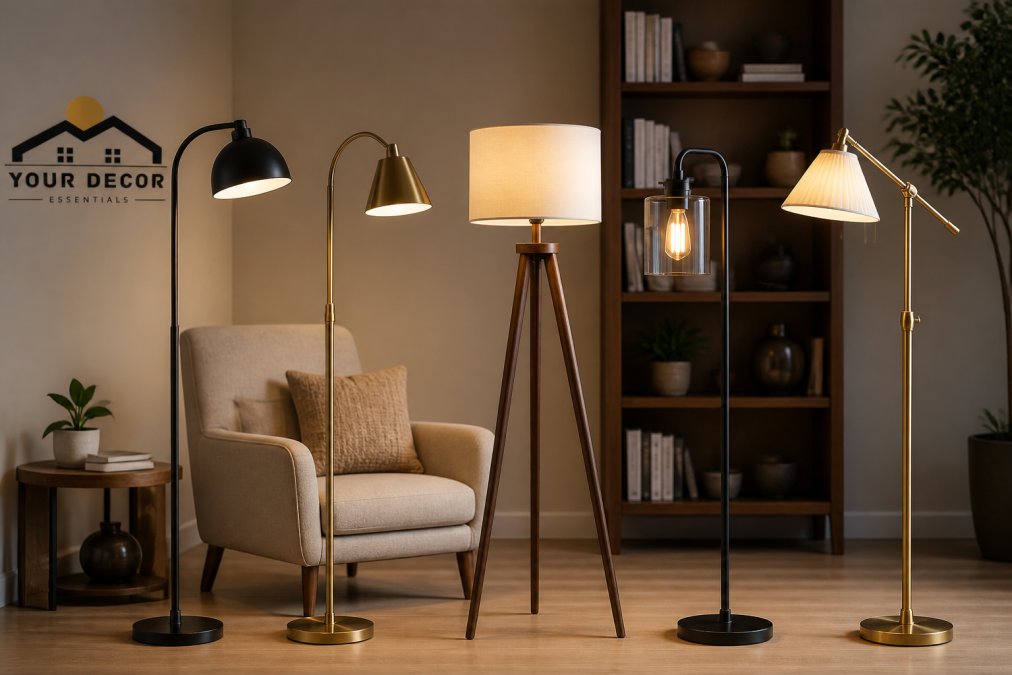
The right floor lamp turns a dead corner into the best seat in the house. This guide compares five floor lamps built for modern reading nooks, from budget task lights to sculptural statement pieces. Each pick solves a different problem: tight footprints, warm ambient glow, or precision LED output for long reading sessions.
A reading nook fails for one of two reasons. Either the light is too dim and your eyes fight the page, or the lamp is too bulky and swallows the corner you were trying to save. The five floor lamps below fix both problems, and they look good doing it.
Here's the short version before the details:
| Lamp | Price | Best For | Key Feature |
|---|---|---|---|
| IKEA Ranarp | $89.99 | Adjustable task light on a budget | Fully adjustable arm and head |
| Article Oslo | $145.00 | Small corners | Minimalist metal frame, weighted base |
| VUUE Gigi | $399.00 | Statement styling | Sculptural architectural silhouette |
| Crate & Barrel Toro | $299.00 | Organic modern rooms | Sustainable wood with metal accents |
| DWR Sten | $450.00 | Serious readers | Precision swivel head, integrated LED |
IKEA Ranarp Floor Lamp: Best Adjustable Task Light Under $100
What most guides miss is the construction. Powder-coated steel at this price point is rare, and it's why the lamp still looks sharp after years of daily use. The tradeoff is assembly. You'll spend 20 minutes with an Allen wrench, and the instructions are mostly pictures.
Article Oslo Floor Lamp: Best Minimalist Option for Small Corners
Where it falls short: color options are limited. If your room leans warm and textured, the Oslo's cool minimalism may read as a little clinical. Pair it with a textured linen shade or a wood side table to soften the look.
VUUE Gigi Floor Lamp: Best Sculptural Statement Piece
That's the tension with statement lighting: it solves a styling problem, not a lighting problem. Know which one you actually have.
Crate & Barrel Toro Wood Floor Lamp: Best Organic Modern Design
At $299.00, the Toro sits in the middle of this list, and for many rooms that's the sweet spot.
Design Within Reach Sten Floor Lamp: Best Precision LED for Serious Readers
The catch is the $450.00 price tag. This is an investment lamp, and it only makes sense if reading is a daily habit rather than an occasional one. For everyone else, the Ranarp or the Oslo gets you most of the way there for a fraction of the cost.
How to Choose the Right Color Temperature for Reading
Color temperature is measured in Kelvin, and it decides whether your reading light feels harsh or comfortable. For reading nooks, aim for 2700K to 3000K. That range gives you a warm glow that's easy on the eyes without the yellow cast of older incandescent bulbs.
Here's the practical breakdown:
- 2700K: Warm, cozy, best for evening reading and relaxing
- 3000K: Soft white, the sweet spot for most reading nooks
- 4000K and above: Cool white, better for workshops and offices than cozy corners
The other number that matters is lumens, which measures brightness. For focused reading, look for a lamp that puts out roughly 800 lumens at the page. Pair that with a dimmable LED bulb and you can dial the light down for ambient evenings and up for serious reading.
Why 3000K Reduces Eye Strain During Long Sessions
Most guides stop at the Kelvin chart. The mechanism matters more. Your eye's ciliary muscle stays contracted when you read under cool, high-contrast light, and that sustained tension is what produces the burning, tired feeling after an hour. Warm light in the 2700K-3000K band keeps pupil dilation steadier, so the muscle works less. That is why a 3000K task lamp feels easier on the eyes at hour two than a 5000K office light, even when both measure the same brightness.
Two more specs separate a comfortable reading lamp from a fatiguing one:
- CRI (Color Rendering Index): Look for 90 or higher. A low-CRI LED makes black text on white paper look slightly gray or green, which forces your eye to work harder to resolve letterforms. A CRI of 90+ keeps the page looking like a page.
- Flicker: Cheap LEDs can flicker at a rate you don't consciously see but your eye still registers. Look for a lamp marketed as flicker-free or with a driver rated for low flicker. This is one of the most common hidden causes of reading fatigue.
Dimming: The Control That Ties It Together
Dimmable LED technology has come a long way, and it's now the default choice for reading lamps. It runs cool, lasts for years, and gives you control over both brightness and mood. If you're buying a new lamp, make dimming a requirement rather than a nice-to-have.
Not all dimming is equal. A lamp that dims to 10 percent lets you drop to a soft evening glow; one that only dims to 50 percent stays too bright for late-night reading. Check the low end of the dimming range, not just the high end. If you want the modern-decor bonus, look for a lamp with app-controlled or smart-home dimming so you can set a reading scene and a wind-down scene without leaving your chair.
Floor Lamp Placement Tips for Small Spaces
Placement decides whether a lamp works, and small spaces leave no room for error. The rule that matters most: put the lamp to the side of your chair, not behind it and not in front. Light should come over your shoulder and land on the page without casting a shadow from your own hand.
A few more placement rules that save small corners:
- Keep the shade at roughly eye level when you're seated, so the bulb stays out of your line of sight
- Leave at least a few inches between the lamp and the wall to avoid a hot spot and trapped heat
- Use a weighted base or tuck the lamp behind a side table if foot traffic passes nearby
- Angle directional light toward the page, and use diffused light for the rest of the room
Ergonomic Placement by Reading Posture
Most guides treat placement as a styling question. It is really a posture question, because the right lamp height and angle change with how you sit. Here is how to match the lamp to the way you actually read.
Upright in an armchair. The shade should sit just above your shoulder line, roughly 40 to 44 inches from the floor for an average seated adult. Aim the beam down at about a 45-degree angle toward the page. This keeps the light source out of your peripheral vision and puts the brightest pool exactly where the text is.
Reclined or lounging. When you lean back, your eyes drop and the page moves closer to your lap. A lamp set for upright reading will now throw light past the page and into your face. Fix it by lowering the head or choosing an adjustable arm you can pull forward and down. This is where an arc or swing-arm lamp earns its keep over a fixed one.
Reading in bed or on a chaise. The page sits lower and farther from the lamp. You need a longer reach and a wider beam, not a tighter one. A lamp with a 12- to 18-inch adjustable reach lets you bring the light to the page instead of moving the page to the light.
Cross-legged on a low chair or floor cushion. Your eye height drops by a foot or more. A standard floor lamp will now be above your head and behind you, casting your own shadow across the page. The fix is a lamp with a head that tilts down past horizontal, or a shorter task lamp on a side table.
The Shadow Test
Before you commit to a spot, run a 30-second check. Sit in your reading position, hold a book where you'd actually hold it, and look at the page. If you see your own hand's shadow across the text, the lamp is too far behind you or too high. If you see the bright bulb reflected in the page or in your glasses, it is too far in front. Move the lamp in small increments until the page is evenly lit and the source is invisible. That single test catches more placement errors than any measurement.
Layering matters too. One lamp doing all the work creates harsh contrast between the bright page and a dark room, which tires your eyes. Add a second, softer light source, even a small table lamp, so your eyes aren't constantly adjusting between bright and dark.
Space-saving designs help here. Slim bases, adjustable arms, and narrow shades let a floor lamp fit where a bulky one can't. Measure your corner before you buy, and check the lamp's floor footprint against the space you actually have.
For a modern look, mix materials and finishes. A matte black frame next to a brass finish, or a wood lamp beside a resin accent piece, adds the kind of visual interest that makes a corner feel designed rather than furnished.
Frequently Asked Questions
What should I look for in a floor lamp for reading?
Focus on adjustability, light output, and color temperature. A lamp with an adjustable arm or swivel head lets you direct light exactly where you need it. Look for at least 800 lumens for comfortable reading, and choose a color temperature between 2700K and 3000K for warm, easy-on-the-eyes illumination. A weighted base also prevents tipping in small spaces.
How do I choose the right color temperature for reading?
For reading, aim for 2700K to 3000K. This range produces a warm glow that reduces eye strain during long sessions. Cooler temperatures above 4000K can feel harsh and disrupt your body's natural wind-down rhythm in the evening. If you read during the day, 3500K works well. Dimmable LED bulbs let you shift between tasks and relaxation without changing fixtures.
Are LED floor lamps better for reading than incandescent?
LEDs run cooler, last longer, and use less energy than incandescent bulbs. Many modern LED floor lamps offer dimmable settings and consistent color temperature, which helps maintain comfortable reading light. Incandescent bulbs produce a warm glow but generate heat and burn out faster. For a reading nook, a dimmable LED with a 2700K to 3000K rating gives you the best balance of comfort and efficiency.
How do I style a floor lamp in a small reading nook?
Place the lamp behind or beside your chair so the light falls over your shoulder, not in your eyes. Choose a lamp with a small floor footprint to save space. An arc floor lamp can extend light over a chair without taking up room beside it. Pair it with a side table and a textured throw to create a layered, inviting corner that feels intentional.