 listicle
Z Gallerie Alternative for Abstract Art: 8 Best Picks
Table of Contents
- Why Shoppers Seek a Z Gallerie Alternative for Abstract Art
- Quick Comparison: Best Abstract Art Sources at a Glance
- How We Evaluated Each Abstract Art Source
- 1. CB2: The Closest Match for Modern Glam
- 2. Saatchi Art: Original Works from Independent Artists
- 3. UGallery: Vetted Artists and Buyer Protection
- 4. World Market: Budget-Friendly Eclectic Finds
- 5. Artsy: Investment-Grade Pieces from Global Galleries
- 6. Zatista: A Balanced Mid-Range Marketplace
- 7. Artfinder: Direct-to-Artist Budget Options
- 8. Wayfair: Massive Selection for Every Budget
- How to Style Abstract Sculptures in a Living Room
- Where to Find Large-Scale Abstract Wall Art That Fits Your Space
- Frequently Asked Questions
Last Updated: September 9, 2026
Finding a Z Gallerie alternative for abstract art doesn't have to mean settling for generic, mass-produced prints. Shoppers who love that gallery-like, modern glam aesthetic often hit a wall when they discover the original retailer is out of budget, out of stock, or simply lacking the specific piece they pictured above the sofa. The good news is that the market for contemporary abstract wall decor has expanded dramatically, offering everything from investment-grade originals to budget-friendly canvases that deliver the same visual impact.
The real challenge isn't finding abstract art. It's finding the right piece that transforms your space rather than just filling wall space. The 8 sources we break down here range from $30 canvas sets to gallery-level originals, so your budget should not limit your options.
Why Shoppers Seek a Z Gallerie Alternative for Abstract Art
The appeal of Z Gallerie's aesthetic is clear: bold, oversized abstract canvases, metallic accents, and a polished, contemporary glam look that feels curated rather than accidental. Yet many shoppers find themselves searching elsewhere because of limited inventory turnover, frequent stockouts on popular pieces, and price points that climb quickly for large-scale statement art.
A common frustration is the "sameness" problem. When a retailer sells the same few abstract designs nationwide, there is a real risk your stylish new focal point shows up in a friend's living room six months later. Shoppers increasingly want pieces with a story, whether that means supporting an independent artist or owning a one-of-a-kind original. The alternatives below solve for these gaps, offering everything from hand-painted originals to high-quality reproductions with textured layers that mimic the depth of fine art.
Quick Comparison: Best Abstract Art Sources at a Glance
This table summarizes each source we evaluated, so you can quickly narrow down where to start your search based on your priorities.
| Source | Starting Price | Best For | Key Trade-Off |
|---|---|---|---|
| CB2 | $129 | Modern glam, consistent aesthetic | Higher cost for large pieces |
| Saatchi Art | $100 | Original, one-of-a-kind works | Shipping varies by artist |
| UGallery | $200 | Quality assurance, vetted artists | Premium price point |
| World Market | $40 | Budget-friendly, eclectic finds | Lower material quality |
| Artsy | Contact for pricing | Investment-grade, global galleries | Intimidating for casual shoppers |
| Zatista | $150 | Mid-range original art | Smaller inventory |
| Artfinder | $50 | Direct-to-artist budget options | Shipping costs vary |
| Wayfair | $30 | Massive selection, reviews | Inconsistent quality |
How We Evaluated Each Abstract Art Source
We did not just compare price tags. Each source was assessed on four criteria that matter when you are buying art online without seeing it in person.
First, we looked at authenticity and originality. Can you buy a true original, or are you getting a reproduction? Second, we weighed quality control, including artist vetting, buyer protection, and return policies. Third, we considered aesthetic range, because a retailer that only sells coastal blue abstracts will not help you if your room calls for charcoal tones with metallic accents. Finally, we evaluated practical logistics like shipping reliability, framing options, and customer support. These criteria mirror the guidance found in the Federal Trade Commission's rules on online purchases and buyer protections, which every shopper should understand before committing to a large purchase.
1. CB2: The Closest Match for Modern Glam
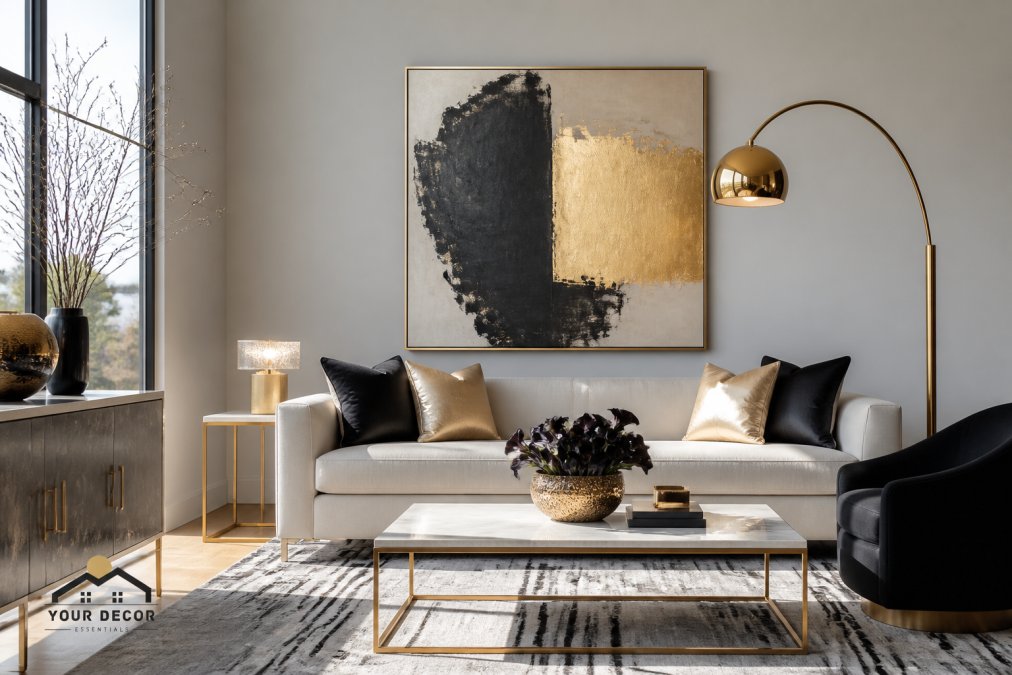
CB2 is the strongest direct stylistic replacement for that polished, contemporary look. Their collection leans heavily into large-scale abstract canvas prints, often framed in matte black or brushed metal, which pairs perfectly with glam interior design styles that favor bold contrast and angular structures.
What sets CB2 apart is consistency. Their furniture, lighting, and art all share a cohesive design language, which removes the guesswork when you are styling an entire room. You can trust that a CB2 canvas will complement a CB2 sofa. They also run frequent collaborations with independent artists, giving their catalog a freshness that big-box retailers lack. The trade-off is price: larger statement pieces climb quickly, and the high-end materials justify the cost.
2. Saatchi Art: Original Works from Independent Artists
If your priority is owning a genuine original rather than a reproduction, Saatchi Art is the most direct route. The platform connects you with thousands of independent artists worldwide, offering original abstract paintings, mixed media works, and limited edition prints that you will not find anywhere else.
The standout feature is direct communication. You can message an artist, ask about their process, request a different size, or commission a custom piece in a specific color palette. For those worried about the colors clashing with existing furniture, this is invaluable. Saatchi Art also curates collections by color and style, which helps narrow down the overwhelming volume. The main drawback is logistics: because works ship directly from artists, delivery times vary significantly depending on location and whether the piece is being created to order.
3. UGallery: Vetted Artists and Buyer Protection
UGallery solves the biggest anxiety of buying original art online: quality uncertainty. Every artist on the platform goes through a strict vetting process, and the gallery backs each sale with buyer protection and satisfaction guarantees. If the piece arrives and does not match your expectations, you have recourse.
This makes UGallery an excellent middle ground. You get the authenticity of original abstract art without the risk of buying from an unknown seller on a general marketplace. Their catalog skews toward residential and commercial spaces, with many abstract styles and color palettes, from fluid forms to high-contrast geometric compositions. Professional framing options are available at checkout, which simplifies the process. The premium price point reflects the curation and safety net, making it best for buyers who value peace of mind over bargain hunting.
4. World Market: Budget-Friendly Eclectic Finds
World Market is where you go when you want visual impact without a significant investment. Their abstract canvas and framed art start at accessible price points, and the style leans eclectic and globally inspired, offering something different from the standard modern aesthetic.
The strength here is the blend of affordability and trend-awareness. World Market tracks what is current in interior design, so you can find textured wall paintings, gold and black combinations, and bohemian-influenced pieces that feel fresh. Frequent sales and promotional discounts make it easy to experiment with a bold piece without a major commitment. Physical retail locations are a genuine advantage, letting you see the colors and texture in person before buying. The honest limitation is material quality; these are decorative pieces, not heirloom investments, and the canvas and frames will not match the durability of higher-end retailers.
5. Artsy: Investment-Grade Pieces from Global Galleries
Artsy operates at the opposite end of the spectrum from World Market. This platform aggregates inventory from professional galleries, auction houses, and art fairs globally, giving you access to work from established and emerging artists that you would otherwise need to travel to see.
The search functionality is exceptional. You can filter by price, size, medium, and style, and each listing includes artist biographies and market context. This is the right place if you view abstract art as an investment or want a piece with provenance and resale potential. However, for a casual decor shopper, Artsy can feel overwhelming and impersonal. You are not just picking a canvas to match your throw pillows; you are navigating a professional art market. Pricing is typically available on request, reflecting the gallery model.
6. Zatista: A Balanced Mid-Range Marketplace
Zatista occupies the sweet spot for many homeowners: original art at mid-range price points with a user-friendly experience. The platform offers a curated selection from emerging and established artists, focusing on works that are accessible both in price and in style.
Navigation is straightforward, with browsing by style, color, and subject matter that does not require art-world expertise. Each listing includes artist profiles and background information, adding a personal connection that mass retailers cannot replicate. Secure payment and shipping logistics are handled professionally. The one limitation is inventory size; compared to Saatchi Art or Artsy, Zatista has a smaller pool of works, so you may need patience if you are searching for something very specific.
7. Artfinder: Direct-to-Artist Budget Options
Artfinder is the best entry point for buyers who want to support independent artists while keeping a firm grip on their budget. With original works starting at accessible price points, this platform proves that owning original abstract art is possible without gallery-level spending.
The direct-to-artist model means a larger share of your money goes to the creator, and the variety of mediums is impressive, spanning oil, acrylic, and mixed media. Personalized recommendations based on your browsing history help surface pieces you might otherwise miss. A 14-day money-back guarantee provides a safety net for online purchases. The main caveat is that shipping costs vary significantly by artist, so a low-priced artwork from overseas may carry a higher delivery fee that changes the overall value calculation.
8. Wayfair: Massive Selection for Every Budget
Wayfair is the volume play. Their inventory of abstract canvas and framed art is enormous, spanning virtually every style, size, and color combination imaginable. If you cannot find it at Wayfair, it likely does not exist in the mass market.
The most useful feature is the user-generated content. Every product page includes customer photos and reviews, showing how the piece actually looks in a real home rather than a stylized studio shot. This is critical for judging scale and color accuracy. Advanced filtering by size, color, and orientation helps you zero in on the exact dimensions your wall requires. The trade-off is consistency: because Wayfair aggregates thousands of brands, quality varies widely. Read reviews carefully and expect to sort through some lower-quality options to find the gems.
How to Style Abstract Sculptures in a Living Room
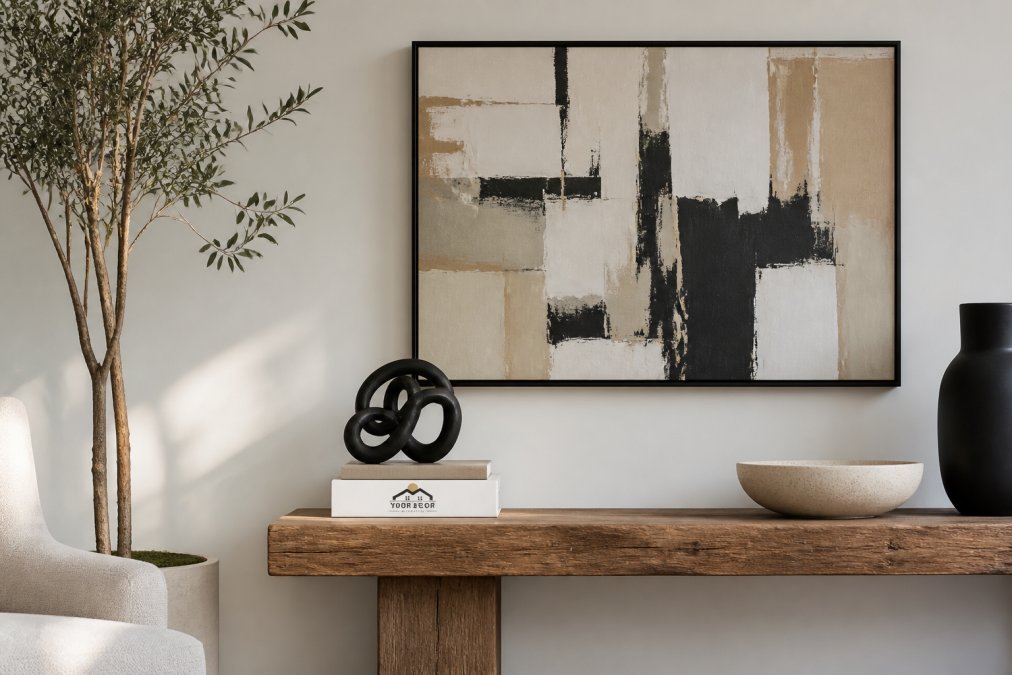
Knowing how to style abstract sculptures in a living room is just as important as choosing the wall art. A well-placed sculpture adds a three-dimensional layer that flat canvas cannot achieve, creating nuanced shadows and visual interest at eye level or on shelves. But to truly capture the gallery-like, modern glam aesthetic that draws shoppers to Z Gallerie, you need to move beyond generic placement rules and think about material, texture, and the specific furniture style you're working with.
Match the Sculpture's Material to Your Room's Dominant Texture. The most common styling mistake is buying a sculpture that clashes with the room's existing material language. In a glam or modern space with velvet sofas and brushed metal accents, a matte, raw-edge resin sculpture will look out of place. Instead, look for pieces with a high-gloss finish, metallic leafing, or a polished ceramic surface that reflects light and echoes the sheen of your furniture. Conversely, in a mid-century modern room with leather and teak, a smooth, matte stone or dark bronze sculpture will feel more grounded and intentional than a shiny gold piece.
Scale the Sculpture to the Surface, Not the Wall. While wall art needs to fill a vertical plane, a sculpture needs to anchor a horizontal one. A good rule of thumb is to choose a sculpture that occupies at least one-third of the width of the console, mantel, or coffee table it sits on. For a standard 60-inch console, that means a piece that is 20 to 24 inches wide. Height is equally critical: the sculpture should be tall enough to break the sightline of the surface but not so tall that it competes with the wall art above it. If you are placing a sculpture beneath a large abstract canvas, keep the sculpture's height under 18 inches to create a clear visual hierarchy.
Create a Vignette with a Material Contrast. Instead of placing a single sculpture in the center of a surface, style it as part of a trio that tells a story. The most effective vignettes combine three elements of varying heights and materials: a tall, vertical sculpture, a stack of books or a small objet, and a low, organic element like a ceramic bowl. The key is contrast. If your abstract canvas is smooth and flat, introduce a sculpture with a heavily textured surface, such as a hand-painted resin piece with visible brushstrokes. If your art is textured and busy, opt for a clean, minimalist sculpture with a smooth, reflective finish to give the eye a place to rest.
Style for the Room's Function. A living room designed for conversation requires a different approach than one designed for lounging. In a conversation-focused seating arrangement, keep sculptures at or below eye level for seated guests, placing them on low consoles or side tables to avoid blocking lines of sight. In a more relaxed, media-focused room, you have more freedom to place a larger, statement sculpture on a high mantel or a tall floor pedestal in a corner, drawing the eye upward and adding a gallery-like feel to the space.
For those who want a curated, designer-led approach without the guesswork of mixing materials and scales, exploring a collection that pairs abstract wall art with complementary resin sculptural accents can simplify the entire process.
Where to Find Large-Scale Abstract Wall Art That Fits Your Space
Large-scale abstract wall art presents a unique challenge: the bigger the piece, the fewer options available and the higher the price. But the visual payoff of an oversized canvas is unmatched, creating a true gallery moment that anchors the entire room. To navigate this category successfully, you need to understand the material differences between what you're buying and how to match your budget to the right source.
Understand the Material Difference: Canvas Print vs. Hand-Painted vs. Mixed Media. Before you shop, know what you're paying for. A large-format canvas print is a reproduction of an original image, printed on canvas and stretched over a frame. These are the most affordable and offer consistent, crisp imagery, but they lack the physical depth of paint. A hand-painted piece, even one that is not an original, has visible brushstrokes and texture that catch light and add a layer of realism. Mixed media works incorporate materials like metal leaf, plaster, or fabric, creating a sculptural relief that changes with the viewing angle. For a glam aesthetic, look for hand-painted pieces with metallic accents or mixed media with gold or silver leaf, as these will mimic the depth and richness of a high-end gallery piece far better than a flat print.
Budget-Specific Sourcing Strategies. Where you shop for a large piece should be dictated by your budget and your tolerance for risk.
- Under $300: Focus on large-format canvas prints from retailers like Wayfair or World Market. Filter strictly by size and read the customer reviews for comments on 'texture' and 'quality.' A common pattern is that prints in this price range are smooth and flat, so if you want texture, look for terms like 'textured wall painting' or 'hand-painted finish' in the product title. Be prepared to buy a frame separately, as many budget options come unframed.
- $300 to $800: This is the sweet spot for high-quality hand-painted pieces and limited-edition prints from marketplaces like Saatchi Art or Zatista. You can filter by size and medium to find an original acrylic or oil painting that already has the texture you want. At this price, you are paying for the artist's time and the uniqueness of the piece, so you can expect a true one-of-a-kind work that will not be replicated in a neighbor's home.
- Over $800: This is the investment tier. Platforms like UGallery and Artsy offer vetted originals from established artists, often with provenance and certificates of authenticity. Here, you are not just buying decor; you are buying an asset. The material quality is at its peak, with gallery-grade canvases, professional framing options, and archival-quality paints.
Measure for the 'Gallery Wall' Effect, Not Just the Wall. The 60 to 75 percent rule is a solid starting point, but for a true glam statement, you should consider the entire wall as a canvas. If you have a large, blank wall, a single oversized piece that takes up 75 percent of the width is the goal. However, if you are working with a wall that has a console or a sideboard beneath it, the art should be sized relative to the furniture, not the entire wall. The art should be no wider than the furniture piece below it, and ideally, it should be about 75 percent of that width. This creates a cohesive, designed look rather than a floating piece of art.
The Custom Commission Route for Unusual Spaces. For walls with unusual dimensions, such as a two-story foyer or a long, narrow hallway, a custom commission is often the best solution. Both Saatchi Art and UGallery allow you to contact artists directly to request a specific size or color palette. This ensures a perfect fit and gives you a piece with a story. The lead time is typically four to eight weeks, so plan ahead. This route is more expensive than buying a ready-made piece, but it eliminates the compromise of forcing a standard size to work in your space.
For those seeking a curated, designer-led approach without the gallery markup, exploring a collection that pairs large-scale abstract art with complementary sculptural accents can simplify the entire process.
Frequently Asked Questions
What are the trends in abstract art for 2026?
For 2026, expect to see a continued focus on textured layers and mixed media that add depth beyond a flat print. Fluid forms with bold contrast remain popular, especially in charcoal tones with metallic accents like gold for a glam interior. Oversized, large-scale pieces are still a top choice for creating a gallery moment in a living room. Buyers are also leaning toward hand-painted works and bespoke art that feel personal rather than mass-produced, plus sustainable sourcing when possible.
What is the 70/30 rule in art?
The 70/30 rule is a styling guideline suggesting that 70% of your decor should be in a dominant style or color palette, with the remaining 30% reserved for contrasting or accent pieces. Applied to abstract art, it means your statement piece should harmonize with the majority of the room's existing furniture and tones. The 30% can then be used for a bold, sculptural accent or a vibrant canvas that adds visual impact without overwhelming the space.
How can I style abstract sculptures with wall art?
To style abstract sculptures with wall art, first anchor the room with a large-scale canvas as the focal point. Then, place a smaller sculpture on a nearby console or side table, ensuring it does not block the artwork's view. Keep a consistent material story, such as pairing a resin sculpture with a textured painting that shares similar charcoal or gold tones. Leave negative space around both objects to let each piece breathe and create a curated gallery moment.
Where can I find affordable large-scale abstract canvas art?
Affordable large-scale abstract canvas art is available at retailers like World Market and Wayfair, with entry prices starting around $40 and $30, respectively. Platforms like Artfinder also offer budget-friendly originals from independent artists starting near $50. For a balance of price and quality, check Zatista for mid-range works around $150. Always measure your wall space first and verify the exact dimensions of the canvas before purchasing.