 blog
blog
Minimalist Sofa Without Arms: Pros, Cons & Buying Guide
Table of Contents
- What Is a Minimalist Sofa Without Arms?
- Armless Sofa vs Sofa with Arms: Key Differences
- The Pros of Choosing an Armless Sofa
- The Cons and Challenges to Consider
- Is an Armless Sofa Comfortable for Everyday Use?
- Maximizing Space: An Armless Sofa for a Small Living Room
- How to Style an Armless Sofa in Your Living Room
- Decision Framework: Is an Armless Sofa Right for You?
- Conclusion: Weighing the Pros and Cons
- Frequently Asked Questions
Last Updated: October 7, 2026
What Is a Minimalist Sofa Without Arms?
A minimalist sofa without arms is a low-profile seating piece built with a clean back and no side armrests, so its full width becomes usable seat. The minimalist sofa without arms pros and cons come down to one trade-off: you gain space and a lighter look, but you give up built-in side support. This style works best in smaller rooms where every inch of floor space counts.
The design itself is simple. No armrests, often raised legs, and a slim back. That combination keeps the silhouette low and airy.
Here's why that matters. Arms add width to a sofa without adding seating. A three-seat sofa with arms can measure 84 inches wide, while an armless version of the same seat count often lands near 72 inches. That difference is real floor space you can use.
So what do you actually gain and lose? Let's break down the differences, then look at who this sofa suits.
Armless Sofa vs Sofa with Arms: Key Differences
An armless sofa and a sofa with arms differ in three main ways: total width, visual weight, and side support. The seat count can be identical, yet the armless version takes up less room and reads as lighter in a small space. Here is the specific breakdown.
Comparing Space and Visual Weight
Arms are the bulkiest part of most sofas. They push the frame outward on both sides, which eats into clearance and makes a room feel packed. The width difference is measurable, not just visual.
A typical armrest adds 5 to 10 inches of width per side. On a three-seat sofa, that is 10 to 20 inches of extra frame with zero extra seating. Here is how the same three-seat capacity plays out across arm styles:
| Arm Style | Typical Width (3 seats) | Width Per Side | Trade-Off |
|---|---|---|---|
| Armless | 68-76 inches | 0 inches | Most floor space, no side support |
| Slim or track arms | 76-84 inches | 4-6 inches | Some support, moderate footprint |
| Standard or rolled arms | 84-96 inches | 8-10 inches | Most support, heaviest visual weight |
Those ranges are not brand-specific, they reflect common frame construction. The takeaway: choosing armless over standard arms can free up roughly 1 to 2 feet of total width, which is often the difference between a clear walkway and a cramped one.
The lighter look is not just about size. With no arms blocking the view, the eye travels across the room instead of stopping at the sofa. In a small living room, that visual openness can make the space feel larger even when the square footage has not changed.
Comfort and Support Trade-Offs
Support is where arms earn their keep. An armrest gives you a place to lean, rest a drink, or prop a pillow. Take that away and you rely on the back and cushions alone.
For sitting upright and chatting, that is fine. For long lounging sessions, some people miss the side support. The difference shows up in how you use the sofa:
- Upright sitting: Arms contribute little. The seat and back do the work.
- Leaning to one side: Arms provide a natural brace point. Without them, you shift more.
- Reclining or napping: Arms help you stay positioned. Armless designs let you roll or slide.
- Getting up: Arms give you something to push against. Armless sofas require more core engagement to stand.
The fix is simple: add a pillow against the back or a small side table for drinks. More on that below.
How Arm Height and Depth Affect Usable Space
Arm height matters as much as arm width. A low arm under 24 inches lets you lean back and rest an elbow, but it does not contain cushions or block drafts. A high arm over 28 inches gives more support but adds visual bulk.
Arm depth also affects how much seat you actually get. On an armed sofa, the arm structure often overlaps the seat cushion by an inch or two on each side. That means a "three-seater" with arms may only offer two full-width seating positions plus two narrower end spots. An armless sofa gives every position the full seat width, which matters when three adults share the sofa.
The Pros of Choosing an Armless Sofa
The main pros of an armless sofa are space savings, flexible placement, and a clean modern look. For a small space, these benefits often outweigh the missing armrests.
Space Efficiency and Room Layout Flexibility
Floor space is the big win. An armless sofa frees up inches on both sides, which you can spend on a walkway, a side table, or just breathing room.
That flexibility changes how you arrange a room. You can float the sofa in the middle of a living room, tuck it against a wall, or angle it into a corner. Furniture arrangement gets easier when the piece is not locked into one spot.
A compact sofa also moves around more easily. Lighter frames and raised legs make it simpler to reposition when you want a new layout.
Design Versatility and Modern Aesthetics
The look is the other draw. A low back and slim profile fit a minimalist layout without fighting the rest of the room.
This style plays well with lots of design styles:
- Modern and contemporary: clean lines, neutral upholstery
- Scandinavian: light fabric, raised wood legs
- Japandi: low profile, natural tones, simple shapes
Because there is less frame to notice, the upholstery and accent pieces do the talking. A textured throw or a bold pillow stands out more on an armless sofa than on a heavy one.
The Cons and Challenges to Consider
The cons of an armless sofa center on support, ergonomics, and durability. These are real limits, not dealbreakers, but you should know them before you buy. Most discussions stop at "no arms means no support", here is what that actually means for your body and your household.
Limited Support and Ergonomics
No arms means no side support. If you like to lean into a corner while reading or watching TV, an armless sofa will not give you that. But the ergonomic effects go deeper than missing a leaning spot.
Posture and sitting position. A sofa with a low back and no arms can encourage slouching if the cushions are soft. Without an arm to brace against, your torso has to stabilize itself. For short sitting sessions, that is fine. For hours of sitting, it can lead to lower back fatigue.
Body type matters. Taller sitters often find armless sofas more comfortable because their arms rest naturally at their sides or on their lap. Shorter sitters may feel the missing arms more, because armrests give them a place to rest their elbows at a comfortable height. If you are under about 5'4", test an armless sofa before buying.
Getting up and down. Arms give you something to push against when standing. Without them, you rely more on your legs and core. For older adults or anyone with mobility concerns, this is a genuine drawback. A firm seat height of 18 to 20 inches makes standing easier, but it does not fully replace an armrest.
Reclining and lounging. This is where armless sofas fall shortest. Without arms, there is nothing to stop you from sliding sideways when you recline. A chaise section or a sofa bed solves this better than an armless sofa alone.
For everyday sitting, most people adapt within a week. For reclining, you may want a sofa bed or a chaise instead.
Practical Ways to Add Support to an Armless Sofa
You do not have to accept the support gap. A few additions replace most of what arms provide:
- Bolster pillows: A cylindrical bolster along the back or side gives you a lean point without adding frame width.
- Firm lumbar cushions: These support your lower back and reduce slouching on soft seats.
- C-tables or slim side tables: These give you a surface for drinks, remotes, and books at armrest height.
- Modular end pieces: Some armless sofas accept a corner or end unit that adds a low arm later if you change your mind.
- Weighted throws: A heavy throw draped over the end can create a soft barrier that keeps cushions in place.
A common pattern is to start with a bolster and a C-table, then add a modular end piece only if you find you miss arms more than expected.
Durability and Household Suitability
Open sides take more wear. Without arms to absorb contact, the edges of the seat cushions get more use, especially in a busy home. The exposed cushion edges are the first place upholstery shows age.
If you have kids or pets, think about upkeep. Tight-weave fabric and leather hold up better than loose weaves. A removable slipcover makes cleaning far easier.
- Kids: expect spills on the open seat edges, and expect cushions to slide because there are no arms to contain them. A non-slip rug pad under the cushions helps.
- Pets: claws catch on loose fabric; leather and tight weaves resist better. Armless sofas also give pets a clear path to jump onto the seat, which can accelerate wear on the front edge.
- Shared seating: no armrests means less personal space between sitters. Three adults on an armless sofa will touch shoulders unless the sofa is at least 76 inches wide.
Cleaning and Long-Term Maintenance
Armless sofas are actually easier to clean in some ways and harder in others. With no arms, there are fewer crevices for crumbs and dust to collect. But the exposed cushion edges and the open back mean more surface area is visible and more likely to show stains.
A practical maintenance routine:
- Vacuum the seat and back cushions weekly with a brush attachment.
- Rotate and flip reversible cushions monthly to even out wear.
- Spot-clean spills immediately, especially on light fabrics.
- Use a fabric protector spray on tight-weave upholstery to buy time between cleanings.
If you choose a removable cover, check that it is machine washable before buying. Some covers are dry-clean only, which adds cost and inconvenience over the life of the sofa.
None of this rules out an armless sofa. It just means you should pick durable upholstery, plan for cushion movement, and clean on a schedule.
Is an Armless Sofa Comfortable for Everyday Use?
Yes, an armless sofa is comfortable for everyday sitting when the seat is firm and the back is tall enough to support your shoulders. The missing arms matter most for lounging, not for normal use.
Here is the honest version. Sitting upright to talk, eat, or work on a laptop feels fine. The seat does the work, not the arms.
Where it falls short is the long, lazy evening. No armrest means nowhere to lean, so you end up shifting around more.
A few practical fixes help:
- Add a firm lumbar pillow for back support
- Use a small side table or C-table for drinks and remotes
- Choose a cushion with medium-firm foam over soft down
- Keep a throw handy to prop behind you
If you mostly sit upright, you will barely notice the missing arms. If you sprawl, test one first or add support yourself.
Maximizing Space: An Armless Sofa for a Small Living Room
An armless sofa for a small living room is often the best seating choice, because it delivers more usable seats in less width. The trick is measuring before you buy, not after.
Start with your room dimensions. Measure the wall or zone where the sofa will sit, then subtract clearance for walking and for any side table.
A simple layout example:
- Room width: 10 feet
- Sofa width: 72 inches (6 feet)
- Side clearance: 2 feet on each end
- Result: a clear walkway and room for a slim side table
Compare that to an armed sofa at 84 inches. Suddenly your clearance shrinks and the room feels tight.
For a small space, an armless compact sofa also lets you add a second seat or an accent chair without crowding. That is the real payoff: more seating capacity in the same footprint.
How to Style an Armless Sofa in Your Living Room
Styling an armless sofa comes down to adding the structure the frame lacks. Pillows, a throw, and a side table replace the function the arms would have provided.
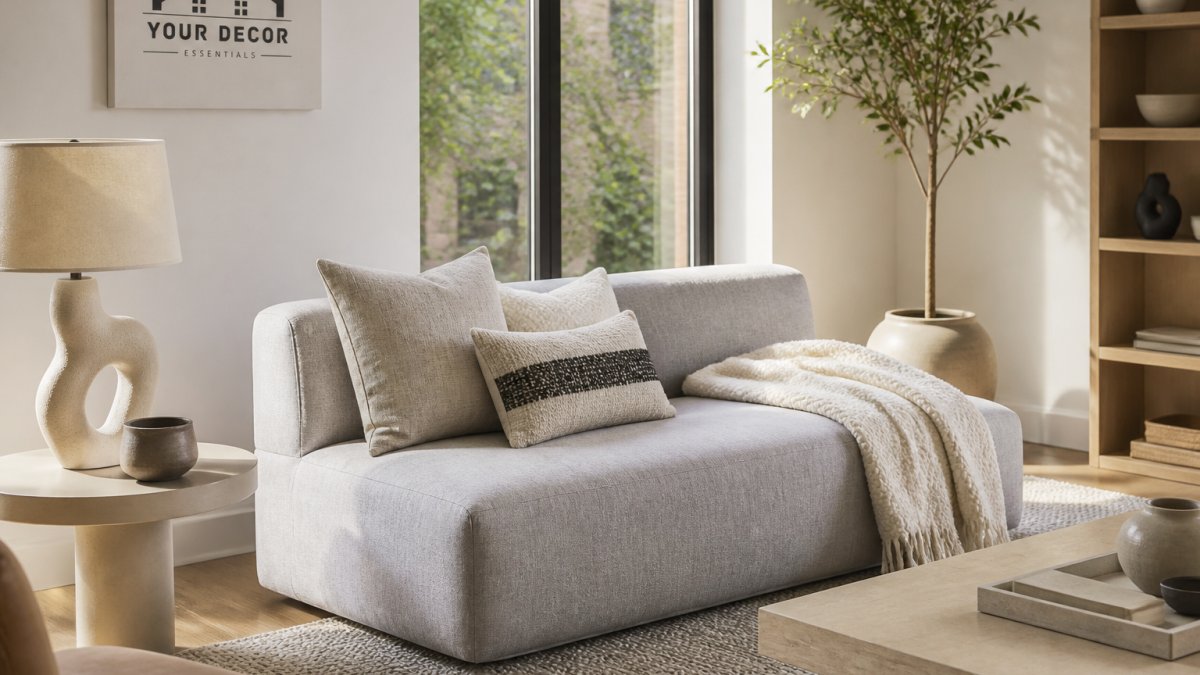
Start with pillows. Two or three in mixed textures give the back a finished look and add support.
Then layer in a throw. Drape it over one end to soften the straight lines.
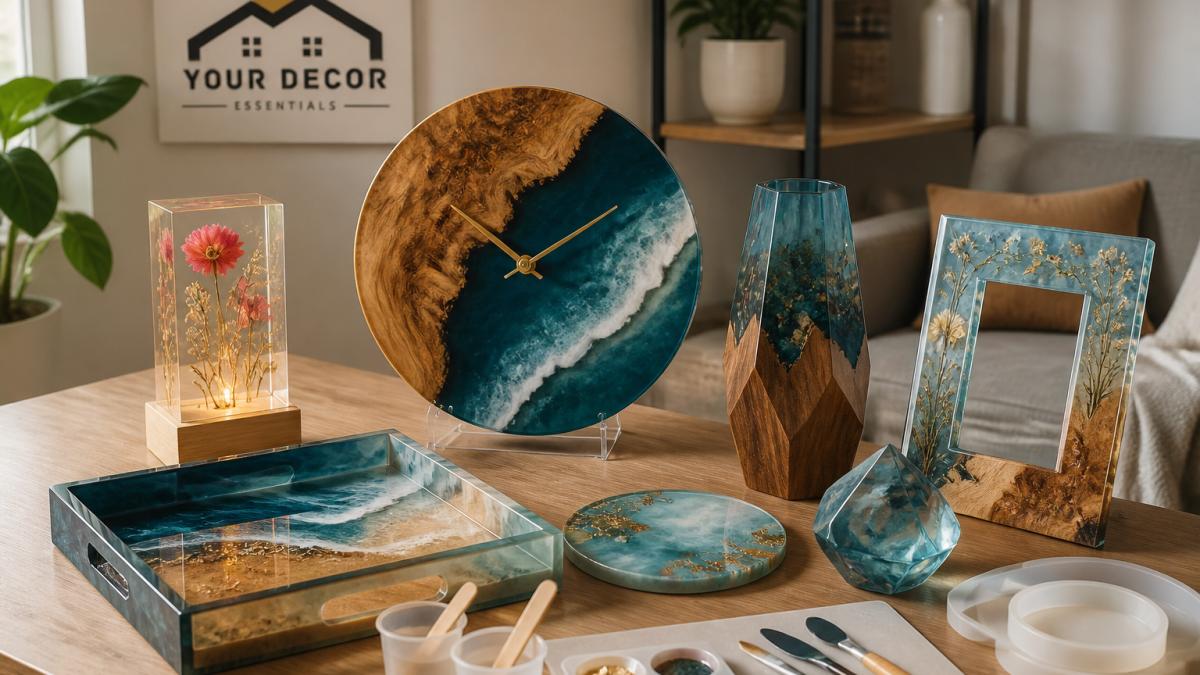
For the sides, a small side table or a floor lamp fills the space an armrest would occupy. This is where a sculptural lamp or a resin accent earns its place, adding visual interest without adding bulk.
- Mix pillow sizes: two large, one small
- Keep colors to two or three for a calm look
- Use a tray on the side table for remotes and drinks
- Add one bold accent piece so the low profile does not feel flat
A curated accent or two makes the minimalist frame feel intentional rather than empty.
Decision Framework: Is an Armless Sofa Right for You?
An armless sofa is right for you if space is tight, you sit upright more than you lounge, and you like a clean modern look. Skip it if you need side support or share the sofa with kids and pets who lean hard on the edges.
Run through this quick check:
| Your Situation | Best Choice | Why |
|---|---|---|
| Small living room, tight clearance | Armless sofa | Saves width on both sides |
| Frequent lounging and reclining | Sofa with arms or a sofa bed | Side support for long sits |
| Kids and pets in the home | Armless with leather or tight weave | Easier to clean and more durable |
| Flexible, changing layouts | Armless compact or modular sofa | Easy to move and rearrange |
| Shared seating for guests | Sofa with slim arms | More personal space per sitter |
If you land on armless, focus on three things: a firm seat, durable upholstery, and a plan for side support. Get those right and the drawbacks shrink fast.
For pieces that finish the look, explore the curated decor at Your Decor Essentials, from abstract sculptures to functional lighting that fills the space your sofa leaves open.
Conclusion: Weighing the Pros and Cons
Choosing between an armless sofa and one with arms is really a choice about how you live. If you have a small space and sit upright, the armless design wins on floor space and style. If you lounge for hours or share the sofa with a busy household, arms still earn their place.
The good news is you do not have to guess. Measure your room, match the sofa to how you actually sit, and add support where the frame falls short. A firm seat, durable fabric, and a couple of well-placed accents turn a simple armless frame into a sofa that works every day.
At Your Decor Essentials, we help you finish the room with pieces that add interest without the bulk: a sculptural lamp, a resin accent, or a textured throw that softens the clean lines. Shop now and build a living room that fits your space and your style.
Frequently Asked Questions
What are the pros and cons of an armless sofa?
An armless sofa saves floor space and creates an open, modern look, making it ideal for small rooms. However, it offers less lateral support, so you may need extra pillows for comfort. It's also more susceptible to wear on the edges and may not suit households with pets or children who need boundaries. Weigh these factors against your lifestyle.
Are armless sofas comfortable for everyday use?
Comfort depends on the cushion quality and depth. A well-cushioned armless sofa can be comfortable for lounging, but you might miss the armrests for reading or watching TV. Adding a lumbar pillow or a small side table can compensate. Test the seat depth and back height to ensure proper support for your posture.
How do you keep cushions from sliding on an armless sofa?
Use a non-slip rug pad or grip liner under the cushions to prevent sliding. Look for sofas with removable covers and tight-weave upholstery, which hold shape better. Rotating cushions regularly also helps maintain their loft and reduces shifting over time.
What should you look for when buying a minimalist armless sofa?
Focus on frame material (hardwood is durable), cushion fill (high-resilience foam retains shape), and upholstery (performance fabrics resist stains). Check dimensions to ensure it fits your space, and consider modular options for flexibility. A removable slipcover makes cleaning easier, especially in busy households.