 blog
blog
Modern Abstract Statues vs Traditional Busts
Table of Contents
- What Defines Modern Abstract Statues vs Traditional Busts
- How to Style Abstract Sculptures in Your Living Room
- Sculpture Placement in Home Decor: Strategic Positioning
- Mixing Modern and Traditional Decor: Creating Cohesion
- Abstract Sculptures for Living Rooms: Finding Your Style
- Materials, Scale, and Durability Considerations
- Choosing Between Abstract and Traditional for Your Space
- Frequently Asked Questions
Last Updated: October 10, 2026
What Defines Modern Abstract Statues vs Traditional Busts
Modern abstract statues vs traditional busts represent two fundamentally different approaches to sculptural art and home decor. Understanding the distinction helps you choose pieces that genuinely align with your space and aesthetic vision.
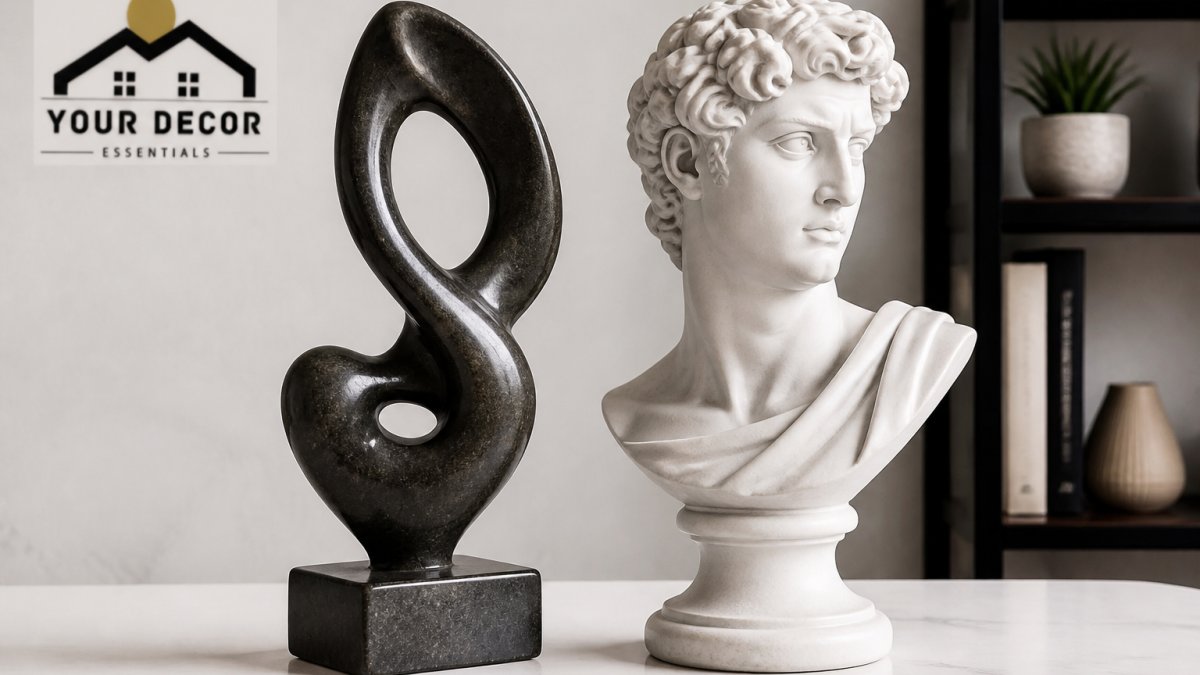
Traditional busts focus on portraiture and likeness. They capture the head and shoulders of a specific person, emphasizing recognizable features and realistic proportions. These sculptures celebrate individual identity and historical significance. Marble, bronze, and stone are common materials, lending them timeless, classical appeal.
Modern abstract statues, by contrast, prioritize form, shape, and artistic expression over representation. They move away from recognizable human features toward geometric compositions, flowing lines, and conceptual meaning. Abstract sculpture invites personal interpretation rather than depicting a specific subject.
Traditional Busts: Form and Purpose
Traditional busts have served as symbols of achievement, memory, and cultural significance for centuries. They emerged from classical art movements and remain popular in formal settings, libraries, and homes that lean toward timeless elegance.
A traditional bust typically includes the head, neck, and upper shoulders. The sculptor captures likeness, facial proportions, expression, distinctive features. This representational approach requires technical skill and anatomical knowledge. The result feels personal and grounded in reality.
Materials matter here. Marble conveys permanence and prestige. Bronze offers warmth and durability. Stone provides weight and gravitas. These materials age beautifully and often improve with time.
Modern Abstract Statues: Form and Expression
Modern abstract statues liberate sculpture from the requirement of likeness. They explore pure form, curves, angles, voids, and mass. A sculpture might suggest movement, emotion, or concept without depicting anything recognizable.
Abstract sculpture emerged from early 20th-century art movements that rejected representational tradition. Artists experimented with nonrepresentational forms, asking what sculpture could express beyond portraiture. The answer: limitless possibility.
These pieces work through composition and spatial relationships. A flowing abstract form might evoke grace or tension. Geometric shapes suggest order or complexity. Viewers bring their own interpretation, making abstract sculpture a conversation between artist and observer.
How to Style Abstract Sculptures in Your Living Room
Styling abstract sculptures in your living room requires understanding how nonrepresentational form interacts with your space differently than a recognizable bust would. A traditional bust anchors a room through narrative, viewers immediately recognize the subject and feel a connection to that person's identity. An abstract sculpture, by contrast, creates visual interest through pure composition, and your styling approach must account for this fundamental difference.
Scale and Visual Weight
Abstract sculptures demand careful scale consideration because they lack the narrative anchor that makes a bust feel "right" at any size. A small abstract piece on a shelf can feel lost or decorative rather than intentional. Medium abstract sculptures (roughly 12 to 24 inches in height) work best on console tables or credenzas where they command eye level without overwhelming the room. Large floor sculptures (24 inches and taller) function as architectural elements, they reshape how you experience the entire space, similar to a statement piece of furniture. By contrast, traditional busts work effectively at smaller scales because their representational content carries weight regardless of size; a 6-inch marble bust of a historical figure feels complete and purposeful, while a 6-inch abstract form often reads as an accent rather than a focal point.
Lighting and Form Revelation
Abstract sculptures live or die by light. Natural daylight reveals the three-dimensional relationships between planes and voids that give abstract form its power. Position your sculpture where morning or afternoon light rakes across its surface, emphasizing shadow and depth. Directional task lighting, a focused floor lamp or track light, becomes essential for evening viewing; it should highlight the sculpture's silhouette and internal geometry rather than washing it in flat, even light. This is distinctly different from how you'd light a traditional bust, where even, frontal lighting that clearly shows facial features and expression is typically preferred. With abstract work, dramatic side-lighting or backlighting often enhances the piece more than direct frontal illumination.
Spatial Relationships and Breathing Room
Abstract sculptures require genuine negative space around them, not as a design principle, but as a functional necessity. The form itself is the content, so visual clutter competes directly with the sculpture for attention in a way it wouldn't with a bust. A traditional bust can coexist comfortably with a framed portrait, a stack of books, and a decorative object on the same console because the bust's representational content dominates. An abstract piece needs visual isolation. Place it on a clear surface with minimal surrounding objects. If you're grouping multiple abstract sculptures, separate them by distance and height variation so each form reads distinctly rather than blending into a visual mass.
Material and Finish Pairing
The material of your abstract sculpture should echo or intentionally contrast with your room's existing materials. A polished resin sculpture with a high-gloss finish works in contemporary spaces with glass, steel, or lacquered surfaces. A matte-finish bronze or cast stone piece pairs naturally with wood, textiles, and warm finishes. This material conversation is less critical with traditional busts because their representational content carries the visual weight; a marble bust works in almost any setting because viewers focus on the face and form rather than how the material relates to surrounding surfaces. With abstract work, material coherence matters more because the viewer's eye has no narrative to follow, it reads the entire visual field, including how the sculpture's finish and texture relate to everything nearby.
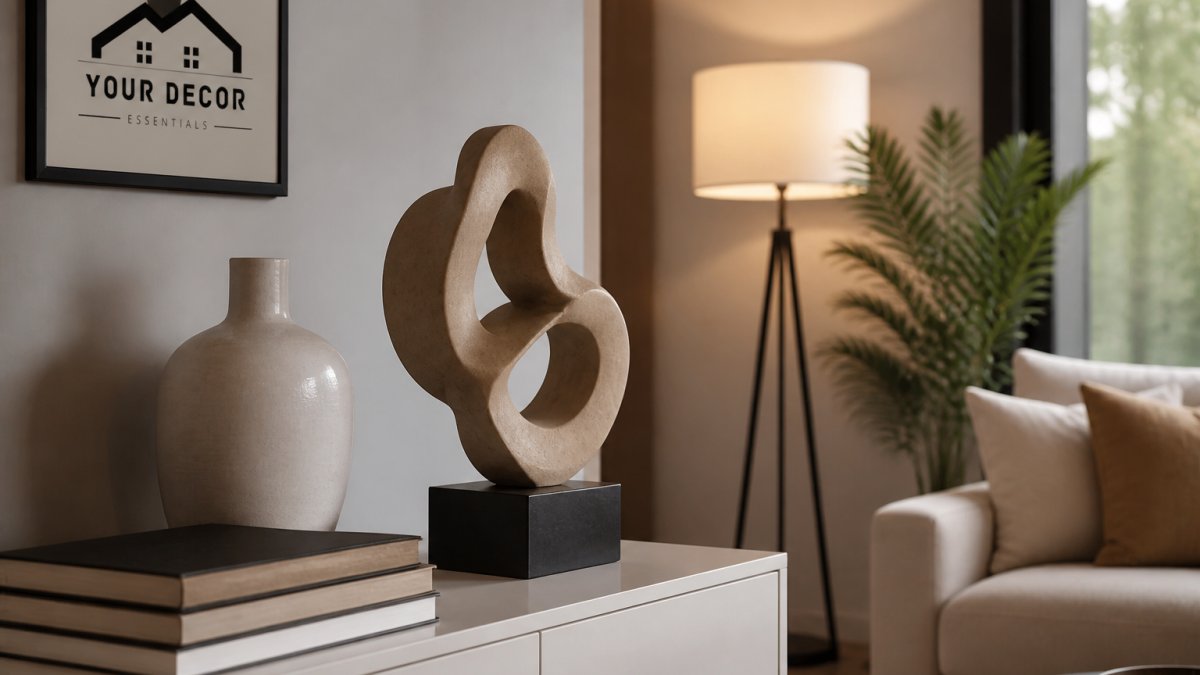
Setting and Purpose Alignment
Consider what you want the sculpture to accomplish in that specific room. In a home office or study, a geometric abstract piece suggests intellectual engagement and contemporary thinking, it works as a subtle statement about your aesthetic without demanding conversation. In a living room where guests gather, an organic, flowing abstract form invites discussion and interpretation, it becomes a conversation starter precisely because its meaning is open. In a bedroom, a smaller, calming abstract sculpture with soft curves promotes visual rest. By contrast, a traditional bust in any of these spaces carries a fixed meaning: it honors a specific person or historical moment, which constrains how the room's purpose can evolve. This flexibility is one of abstract sculpture's practical advantages in living spaces where function and mood matter as much as aesthetics.
Sculpture Placement in Home Decor: Strategic Positioning
Strategic placement transforms how a sculpture functions in your home. The right location makes a piece feel intentional rather than randomly placed.
Console Tables and Shelving
Console tables offer ideal platforms for abstract sculptures. They elevate pieces to eye level, making them prominent without dominating. Pair your sculpture with a few carefully chosen accessories, a single plant, a stack of books, a decorative object in a complementary color.
Shelving works beautifully for smaller abstract pieces. Group sculptures at varying heights to create visual interest. Mix materials: a bronze piece next to a resin accent catches light differently and adds dimension.
Avoid overcrowding. Each piece needs breathing room. Negative space around your sculpture actually makes it more powerful, not less.
Floor Placement and Focal Points
Large abstract statues command floor placement. Position them where they anchor a room, opposite your seating area, in an entryway, or at the end of a hallway. This creates a natural focal point that draws the eye and organizes the space.
Floor placement works best with minimal surrounding furniture. A single large sculpture in a corner creates a gallery-like effect. Pair it with appropriate lighting to emphasize form and shadow.
Consider sightlines from multiple angles. Your sculpture should look intentional from the entry, from your seating area, and from adjacent rooms.
Mixing Modern and Traditional Decor: Creating Cohesion
Many homeowners hesitate to mix modern abstract pieces with traditional elements, fearing visual discord. The truth is more nuanced: thoughtful mixing creates sophistication and depth.
The key is proportion and intentionality. If your room leans 70% traditional, introduce abstract elements strategically, a single modern sculpture, contemporary lighting, a minimalist accent wall. This creates visual tension in a positive way.
Color bridges the gap beautifully. A neutral abstract piece works alongside traditional furniture because it doesn't compete for attention. Let your traditional elements provide warmth and history. Let abstract forms provide visual interest and contemporary edge.
Transition through materials and finishes. Bronze abstract sculptures pair naturally with traditional wooden furniture. Resin accents complement both classical and modern aesthetics. Lighting becomes the unifying element, the same lamp style can anchor both design traditions.
Abstract Sculptures for Living Rooms: Finding Your Style
Your personal style determines which abstract sculptures resonate with your space. Some people respond to geometric precision. Others prefer organic, flowing forms. Both are valid, the choice reflects how you want your home to feel.
Geometric abstract pieces suggest order, modernity, and intellectual engagement. They work in minimalist spaces and contemporary homes. These sculptures often feature clean lines, bold angles, and intentional composition.
Organic abstract forms feel fluid and natural. They suggest movement, growth, and emotional expression. These pieces work beautifully in eclectic spaces and homes that blend styles. They pair well with natural materials and warm lighting.
Consider your existing decor honestly. Does your room feel calm or energetic? Minimal or layered? Your abstract sculpture should amplify what's already working, not fight against it.
Materials, Scale, and Durability Considerations
Material choice affects not only how your sculpture looks but how it functions over time and how it compares to traditional busts in practical terms. Understanding these trade-offs is essential for making a choice you won't regret.
Bronze: The Enduring Standard
Bronze is the material of choice for both traditional busts and many abstract sculptures because it ages beautifully and lasts indefinitely. Bronze develops a patina, a surface oxidation layer, that deepens over years and decades, actually improving the piece's character rather than degrading it. A bronze abstract sculpture in your home will look richer and more distinguished in 10 years than it does today. Bronze is also forgiving: it resists minor damage, doesn't scratch easily, and can be cleaned without special care. The trade-off is weight and cost. Bronze sculptures are heavy, which limits placement flexibility and requires sturdy furniture or secure floor mounting. Bronze is also the most expensive material for custom or artist-made pieces. For a traditional bust, this investment often feels justified because you're commissioning a portrait of someone meaningful. For an abstract sculpture, the cost-to-narrative-value ratio is different, you're paying premium prices for form alone, which can feel less essential than a representational piece.
Stone and Marble: Permanence with Maintenance
Marble and stone convey timelessness and gravitas. They're the classical choice for traditional busts and work equally well for abstract sculptures that emphasize geometric or monumental form. Stone ages slowly and visibly, it can develop a patina, weather slightly, and show wear in ways that feel authentic rather than degraded. The downside is maintenance. Marble is porous and can stain from water, oils, or acidic substances. Stone requires occasional sealing and careful cleaning. In a living room, this means protecting your sculpture from spills, humidity fluctuations, and direct contact with wet hands. For a traditional bust, this maintenance burden often feels worthwhile because the piece carries personal or historical significance. For an abstract sculpture, the same maintenance demands can feel like a burden for a piece chosen primarily for visual interest. If you choose stone or marble for an abstract work, commit to the care it requires or accept that it will show signs of use.
Resin: Contemporary Flexibility
Resin (cast polyurethane or epoxy-based materials) offers the most practical advantages for living spaces: lightweight, durable, low-maintenance, and affordable relative to bronze or stone. A resin sculpture can be moved easily, doesn't require sealing or special care, resists damage from moisture and temperature changes, and can be cleaned with a soft cloth. Resin also allows artists to create intricate abstract forms that would be difficult or impossible in bronze or stone. The trade-off is perceived permanence. Resin feels contemporary and temporary in a way that bronze or marble does not. A resin abstract sculpture reads as a design choice you might change in five years, whereas a bronze or marble piece feels like an investment you'll keep forever. This perception matters: if you want your sculpture to feel like a permanent part of your home's identity, resin may undermine that feeling. If you want flexibility and low-stakes experimentation with abstract form, resin is ideal. Traditional busts in resin are rare because the material undermines the sense of permanence and gravitas that busts are meant to convey.
Scale and Spatial Impact
Scale determines not just how prominent your sculpture is but how it functions in your space. Small abstract sculptures (under 12 inches) work as accents on shelves or side tables, but they risk feeling decorative rather than significant. Medium pieces (12 to 24 inches) are the practical sweet spot for most living rooms, large enough to command attention from across the room, small enough to fit on standard furniture without dominating. Large floor sculptures (24 inches and taller) reshape your entire room's spatial experience; they require dedicated floor space, appropriate ceiling height, and careful sightlines from multiple angles. A large abstract sculpture in a small room can feel cramped; in a spacious room, it becomes a focal point that organizes the entire space. Traditional busts, by contrast, work effectively across a wider range of scales because their representational content carries weight regardless of size. A 6-inch marble bust feels complete; a 6-inch abstract form often feels incomplete or tentative.
Durability and Lifestyle Fit
Consider your actual living situation. If you have children or pets, resin sculptures resist damage better than stone or marble. If you move frequently, lightweight resin or smaller bronze pieces are more practical than large stone sculptures. If you live in a humid climate (coastal areas, high-moisture regions), bronze develops patina faster and stone requires more frequent maintenance; resin is unaffected by humidity. If your home experiences significant temperature swings (seasonal heating and cooling), resin and bronze are stable; marble and stone can develop micro-cracks over decades. For a traditional bust, durability often justifies the material choice because the piece carries personal significance. For an abstract sculpture, durability should match your actual lifestyle, don't choose marble because it feels prestigious if you can't commit to its care, and don't choose resin if you want your piece to feel like a permanent investment.
Installation and Placement Implications
Material affects where and how you can place your sculpture. A light resin piece can sit on a standard console table or shelf. A medium bronze sculpture needs sturdy furniture rated for its weight. A large stone sculpture may require floor placement with a reinforced base or professional installation. If you rent, resin and lightweight bronze offer flexibility; stone and heavy bronze demand permanent homes. If you're commissioning a custom piece, discuss material implications with the artist early, they can recommend materials that suit both your aesthetic vision and your practical constraints. A traditional bust typically comes with a base designed for stable display; an abstract sculpture's base is often integral to the work's composition, so material and base design are inseparable considerations.
Choosing Between Abstract and Traditional for Your Space
The decision between abstract sculptures and traditional busts comes down to function and feeling. Ask yourself what you want your sculpture to accomplish.
Do you want a piece that tells a story and honors someone's memory? A traditional bust serves this purpose beautifully. Do you want visual interest that sparks imagination without narrative weight? Abstract sculpture delivers.
Consider your room's current energy. Formal, classical spaces often benefit from traditional busts. Contemporary, minimalist rooms shine with abstract forms. Eclectic spaces can embrace both.
Think about longevity. Traditional busts feel timeless across decades. Abstract pieces can feel dated if they chase trends rather than exploring enduring form principles. The best abstract sculptures transcend their moment, they feel fresh in 2026 and will feel fresh in 2036.
Your Decor Essentials specializes in pieces that bridge these considerations. We understand that choosing the right sculpture means choosing something that reflects your taste and enhances your home's character.
Finding the perfect sculpture for your living room shouldn't feel overwhelming. Whether you're drawn to the timeless elegance of traditional busts or the dynamic energy of modern abstract statues, the right piece transforms your space into something distinctly yours. At Your Decor Essentials, we've curated a collection of abstract sculptures and resin accents designed to introduce visual interest and elevate your home's style. Shop our selection today and discover how the right sculptural piece can completely reshape your living room's atmosphere and aesthetic impact.
Frequently Asked Questions
What is the difference between an abstract statue and a traditional bust?
Traditional busts focus on representational likeness, typically capturing a person's head and shoulders with recognizable features. Modern abstract statues prioritize form, shape, and conceptual expression over likeness, using nonrepresentational shapes and compositions. Busts serve as portraits or memorials, while abstract statues emphasize artistic interpretation and viewer response. Both work as home decor, but they communicate different visual messages and suit different interior aesthetics.
How do you style an abstract sculpture in a living room?
Position your abstract sculpture where it draws the eye without overwhelming the space. Pair it with complementary textures and colors from your existing decor. Leave breathing room around the piece so its form and composition stand out. Consider scale relative to your furniture and wall space. Group it with books, plants, or functional lighting to create a curated vignette. Ensure adequate lighting to highlight the sculpture's texture and shadow play.
Can you mix abstract sculptures with traditional busts in the same room?
Yes, mixing abstract sculptures with traditional busts works when you balance them thoughtfully. Use different zones or heights to separate them visually. A traditional bust on a mantel and an abstract sculpture on a console table creates intentional contrast. Ensure both pieces share a common material or color palette to create cohesion. The key is treating them as deliberate design choices rather than random placement.
What materials are commonly used for modern abstract statues and traditional busts?
Traditional busts are often crafted from marble, stone, or bronze for durability and classical aesthetic. Modern abstract statues use a wider range including resin, ceramic, metal, and composite materials. Resin offers flexibility in form and color while remaining affordable and lightweight. Bronze and stone remain popular for both styles due to their longevity and visual appeal. Your choice depends on your space, budget, maintenance preferences, and the visual effect you want to achieve.