 Listicle
9 Best Modern Rugs for Eclectic Living Rooms in 2026
Quick Summary
The best modern rugs for eclectic living rooms are the ones that give the seating area a defined base while repeating a color already in the room. Size the rug so the front legs of your main seating rest on it, leaving at least 6 to 8 inches of border beyond the furniture on all sides.
- Let the rug extend at least 6 to 8 inches beyond your furniture on all sides.
- For a standard 7-foot sofa, a 5x8 rug often works in small rooms.
- Pick a rug that repeats one or two colors already in the room.
- Give one pattern room to breathe when pairing a rug with a busy print.
- Choose low-pile wool or wool blends for high-traffic living rooms.
Table of Contents
- Why the Right Rug Anchors an Eclectic Living Room
- How to Choose a Rug Size for Your Living Room Layout
- Mixing Patterns: How a Rug Works With Existing Colors and Furniture
- Materials, Pile and Durability: Comparing Your Options
- Modern Geometric Living Room Rugs Worth Considering
- Funky Area Rugs That Bring Bold Personality
- Eclectic Rugs for Living Room Styling: Our Shortlist at a Glance
- Budget, Value and Caring for Your Rug Over Time
- Choosing Your Rug and Planning Your Next Step
- Frequently Asked Questions
9 Best Modern Rugs for Eclectic Living Rooms in 2026
Last Updated: November 14, 2026
Eclectic living rooms thrive on contrast, but without a strong base, bold colors and mismatched furniture can feel scattered. A rug pulls the room together. The right rug is often the single most effective way to anchor a mix of styles. This guide walks through nine modern rugs that suit eclectic spaces, along with the sizing, material, and care details that help you choose well.
Why the Right Rug Anchors an Eclectic Living Room
A rug is the foundation of a room that mixes many styles. It defines the seating area, ties separate pieces together, and gives the eye somewhere to rest. In an eclectic space, that job matters more than in a minimalist one, because every other element is pulling attention in a different direction.
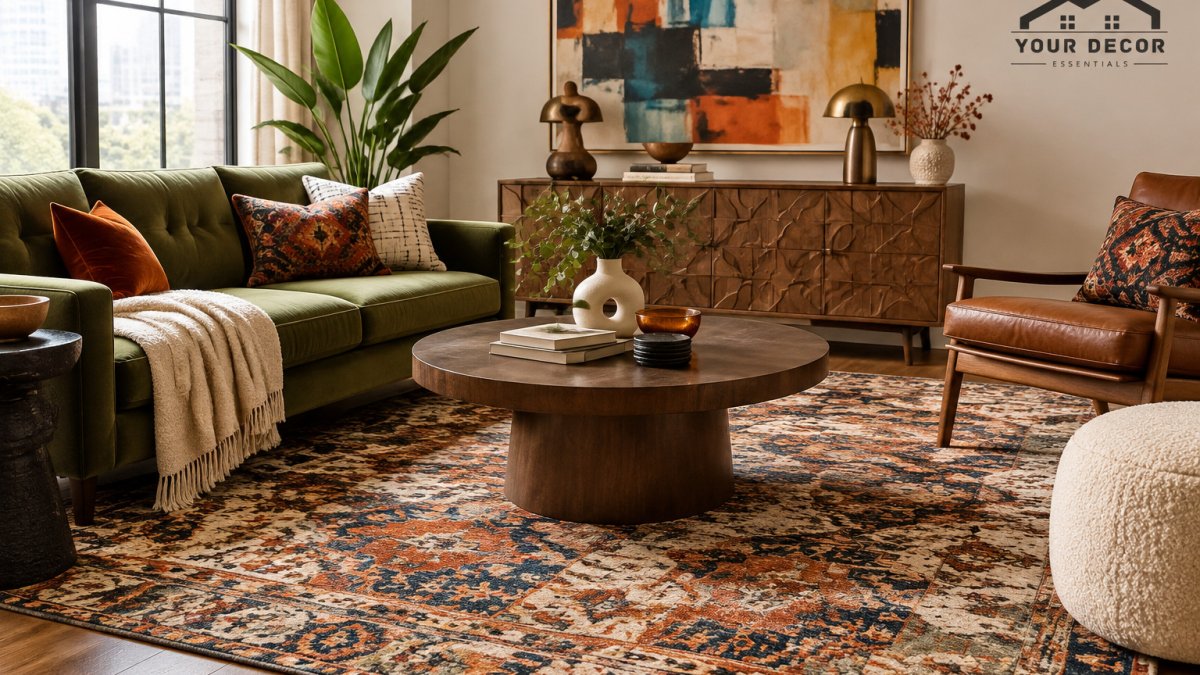
Most rooms that feel chaotic lack a shared ground. The sofa, the art, and the lamps each compete for attention. A rug with a clear color or pattern gives them a common base. Pick one that picks up a color already in the room, such as the rust in a vintage chair or the navy in a throw pillow.
Rugs also work as a neutral backdrop when the pattern of the room is already busy. A solid or low-contrast rug in a grounding color such as ivory or taupe lets bold furniture stand out.
How to Choose a Rug Size for Your Living Room Layout
Size is where many rug purchases go wrong. A rug that is too small makes furniture look like it is floating, while one that is too large can crowd a small room. The goal is to give the seating area a defined footprint. A common guideline is that a rug should be large enough to fit under the front legs of all main seating pieces, or under all legs in smaller rooms.
For a typical living room, a common approach is to let the front legs of the sofa and chairs rest on the rug. This keeps the seating grouped and prevents the room from looking disconnected. In larger open-plan spaces, a rug that reaches under all the furniture in the conversation area works well. As a rule of thumb, the rug should extend at least 6 to 8 inches beyond the edges of your furniture on all sides. For a standard 7-foot sofa, a 5x8 rug often works in small rooms, while an 8x10 or 9x12 is better for larger spaces.
Measure the room and the furniture before you shop. Mark the intended rug footprint on the floor with painter's tape so you can see how much space it will occupy. Consider shape too. Rectangular rugs suit most sofa arrangements, while round rugs can soften a space with angled or curved furniture. In an open-plan layout, use the rug to delineate the conversation zone: the rug should sit entirely within the seating area, not extend into walkways. For a sectional, choose a rug that is at least as long as the sectional's longest side, and allow the chaise to sit fully on the rug if possible.
Watch out: placing a rug that is too small under a large sectional can make the room feel unbalanced; always err on the side of a larger rug if your space allows.
Mixing Patterns: How a Rug Works With Existing Colors and Furniture
The hardest part of styling an eclectic room is balancing pattern. A bold rug next to a patterned sofa can overwhelm the eye, but a pattern-free room can feel flat. A practical rule is to let one element carry the pattern and keep the others quieter.
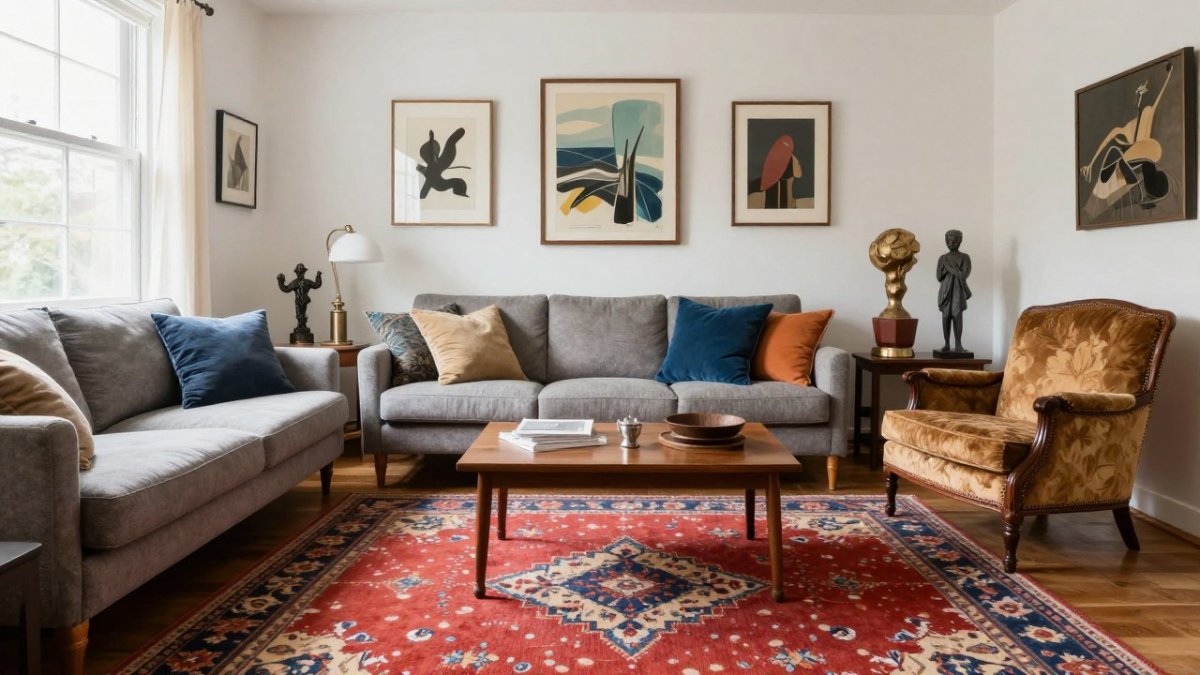
Start with the colors you already own. Choose a rug that repeats one or two of them, and the room will feel connected even if the styles differ. If your furniture is mostly solid, a patterned rug adds energy. If your sofa is printed, choose a rug with a simpler design or a tonal texture.
Watch out: laying a high-contrast pattern directly beside an equally busy print is the most common styling mistake. Give one of them room to breathe.
Materials, Pile and Durability: Comparing Your Options
Material affects how a rug looks, feels, and wears. Natural fibers such as wool and jute bring texture and warmth. Wool is resilient and tends to hold color well, though it can shed when new. Jute has a distinctive woven look but feels rougher underfoot and is less tolerant of moisture. Synthetic blends are often more stain-resistant and cost less, though they can feel less luxurious than wool. Pile height matters too: a low pile is easier to clean and works well in busy hallways and high-traffic living rooms, while a high pile feels plush but traps dirt and takes longer to dry.
When comparing options, look at the construction. Hand-finished edges and tight weaves generally last longer than loose, machine-made constructions. For high-traffic areas, wool or wool-blend rugs with a low pile (under 0.5 inches) offer the best balance of durability and ease of cleaning. Synthetic rugs, such as polypropylene, are highly stain-resistant and suitable for homes with pets or kids, but they may off-gas initially and are less biodegradable. Natural fiber rugs like jute and sisal are durable but can be abrasive and are not recommended for damp areas.
Care requirements vary by material. Wool rugs should be vacuumed regularly without a beater bar and professionally cleaned every 12 to 18 months. Synthetic rugs can often be spot-cleaned with mild detergent and water. Always use a rug pad to extend the life of any rug and prevent slipping.
Watch out: high-pile shag rugs can be difficult to vacuum thoroughly and may mat down in high-traffic zones; consider a low-pile option for primary walkways.
Modern Geometric Living Room Rugs Worth Considering
Geometric rugs bring structure to a room full of curves and color. They are a strong choice when you want a clear graphic element without a busy floral or traditional motif.
Funky Area Rugs That Bring Bold Personality
If your room already leans playful, a funky rug can deliver personality in one piece. These options use color and pattern as the focal point.
Eclectic Rugs for Living Room Styling: Our Shortlist at a Glance
The table below summarizes the rugs covered in this guide.
| Rug | Starting Price | Material | Best For |
|---|---|---|---|
| Amber Lewis x Loloi Asher | $150 | Power-loomed, neutral | Versatile neutral base |
| Revival Record Washable | $129 | Machine-washable | Pets and kids |
| Nordic Knots Jute Cross | $450 | Jute | Modern geometric element |
| Rugs USA Softest Knit Wool | $199 | High-pile wool blend | Softness with hard furniture |
| Mangas Original Campana MC3 | $1,200 | Hand-knitted wool | Sculptural focal point |
| Fritz Checked Wool | $550 | Wool | Bold graphic punch |
| Maren Hazy Swirls | $380 | Synthetic blend | Artistic focal point |
| Your Decor Essentials | Contact for pricing | Varies | Curated eclectic pieces |
| 5ft x 8ft Grey Fluffy Shag | Check our site | Plush shag | Comfort in large rooms |
Pricing depends on size, quantity, and delivery. Visit the Your Decor Essentials website for current prices or a quote.
Starting prices of featured rugs
Budget, Value and Caring for Your Rug Over Time
Price does not always track quality. A mid-range wool rug can outlast a cheaper synthetic one, but a washable rug may be the better value for a busy household. Think about how often the rug will be walked on, whether pets or children use the room, and how long you plan to keep it.
Care depends on the material. Vacuum regularly and rotate the rug every few months so it wears evenly. Use a rug pad to prevent slipping and to add cushion, especially under thin or lightweight pieces. Blot spills immediately, and check the manufacturer's care label before using any cleaner. Washable rugs are convenient, but many still need a pad to stay in place.
Choosing Your Rug and Planning Your Next Step
Start with your room's size and its strongest existing color, then narrow your options by material and budget. A bold piece suits a neutral room, and a quieter rug suits one that already has plenty going on. Measure twice, mark the footprint on the floor, and buy a rug pad at the same time.
Once you have a shortlist, use the sizing and material guidance above to confirm the right fit for your space, and visit the Your Decor Essentials website to browse current options.
Frequently Asked Questions
What kind of rugs are trending right now?
Current living room rug trends lean toward modern geometric patterns, soft abstract and painterly designs, and natural fibers like jute and wool. Many homeowners pair a bold rug with neutral upholstery so the rug becomes the room's focal point. Washable and stain-resistant options are also gaining attention among households with pets or children. When shopping, look for a rug that connects two or three colors already in the room rather than chasing a single trend, since that approach keeps an eclectic space feeling intentional for years.
What rug patterns work best in an eclectic living room?
Geometric, abstract and checked patterns tend to work well in eclectic rooms because they hold their own next to mixed furniture styles. Choose one dominant pattern and let the other pieces in the room carry smaller or solid-color motifs. A rug with a neutral base and a few accent colors pulled from your existing decor is an easy starting point. Avoid placing two equally loud patterns side by side without a solid color element between them to give the eye a place to rest.
How do you choose a rug size for a living room?
For most living rooms, a rug large enough for the front legs of all seating to rest on works well, and a standard 8x10 size suits many medium-sized rooms. Measure your seating area rather than the whole room, and leave roughly 12 to 18 inches of floor visible around the edges where possible. In smaller spaces, a rug that fits fully under the coffee table can also define the seating zone. Confirm dimensions with the seller before ordering, since sizes can vary between brands.
Can you mix a patterned rug with patterned furniture?
Yes, as long as the patterns differ in scale and share at least one color. A large-scale geometric rug pairs well with a sofa in a small floral or textured weave, while two equally busy patterns usually compete. Use a solid throw pillow or a neutral chair to separate patterns when needed. Testing a few combinations with fabric swatches or sample images before buying helps you see how the pieces interact in your actual room.