 How-to
Choosing Luxury Accent Pillows: A Practical Buying Guide
Last Updated: November 22, 2026
Quick Summary
To choose luxury accent pillows for a modern interior, start with the furniture and room, then narrow by fabric, color, size, and arrangement. Choose dense, well-woven fabrics like velvet, wool blends, or cotton sateen for daily-use seating, and limit the group to three colors.
- Measure your sofa seat or bed before shopping, since most sofa throw pillows run 18 to 22 inches square.
- Check fiber content, fabric weight, and weave density, because vague fabric labels often signal high synthetic content.
- Limit the pillow palette to three colors: a base, a secondary, and an accent.
- Mix two sizes on a sofa, with larger pillows in the back and smaller ones in front.
- Arrange pillows from largest to smallest and use odd numbers, usually three, for a natural look.
Table of Contents
- How do you choose luxury accent pillows for a modern interior?
- Step 1: Decide Which Room and Furniture the Pillows Will Serve
- Step 2: Select Luxury Pillow Fabrics and Textures
- Step 3: Choose a Color Palette That Fits Your Space
- Step 4: Mix and Match Throw Pillows Without Clashing
- Step 5: Pick Throw Pillow Sizes for Sofas and Beds
- Step 6: Arrange Your Pillows for a Layered Look
- Best Luxury Throw Pillows for a Sofa: What to Look For
- Caring for Your Pillows So They Last
- Choosing Your Accent Pillows for the Room Ahead
- Frequently Asked Questions
Choosing luxury accent pillows for a modern interior comes down to four things: the room they go in, the fabric and construction, the color palette, and how you arrange them. Get those right and a few well-chosen pillows can do more for a sofa or bed than a dozen mismatched ones. This guide walks through how to make the decisions yourself, whether you are furnishing your first home or refreshing a room you already love.
How do you choose luxury accent pillows for a modern interior?
Start with the furniture and the room, then narrow by fabric, color, size, and arrangement. A luxury accent pillow earns its place when it fits the sofa or bed it sits on, picks up one color already in the room, and adds texture that the rest of the space lacks. Work through the steps below in order, and you will avoid the most common mistake: buying pillows one at a time without a plan.
Step 1: Decide Which Room and Furniture the Pillows Will Serve
Pick the piece of furniture first. A pillow that works on a king bed can look lost on a narrow loveseat, and a living room sofa asks for a different mix than a reading chair.
Measure the seating before you shop. Most sofa throw pillows fall between 18 and 22 inches square, while bed pillows often run larger. Write down the depth of the sofa seat and the width of the bed, because those numbers decide how many pillows you can layer without crowding.
Decide how much the pillows need to do. In a living room, they carry the color and texture. In a bedroom, they often add softness and a finished look. Knowing the job keeps you from overbuying.
Step 2: Select Luxury Pillow Fabrics and Textures
Fabric is where luxury shows up, but the label alone does not tell you whether a pillow will last. Two velvet pillows can look identical online and feel completely different after a year. The difference is in fiber content, fabric weight, weave density, and how the cover is finished. Work through those four checks before you fall for a color or a sheen.
Start with fiber content. Common high-end choices include long-staple cotton sateen, silk and silk blends, cotton velvet and silk-blend velvet, suede, wool, and cashmere blends. Each one suits a different mood. Velvet and suede add warmth and depth, while cotton sateen gives a clean, crisp finish that suits a minimalist room. Silk brings a subtle luster that reads formal, and wool or cashmere blends add softness with more resilience than pure silk.
Then check fabric weight. A lightweight cover feels flimsy in hand and tends to sag at the corners after a few months on a sofa. Heavier fabrics hold their shape and resist seam stress. A dense cotton velvet or a substantial wool blend is generally sturdier on daily-use seating than a thin silk, while a lighter silk suits a bed or an occasional chair that sees less handling.
Weave density matters as much as weight. Hold the cover up to light, if you can, and look for a tight, even weave with no visible gaps between yarns. A loose weave pills and snags faster. For velvet, run your hand against the pile and then with it; the color should shift evenly, and the pile should spring back rather than flatten permanently.
Pair textures on purpose. A smooth silk next to a nubby bouclé or a soft velvet creates visual interest without any pattern at all. This is often the easiest route to a modern look that still feels rich. Keep one texture dominant and let the second one support it, rather than giving three or four equal textures the same visual weight.
Watch out: a fabric described only as "velvet" or "silk blend" without fiber percentages is a warning sign. Reputable makers list the exact composition, and a vague description usually means a high synthetic content that will pill or shine unevenly.
Recognizing Quality in Construction and Inserts
Quality lives in details you can check before you buy. Look at the seams, which should be straight and double-stitched at stress points. Check the zipper, if there is one, for a smooth pull and a concealed or well-finished tape. A serged or overlocked interior seam is fine on a budget pillow but a poor sign on a luxury one; a French seam or a clean bound seam signals that the maker expects the cover to be turned and used for years.
The insert matters as much as the cover. A pillow that is overstuffed looks tight and wears poorly, while one filled with a quality down or feather blend keeps its shape and loft longer. A common pattern is a cover sized one inch smaller than the insert so the pillow fills out fully without strain. Down-alternative fills vary widely; a high-quality microfiber can mimic down, but a cheap polyester fill compresses quickly and leaves the cover looking empty.
If you are shopping online, read the product description for fill type, cover material, and closure type. Detailed construction notes are a good sign that the maker is confident about what they sell. Reviews that mention how the pillow looks after six months are more useful than first-impression reviews, because that is where construction quality shows.
The table below summarises the fabrics the article names and what each one suits, so you can match a cover to the room.
| Fabric | Best for | Key difference |
|---|---|---|
| Cotton sateen | Minimalist rooms | Clean, crisp finish |
| Velvet or suede | Warmth and depth | Adds richness and depth |
| Silk | Formal look | Subtle luster that reads formal |
| Wool or cashmere blend | Daily-use seating | Softer, more resilient than pure silk |
| Dense cotton velvet | Sofas with daily use | Holds shape and resists seam stress |
| Lightweight silk | Beds and occasional chairs | Less handling, less wear |
Step 3: Choose a Color Palette That Fits Your Space
Start from a color already in the room, such as the rug, the artwork, or the sofa frame, and build outward. Modern interiors often rely on neutral tones like cream, charcoal, and warm gray, which means one or two saturated accents can carry the whole look. A deep emerald or rust pillow against a neutral sofa draws the eye without overwhelming the room.
Limit yourself to three colors in the pillow group: a base, a secondary, and an accent. More than that usually reads as busy rather than curated.
Step 4: Mix and Match Throw Pillows Without Clashing
Mixing solids, patterns, and prints is where most people get nervous, but a simple rule helps. Keep one element consistent across the group. That might be the color family, the scale of the pattern, or the material. If the pillows share a palette, a stripe and a solid can sit together comfortably.
Vary the scale. Pair one large graphic print with a smaller pattern and a plain solid. The contrast in size is what keeps the group from looking like a matched set bought in one trip.
Avoid putting two busy patterns side by side. One pattern is the statement, and everything else should support it.
Step 5: Pick Throw Pillow Sizes for Sofas and Beds
Size changes the whole arrangement. On a standard sofa, mix two sizes: larger pillows in the back and smaller ones in front. A common pattern is two 20-inch squares paired with one or two 16-inch lumbar pillows.
On a bed, check the size of your existing shams and duvet before you shop. Euro shams, which are square, need larger pillows than standard rectangular ones. A decorative pillow that fits the sham gives the bed a finished look without crowding the sleeping area.
Shape adds variety too. A lumbar or rectangular pillow breaks up a row of squares and gives the eye a place to rest.
Step 6: Arrange Your Pillows for a Layered Look
Arrange pillows from largest to smallest, placing the biggest ones against the back of the sofa or headboard. Lean the smaller pillows in front so the layers read clearly. Odd numbers, usually three, tend to look more natural than even pairs.
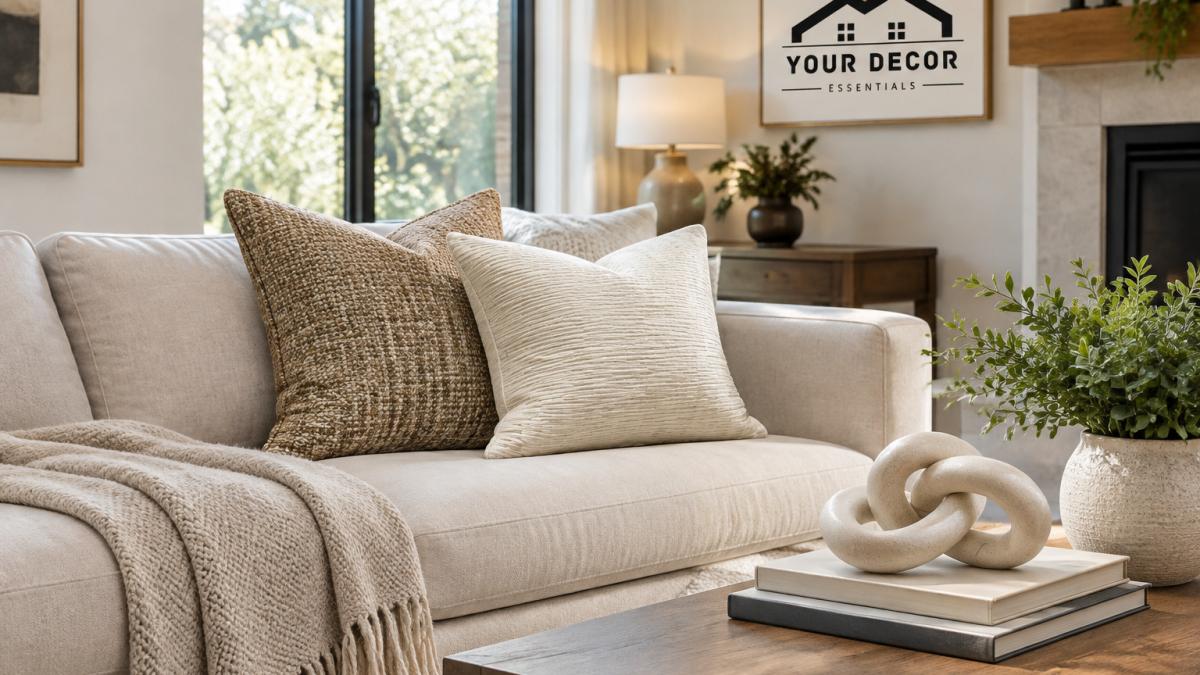
Let one pillow break the pattern. Tilt a lumbar pillow diagonally or set a textured pillow slightly off center. Perfect symmetry can look staged, while a small deliberate imbalance feels lived in.
Refresh the arrangement seasonally. Swapping two pillows is the fastest way to change a room without buying anything new.
Best Luxury Throw Pillows for a Sofa: What to Look For
When you compare sofa pillows, focus on four things: fabric weight, insert quality, cover closure, and how the piece fits your existing seating. A heavier fabric such as velvet or a dense cotton holds its shape on a sofa that gets daily use. Check whether the cover is removable for cleaning, and whether the insert is sized to fill the cover fully.
Be wary of very cheap pillows marketed as luxury. If the price seems low for the materials described, the cover is probably thin or the fill is compressed. Read reviews that mention how the pillow looks after a few months, since that is where quality shows.
Compare the fabric and construction details above against any option you consider.
Caring for Your Pillows So They Last
Luxury covers reward careful maintenance, and the care label is the first thing to read before the first wash. Many luxury covers, especially silk, velvet, and cashmere blends, need spot cleaning or dry cleaning rather than a machine cycle. Machine washing a silk or cashmere blend can shrink the cover, dull the sheen, and break down the insert fill in a single cycle. When in doubt, spot clean and air dry.
Match the method to the fiber. Cotton sateen and most wool blends tolerate a gentle cold-water cycle on a delicate setting, but turn the cover inside out, close the zipper, and use a mild detergent with no bleach or fabric softener. Silk and cashmere blends should go to a professional cleaner unless the label explicitly says otherwise. Velvet is the most misunderstood: brushing or machine washing can crush the pile, and heat can leave permanent marks. Spot clean velvet with a soft cloth and a small amount of mild detergent, then let it air dry away from direct heat.
Fluff inserts by hand and rotate pillows every few weeks so they wear evenly. Rotating also spreads body oils and sunlight exposure across the cover, which slows fading and soiling. For down and feather inserts, a short low-heat tumble with a clean tennis ball can restore loft, but check the insert label first, since some down-alternative fills clump under heat.
Watch out: vacuuming velvet with a rough brush attachment can crush the pile. Use a soft upholstery attachment on low suction instead, and never hold the nozzle in one spot.
Keep pillows out of direct sunlight when you can. Strong light fades saturated colors faster than almost anything else, and silk is especially prone to sun damage. If a pillow sits in a bright window, rotate it weekly so the fade is even rather than one-sided.
Store clean and dry. Never put a pillow away with body oils or moisture still in the cover, because that is how mildew and yellowing start. A breathable cotton storage bag is better than a sealed plastic one, which traps humidity. For long-term storage, remove the insert if the cover is delicate, and store the cover flat rather than folded on a crease.
Finally, treat small repairs as maintenance, not damage. A loose seam or a pulled thread is easy to fix early and expensive to fix after it spreads. A tailor or upholsterer can re-stitch a stress-point seam for far less than replacing a luxury cover.
Choosing Your Accent Pillows for the Room Ahead
Luxury accent pillows work best when you plan the room first, then choose fabric, color, size, and arrangement in that order. Start with the furniture, pick two or three textures that complement each other, and keep the palette tight. Layer from large to small, and let one piece break the pattern. Bring your room measurements with you so the sizes work the first time.
Frequently Asked Questions
How many throw pillows should you put on a sofa?
Most styling guidance suggests keeping the count small enough that the sofa still looks comfortable to sit on. Two to four accent pillows on a standard three-seat sofa is a common approach, with the larger pillows at the back and smaller ones in front. For a modern interior, fewer well-chosen luxury pillows usually look more deliberate than a crowded row. Start with two, step back to see how the sofa reads in the room, then add or remove one pillow at a time until the arrangement feels balanced.
What is the 2-2-1 pillow rule?
The 2-2-1 pillow rule is a simple starting formula for styling a sofa: two larger pillows at the ends, two medium pillows in the middle layer, and one smaller accent pillow in front. It gives you a structure to work from when you are first learning to mix sizes. Once you understand the proportions, you can adjust the formula for your sofa length and your color palette, and swap in different textures or patterns without losing the sense of order.
Which fabrics work best for luxury accent pillows?
Cotton sateen, high-thread-count cotton, silk blends, velvet, and suede are among the most common choices for luxury accent pillows. Velvet and suede add depth and a tactile quality, while cotton sateen and silk blends offer a smoother, more refined sheen. Check the pillow cover for a secure closure, a dense weave, and a well-sewn seam, and look for an insert with a fill that holds its shape. Choose fabrics that match how the room is used: performance blends suit high-traffic living rooms, while delicate fibers fit bedrooms and quieter spaces.
How do you choose accent pillows for a sofa?
Start with the sofa's color and the room's dominant tones, then select one or two pillows that either echo those colors or provide deliberate contrast. Mix at least two textures, such as a smooth sateen with a nubby or velvet piece, to add visual interest without visual noise. Confirm that the pillow sizes fit the sofa's depth and back height, and test the arrangement before settling on it.