 How-to
Creating Ambiance With Layered Modern Lighting at Home
Last Updated: November 21, 2026
Quick Summary
Creating ambiance with layered modern lighting means combining ambient, task and accent light so a room has both function and atmosphere. Start with a dimmable ceiling source for the base, add task lamps at reading and work spots, and finish with one accent light on a favorite piece.
- Keep ambient light warm, roughly 2700K to 3000K, for living spaces.
- Aim task light beside your work surface rather than in front of your eyes.
- Angle accent light at about 30 degrees to reveal texture on the target.
- Use one switch or dimmer per zone so you can run task and accent light alone.
- Map outlets and ceiling boxes before buying lamps to avoid placement problems.
Table of Contents
- Why Layered Modern Lighting Creates Ambiance
- Start With Ambient Lighting for the Whole Room
- Add Task Lighting Ideas Where You Read, Cook and Work
- Use Accent Lighting Ideas to Highlight Art and Architecture
- Plan a Layered Lighting Living Room Step by Step
- Choosing Modern Fixture Styles for Each Layer
- Color Temperature, Brightness and Glare Specifications
- Controlling Layers With Dimmers and Smart Scenes
- Common Lighting Mistakes and How to Fix Them
- Build Your Lighting Plan Room by Room
- Frequently Asked Questions
Layered modern lighting is the simplest way to make a room feel warm, deep and lived-in. Most rooms rely on one harsh overhead fixture, which flattens everything and leaves corners dark. This guide walks you through building that effect one layer at a time.
Layered lighting uses several light sources at different heights and purposes. Together they create brightness, mood and visual interest. Each layer does a different job, and the room looks best when all three are present.
Layered lighting is the practice of combining ambient, task and accent light so a room has both function and atmosphere.
Why Layered Modern Lighting Creates Ambiance
A single ceiling light gives you brightness, but not much else. Layers give you control. You can switch from a bright evening of cooking to a quiet night on the couch without changing a single bulb.
Here is what layering does for a room:
- Adds depth by placing light at different heights
- Softens shadows and glare
- Highlights the pieces you love, like sculptures and art
- Lets you adjust the mood with dimmers and switches
Designers often describe the goal as "light that feels intentional." Layers make that possible, because each source has a clear role.
Start With Ambient Lighting for the Whole Room
Ambient lighting is your base layer. It fills the room with general light so you can move around safely and comfortably.
Common ambient sources include:
- Flush-mount or semi-flush ceiling fixtures
- Modern pendants hung in the center of the room
- Recessed ceiling lights on a dimmer
Keep ambient light soft rather than blinding. Aim for a warm white color temperature, roughly 2700K to 3000K, for living spaces. Cooler light around 4000K works better in kitchens and work areas.
Watch out: A ceiling fixture that is too bright will wash out the other layers. If you can't read a book comfortably under it when it's on its lowest setting, it's probably too strong.
Add Task Lighting Ideas Where You Read, Cook and Work
Task lighting puts focused light where you need to see detail. It belongs next to reading chairs, over kitchen counters and beside desks.
Good task lighting options include:
- A floor lamp beside a reading chair with an adjustable arm
- Under-cabinet strips above a kitchen counter
- A desk lamp with a directional head
- Wall-mounted reading sconces beside a bed or sofa
Position task light so it falls on your work surface, not into your eyes. A light source placed at the side or slightly behind your shoulder reduces glare on screens and pages.
Use Accent Lighting Ideas to Highlight Art and Architecture
Accent lighting is the layer that creates drama. It draws attention to a sculpture, a piece of artwork, a shelf of resin decor or an architectural feature like an alcove.
Try these accent ideas:
- Track lights aimed at a favorite sculpture
- Picture lights mounted above framed art
- LED strips tucked behind a floating shelf
- A small spotlight directed at a textured wall
Aim accent light at an angle of about 30 degrees to the surface you want to highlight. This angle reveals texture and shadow. Straight-on light tends to flatten the object.
Plan a Layered Lighting Living Room Step by Step
A living room benefits most from layering because it serves many purposes. The process below turns a vague idea into a written plan you can shop from and adjust as you go. Work through it once, then keep the notes for future purchases.
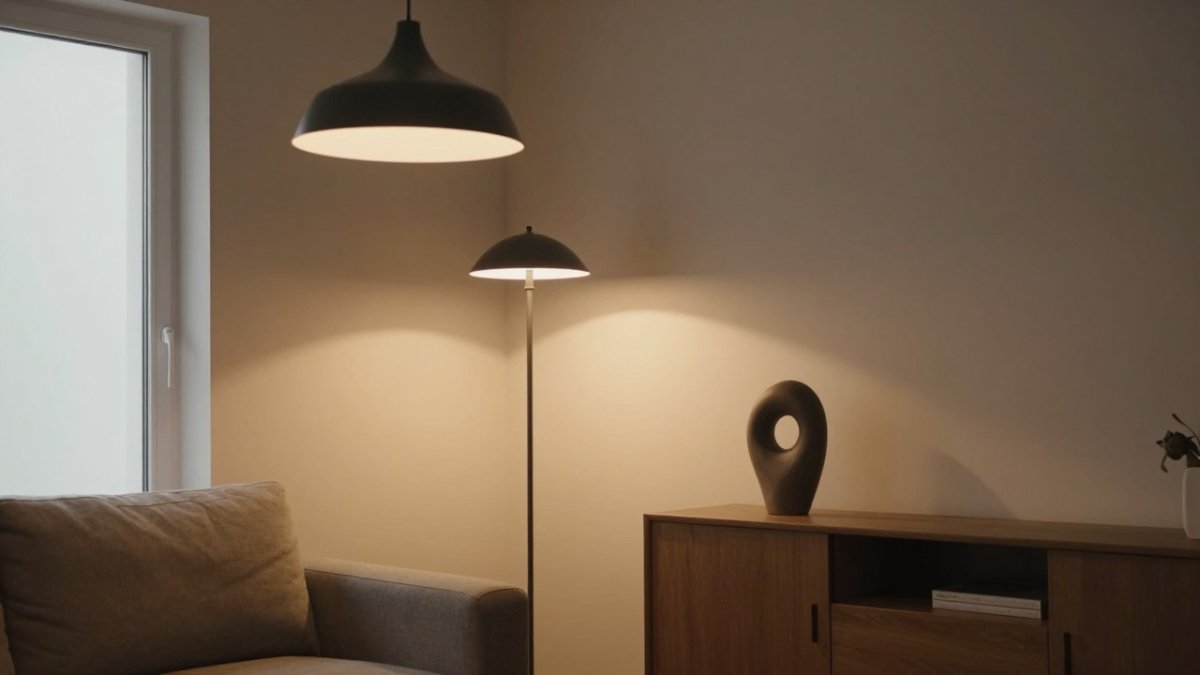
- Measure the room and note ceiling height. Record square footage, ceiling height, and the location of every existing outlet and ceiling box. Outlet placement often determines where floor and table lamps can go without extension cords.
- Map activities to zones. List what happens in the room and where: reading in a favorite chair, watching television on the sofa, working at a desk, entertaining near a sideboard. Each activity zone needs its own task light.
- Set ambient light first. Choose a central fixture sized to the room. Choose a central fixture sized to the room, then use a dimmer to tune its brightness down.
- Place task lights at the activity zones. Put an adjustable floor lamp beside the reading chair, a table lamp at the end of the sofa, and a desk lamp at the work surface. Position each so light falls on the task, not into eyes.
- Choose one or two accent targets. Pick a piece of art, a sculpture, or an architectural feature such as an alcove or textured wall. Aim accent light at roughly a 30-degree angle to reveal texture.
- Define switching zones. Decide which lights should turn on together. A common pattern is one switch for ambient, one for the reading corner, and one for accent lights, so you can run task and accent light alone in the evening.
- Add dimmers to each zone. Dimmers let you shift from bright cooking light to a low evening glow without changing bulbs.
- Test at night. Turn off the ambient layer and check whether task and accent light alone feel balanced. Adjust aim and brightness before buying anything else.
A simple planning worksheet for a 200-square-foot living room might list one dimmable ceiling source, two floor or table lamps, one desk or reading lamp, and one accent fixture, each on its own switch or dimmer zone. Treat these numbers as starting points and adjust to taste.
Watch out: If you skip the outlet and switching inventory, you may buy lamps that cannot be plugged in where you need them or lights that cannot be controlled independently.
Choosing Modern Fixture Styles for Each Layer
Fixture style affects how the room looks as well as how it lights. Match the style to the layer it serves.
- Ambient: Clean-lined flush mounts or simple pendants keep the ceiling uncluttered.
- Task: Adjustable arms and articulating heads give you control over direction.
- Accent: Slim track heads and picture lights stay out of the way while aiming precisely.
Sculptural fixtures make a strong statement. Use one per room as a focal point, and keep the others simpler so the look stays balanced.
Color Temperature, Brightness and Glare Specifications
Specifications help you avoid guesswork. Check these before buying:
| Layer | Target Color Temperature | Typical Brightness Goal | Glare Tip |
|---|---|---|---|
| Ambient | 2700K-3000K | Soft, even fill | Use diffusers or frosted shades |
| Task | 3000K-4000K | Focused, bright on work surface | Position beside, not in front of eyes |
| Accent | 2700K-3000K | 2-3 times brighter than ambient on the target | Angle around 30 degrees |
Target Color Temperature
Lumens measure total light output. Use dimmers to adjust ambient brightness to your comfort.
Controlling Layers With Dimmers and Smart Scenes
Control turns a set of lights into a flexible system. Dimmers adjust brightness, and smart controls save combinations as scenes you can recall with a tap or a voice command. This is where layered lighting becomes practical day to day.
Start with dimmer compatibility. Not every LED bulb dims smoothly on every dimmer. Check the bulb packaging for a dimmer compatibility list, and match the dimmer to the bulb technology. A common pattern is to use a dimmer rated for LED loads and to avoid mixing older incandescent-only dimmers with LED bulbs, which can cause flicker or buzzing.
Next, consider tunable-white bulbs. These let you shift color temperature from warm 2700K in the evening to cooler 4000K for focused work. Tunable-white bulbs are useful in rooms that serve both relaxation and task needs, such as a living room with a desk or a kitchen with a dining area.
Build scenes around the day:
- Morning: ambient at 4000K and moderate brightness, task lights on at the desk or kitchen counter.
- Dinner: ambient dimmed to about half, accent lights on the art or sideboard, task lights off.
- Reading: ambient low, the reading task lamp at full brightness, accent lights off to reduce glare.
- Movie night: ambient off or very low, a single accent light behind the television or on a shelf for soft background glow.
For control hardware, you have three common paths:
- Wall dimmers for the ambient layer, the simplest and most reliable option.
- Plug-in smart plugs or smart switches for floor and table lamps, which lets you control lamps that are not on a wall switch.
- Smart bulbs for fixtures where you want color temperature control without rewiring.
Watch out: Smart bulbs and wall dimmers can conflict. If a smart bulb is on a dimmed circuit, the dimmer may cut power below the level the bulb needs to operate. Keep smart bulbs on full-power circuits and control brightness through the app or voice assistant instead.
Scenes are the easiest way to keep layering practical. Set each scene once, name it clearly, and recall it with a tap or a voice command. Setting a few named scenes is a practical way to keep daily use simple.
Common Lighting Mistakes and How to Fix Them
Most lighting problems come from a few repeat errors:
- Relying on one overhead light. Add at least two other sources.
- Mixing color temperatures. Keep warm and cool light separate by room.
- Placing task light behind you. Move it to the side to cut shadows on your work.
- Choosing bulbs that are too bright for the room. Start lower and add light only if needed.
- Ignoring dimmers. A dimmable bulb with the right fixture costs little and changes the mood completely.
Build Your Lighting Plan Room by Room
Work through your home one room at a time instead of trying to light everything at once. Start where you spend the most evening hours, usually the living room or kitchen. Note which layers each room already has and which are missing.
A simple written plan helps keep purchases focused. For each room, list your ambient, task and accent sources, along with the color temperature you want. Then fill the gaps as your budget allows. If you are starting in a small space, our guide on adding smart lighting to a studio apartment walks through base lighting in more detail.
For a full walkthrough of living room planning, read our living room lighting guide. To explore fixture options that work well as focal points, see our modern sculptural lighting guide. If you want to see how adjustable task lighting supports reading and work, our benefits of adjustable task lighting article explains the advantages. When you are ready to test color temperature and dimming, our 24-inch crystal chandelier with adjustable color temperature offers 3000K, 4000K and 6000K options.
Layered lighting does not require a complete renovation. Start with one ambient source, add one task light and one accent piece, and build from there. Each new layer makes the room feel more finished. Shop the Your Decor Essentials collection to find pieces that fit your plan.
Frequently Asked Questions
What are the three layers of lighting?
The three layers are ambient, task and accent lighting. Ambient light fills the room evenly and is usually provided by ceiling fixtures, recessed lights or pendants. Task light gives focused brightness for reading, cooking or working, such as a desk lamp or under-cabinet strip. Accent light highlights artwork, sculptures or architectural features with a narrower beam. Combining all three lets you adjust brightness for each activity and creates depth and mood instead of a flat, single-source look.
How many light sources should a room have?
Most living rooms work well with three to five light sources spread across the three layers: one or two ambient sources such as a ceiling pendant or flush mount, one or two task lamps near seating or reading spots, and one or two accent lights aimed at a focal point. Smaller apartments often need fewer, so start with an ambient source and one lamp, then add accents as you find dark corners. Every source should be controllable separately, ideally on a dimmer.
What color temperature is best for ambient lighting?
Warm white light in the range of about 2700K to 3000K is the most common choice for living areas because it feels cozy and makes wood, fabric and warm paint tones look rich. Use 3000K to 3500K in kitchens and home offices where clearer task visibility matters. Keep color temperature consistent within a room so the layers blend rather than clash. Check the bulb packaging for the Kelvin rating before you buy, since many LED bulbs list it clearly.
How do you layer lighting in a small apartment?
Start with one ambient fixture that lights the center of the room, then add a single floor or table lamp by your main seating area for task and mood light. Use a wall sconce or small accent lamp to highlight one piece of art or a sculpture, which adds depth without taking up floor space. Plug-in lamps with dimmers give you control without hardwiring, and keeping fixtures at different heights prevents the room from feeling flat.