 How-to
How to Mix Antique and Modern Furniture Effectively
Last Updated: November 20, 2026
Quick Summary
Mixing antique and modern furniture works best when you pair one or two antiques with clean, modern pieces, keep the scale consistent, and repeat a shared colour or material. Contrast between eras makes a room feel collected rather than catalogued.
- Lead with one dominant style and use about 80 percent of the furniture to follow it.
- Leave at least 18 inches of walking space between major pieces.
- Pair contrasting silhouettes and materials, then repeat one finish elsewhere in the room.
- Limit antiques to one or two per room to avoid a cluttered look.
- Check antique condition for loose joints, cracks and pest damage before buying.
Table of Contents
- Why Mixing Antique and Modern Furniture Works
- Step 1: Choose a Dominant Style or Era
- Step 2: Match Scale and Proportion Before You Buy
- Step 3: Pair Contrasting Silhouettes and Materials
- How to Decorate With Antiques in a Modern Style
- Mixing Modern and Antique Furniture in the Living Room
- Mixing Modern and Antique Furniture in the Bedroom
- Mixing Modern and Antique Furniture in the Dining Room
- Common Mistakes and How to Fix Them
- Your Next Step: Plan Your First Mixed Room
- Frequently Asked Questions
Mixing antique and modern furniture is one of the easiest ways to make a home look collected rather than catalogued. New homeowners often ask this question because they want their rooms to feel personal without looking cluttered. The short answer: pair one or two antiques with clean, modern pieces, keep the scale consistent, and let a shared colour or material tie everything together. This guide walks through why the combination works and how to put it into practice, step by step.
Why Mixing Antique and Modern Furniture Works
Contrast is the reason this pairing succeeds. A worn wooden chest next to a low, pale sofa looks more interesting than two matching pieces ever could. The old piece gives the room depth and history, while the new piece keeps things fresh and uncluttered.
Many interior designers describe this as "layering." Each era adds a different texture, and the mix feels curated instead of accidental.
- Contrast creates a clear focal point
- Antiques add character and a sense of history
- Modern pieces keep the room light and easy to use
- A mix feels personal, which suits a home you want to make your own
Step 1: Choose a Dominant Style or Era
Before you buy anything, pick one style to lead the room. This is usually the modern look, with antiques playing a supporting role. A common guideline is an 80/20 balance: roughly four-fifths of the furniture follows your main style, and one-fifth comes from another era.
This keeps the room from feeling like two separate homes fighting for space. If you want more background on how the two approaches differ, our guide on contemporary vs traditional furniture style explains the key differences in plain terms.
Ask yourself a few simple questions:
- Which style do I feel most at home in day to day?
- Which pieces will I see most often?
- Do I want the antique to be a conversation piece or a quiet accent?
Once you know your lead style, every new purchase has a clear test: does it support the main look or fight it?
Step 2: Match Scale and Proportion Before You Buy
Scale matters more than style. An antique armoire that towers over a small modern bedroom will overwhelm the space, even if the finish is beautiful. Before you shop, measure the room and the wall space you plan to fill.
Use this quick check:
- Leave at least 18 inches of walking space between major pieces
- A sofa should be about two-thirds the length of the wall it sits against
- Coffee tables should sit roughly 14 to 18 inches from the sofa
- Tall antique pieces work best against high walls or in corners
Proportion is the other half of the equation. A heavy, carved antique usually balances well with a substantial modern piece, not a delicate one. If one piece looks like it could float away, pair it with something with more visual weight.
A Repeatable Proportion Method
Most styling advice stops at "balance the room." A more reliable approach is to assign each major piece a visual weight score from 1 to 5, where 1 is light and airy (a glass console, a slim modern chair) and 5 is heavy and grounded (a carved oak sideboard, a deep tufted sofa). Then aim for the total weight on opposite sides of the room to land within one point of each other.
For example, a modern sofa at 4 balanced by an antique chest at 3 plus a slim floor lamp at 1 gives you 4 versus 4. If one side totals 5 and the other totals 2, the room will feel lopsided no matter how well the colors match. This method turns a subjective judgment into a quick arithmetic check you can do before you buy.
How Much Antique Is Enough
A common pattern among designers is the 80/20 rule: roughly four-fifths of the visual volume follows your lead style, and one-fifth comes from the other era. In practice, that usually means one large antique or two small ones per room. If you want the antique to be the focal point, flip the ratio to 60/40, but expect the room to read as period-led rather than modern-led.
Watch out: visual weight is not the same as physical size. A tall, open modern bookshelf can score lower than a low, dense antique trunk because solid mass reads heavier than open lines.
Proportion Checks by Piece Type
- Sofas and settees: An antique settee usually sits lower than a modern sofa; pair it with a modern coffee table within 14 to 18 inches so the height difference does not feel like a step down.
- Dining tables: Chair seat height should leave about 10 to 12 inches between the seat and the table apron; antique tables often run slightly lower, so test chairs in person.
- Case goods: A tall antique armoire needs at least 36 inches of clearance in front for doors and drawers to open without crowding circulation.
- Lighting: A pendant or chandelier should hang about 30 to 36 inches above a dining table and 7 feet above the floor in walkways.
If a piece fails two or more of these checks, it is usually the wrong scale for the room, not the wrong style.
Step 3: Pair Contrasting Silhouettes and Materials
Silhouette is the outline a piece makes in the room. Pair a curvy, ornate antique with clean, straight modern lines. This contrast is what makes the combination feel intentional.
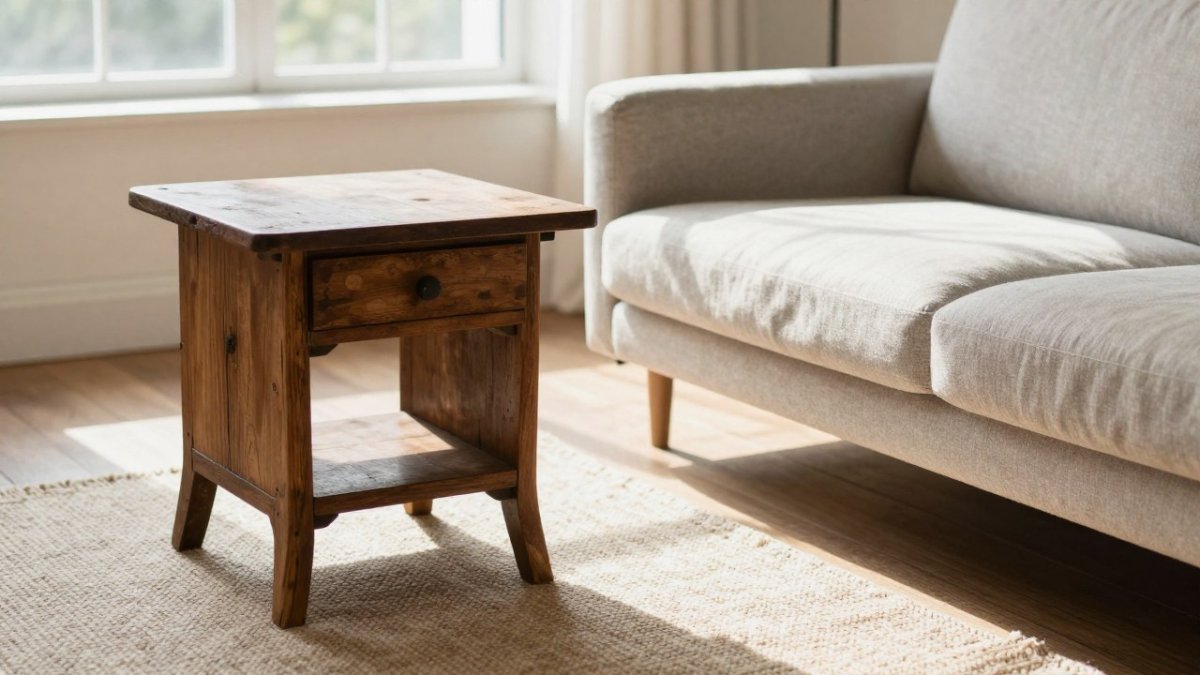
Materials do the same job. Try these pairings:
- Dark, aged wood with pale upholstery
- Brass or iron hardware with glass or polished metal
- Velvet or linen with smooth lacquer
Repeat one material or colour somewhere else in the room. This small link is what makes the mix feel cohesive. For example, if the antique side table has warm brown wood, bring that tone into a picture frame or a lamp base. Our article on mixing metal finishes in modern lighting design covers how to carry finishes across a room, which is useful when you are choosing new light fixtures to sit alongside older pieces.
Watch out: a lot of different woods, finishes and metals in one small room can feel busy. Pick two or three repeating materials and stick with them.
How to Decorate With Antiques in a Modern Style
Think of the antique as a accent, not the whole story. Place it where a viewer's eye naturally lands, such as opposite the entry, at the end of a sofa, or on a wall with clean lines. Keep the surrounding space open and simple so the piece has room to stand out.
Here is a practical approach we recommend:
- Choose one antique piece per room to be the focal point
- Surround it with modern pieces in neutral colours
- Add one or two small decorative items that echo the antique's tone
- Leave some empty space so the room can breathe
Antique pieces also work well as functional items. A vintage dresser can hold modern electronics, and an old trunk can serve as a coffee table. Function keeps the mix practical, not just decorative.
Mixing Modern and Antique Furniture in the Living Room
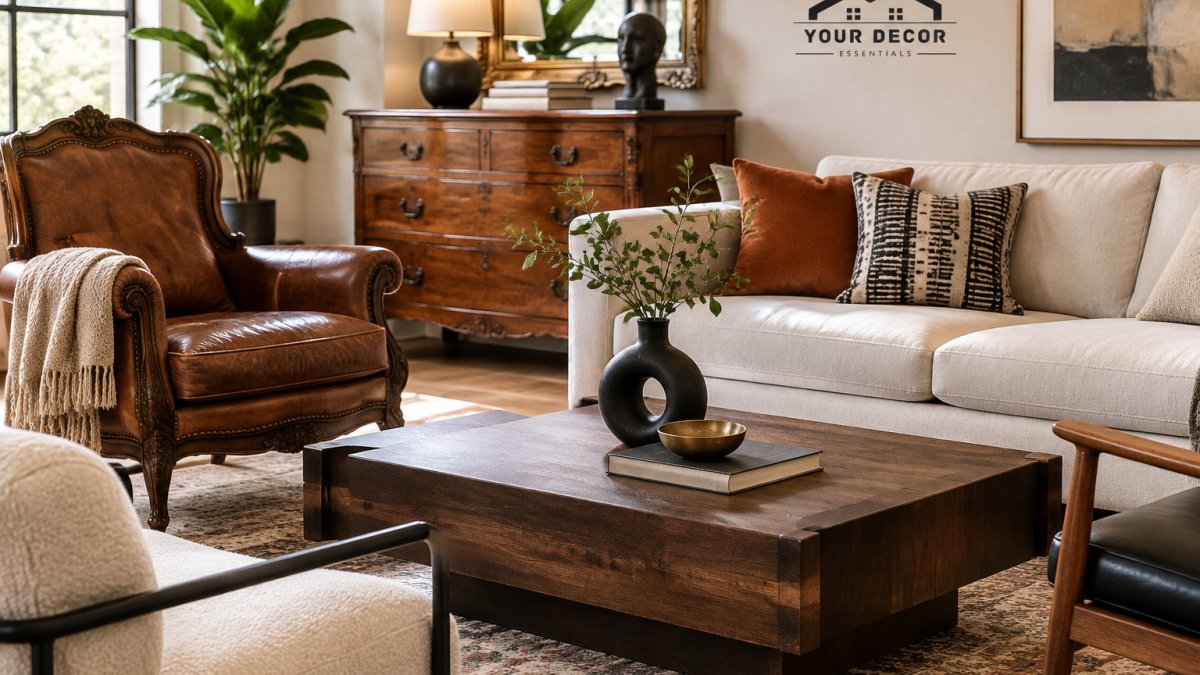
The living room is where this mix tends to show best, since it is the room most guests see. Start with a modern sofa and a neutral rug, then add one antique piece that suits the space, such as a carved side table or a vintage cabinet.
Place the antique where it has a clear job. A side table beside the sofa works well, because it is both useful and visible. Avoid placing too many antiques along one wall, which can make the room feel crowded.
A modern rug can also help bring the two styles together. Its clean pattern grounds an old wooden table, and its color can echo a detail on the antique. For more ideas, see our guide to modern rugs for eclectic living rooms, which covers rug choices that suit a layered look.
If you are looking for a modern coffee table that sits well beside an antique, consider a round nesting coffee table set with storage. Its clean shape balances an older piece, and the storage drawer keeps everyday items out of sight.
For wall decor, our article on alternatives to traditional wall art offers ideas that work alongside antique furniture without competing with it.
Three Living Room Layouts You Can Copy
Layout 1: The Anchored Sofa (most common)
- Modern sofa centered on the longest wall, about two-thirds of the wall length
- Antique side table at one arm, modern floor lamp at the other
- Modern coffee table 14 to 18 inches from the sofa
- One antique accent chair angled toward the sofa, no more than 8 feet away so conversation stays easy
- Rug large enough that the sofa's front legs sit on it
This layout works because the antique side table and chair are close enough to be seen together but separated by modern pieces, so neither era dominates.
Layout 2: The Symmetrical Pair
- Two matching modern chairs facing a modern sofa
- A single antique console or chest centered between the chairs
- Matching modern lamps on the console to keep the symmetry clean
- A low antique trunk as the coffee table, which adds age without breaking the grid
Symmetry is the easiest way to make mismatched eras feel deliberate. The eye reads the matching chairs first, then the antique as a focal point.
Layout 3: The Small-Room Mix
- A modern loveseat or apartment-size sofa against one wall
- An antique drop-leaf table behind the sofa as a console, which keeps floor space open
- A wall-mounted modern sconce instead of a floor lamp to save floor area
- One antique mirror above the sofa to add light and depth
In rooms under about 200 square feet, keep antiques to one or two pieces and favor wall-mounted or drop-leaf designs that can fold away. Reversible changes, such as leaning an antique mirror rather than hanging it, also suit renters who cannot drill into walls.
Circulation and Function Checks
Before you commit to a layout, walk the path from the entry to the seating area. You should be able to pass between pieces without turning sideways, which usually means at least 18 inches of clearance and 36 inches on main walkways. Antique chairs often have lower seats and firmer cushions than modern ones, so if the room is a main TV or reading spot, keep the most-used seat modern and let the antique be the accent.
Watch out: antique case pieces can be top-heavy. If you place a tall chest or armoire in a high-traffic area, secure it to the wall with a furniture strap, especially in homes with children or pets.
Mixing Modern and Antique Furniture in the Bedroom
Bedrooms suit a softer mix. A modern bed frame with clean lines looks striking beside an antique dresser or a vintage mirror. Keep bedding neutral so the furniture does the talking.
Antique nightstands can add warmth to a bedroom. Pair one with a modern lamp to keep the bedside area functional. Check that the nightstand height matches your mattress, since a mismatch is easy to miss in a shop and annoying at home.
Keep the bedroom calm. Two or three antique pieces is usually enough, and the rest of the room should feel open and restful.
Mixing Modern and Antique Furniture in the Dining Room
In a dining room, an antique table or sideboard can anchor the space. A modern set of chairs around a vintage table creates an eye-catching contrast without looking mismatched, as long as the chair height and table height work together.
Choose one statement piece, such as a large antique sideboard, and keep the rest of the room simple. A modern pendant light above the table ties the look together and adds a clean line.
Many people find that antique dining furniture needs more care. Check that the wood is stable and that drawers and joints move freely before you buy.
Common Mistakes and How to Fix Them
Most problems with this style come from a few predictable errors. Here are the most common, with simple fixes.
- Too many antiques: Limit your antique pieces to one or two per room. If the room feels crowded, remove one and see how it looks.
- Mismatched scale: A large antique in a small room overwhelms it. Swap for a smaller piece or move it to a larger space.
- No repeating element: If nothing links the old and new pieces, add a shared colour or material in a cushion, rug or lamp.
- Ignoring condition: Damaged antiques can look shabby rather than charming. Check for loose joints, cracks and pest damage before buying. A restorer can often help with repairs.
- Buying everything at once: Build the room over time. Mixing styles is easier when you can test each piece in place first.
If a room still feels off, step back and look at it from the doorway. Usually one piece is too big, too busy or in the wrong spot, and moving it makes all the difference.
Your Next Step: Plan Your First Mixed Room
Pick one room to start with, ideally the living room, since it sets the tone for the rest of your home. Measure the space, decide on your lead style, and choose one antique piece to build around. Then add modern pieces that match its scale and share one material or colour.
Start small. One well-chosen antique with a few modern pieces will teach you more about what works in your home than a full room bought all at once. When you are ready to shop, browse the Your Decor Essentials collection of unique home decor, abstract sculptures, resin accents and functional lighting. Every room you mix this way will feel a little more like your own.
Frequently Asked Questions
How do you mix antique and modern furniture in a living room?
Start by choosing one dominant style so the room has a clear direction, then add the other era as accents. Anchor the seating area with a modern sofa, and bring in one or two antique pieces such as a side table, a sideboard or a mirror. Keep the scale of each piece similar so neither era overwhelms the other. Repeat one wood tone or metal finish across both periods to tie the room together. Leave clear walking paths and place a single antique focal point where the eye naturally lands.
What colors work best with antique furniture in a modern room?
Neutral wall colors such as warm white, soft greige or muted cream let antique wood tones stand out without competing with them. Pull one or two colors from the antique piece, such as a deep walnut or a faded blue in an old rug, and repeat them in cushions, art or lamp shades. This repetition makes older pieces feel deliberate rather than leftover. Avoid more than three dominant colors in one room so the contrast between eras reads as curated.
Can you mix different furniture styles in one room?
Yes, as long as one style leads and the others play supporting roles. A common approach is a roughly 80/20 balance, where about 80 percent of the room follows one direction and the remaining 20 percent introduces contrast. Shared elements such as a repeated material, finish or color keep mixed styles feeling connected. When pieces clash, the usual cause is too many competing finishes or scales rather than the mix of eras itself.
How do you keep a room with antiques from looking cluttered?
Limit each antique to one clear role, such as a focal piece or a functional table, and avoid placing several ornate items close together. Give antiques breathing room with open floor space and simple surroundings. Pair detailed older pieces with pared-back modern furniture so the eye has somewhere to rest. Before you buy, measure the room and confirm that every piece leaves at least a comfortable walking path.