 how-to
Mixing Metal Finishes in Modern Lighting Design
Table of Contents
- Why Mixing Metal Finishes Works in Modern Lighting
- How to Mix Metals in Interior Design: The Dominant-Finish Rule
- Mixing Brass and Nickel Finishes Without Clashing
- Coordinating Lighting with Cabinet Hardware
- Mixed Metal Light Fixtures That Anchor a Room
- Pairing Warm, Cool, and Neutral Metal Tones
- How Undertones and Lighting Change a Finish
- Finish Durability, Maintenance, and Matching Across Brands
- Common Mistakes to Avoid When Mixing Metal Finishes
- Conclusion
- Frequently Asked Questions
Last Updated: October 21, 2026
Why Mixing Metal Finishes Works in Modern Lighting
Mixing metal finishes in modern lighting design is the practice of combining two or three metal tones, such as brass with matte black or nickel with bronze, in one room's light fixtures and hardware.
The old rule said every metal in a room had to match. That rule is dead. A single-finish room can read flat, like a showroom set. Layering finishes adds depth, and light fixtures are the easiest place to start because they hang away from everything else.
A metal finish is the final surface treatment on a fixture, including its color, sheen, and undertone. Aged brass, satin nickel, and matte black are all finishes, not just colors.
Below, we break down the dominant-finish rule, the tone pairings that hold up, and the mistakes that make a room look unfinished.
How to Mix Metals in Interior Design: The Dominant-Finish Rule
The dominant-finish rule is simple: pick one metal to lead the room, then let a second finish play a supporting role. The lead finish should cover most of the metal you see, so the eye has a home base.
This is the backbone of how to mix metals in interior design. Skip it and a room starts to feel random.
Choosing a Primary Finish
Your primary finish is the metal that shows up most often. It usually follows what's already fixed in the room: door knobs, cabinet pulls, or a faucet you are not replacing. Match the new light fixtures to that anchor and the room ties together without effort.
If you are starting fresh, choose a primary finish that suits the room's mood:
- Brass or aged brass for warmth and a collected look
- Matte black for contrast and a crisp modern edge
- Satin nickel or chrome for a clean, neutral base
Limiting Finishes to Two or Three Per Room
Two finishes is the safe zone. Three works when one of them is quiet, like matte black or a soft bronze. Four or more and the room loses its thread.
Count everything metal, not just the lights. Cabinet hardware, faucets, ceiling fans, and curtain rods all count. A quick count before you buy saves a return later.
Mixing Brass and Nickel Finishes Without Clashing
Mixing brass and nickel finishes works when you separate them by role. Brass brings warmth and a bit of shine. Nickel, especially satin nickel, reads cool and calm. Put brass on the fixture you want noticed and nickel on the hardware that should recede.
The trick is proportion. Let one finish take roughly two-thirds of the metal in view and keep the other as the accent. A brass pendant over a table with nickel cabinet pulls nearby is balanced. Brass pendants, brass sconces, and brass pulls in the same sightline start to shout.
Watch the sheen, too. Polished brass next to polished chrome is a lot of reflection in one view. Aged brass next to satin nickel is softer and easier to live with.
Coordinating Lighting with Cabinet Hardware
Coordinating lighting with cabinet hardware starts with the finish you cannot easily change. Cabinet pulls are screwed in. Light fixtures swap out in an afternoon. So let the hardware set the tone and choose lights that echo or gently contrast with it.
A few pairings that hold up in practice:
- Brass pulls + matte black pendants: warm base, sharp accent
- Satin nickel pulls + aged brass chandelier: quiet base, warm focal point
- Matte black pulls + bronze sconces: dark base, soft glow
Finish matching across manufacturers is the hard part. Two companies can both call a finish "brass" and ship two different colors. Order a swatch or check the finish name against a photo in daylight before you buy a full set.
Mixed Metal Light Fixtures That Anchor a Room
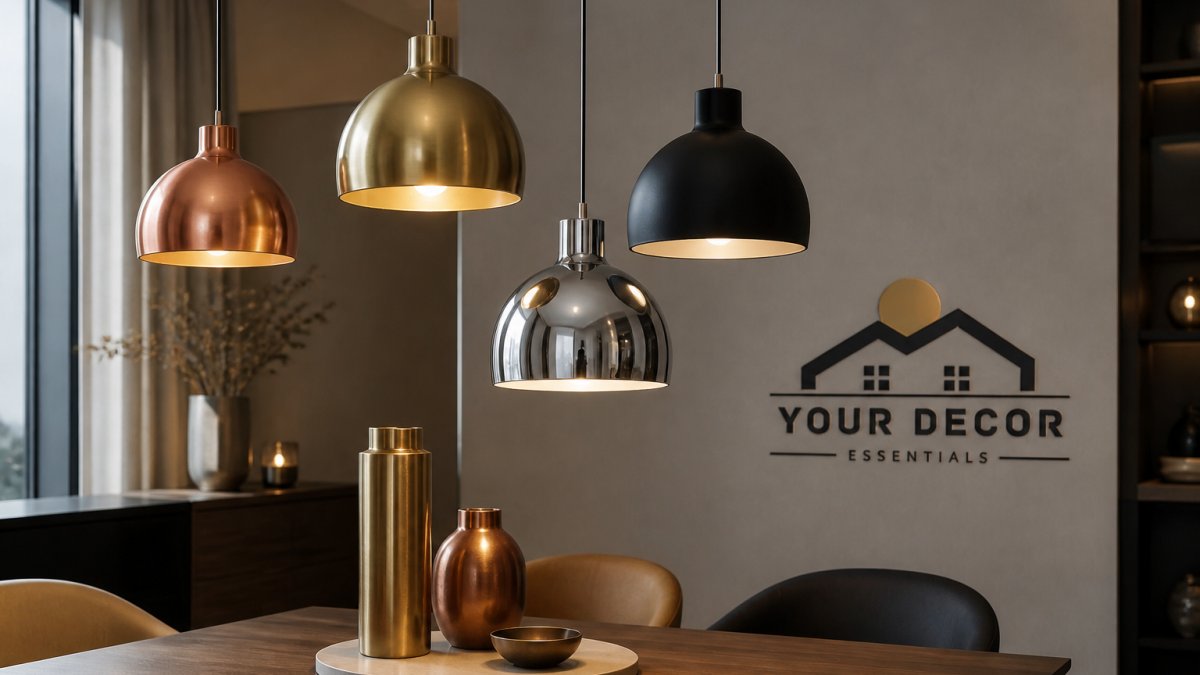
Mixed metal light fixtures combine two finishes in one piece, which does the layering for you. A brass frame with black arms, or a bronze body with nickel details, gives the room contrast without adding another finish to track. These pieces are the easiest entry point if you are nervous about mixing because the fixture already made the decision.
But the real skill is coordinating multiple fixtures across a room so they read as a deliberate composition, not a showroom catalog. Here is how to layer pendants, chandeliers, sconces, and task lighting without making every piece match.
Pendants, Chandeliers, and Sconces
Each fixture type plays a different role in the mix:
- Pendants carry the primary finish over a table or island. They are the workhorses of the mix and should echo the room's dominant metal.
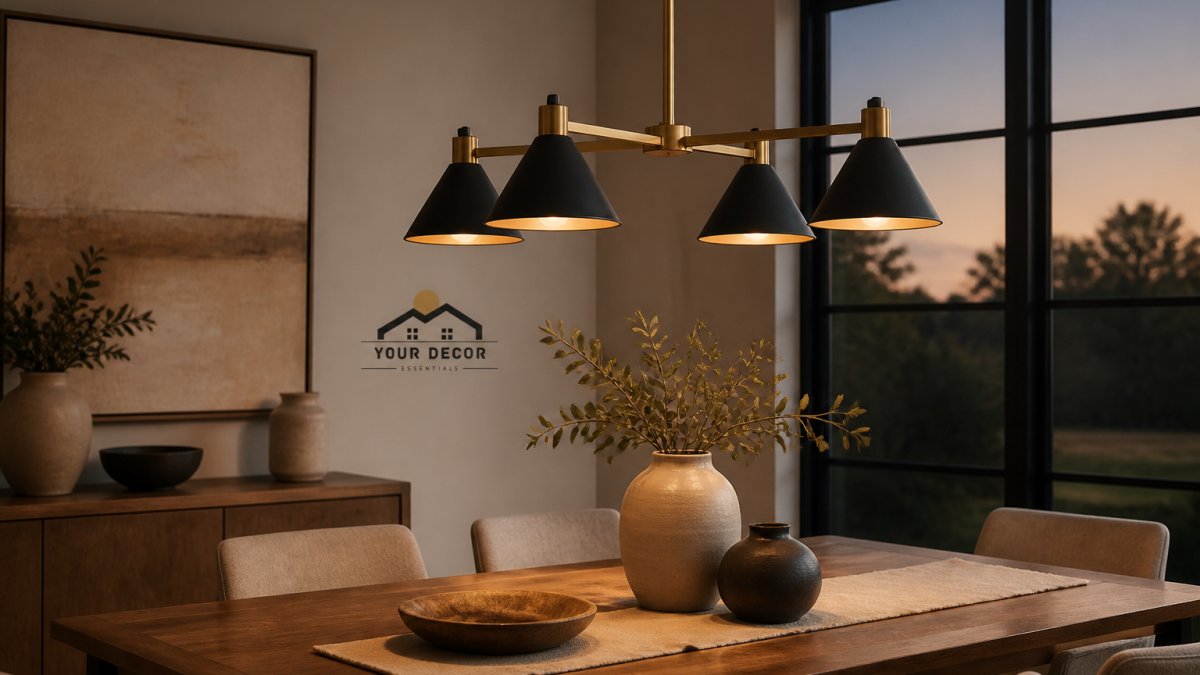
- Chandeliers can hold the boldest mix since they sit high and read as sculpture. A chandelier with a brass frame and matte black arms can introduce a second finish without competing at eye level.
- Sconces work well as the accent finish, small enough to contrast without shouting. Use them to repeat the accent metal you introduced elsewhere.
Keep one finish consistent across a sightline. If pendants are brass, let the sconces in the same view pick up the accent finish, not a third metal. A common pattern is to let the chandelier or pendant be the only place where two finishes meet in a single fixture, while sconces and task lights stay in one finish each.
Layering Task Lighting Without a Third Finish
Task lighting, under-cabinet strips, desk lamps, reading lights, is where mixes often fall apart. The fix is to treat task lighting as a neutral layer. Choose task fixtures in matte black, satin nickel, or a finish that matches the room's dominant metal, and let the decorative fixtures carry the contrast. If your pendants are brass and your sconces are matte black, keep the under-cabinet lighting in matte black or a close neutral so the eye does not register a third metal.
A practical rule: count the finishes visible from any seated position. If you can see three metals at once, one of them should be a quiet neutral like matte black or stainless steel. If you see four, remove one.
Placement and Scale
Placement matters as much as finish. A brass pendant centered over a table anchors the room. A nickel sconce flanking a doorway extends the accent finish to the edges. Avoid placing two different accent finishes on the same wall, the eye reads it as a mistake rather than a choice. Instead, repeat each accent finish at least twice in the room so it looks intentional.
Pairing Warm, Cool, and Neutral Metal Tones
Warm tones include brass, gold, copper, and bronze. Cool tones include chrome, nickel, and aluminum. Matte black and stainless steel sit closer to neutral.
The pairing rule: warm and cool can share a room as long as one clearly leads. Warm brass with cool nickel is a classic contrast. Warm brass with warm bronze can blur together and lose the contrast you wanted.
Neutral tones are the peacekeepers. Matte black works with almost any finish and gives the eye a rest between warmer and cooler metals. If a room feels busy, swap one shiny finish for matte black and watch it settle.
How Undertones and Lighting Change a Finish
Undertones are the subtle color cast beneath a finish's main color. Brass can lean yellow or green. Nickel can lean warm or slightly pink. Two fixtures that look identical in a store can look different in your room.
Lighting changes everything. A warm bulb pulls out the gold in brass. A cool bulb pushes nickel toward blue-gray. Daylight shows the truest color, which is why finish shopping in person beats shopping from a screen.
Finish Durability, Maintenance, and Matching Across Brands
Durability depends on the finish type, not the color. Two brass fixtures can behave very differently depending on whether the brass is lacquered, unlacquered, or powder-coated. Here is how the common finishes actually perform in daily use.
Fingerprints, Tarnishing, and Patina
- Polished chrome and polished nickel show fingerprints fastest. They are the easiest to wipe but the hardest to keep looking pristine in high-touch areas like kitchen islands and bathroom vanities.
- Satin nickel and brushed finishes hide fingerprints well and resist showing water spots. They are a practical choice for bathrooms and busy kitchens.
- Lacquered brass holds its shine with a soft dry cloth. The lacquer barrier prevents tarnishing, but it can wear thin in high-use spots over time.
- Unlacquered brass develops a patina, a darkening and mottling that some people love and others do not. It requires occasional polishing if you want to keep it bright, and it will never look exactly the same from one year to the next.
- Matte black powder coating resists scratches and fingerprints well, but chips can expose the metal underneath. Touch-up paint is usually available from the manufacturer.
- Bronze and copper develop a living finish. They darken and shift color with exposure to air and moisture, which is part of their appeal but also means two fixtures bought at different times may not match exactly.
Corrosion and Cleaning
Corrosion risk is highest in bathrooms and kitchens where moisture and cleaning products are common. Chrome and nickel are generally resistant, but polished finishes can pit if harsh cleaners sit on the surface. Lacquered and powder-coated finishes should never see abrasive cleaners or polish, wipe with a soft dry cloth and mild soap only. Test any new cleaner on a hidden spot first.
A simple maintenance routine works for most finishes:
- Wipe with a soft dry cloth weekly
- Use mild soap and water for stubborn spots, then dry immediately
- Skip harsh cleaners on lacquered and coated finishes
- Polish unlacquered brass only if you want to slow patina
Matching Across Brands
Finish names are not standardized. One brand's "aged brass" is another's "antique gold." Two companies can both call a finish "brushed nickel" and ship two different colors. Order a physical swatch when you can. When you cannot, buy the whole set from one source so the tones agree. If you must mix brands, compare samples in daylight and under the bulbs you actually use, not under store lighting.
Common Mistakes to Avoid When Mixing Metal Finishes
The biggest mistake is treating the mix as a free-for-all. Here is what can go wrong, and the fix for each:
| Mistake | Fix | Why It Matters |
|---|---|---|
| Four or more finishes in one room | Cut to two or three | Too many metals read as clutter |
| Every finish at the same shine | Mix one polished with one matte | Contrast needs a quiet partner |
| Ignoring fixed hardware | Anchor the mix to the faucet or pulls | New lights can fight what is already there |
| Buying finishes from memory | Order a swatch or buy as a set | Finish names vary by brand |
| Judging under one bulb | Check in daylight and warm light | Undertones shift with the light |
The second most common mistake is matching too perfectly. A room where every metal is the same brass can feel flat. One small contrast, like a matte black sconce against brass pulls, does more than a whole room of identical finishes.
Conclusion
Mixing metal finishes in lighting rewards a light hand. One lead finish, one accent, and a check under real light will carry most rooms. The rest is patience with swatches and a willingness to let one piece stand out.
That is where Your Decor Essentials comes in. Our curated collection pairs functional lighting with abstract sculptures and resin accents, so the finishing layer of a room comes together in one place. Discover pieces chosen to add contrast and visual interest, not fill a shelf. Browse the collection and build a room that looks collected, not matched.
Frequently Asked Questions
Is it fashionable to mix metal finishes in lighting?
Yes. Mixing metal finishes in modern lighting design is a widely accepted approach rather than a passing trend. The key is intention: pick one dominant metal for the room, then add a second finish as an accent on smaller fixtures or hardware. Two or three finishes usually read as deliberate, while four or more can look accidental. Keep warm and cool tones balanced so the room feels layered instead of mismatched.
Can you mix nickel and brass fixtures in the same room?
You can, and mixing brass and nickel finishes is one of the most common pairings. Brass brings warmth, while satin nickel or polished nickel adds a cooler counterpoint. Choose one as the primary finish and use the other on a secondary fixture, such as brass pendants over an island with nickel cabinet hardware nearby. Repeating each finish at least twice helps the pairing look planned.
How many metal finishes should you use in one room?
Most designers cap a room at two or three metal finishes. A dominant finish covers the largest surfaces, like a chandelier or faucet, and a secondary finish appears on smaller accents. A third finish works when it is quiet, such as matte black on a frame. Limiting the count keeps the palette cohesive and makes each finish feel intentional rather than collected by accident.
Should light fixtures match other hardware in a room?
They do not have to match exactly, but they should relate. Coordinating lighting with cabinet hardware means sharing a tone family or repeating a finish at least twice. If your cabinet pulls are aged brass, a brass-accented pendant ties the room together, while a satin nickel sconce can serve as contrast. Matching every piece looks flat; total mismatch looks unresolved. Aim for connection with variation.