 how-to
Is Modular Furniture Good for Pets?
Last Updated: November 11, 2026
Quick Summary
Modular furniture can suit homes with pets because individual sections are easier to move, clean and replace than a whole sofa. Its seams can trap hair and dirt, so choose designs with tight joins, easy access underneath, and firmly locking modules.
- Tightly woven or performance fabrics resist snags and claw pulls better than loose weaves.
- Check that each module locks firmly and test stability with a firm push and a sit.
- Choose removable, washable covers to manage pet hair and odor over time.
- Confirm whether damaged modules can be replaced individually, not only as a full set.
Table of Contents
- How Modular Furniture Handles Life With Pets
- Matching Modular Furniture to Your Pet Type
- Choosing Pet-Friendly Furniture Fabrics
- Pet-Friendly Couches That Wash Easily
- Pet Scratch-Resistant Furniture: What Holds Up
- The Pros and Cons of Modular Sectional Sofas
- Construction, Repairability and Long-Term Cost
- A Step-by-Step Checklist Before You Buy for a Pet Home
- Frequently Asked Questions
Pet owners often ask whether modular furniture is good for pets, and the honest answer is that it depends on the piece, the fabric and the animal. Your Decor Essentials carries a curated mix of stylish furniture and home accents, so this guide walks through what to look for before you buy for a pet home.
How Modular Furniture Handles Life With Pets
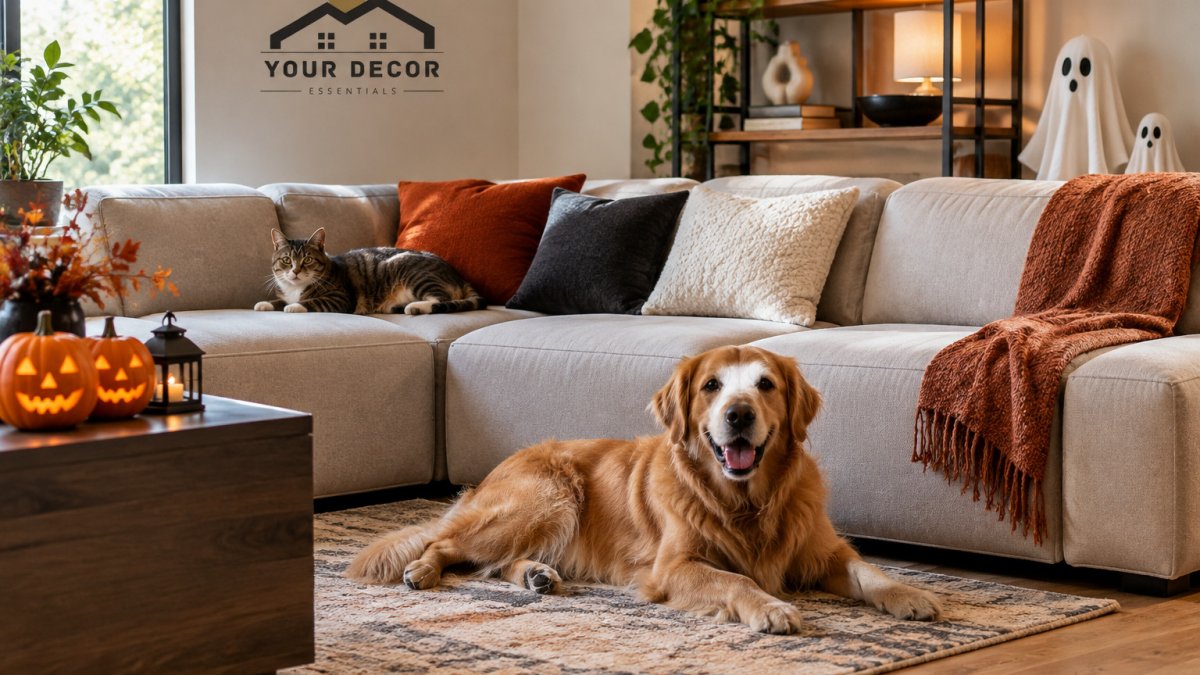
Modular furniture is built from separate sections, or modules, that you can rearrange. For a home with pets, that flexibility is useful. You can pull one module out of a line of seating when a dog wants to sit or a cat wants to climb, and reconfigure the room as your household changes.
The main advantage is that individual pieces are easier to move, clean and replace. A single soiled cushion or section is simpler to deal with than an entire sofa. The main drawback is that seams between modules can trap hair, crumbs and dirt, so look for designs with tight joins and easy access underneath.
Watch out: a loose module that slides or tips can startle a pet or cause a fall, so check that each piece locks firmly into place before letting animals use it.
Matching Modular Furniture to Your Pet Type
Different animals stress furniture in different ways, and the same module that suits a calm cat can fail quickly under a large dog. Before you shop, identify which of four behaviors matters most in your home: scratching, chewing, shedding, and weight or jumping. Each one points to a different feature.
Dogs. The main risks are weight, repeated jumping, and muddy paws. A dog that climbs onto the seating every evening puts stress on the joins between modules, so check whether each section locks to its neighbor and whether the frame flexes when you push on a corner. Large dogs also tend to shed in volume, which makes a removable cover more valuable than the fabric's appearance. Dark, low-pile fabrics tend to hide hair better than light textures. Bed-style modules with a raised edge can also help keep a dog from sliding off a loose section.
Cats. Scratching is the main concern, and it is more about the surface texture and the exposed edges than about the fabric's weight. Loose, looped weaves give a claw something to catch and pull, so look for tight, flat weaves. Cats also like to dig and push at cushion seams, so a module with a clean, closed seam at the base is less likely to split. Vertical surfaces such as the arms or the module sides usually take the most damage, so consider whether a scratching post placed next to the sofa will draw attention away from the upholstery.
Small animals (rabbits, guinea pigs, ferrets, and similar pets). The concerns here are chewing and gaps. Rabbits and rodents will gnaw on exposed foam, piping, and cord-like trim. Ferrets and other small mustelids can squeeze into openings between modules and become stuck or injured. Choose furniture with enclosed bases and no gaps wider than your pet's head and shoulders, and check that any fabric trim is tightly sewn rather than glued or loosely stitched.
Watch out: a module that looks sturdy at the store can still shift under a jumping dog, so test each section with a firm push and a sit before you commit.
A practical way to narrow the choice is to write down your pet's three most frequent behaviors on the sofa and rank them. A high-energy dog that greets guests at the door needs a stronger frame and a washable cover. An older cat that naps on one cushion needs a comfortable, low-wear surface and a clean base where dust does not collect.
Choosing Pet-Friendly Furniture Fabrics
Fabric matters more than almost any other feature when you live with pets. The right material holds up to fur, claws and spills, while the wrong one shows every mark.
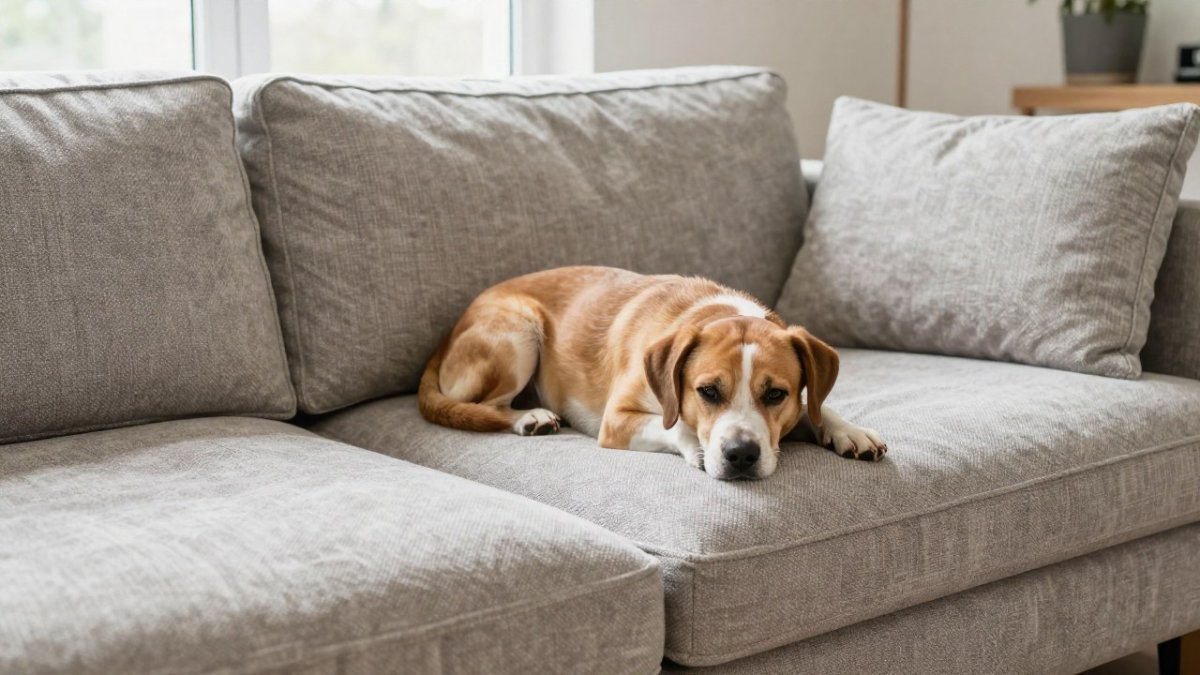
Tightly woven and performance fabrics
Tightly woven fabrics resist snags and claw pulls better than loose weaves. Performance fabrics are often treated to resist stains and moisture. Ask the seller for the fabric's abrasion rating and read care labels closely, since treatments can wear off over time.
Realistic limit: no fabric is fully scratch-proof. Even tough materials will show wear from a determined cat.
Pet hair, claws and odor
Pet hair clings to some fabrics more than others. Smooth, tightly woven surfaces let hair brush off more easily than nubby or velvet textures. Odor is harder to control, so choose covers that can be washed and check whether the fabric is treated for odor resistance.
Many owners find that a removable, washable cover is the easiest way to manage hair and smells over time.
Pet-Friendly Couches That Wash Easily
Couch style plays a role in cleaning. Armless and low-profile designs are often easier to wipe down, because there are fewer crevices for crumbs and fur to collect.
When comparing couches, check these points:
- Removable cushion covers that machine wash
- Smooth seams and minimal tufting
- Legs raised enough to allow a vacuum underneath
- A fabric that wipes clean with a damp cloth
Choose a couch that suits how your pet behaves. A plain, easy-clean design is usually more practical than an intricate one.
Pet Scratch-Resistant Furniture: What Holds Up
Scratch resistance is one of the most common concerns for pet owners. Tightly woven fabrics, firm cushions and sturdy frames all help. Leather and faux leather can resist claws well, but they may show marks differently, so test a sample if you can.
Set expectations realistically. Scratch-resistant furniture reduces damage but does not eliminate it. Pair the furniture with a scratching post and regular nail trims to protect your investment.
The Pros and Cons of Modular Sectional Sofas
Modular sectionals suit many pet homes, but they are not right for everyone.
Pros:
- Individual sections can be cleaned or replaced
- Layouts can be rearranged as needs change
- Smaller pieces often fit narrow doorways more easily
Cons:
- Seams can trap hair and debris
- Sections may shift or separate if not well joined
- Costs can add up when replacing several modules
If you live in a small apartment with a dog that likes to lounge in one spot, a modular sectional with a washable cover may be a good fit. If you have a very active cat, you may prefer a single, tightly constructed piece with fewer seams.
Construction, Repairability and Long-Term Cost
The sticker price of a modular piece tells you little about what it will cost to keep. What matters is how the frame is joined, how the cushions are filled and attached, and whether a damaged part can be replaced on its own.
Start with the frame. Kiln-dried hardwood or a well-joined engineered frame resists the racking that happens when a pet repeatedly pulls or climbs on one corner. Check the joinery by pushing a corner and watching whether the joint moves. Screwed and glued corner blocks usually outlast staples alone. Look at the legs too: bolted or screwed legs can be tightened over time, while legs set into a single block of foam or plastic often cannot.
Next, examine the cushions. A foam core wrapped in a sealed inner liner tends to hold its shape longer than loose fiber fill, and a zippered inner cover makes it easier to replace the fill without replacing the outer fabric. Press a cushion and watch how quickly it recovers. Slow recovery usually means the foam will sag within a year or two of pet use.
The modular advantage shows up when something fails. Ask whether the manufacturer sells individual modules, cushion covers, and replacement arm or back panels separately. If a single section can be ordered alone, a torn or heavily clawed module costs far less to fix than the whole set. Compare this with a conventional sofa: when a single-piece sofa is badly damaged, reupholstering can cost as much as a new mid-range piece, and many repair shops will not take a full frame job at all.
A rough ownership comparison helps. Add up the price of the piece, the expected replacement covers over five years, and the cost of replacing one module if it fails. Then compare that total with a conventional sofa and the cost of professional reupholstery. A modular set with cheap, widely available covers often comes out ahead. A set where every module is proprietary and sold only as a full group often does not.
Questions to ask before you buy:
- Are cushion covers and individual modules sold separately, and at what price?
- Can a damaged section be replaced without buying the whole set again?
- Is the frame made of solid wood or engineered board, and how are the joints fastened?
- What warranty covers the frame, the fabric, and the foam, and does it cover pet damage?
Watch out: some warranties exclude claw damage and pet accidents, so read the exclusions before assuming the manufacturer will cover wear from your animals.
The article points to a few construction features that affect how long a piece lasts and how cheaply it can be repaired.
| Feature | Better choice | Why it matters |
|---|---|---|
| Corner joints | Screwed and glued corner blocks | Outlast staples alone |
| Legs | Bolted or screwed legs | Can be tightened over time |
| Cushion core | Foam core in a sealed inner liner | Holds its shape longer than loose fill |
| Cushion cover | Zippered inner cover | Lets you replace fill without replacing fabric |
| Replacement parts | Individual modules sold separately | A damaged section costs far less to fix |
| Warranty | Read exclusions | Some exclude claw damage and pet accidents |
A Step-by-Step Checklist Before You Buy for a Pet Home
Use this checklist to narrow your choices:
- Identify your pet type and typical behavior
- Choose a tightly woven or performance fabric
- Confirm that covers are removable and washable
- Check seams, joins and legs for easy cleaning
- Test stability of each modular section
- Ask about replacement parts and expected lifespan
- Set a budget that includes future replacements
Work through the list before you commit. A little planning now makes modular furniture a practical, good-looking choice for a home with pets.
Frequently Asked Questions
Are modular sofas safe for pets?
Modular sofas can be a good choice for pet owners when the construction is sound and the upholstery is durable. Look for sturdy frames, secure module connectors and fabrics that resist snags and claw pulls. Because modules can shift when a pet jumps on them, check that the pieces lock together firmly. Ask the retailer about the frame material and fabric rating before buying, and test a sample of the fabric at home with a pet hair roller and a damp cloth.
Which furniture fabrics are best for pets?
Tightly woven performance fabrics, microfiber and some synthetic blends tend to resist snags, stains and pet hair better than loose-weave cotton or linen. Smooth, low-pile surfaces release hair more easily than deep textures. Fabric durability is often described by a rub or abrasion rating, so look for that figure on the product listing. Keep in mind that no fabric is fully scratch-proof, and performance ratings describe lab testing rather than guaranteed results in your home.
Are pet-friendly couches washable?
Some pet-friendly couches have removable, machine-washable covers, while others need spot cleaning only. Check the care label before buying, since a cover that is washable on a gentle cycle is much easier to maintain than one that requires dry cleaning. Removable covers also let you replace a worn section without replacing the whole piece. Plan to wash covers regularly if your pets shed heavily or go outdoors often.
How can I protect a modular sofa from pet scratches?
Trim your pet's nails regularly, provide a scratching post near the sofa, and use washable throws over high-contact areas. Pet-friendly fabrics with a tight weave resist claw snags better than loose upholstery. Keep in mind that scratch resistance has limits, so rotating throws and redirecting your pet's behavior helps more over time than relying on the fabric alone.