 how-to
Durable Resin Home Accessories: How to Choose Well
Quick Summary
Choose durable resin home accessories by matching the resin type to how the piece will be used. Epoxy suits trays and coasters because it resists water and heat well, while polyresin works for heavy decorative sculptures. Then inspect the piece for smooth edges, even color and a fully cured, non-sticky surface.
- Epoxy is strong, clear and water resistant, making it best for trays and coasters.
- Polyester cures faster and costs less, but resists heat and UV less well.
- Ask sellers which resin type they use, since a clear answer is a good sign.
- Check for large bubbles, cracks, sticky spots and thin edges before keeping a piece.
- Hand wash resin with mild soap and a soft cloth, never in the dishwasher.
Table of Contents
- Why Durability Matters More in Resin Than in Other Decor
- Understanding the Main Resin Types and Their Properties
- How to Choose Resin for a Project or Intended Use
- Side-by-Side Comparison of Resin Formulations
- Testing Durability: Measurable Criteria to Look For
- UV Exposure, Yellowing, and Color Stability
- Inspecting Construction Quality and Spotting Defects
- Epoxy Resin Decorative Items by Room and Household Use
- Caring for Your Resin Pieces So They Last
- Choosing Your Next Durable Resin Accent for Your Home
- Frequently Asked Questions
Why Durability Matters More in Resin Than in Other Decor
Resin accents sit on coffee tables, trays and shelves where hot mugs, wet glasses and daily handling test them every day. A durable resin piece keeps its shine, shape and color for years. A weak one can scratch, cloud or crack within months. That is why choosing well matters more with resin than with many other decor materials.
Resin is a plastic that starts as a liquid and hardens. Its strength depends on the formula, how it was mixed and how fully it cured. Two pieces that look identical in a photo can behave very differently at home.
- Heat from hot cups can leave marks on weaker surfaces
- Sharp edges and grit can scratch a soft top coat
- Sunlight can yellow some formulas over time
- Poor mixing can leave tacky or brittle spots
Knowing what to look for helps you pick pieces that stay beautiful. The sections below walk through the resin types, the tests and the checks that separate lasting accessories from short-lived ones.
Understanding the Main Resin Types and Their Properties
Most decorative resin falls into two groups: epoxy and polyester. Epoxy is a common choice for home accessories. It bonds well and handles moisture well. Polyester cures faster, but it can smell strongly and may yellow over time.
Polyresin is another term you will see. It usually refers to a resin blend that adds fillers, such as powdered stone, to create a solid, heavy feel. Polyresin pieces often look like stone or ceramic, but the quality varies widely from one maker to the next.
- Epoxy resin: Strong, clear and water resistant. Best for trays and coasters.
- Polyester resin: Faster curing and lower cost. Less heat and UV resistant.
- Polyresin: Heavy and solid, often used for sculptures and figurines.
Ask the seller which type they use. A clear answer is a good sign.
How to Choose Resin for a Project or Intended Use
Start with how the piece will be used. A decorative sculpture on a shelf faces very different stress than a tray that holds drinks. Matching the resin to the job is the first step to choosing well.
Here is a simple way to think about it:
- Decorative display: Polyresin or epoxy works well, since it sees little wear.
- Surface use, such as trays: Choose epoxy with a hard, scratch resistant top coat.
- Coasters: Look for heat and water resistance, since cups sit on them daily.
- Outdoor or sunny spots: Pick a UV stable formula to limit yellowing.
If you plan to use a piece under hot items, ask about heat resistance before you buy. Many resins soften near high temperatures, so a warning label is worth reading.
Side-by-Side Comparison of Resin Formulations
Comparing formulations side by side makes the differences easier to spot. The table below summarizes typical strengths for common resin types used in home accessories. Real results vary by brand and finish, so treat it as a starting guide.
| Resin Type | Hardness | Water Resistance | Heat Resistance | UV Stability | Best For |
|---|---|---|---|---|---|
| Epoxy | High | Excellent | Moderate | Fair to good | Trays, coasters |
| Polyester | Moderate | Good | Low | Fair | Decorative items |
| Polyresin | High | Good | Moderate | Good | Sculptures, figurines |
Use this table to narrow your choices, then check each product page for the exact formula and care notes.
Testing Durability: Measurable Criteria to Look For
Marketing words like "durable" or "long-lasting" do not tell you much. Look for measurable signs instead, and understand what each one actually predicts. A single number rarely captures how a piece will behave on a coffee table, so treat each measure as one piece of the picture.
Surface hardness. Hardness describes how well a surface resists indentation and light scratching. Sellers sometimes list a Shore D value, a scale commonly used for rigid plastics. Higher numbers generally mean a harder surface, but hardness says little about impact strength. A very hard resin can still chip or crack if it is brittle or thin.
Scratch resistance. This is closely tied to hardness and to the top coat. A fingernail dragged gently across an inconspicuous spot is a rough field check: deep marks suggest a soft surface or a thin finish. Scratch resistance does not predict how the piece handles heat or heavy loads.
Impact resistance. This describes how a piece copes with drops, knocks and sudden force. It depends on the formula, the thickness and the shape. Thin edges and sharp corners concentrate stress, so a thick, rounded coaster usually survives a fall better than a thin, angular tray. Impact resistance tells you nothing about UV stability or heat tolerance.
Water resistance. For trays, coasters and bathroom pieces, this matters most. Epoxy generally handles moisture well, while some polyester pieces can cloud or soften with prolonged wet contact. Water resistance does not guarantee stain resistance from colored liquids, so wipe spills promptly.
Heat tolerance. Many resins soften near high temperatures, so a stated maximum temperature for hot items is a useful number to compare. Heat tolerance does not predict how a piece behaves under a heavy load or in direct sun.
UV stability. This predicts how well color and clarity hold up in sunlight. It is separate from every measure above, and a piece can be hard, strong and water resistant yet still yellow in a bright window.
Use these measures together rather than in isolation. A practical durability checklist helps you weigh them:
- Thickness: Thicker walls and bases resist impact and warping better than thin ones.
- Construction: Look for solid joins, flat bases and no hollow, flexible spots.
- Finish: A hard, even top coat resists scratches and stains better than a soft or patchy one.
- Intended use: Match the piece to its job, since a display sculpture and a drink tray face different stress.
- Stated limits: A heat limit, hardness value or care note is more useful than a vague durability claim.
If a seller cannot share any measurable detail, assume the product has not been tested for durability in a way you can verify. A clear answer is a good sign; a vague one often means the product is harder to judge.
UV Exposure, Yellowing, and Color Stability
Resin can yellow or fade when it sits in strong sunlight for long periods. Clear and light-colored pieces show this most. Dark pieces can hide early changes, but they can still fade and lose depth over time.
To protect your pieces, keep them out of direct, all-day sun. Rotate them if they sit by a bright window. Ask sellers whether the formula includes UV inhibitors, since that additive slows yellowing.
Inspecting Construction Quality and Spotting Defects
A quick inspection can catch problems before they become regrets. Take a few minutes when a piece arrives, and check it under good light. Each defect below points to a specific way an accessory can fail later, so it helps to know what you are looking at.
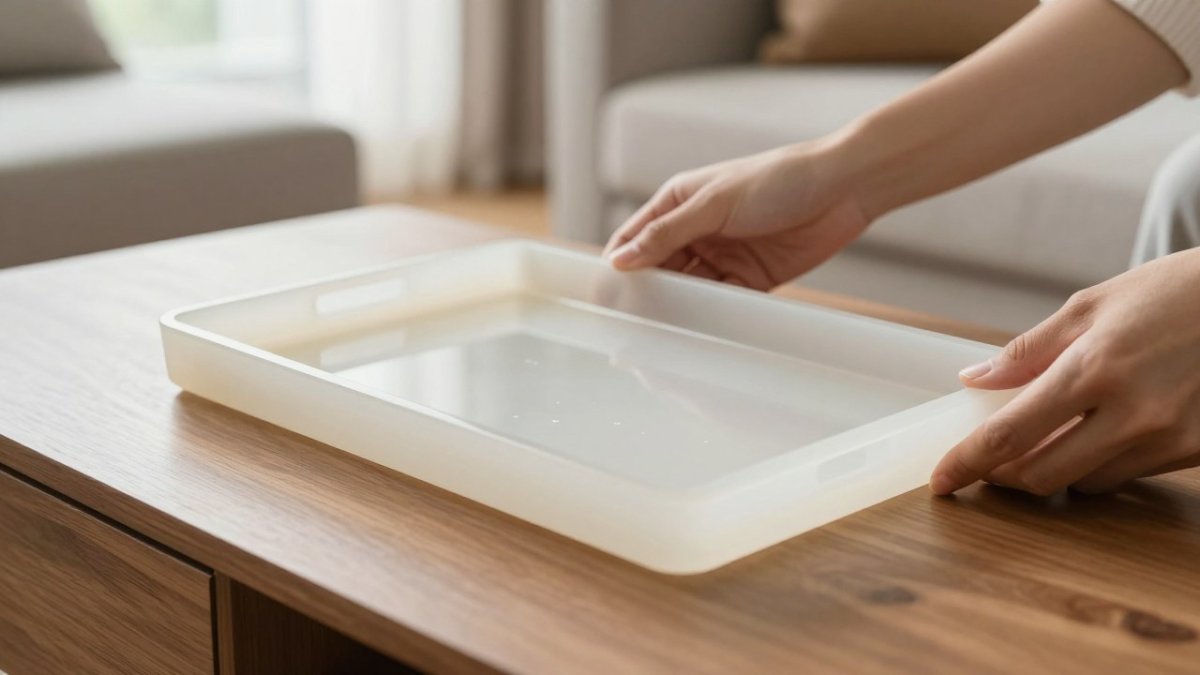
Air bubbles. Small bubbles near the edges may be normal in handmade pieces. Large voids, especially at the surface or along an edge, weaken the body and can grow into cracks under stress. Bubbles trapped at the base can also make a piece sit unevenly.
Cracks and hairline fractures. Any visible crack is a reason to return the piece. Cracks concentrate stress and tend to spread, and a hairline fracture near an edge often signals a thin or poorly cured area.
Uneven curing. Feel for tacky or soft patches. A sticky or soft surface that does not improve after a few days usually means the piece did not cure fully. Incomplete curing leaves the resin weaker and more prone to scratching, clouding and deformation.
Weak joins. On assembled pieces, check where parts meet. A join should feel solid and look even. Gaps, movement or excess glue at a seam can fail under load, especially on trays with handles or lamps with bases.
Thin edges. Run a finger along rims and corners. Very thin edges chip and crack more easily and offer less protection against impact. A thick, rounded edge usually lasts longer than a sharp, thin one.
Poor coatings. Look for patchy, drippy or cloudy top coats. An uneven finish can flake, trap stains or hide soft spots underneath. A hard, even coat is a better sign of a durable surface.
Color and inclusions. Confirm that colors are even and that any embedded items are set firmly. Loose inclusions can work free over time, and uneven pigment can signal a rushed pour.
Stability. Make sure the base or back is flat and stable. A piece that rocks or sits unevenly is more likely to tip and fall.
Watch out: A sticky or soft surface that does not improve after a few days usually means the piece did not cure fully. Return it rather than trying to fix it at home. Photograph any defect and ask for a replacement or refund under the return policy.
Epoxy Resin Decorative Items by Room and Household Use
The right resin piece depends on where it lives. Here is how to match accessories to common rooms and households.
- Living room: Sculptural pieces and statement trays suit a coffee table or console. Choose a hard, scratch resistant finish.
- Kitchen or dining: Coasters and serving trays need heat and water resistance. Epoxy is the safer pick.
- Bedroom or bathroom: Lighter-use pieces, such as small dishes, can handle humidity well.
- Homes with children or pets: Choose sturdy, smooth-edged pieces that resist chips and scratches.
Think about traffic and habits when choosing pieces for your home.
Caring for Your Resin Pieces So They Last
Good care extends the life of any resin piece. Most care is simple and quick.
- Clean with mild soap and a soft cloth.
- Dry the surface right away to avoid water spots.
- Use coasters or mats under hot items.
- Avoid harsh solvents, abrasive pads and strong cleaners.
- Keep pieces away from heaters and long, direct sun.
For small scratches, a gentle polish made for resin may help, but test it on a hidden area first.
Choosing Your Next Durable Resin Accent for Your Home
Choosing durable resin home accessories comes down to three steps: match the resin to the use, check measurable quality signs and inspect the piece on arrival. With those habits, you can enjoy pieces that look good and hold up for years.
Ready to find accessories built to last? Browse the Your Decor Essentials collection and pick the pieces that fit your rooms and your routine. [Shop Now]
Frequently Asked Questions
How can you tell if a resin home accessory is durable?
Look at the resin type, the thickness and evenness of the cast, and the finish. Durable pieces have a smooth, hard surface that resists light scratching, no visible bubbles or soft spots, and clean, sealed edges. Ask the seller whether the piece is fully cured and what protective coating was used. Pieces that feel tacky, smell strongly of solvent, or dent easily when pressed with a fingernail are signs of an incomplete cure or weak construction, and they are less likely to hold up to everyday handling.
Does epoxy resin yellow over time?
Some epoxy resins yellow, especially when exposed to direct sunlight or UV light over long periods. Standard epoxy is more prone to yellowing than UV-stabilized formulations. To reduce the risk, choose a resin labeled as UV-resistant or stable, and place decorative pieces away from south- and west-facing windows where sun exposure is strongest. Color stability also depends on the pigments and dyes used, so ask the maker which colorants were added.
How do you care for resin home accessories?
Clean resin decor with a soft cloth and mild soap diluted in warm water, then dry it with a clean cloth. Avoid abrasive pads, harsh solvents, and strong cleaners that can dull or cloud the surface. Keep hot items off resin trays and coasters unless the piece is rated for heat, and avoid long-term direct sunlight to limit yellowing. Dust regularly so grit does not scratch the finish.
Can resin decor withstand heat and sunlight?
Resin can handle ordinary room temperatures well, but many resins soften or discolor under high heat or prolonged sun. Do not place resin pieces on heated surfaces, near radiators, or in a hot car. Indoors, position pieces away from direct sunlight where possible. For pieces that will see more heat or light, look for products specifically described as UV-stable and heat-tolerant, and confirm those claims with the seller before purchasing.