 blog
blog
Resin Decor Alternatives to Glass: A 2026 Guide
Table of Contents
- Why Choose Resin Decor Alternatives to Glass?
- Quick Comparison: Top Materials for Glass-Like Decor
- Acrylic Decor vs Glass: Clarity, Durability, and Style
- Polycarbonate vs Glass for Decor: Strength Meets Style
- Materials That Look Like Glass: Beyond Resin
- Eco-Friendly Resin Alternatives for Conscious Decor
- How to Work with Resin Alternatives: Step-by-Step
- Safety and Care for Resin Decor Alternatives
- Conclusion: Choosing the Right Resin Decor Alternative
- Frequently Asked Questions
Last Updated: October 12, 2026
Why Choose Resin Decor Alternatives to Glass?
Resin decor alternatives to glass give you the look of glass without the fragility that comes with it. A dropped glass vase shatters; a resin accent piece usually just bounces. That single difference explains why so many homeowners now reach for resin decor when they want a clear, glossy statement piece that survives real life.
At Your Decor Essentials, we hear the same hesitation from first-time buyers: they love the look of glass but worry about breakage, weight, and shipping damage. Resin solves all three. It's lighter, it's forgiving, and it can be cast into shapes glass simply can't hold.
The trade-offs matter, though. Resin scratches more easily than glass, and cheaper formulas yellow over time. Knowing which material fits your project is the whole game.
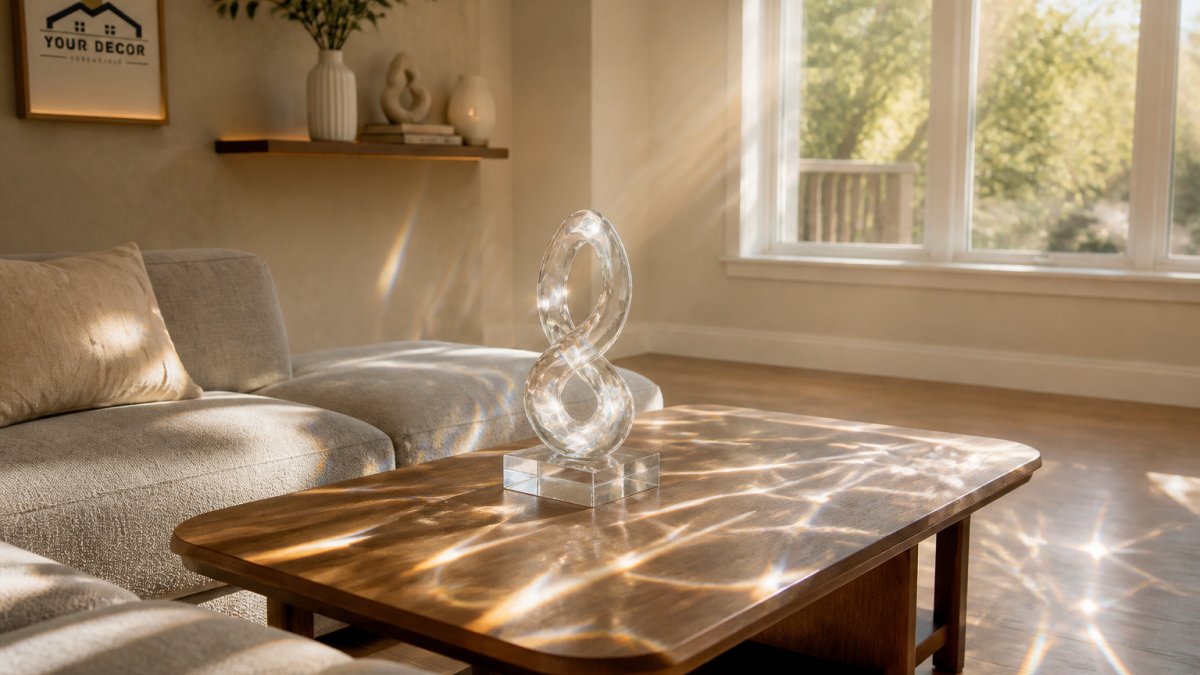
Quick Comparison: Top Materials for Glass-Like Decor
The best glass-like material depends on where the piece goes. Acrylic suits display shelves, polycarbonate suits high-traffic areas, and epoxy resin suits detailed cast shapes. Here's how the main options stack up before we dig into each one.
| Material | Clarity | Scratch Resistance | Best For |
|---|---|---|---|
| Acrylic | Excellent | Moderate | Display sculptures, shelving |
| Polycarbonate | Good | High | High-traffic, kid-friendly rooms |
| Epoxy resin | Excellent | Low | Cast shapes, embedded objects |
| Eco resin | Good | Low | Conscious buyers, small accents |
| Water-based coating | Moderate | Low | Faux glass over existing surfaces |
Each material trades one strength for another. Acrylic looks closest to glass but scuffs. Polycarbonate takes a hit without cracking but never looks quite as crisp. Resin casts into anything but needs care.
Acrylic Decor vs Glass: Clarity, Durability, and Style
Acrylic decor vs glass comes down to weight and safety versus scratch resistance. Acrylic weighs roughly half as much as glass and resists shattering, which makes it the safer pick for shelves above furniture. It also bends light in a way that reads as genuine glass from across a room.
Where acrylic falls short is surface hardness. Dust it with a dry cloth and you're fine; wipe it with a rough rag and you'll leave fine scratches that catch the light. Glass shrugs that off.
For styling, acrylic takes color beautifully. A tinted acrylic sculpture can anchor a coffee table the way a glass piece would, but with a softer, more modern edge. If you want the glass look without the anxiety, acrylic is the practical answer.
Polycarbonate vs Glass for Decor: Strength Meets Style
Polycarbonate vs glass for decor is a strength contest that polycarbonate wins outright. It's the material behind safety glasses and riot shields, and it absorbs impact that would shatter glass or crack acrylic. For a home with kids or pets, that toughness matters.
The catch is optical quality. Polycarbonate has a slightly warmer tint and lower clarity than acrylic, so it never looks quite as glass-like. It also scratches, though less than you'd expect from a material this tough.
Use polycarbonate where the piece takes abuse: a floor sculpture, a tabletop accent in a busy hallway, a decorative object near a doorway. Save the crystal-clear acrylic for pieces that sit still and get admired.
Materials That Look Like Glass: Beyond Resin
Glass-like finishes come from more than resin. Real glass, acrylic, polycarbonate, and mineral casting all deliver a clear or translucent look, and each suits a different job. The trick is knowing which one fits yours.
- Real glass: Unmatched clarity and scratch resistance, but heavy and breakable
- Acrylic: Light, shatter-resistant, closest match to glass clarity
- Polycarbonate: Tough and impact-resistant, slightly less clear
- Mineral casting: A stone-and-resin blend that mimics frosted or cloudy glass
- Water-based coatings: A clear finish you apply over existing surfaces for a faux glass effect
Mineral casting deserves more attention than it gets. It produces a soft, translucent look that reads as frosted glass, and it holds fine detail well. For decorative objects like bowls and small sculptures, it's a strong middle ground between resin and stone.
Eco-Friendly Resin Alternatives for Conscious Decor
Eco-friendly resin alternatives reduce solvent load and waste, but they are not all interchangeable. The two main categories are bio-based resins, which replace a portion of petroleum-derived ingredients with plant sources, and water-based coatings, which use water as the carrier instead of harsh solvents. Each has a distinct performance profile that matters for decor.
Bio-based epoxy resins, such as those formulated with plant-derived epichlorohydrin or modified vegetable oils, can achieve clarity close to standard epoxy but tend to cure softer and may amber faster under UV exposure. They work well for small accents, coasters, and embedded objects that won't face heavy handling. Water-based polyurethane and acrylic coatings dry clear and emit far fewer volatile organic compounds (VOCs), but they are thinner, build gloss more slowly, and are not suitable for deep pours. For a faux-glass finish over a painted surface or a small decorative panel, they are a practical choice.
A common pattern is that eco-friendly options trade hardness and UV stability for lower toxicity. If you need a piece that stays crystal clear for years, a standard high-solids epoxy with a UV inhibitor may still outperform bio-based alternatives. If your priority is indoor air quality and you're working in a small space, water-based coatings are the safer bet.
Biodegradable resins exist but come with significant caveats. They are typically opaque or only slightly translucent, softer than standard resin, and not intended for structural or high-wear decor. They suit compostable craft projects or small decorative elements where clarity is not the goal.
For buyers who want the look without the mixing and curing, purchasing a finished piece avoids the solvent exposure entirely. Look for decor made from acrylic, polycarbonate, or mineral casting, which are factory-finished and require no home ventilation.
How to Work with Resin Alternatives: Step-by-Step
Expected Result: A clear, glossy surface that mimics glass. Small bubbles may remain, but they usually read as character rather than flaws.
Safety and Care for Resin Decor Alternatives
Cleaning finished pieces: Dust with a soft, lint-free cloth. For deeper cleaning, use mild soap and lukewarm water. Avoid ammonia-based glass cleaners, alcohol, acetone, and abrasive pads, all of which can cloud or scratch acrylic, polycarbonate, and resin surfaces. Polycarbonate is especially susceptible to stress cracking from ammonia and some solvents.
UV exposure and yellowing: Cheaper epoxy and bio-based resins yellow over time when exposed to sunlight. Keep decor out of direct, prolonged sun. Acrylic has good UV resistance but can still degrade with years of direct exposure. Polycarbonate yellows faster than acrylic under UV unless it has a UV-resistant coating.
Long-term care by material: Acrylic scratches easily; polish with a plastic-specific cleaner and avoid dry wiping with rough cloths. Polycarbonate is tougher but can haze over time; use a plastic polish designed for polycarbonate. Epoxy resin benefits from a UV-resistant topcoat if the piece will be near windows. Mineral casting is porous and should be sealed if used in humid areas.
Conclusion: Choosing the Right Resin Decor Alternative
Picking the right resin decor alternative starts with one question: where will the piece live? High-traffic spot, choose polycarbonate. Display shelf, choose acrylic. Detailed cast shape, choose epoxy resin. Conscious buyer, choose a water-based or bio-based option.
Your Decor Essentials offers a curated selection of abstract sculptures, resin accents, and functional lighting, all ready to display and styled to bring visual interest to a room. Every piece is chosen to help you build a space that reflects your taste, not a catalog's.
Shop Now and find the piece that finishes the room.
Frequently Asked Questions
What are some good substitutes for glass in home decor?
Acrylic, polycarbonate, and resin are popular substitutes for glass in home decor. Acrylic offers clarity and shatter resistance, while polycarbonate provides high impact strength. Resin can mimic glass and is available in eco-friendly formulations. Each material has unique properties suited to different decorative applications, from sculptures to functional lighting.
Is resin as fragile as glass?
Resin is generally more durable and less fragile than glass. It resists shattering and can absorb impact better, making it safer for homes with children or pets. However, resin can scratch over time, so care should be taken with abrasive cleaners. Quality resin decor maintains its appearance with proper handling and cleaning.
What is the material that looks like glass but isn't?
Acrylic, polycarbonate, and certain resins are materials that look like glass but aren't. Acrylic, often called plexiglass, offers high clarity and is lightweight. Polycarbonate is extremely strong and impact-resistant. Resin can be cast into various shapes and colors, providing a glass-like finish for artistic and decorative pieces.
Is acrylic a good alternative to glass for decor?
Yes, acrylic is an excellent alternative to glass for decor. It is lighter, shatter-resistant, and available in many colors and finishes. Acrylic decor can mimic the clarity of glass while offering greater durability. It is ideal for sculptures, vases, and lighting fixtures, though it can scratch more easily than glass.