 ultimate-guide
Abstract Sculpture Materials: Collector's Guide
Table of Contents
- Why Sculpture Materials Matter for Abstract Art Collectors
- Resin vs Glass Sculpture: Key Differences for Collectors
- How to Identify Resin Sculpture: A Collector's Checklist
- Resin Sculpture Care: Cleaning and Maintenance Basics
- Abstract Sculpture Buying Guide: What to Evaluate Before You Buy
- Stone Sculpture: Weight, Patina, and Placement Realities
- Metal Sculpture: Welded Forms and Indoor-Outdoor Flexibility
- Wood and Mixed Media: Texture, Finish, and Environmental Sensitivity
- Ceramic, Clay, and Plaster: Fragility and Display Considerations
- Material-Specific Indoor and Outdoor Placement Guide
- Condition Assessment by Material: What to Inspect
- Sustainability and Material Provenance in Sculpture Collecting
- Conclusion: Building Your Collection with Confidence
- Frequently Asked Questions
Last Updated: October 12, 2026
Why Sculpture Materials Matter for Abstract Art Collectors
The material an abstract sculpture is made from shapes everything about owning it: how it looks in your space, how long it lasts, how you clean it, and what it costs to keep it looking right.
This guide is a sculpture materials walkthrough built for people buying three-dimensional art, not art historians.
Here's the throughline: material is not a footnote to the artwork. For abstract work, where there's no recognizable subject to carry the piece, material is the subject.
Most buying guides treat material as a single line in a spec sheet. We think that's backwards.
Resin vs Glass Sculpture: Key Differences for Collectors
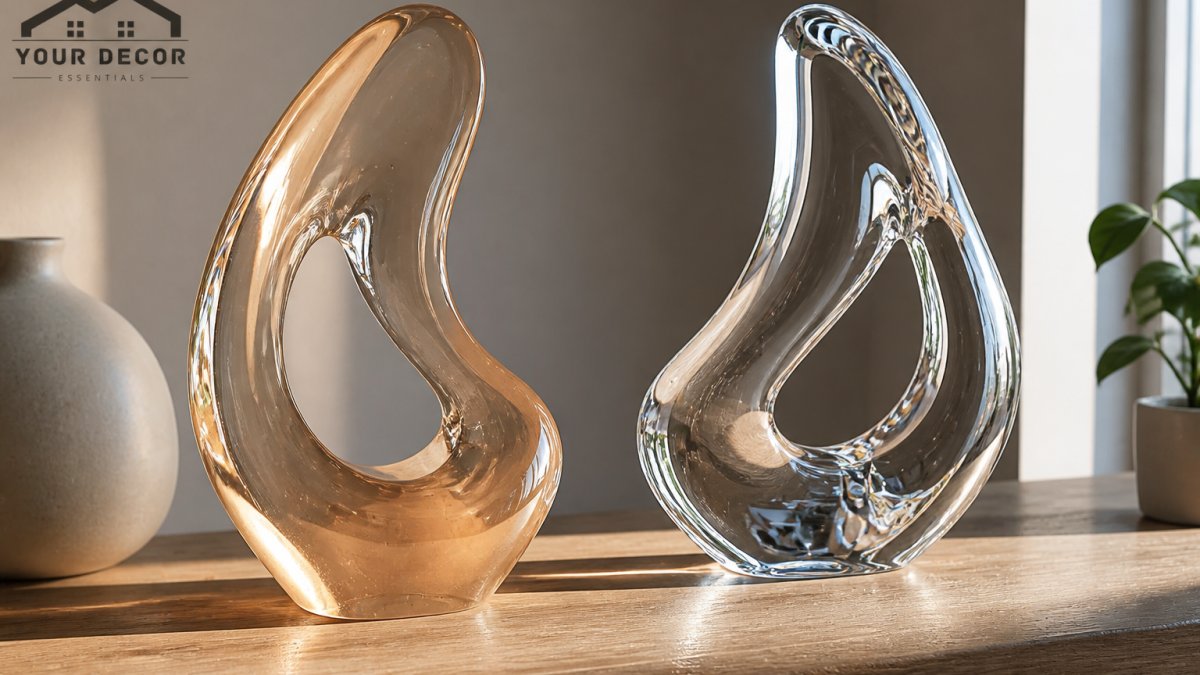
Resin and glass sculptures can look nearly identical in an online listing and behave nothing alike in a real home. Resin is a synthetic material, typically a poured polymer that can be cast into almost any form and colored throughout or on the surface.
Durability and Breakage Risk
Resin's biggest advantage is resilience. A dropped resin piece might chip or scuff, but it usually won't shatter the way glass can. That makes resin a practical choice for households with kids, pets, or high-traffic shelves. Glass, by contrast, is unforgiving: a knock against a hard edge can crack or shatter the piece outright, and some glass forms are vulnerable to thermal shock if moved between very different temperatures.
Visual Qualities and Light Interaction
This is where the two diverge most. Glass interacts with light in ways resin generally can't replicate: refraction, internal reflections, and color that shifts as you walk past. Resin can be formulated to be translucent, opaque, or layered with metallic and pearlescent effects, and it holds crisp, complex shapes well. If you want a piece that changes character as daylight moves across a room, glass usually wins.
How to Identify Resin Sculpture: A Collector's Checklist
Resin sculpture is a cast piece made from a synthetic polymer, usually identifiable by its light weight, warm-to-neutral touch, and the absence of the sharp "ping" or cool surface of glass. Knowing how to identify resin sculpture matters because listings don't always say, and "stone-look" or "crystal-look" pieces are frequently resin underneath.
Run through this checklist before you buy:
- Weight test: Resin feels light for its size. A piece that looks like stone but lifts easily is almost certainly resin.
- Temperature test: Glass and metal feel cool to the touch; resin warms quickly to your hand.
- Seam check: Cast resin often shows a faint mold line or a small fill point on the underside or back.
Resin Sculpture Care: Cleaning and Maintenance Basics
Resin sculpture care is simple, but the wrong product can permanently dull or cloud the surface. The short version: dust regularly with a soft, dry cloth, and clean with lukewarm water and a drop of mild dish soap on a microfiber cloth when needed.
What to avoid:
- Alcohol, acetone, and ammonia-based cleaners. These can etch, cloud, or dissolve the surface finish.
- Abrasive pads and scouring powders. They leave fine scratches that catch light and dull the piece.
- Direct sunlight and heat sources. Prolonged UV exposure can fade or yellow some resins, and heat can soften or warp thin sections.
For matte finishes, a dry microfiber cloth is usually all you need. For high-gloss pieces, a very small amount of a plastic-safe polish keeps the shine without buildup.
Abstract Sculpture Buying Guide: What to Evaluate Before You Buy
An abstract sculpture buying guide that only covers looks is incomplete.
Start with scale. A piece that reads as a bold statement in a showroom can disappear on a large wall or overwhelm a narrow console.
Then look at the artist. An emerging artist's work may be more affordable and more distinctive, while an established reputation often supports resale value.
Provenance, Authenticity, and Edition Size
Provenance is the documented history of a piece: who made it, when, and where it has been. Authenticity is confirmation that the piece is genuinely the artist's work. Edition size is how many copies of a design exist.
These three determine both your confidence and your resale potential. A unique work is one of one. A limited edition might be numbered, with the total run stated.
Total Ownership Costs Beyond the Purchase Price
The sticker price is rarely the full cost. Budget for:
| Cost Category | What It Covers | Why It Matters |
|---|---|---|
| Shipping and handling | Crating, insurance, freight for heavy pieces | Stone and large metal works often require special freight |
| Mounting and installation | Brackets, pedestals, wall reinforcement | Heavy pieces may need professional installation |
| Cleaning supplies | Microfiber cloths, plastic-safe cleaners | Wrong products can damage finishes |
| Placement protection | Felt pads, UV film, climate control | Prevents scratches, fading, and warping |
| Conservation | Occasional professional cleaning or repair | Porous and fragile materials need it sooner |
For porous and fragile materials, plan for periodic professional care. For stable materials like sealed stone or powder-coated metal, upkeep is mostly dusting. The point is to compare materials on total cost, not just purchase price, because a cheaper piece that needs constant care can cost more over a decade.
Stone Sculpture: Weight, Patina, and Placement Realities
Stone is the most permanent-feeling material in this guide, and the most demanding to place.
Weight is the first reality. Stone pieces can be heavy enough to require a reinforced surface, a floor position, or professional installation.
Patina is the second. Some stones develop a soft, aged surface over time that collectors prize; others stain or dull.
Placement is the third.
Metal Sculpture: Welded Forms and Indoor-Outdoor Flexibility
Metal is the most placement-flexible material for abstract sculpture, provided the finish suits the environment.
Welded steel is the workhorse of abstract metalwork. It takes bold, angular forms well and can be finished with paint, powder coat, or a clear sealant.
For outdoor placement, the finish matters more than the base metal. Powder-coated and sealed pieces last far longer than bare finishes.
Wood and Mixed Media: Texture, Finish, and Environmental Sensitivity
Wood brings warmth and grain that no cast material replicates, and it's the most environmentally reactive material in this guide.
Wood expands and contracts with moisture in the air. In a dry, heated home, a wood sculpture can develop fine cracks; in a damp space, it can warp or grow surface mold.
Mixed media pieces add complexity. Where two materials meet, they can expand at different rates, and adhesives or joins can loosen over time.
Ceramic, Clay, and Plaster: Fragility and Display Considerations
Ceramic, clay, and plaster are the most fragile materials in this guide, and the most rewarding for collectors who value surface detail.
Fragility is the defining constraint. These materials chip, crack, and shatter on impact, and plaster is especially soft and prone to surface dents.
Cleaning is gentle by necessity. Dust with a soft brush or dry microfiber cloth.
Repair is possible but rarely invisible.
Material-Specific Indoor and Outdoor Placement Guide
Where a sculpture can live is decided by material and finish, not by preference. Most collecting guides stop at "indoor" or "outdoor" and leave you to guess. The practical framework below matches each material to the space it can actually survive, names the environmental mechanism that causes failure, and tells you what finish or protection changes the answer.
| Material | Best Indoor Placement | Outdoor Suitability | Failure Mechanism | Finish or Protection That Changes the Answer |
|---|---|---|---|---|
| Resin | Shelves, consoles, covered patios | Covered areas only | UV radiation breaks polymer bonds (fading, yellowing); heat softens thin sections | UV-stabilized resin and a matte or gloss topcoat slow fading; no coating makes resin frost-safe |
| Glass | Display cabinets, low-traffic surfaces | Not recommended | Impact fracture; thermal shock when surface temperature changes quickly | Tempered or laminated glass resists impact better but still fails in freeze-thaw |
| Stone (sealed, dense) | Floor, sturdy pedestals | Yes, if frost-resistant | Freeze-thaw cycling cracks porous stone; oils and liquids stain unsealed surfaces | Penetrating sealer slows staining; dense granite and certain basalts tolerate freeze-thaw better than marble or alabaster |
| Metal (sealed/coated) | Anywhere indoors | Yes, with finish upkeep | Rust and corrosion at welds, joints, and coating breaks; pitting in coastal air | Powder coat, automotive paint, or clear sealant; reapply coatings periodically in harsh climates |
| Wood | Stable-humidity rooms | No | Humidity swings cause expansion and contraction (cracks, warping); damp promotes mold | Sealed or lacquered finishes slow moisture exchange; oiled and waxed finishes need reapplication |
| Ceramic/Clay/Plaster | High shelves, cabinets | No | Impact chipping and shattering; porous surfaces absorb moisture and stain | Glazed ceramic resists moisture better than unglazed clay or plaster; no finish makes these frost-safe |
How to Read the Table
The rule of thumb: the more porous, the more fragile, and the more reactive the material, the more controlled its environment needs to be. Resin and coated metal tolerate the widest range. Wood, clay, plaster, and glass want consistency and protection.
Three mechanisms drive most outdoor failures:
- Moisture cycling. Water enters a porous material, then freezes and expands. Repeated freeze-thaw cycles open cracks that widen each season. This is why unsealed stone, clay, and plaster fail outdoors in cold climates even when they look fine the first year.
- UV exposure. Sunlight degrades resins, fades pigments, and breaks down some wood finishes. A covered patio blocks direct sun but not all UV; a UV-stabilized resin or a UV-blocking topcoat extends life indoors near a bright window as well.
- Thermal shock. Rapid temperature change, moving a glass piece from a warm room to a cold garage, or a metal piece from sun to shade, stresses the material. Glass is the most vulnerable; metal and stone are more tolerant but not immune.
Placement Questions to Ask Before You Buy
- Is the spot covered? A roof or overhang blocks rain and some UV but does not stop humidity or freeze-thaw.
- Does the surface move? A shelf that flexes, a pedestal on carpet, or a wall that vibrates can tip a top-heavy piece.
- What is the humidity range? A cheap hygrometer in the room tells you more about long-term risk for wood and mixed media than any care label.
- Is the finish intact? A chip in powder coat or a scratch in a sealer is where corrosion and moisture damage begin.
- Can you move it safely? Heavy stone and bronze may need professional installation and a reinforced surface; plan the route before delivery.
Condition Assessment by Material: What to Inspect
Condition assessment is material-specific. A flaw that is fatal in glass is cosmetic in bronze, so inspect each piece against the standards of its own material. The checklist below names the defect, explains the mechanism that causes it, and gives you a concrete way to check before you buy.
Resin
- What to look for: Chips at edges, cloudy or hazy patches, yellowing, hairline cracks near thin sections, uneven finish, bubbles, or a waxy sheen.
- Why it happens: UV exposure yellows and embrittles resin; heat warps thin sections; cleaning residue leaves haze; casting defects show as bubbles or swirls.
- How to check: Hold the piece to a window or lamp. Cloudiness that disappears at an angle is often surface film; cloudiness that stays is internal. Press gently on thin extensions, a soft flex suggests heat damage.
Glass
- What to look for: Chips, cracks, internal stress lines, and cloudy areas that do not wipe away.
- Why it happens: Impact fractures start at edges; thermal shock creates internal stress; some cloudiness is etching from hard water or harsh cleaners.
- How to check: Hold the piece to light and rotate it slowly. Internal fractures catch light as bright lines. Run a fingernail along the rim, a chip will catch. Tap gently; a dull thud in a piece that should ring can indicate an internal crack.
Stone
- What to look for: Cracks, chips, stains, efflorescence (a white powdery deposit), and any loose base or mounting.
- Why it happens: Freeze-thaw cycling opens cracks; oils and liquids stain porous stone; efflorescence signals moisture moving through the stone and evaporating at the surface.
- How to check: Look at the base and any carved recesses where moisture collects. Wipe a damp cloth across a small area, if it darkens quickly and stays dark, the stone is unsealed and more stain-prone. Check that the piece sits flat without rocking.
Metal
- What to look for: Cracks or corrosion at welds and joints, rust bleeding through coatings, pitting, and uneven patina that suggests water exposure.
- Why it happens: Water collects in gaps at welds and joints; coating breaks expose bare metal; coastal air accelerates pitting on aluminum and steel.
- How to check: Inspect welds with a flashlight at a low angle, shadows reveal gaps and cracks. Look for rust streaks below joints, which indicate water is pooling. Check that any patina is even; blotchy patina often means a repair or a coating failure.
Wood
- What to look for: Cracks along the grain, warping, joint separation, soft spots, and surface mold.
- Why it happens: Wood expands and contracts with humidity; dry heated homes cause cracks, damp spaces cause warping and mold; joints move as the wood moves.
- How to check: Run a finger along the grain, a crack will catch. Press gently on joints; movement suggests a loose glue line. Look in recesses and on the underside for dark spots or a musty smell, which indicate moisture.
- Ask the seller: Where has the piece been displayed? What is the indoor humidity like? Has it been oiled or waxed, and when?
Ceramic, Clay, and Plaster
- What to look for: Chips, hairline cracks, previous repairs, surface loss, and dull or cloudy glaze.
- Why it happens: Impact chips and shatters; porous unglazed surfaces absorb moisture and stain; repairs rarely match glaze or plaster color exactly.
- How to check: Tap gently, a dull thud in a glazed piece can indicate an internal crack. Hold the piece to light to reveal hairline cracks. Look for a slight color or sheen difference around a repair, which is often visible under raking light.
- Ask the seller: Has the piece been repaired? By whom? Are there photos of the base and any repaired areas?
A Buyer's Condition Checklist
Before you commit, ask for:
- Detailed photos of the base, back, and any repaired areas.
- A written statement of material and finish.
- Disclosure of any repairs, restorations, or prior outdoor display.
- The piece's storage and display history.
Sustainability and Material Provenance in Sculpture Collecting
Material provenance is the sustainability story of a sculpture: where the material came from, how it was sourced, and what happens to it at the end of its life.
Resin is petroleum-derived, so its environmental footprint depends on the formulation and whether recycled content is used; some studios now work with bio-based or recycled resins.
For collectors, the practical takeaway is to ask questions. Where did the material come from? Is the piece locally made or shipped long-distance?
Conclusion: Building Your Collection with Confidence
Collecting abstract sculpture gets easier once you stop shopping by silhouette alone and start shopping by material.
That's the framework we use at Your Decor Essentials when we curate pieces: match the material to the room, the lifestyle, and the long-term plan, not just the photo.
Get started with Your Decor Essentials and find the abstract sculpture that fits your space, your style, and the way you actually live.
Frequently Asked Questions
What materials are commonly used to make abstract sculptures?
Abstract sculptures are made from a wide range of materials including resin, glass, stone (such as marble or alabaster), metal (bronze, steel, aluminum), wood, ceramic, clay, plaster, and mixed media combining found objects. Each material offers distinct visual and tactile qualities. Resin allows for vibrant colors and complex shapes, stone provides weight and permanence, metal offers strength and outdoor durability, and wood brings warmth and organic texture. Collectors should choose based on display environment, care willingness, and aesthetic preference.
Is resin as fragile as glass?
Resin is generally more impact-resistant than glass, though it can still chip or crack under heavy force. Glass is harder and more scratch-resistant but shatters easily. Resin sculptures tolerate minor bumps better, making them safer for homes with pets or children. However, resin can yellow over time with UV exposure, while quality glass remains clear. For collectors, resin offers a balance of durability and design flexibility, but both materials require careful handling and placement away from high-traffic areas.
How can you tell whether an abstract sculpture is made of resin, stone, or metal?
Start with weight: stone and metal feel noticeably heavier than resin of similar size. Tap the surface gently; resin gives a dull, plastic-like sound, while stone sounds solid and metal rings slightly. Check temperature; metal and stone feel cool to the touch, resin warms quickly. Look for seams or mold lines that suggest casting. Resin often has a uniform, slightly waxy sheen, while stone shows natural veining and metal may have weld marks or patina. When unsure, ask the seller for material disclosure.
How do you clean and care for a resin sculpture?
Dust resin sculptures regularly with a soft, dry microfiber cloth or a gentle brush. For deeper cleaning, use lukewarm water with a drop of mild dish soap on a soft cloth, then dry immediately. Avoid alcohol, acetone, or abrasive cleaners that can dull or damage the surface. Keep resin out of direct sunlight to prevent yellowing. For outdoor display, apply a UV-protective sealant and bring the piece inside during extreme weather. Inspect periodically for cracks or fading.
Which sculpture materials are best for displaying indoors?
Resin, glass, ceramic, plaster, wood, and mixed media work well indoors where temperature and humidity are controlled. Resin and glass suit modern interiors with their clean lines and light play. Wood adds warmth but needs protection from dryness and direct sun. Ceramic and plaster are fragile, so place them on stable surfaces away from foot traffic. Stone and metal also work indoors but consider floor strength for heavy pieces. Always match the material to the room's humidity, light, and activity level.
What should collectors check before buying an abstract sculpture?
Before buying, verify the material and fabrication method, ask about edition size and whether the work is unique, request provenance documentation, and inspect condition closely for chips, cracks, or repairs. Consider total ownership costs including shipping, insurance, mounting, and ongoing care. Confirm the seller's return policy and authenticity guarantee. For outdoor pieces, check UV and weather resistance. Finally, ensure the scale and style suit your space and that the artist's reputation aligns with your collecting goals.
This guide is for general informational purposes. Always confirm material, dimensions, and care requirements with the seller before purchasing, and consult a professional conservator for valuable or fragile works.