 ultimate-guide
Benefits of Metal Wall Art in Modern Homes 2026
Table of Contents
- Why Metal Wall Art Belongs in Modern Homes in 2026
- Benefits of Metal Wall Art: Texture, Depth, and Lasting Character
- Metal Wall Art for Living Room Spaces That Need a Focal Point
- How to Style Metal Wall Art With the Rest of Your Decor
- Metal Wall Art Placement Ideas for Every Wall
- Metal Wall Art for Small Spaces and Compact Rooms
- Choosing Materials and Finishes: Steel, Iron, and Aluminum
- Hanging Metal Wall Art Safely: Anchors, Studs, and Wall Types
- Care, Cleaning, and Long-Term Maintenance
- Conclusion: Making Metal Wall Art Work in Your Home
- Frequently Asked Questions
Last Updated: October 9, 2026
Why Metal Wall Art Belongs in Modern Homes in 2026
Metal wall art is a decorative piece made from steel, iron, or aluminum, shaped into sculptural forms that hang on a wall and add texture, depth, and visual weight to a room. It has moved from gallery walls and hotel lobbies into everyday living rooms, entryways, and bedrooms, and the benefits of metal wall art in modern homes 2026 buyers are chasing come down to three things: presence, durability, and light play.
What most guides get wrong is treating metal wall art as a finishing touch. It is not. It is the anchor. Wood, canvas, and paper prints sit flat against a wall. Metal does not. It catches light, throws shadow, and changes appearance from morning to evening, which is exactly why it suits modern interiors where clean lines need something with volume to break them up.
Below, we break down the real benefits, the materials that hold up, and how to hang a heavy piece without cracking your drywall.
Benefits of Metal Wall Art: Texture, Depth, and Lasting Character
The main benefits of metal wall art are sculptural texture, three-dimensional depth, and durability that outlasts short-lived decor trends. A metal piece does not just decorate a wall; it changes how light moves across it.
Sculptural Texture and 3D Dimension
Flat art relies on color and pattern. Metal relies on form. A brushed steel panel with folded planes will read differently at 8 a.m. and 8 p.m. because the shadows shift as the light source moves. That is the quality interior designers call "visual interest," and it is hard to fake with a print.
For minimalist rooms, this matters more than color. Warm minimalism depends on texture doing the work that pattern usually does. A single brushed-aluminum or matte-black steel piece gives a neutral wall something to say without adding clutter.
Durability That Outlasts Trends
Canvas fades. Paper yellows and warps in humid rooms. Metal does not. A powder-coated steel or aluminum piece holds its finish for years, resists warping, and wipes clean with a dry cloth.
That longevity changes the math on value. A piece you keep for a decade costs less per year than a print you replace every two seasons. It is also why metal works as a housewarming gift: it does not date the way a trend-driven color palette does.
Metal Wall Art for Living Room Spaces That Need a Focal Point
The living room is where metal wall art earns its keep, because it can carry a focal point without competing with the furniture. Hang one oversized piece above the sofa and the eye lands there first, which lets everything else stay quiet.
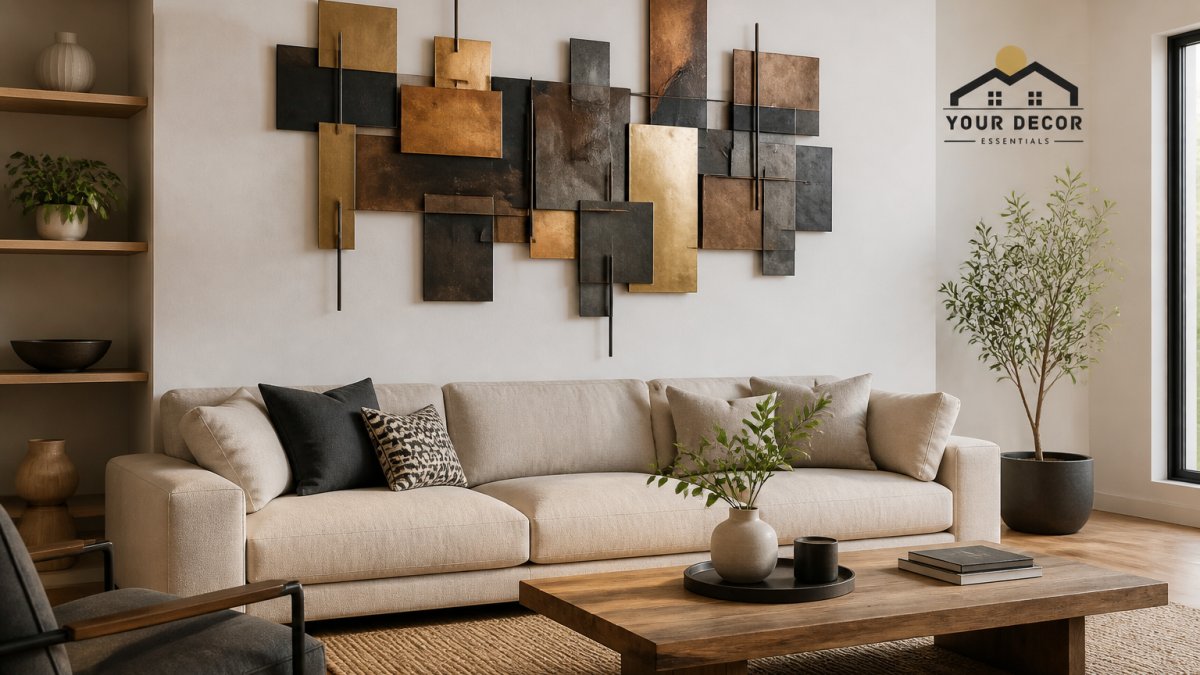
The mistake most often made is scale. A 12-inch piece over a 7-foot sofa looks lost. As a rule of thumb, the art should span roughly two-thirds of the furniture width below it. For a standard 84-inch sofa, that means aiming for a piece around 50 to 56 inches wide.
Placement matters just as much as size. Hang the center of the artwork at eye level, typically 57 to 60 inches from the floor, and keep at least 6 to 10 inches of clearance above the sofa back so the piece breathes.
In an open-plan space, metal wall art also works as a divider. A tall vertical sculpture on a narrow wall between a living and dining zone signals where one area ends and the next begins, no furniture required.
How to Style Metal Wall Art With the Rest of Your Decor
Styling metal wall art comes down to contrast: pair hard, reflective surfaces with soft, matte ones so neither overwhelms the room. Metal against a bare white wall reads cold. Metal against texture reads intentional.
- Mix materials deliberately. Set a steel sculpture near a linen sofa, a wool throw, or a jute rug. The soft fibers soften the metal's edge.
- Repeat the finish once. If your piece is brushed brass, echo it in a lamp base or a drawer pull. One repeat ties the room together; three looks like a showroom.
- Keep the wall behind it simple. A busy wallpaper fights a sculptural piece. Solid paint or a subtle plaster finish lets the form lead.
- Vary height, not just width. A tall, narrow piece beside a wide, low one creates a composition. Two same-sized pieces side by side look like a set, not a collection.
- Leave negative space. Do not fill every inch around the art. Empty wall is what makes the piece read as a statement.
For warm-minimalist interiors, the rule is one sculptural piece per sightline. Walk into the room and count how many metal accents you can see at once. If it is more than two, remove one.
Metal Wall Art Placement Ideas for Every Wall
Placement is where most people second-guess themselves, so here is a room-by-room framework to consider.
| Room | Best Placement | Height Guideline | Why It Works |
|---|---|---|---|
| Living room | Above the sofa or console | 57-60 in. to center | Anchors the seating zone |
| Bedroom | Above the headboard or opposite the bed | 57-60 in. to center | Adds depth without clutter |
| Entryway | Narrow wall beside the door | 60-63 in. to center | First impression, low traffic risk |
| Dining room | Above the sideboard | 57-60 in. to center | Frames the table without blocking sightlines |
| Home office | Behind the desk, on the camera wall | 57-60 in. to center | Reads well on video calls |
A few practical notes. In an entryway, keep the piece at least 4 inches clear of the door swing. In a bedroom, avoid hanging anything heavy directly over the pillow line if you live in an area with seismic activity. And in a hallway, a vertical piece on the end wall draws the eye forward and makes a short corridor feel longer.
Metal Wall Art for Small Spaces and Compact Rooms
Small rooms benefit from metal wall art more than large ones, because a reflective surface bounces light and a sculptural form adds depth without eating floor space. In a compact apartment, wall art is the one decor category that costs you zero square footage.
The instinct in a small room is to go small. Resist it. One medium-to-large piece reads calmer than five small ones, and fewer objects mean less visual noise. Aim for a piece that covers roughly half the width of the wall you are hanging it on.
Light colors and reflective finishes help most. Brushed aluminum, polished steel, and light-toned powder coats bounce daylight into corners. Dark matte finishes absorb light, which is fine in a bright room but can make a dim one feel smaller.
For renters, weight matters. A hollow aluminum piece is far easier to hang in a rental than a solid iron sculpture, and it comes down just as cleanly when you move.
Choosing Materials and Finishes: Steel, Iron, and Aluminum
Material choice decides how a piece looks, how much it weighs, and how it holds up. Steel, iron, and aluminum each behave differently, and the finish matters as much as the metal underneath. This section goes beyond the usual "steel is strong, aluminum is light" summary to explain the trade-offs that actually affect your wall, your climate, and your long-term maintenance.
Steel: The Versatile Workhorse
Steel is an alloy of iron and carbon, and it is the most common metal used in wall art because it balances strength, cost, and finish options. It takes powder coating exceptionally well, holds sharp edges and fine details, and resists denting better than aluminum. However, steel is dense, roughly 0.284 pounds per cubic inch, so a 36-inch sculptural piece can easily weigh 15 to 25 pounds. That weight matters when you are choosing mounting hardware.
Steel will rust if the coating is compromised. Indoor pieces with intact powder coating are fine, but in humid rooms or if the finish chips, rust can start. Look for powder-coated steel for indoor living spaces; it is the default choice for most modern homes.
Iron: Weight and Tradition
Iron is the heaviest of the three, with a density of about 0.284 pounds per cubic inch (similar to steel, but often cast iron is thicker). It carries a dense, traditional weight and suits rustic or industrial rooms. Cast iron is brittle and can crack if dropped, and it is the most prone to rust if the coating chips. Keep iron pieces out of damp rooms and inspect them seasonally for chips. Touch up any bare spots with matching enamel paint to prevent rust from spreading.
Aluminum: Lightweight and Corrosion-Resistant
Aluminum is roughly one-third the weight of steel, about 0.098 pounds per cubic inch, making it the best choice for humid rooms, bathrooms, and rentals. It naturally forms a thin oxide layer that protects against rust, so it will not corrode like steel or iron. However, aluminum dents more easily, so keep it away from doorways and high-traffic areas. It also takes powder coating well, and the finish adheres strongly.
Finish Matters as Much as the Metal
The finish determines how the piece looks and how long it lasts. Here are the common options:
- Powder coating: Baked on rather than sprayed, creating a durable, chip-resistant shell. It is the best choice for indoor and covered outdoor use. It resists fading and scratching far better than standard paint.
- Brushed or polished finishes: These are mechanical treatments that give the metal a directional texture or mirror-like shine. They show fingerprints and smudges more readily, so they need more frequent wiping.
- Patina and antiqued finishes: Often applied to iron or steel to simulate age. These finishes may be more delicate and can wear unevenly if touched frequently.
- Weather-resistant coatings: For outdoor pieces, look for a finish rated for exterior use, often a two-part polyurethane or a specialized powder coat. Check the hardware too, stainless steel screws are a good sign.
Matching Material to Room and Climate
- Humid rooms (bathrooms, basements, kitchens): Choose aluminum or powder-coated steel. Avoid iron unless it is specifically rated for damp environments.
- Dry living spaces: All three work, but steel and aluminum are the most practical. Iron is fine if you want the weight and look.
- Rentals: Aluminum is easiest to hang because it is lighter, requiring smaller anchors that leave smaller holes.
- Covered porches: Powder-coated steel or aluminum with a weather-resistant finish. Bring pieces inside before hard freezes if the manufacturer recommends it.
A Note on Weight and Mounting
Weight is not just about hanging; it also affects how the piece feels when you bump it. A heavy iron piece can swing and damage the wall if not secured properly. Always check the product weight and match your hardware to it. As a rule, anything over 20 pounds needs a stud or a heavy-duty toggle anchor.
By understanding these material and finish differences, you can choose a piece that not only looks right but also performs well in your specific space.
Hanging Metal Wall Art Safely: Anchors, Studs, and Wall Types
Metal wall art is heavier than a framed print, so hanging it safely starts with finding what is behind the drywall. The piece is only as secure as the hardware holding it.
Step 1: Weigh the piece. Check the product listing or use a bathroom scale. Anything over 20 pounds needs more than a single nail.
Step 2: Find the studs. Use a stud finder and mark the edges with painter's tape. Studs are typically spaced 16 or 24 inches apart. Hitting one lets you hang heavy pieces with a simple lag screw.
Step 3: Match the anchor to the wall. Drywall, plaster, brick, and concrete each need different hardware.
| Wall Type | Best Hardware | Weight Limit (Typical) |
|---|---|---|
| Drywall, no stud | Self-drilling toggle anchor | Up to 50 lb per anchor |
| Drywall with stud | Lag screw into stud | 100+ lb per screw |
| Plaster | Toggle anchor with a pilot hole | Varies; plaster cracks easily |
| Brick or concrete | Sleeve anchor or masonry screw | 50+ lb per anchor |
| Rented drywall | Adhesive strips for light pieces only | Under 10 lb |
Step 4: Use two points of contact. Even a light piece should hang from two anchors, spaced wide enough to stop it from tilting.
Step 5: Level and check. Hang, level, then press gently on the bottom corner to confirm it does not move.
For households with children or pets, mount the piece at least 48 inches from the floor and consider a small security clip at the bottom edge. It is a cheap addition that stops a bumped frame from swinging off the hook.
Care, Cleaning, and Long-Term Maintenance
Metal wall art needs very little upkeep, but the right care depends on the metal and finish. A powder-coated steel piece in a dry living room may need only dusting, while an iron sculpture on a covered porch needs seasonal inspections. This section gives finish-specific guidance so you can protect your investment and avoid common mistakes.
Routine Cleaning by Finish
- Powder-coated steel and aluminum: Dust monthly with a dry microfiber cloth. For smudges, use a slightly damp cloth with a drop of mild dish soap, then dry immediately with a soft cloth. Avoid abrasive pads, ammonia-based cleaners, and solvents, they dull the finish and can break down the coating over time.
- Brushed or polished metal: These finishes show fingerprints. Wipe with a microfiber cloth designed for glass or stainless steel. For polished surfaces, a small amount of mineral oil on a cloth can help hide smudges, but test in an inconspicuous area first.
- Iron with a patina or antiqued finish: Dust gently with a soft brush or cloth. Avoid wet wiping, which can disturb the patina. If the finish is sealed, a dry cloth is usually enough.
- Outdoor pieces: Rinse with a garden hose every few months to remove dirt and pollen. For stubborn grime, use a mild soap and a soft brush, then rinse thoroughly. Re-coat with a manufacturer-recommended wax or sealant if the finish starts to look dull.
Preventing Rust and Corrosion
Rust is the main long-term threat for steel and iron. The key is to catch chips and scratches early.
- Inspect edges and joints seasonally. These are the first places to show wear. A small chip is the start of rust; touch it up with matching enamel paint. Clean the area with a degreaser before painting.
- Keep iron and steel away from direct steam. Bathrooms and basements without ventilation will eventually affect any metal. If you must hang a steel piece in a humid room, choose aluminum instead.
- For outdoor pieces, check the hardware. Screws and brackets often fail before the art does. Replace rusted hardware with stainless steel.
Dealing with Scratches and Dents
- Light scratches on powder-coated surfaces: Sometimes a pencil eraser can lift minor scuffs. If that fails, a touch-up pen in a matching color is the next step.
- Dents in aluminum: Aluminum dents more easily than steel. Small dents can sometimes be pressed out from behind if the piece is hollow, but this risks cracking the finish. If the dent is noticeable, consult a professional metal restorer.
- Deep scratches on bare metal: If the scratch exposes bare steel or iron, clean it and apply a rust-inhibiting primer, then paint. For aluminum, bare scratches will oxidize but will not rust; you can leave them or touch up with matching paint.
Long-Term Maintenance Schedule
- Monthly: Dust all indoor pieces.
- Seasonally: Inspect iron and steel pieces for chips or rust; check outdoor pieces for finish degradation and hardware corrosion.
- Annually: For outdoor pieces, consider re-coating with a protective wax or sealant. For indoor pieces, check mounting hardware for tightness.
When to Call a Professional
Most cleaning and minor touch-ups are DIY-friendly. However, if a piece has significant rust, structural damage, or a finish that is flaking over a large area, a professional conservator or metal restorer can help. For valuable or antique pieces, always consult a professional before attempting repairs.
By following these care guidelines, your metal wall art can remain a focal point for years, maintaining its appearance and structural integrity.
Conclusion: Making Metal Wall Art Work in Your Home
The hardest part of buying metal wall art is not finding a piece you like. It is committing to a scale and a finish that actually fits the room, and that is where most people stall.
Our curated selection focuses on abstract sculptures and resin accents, alongside functional lighting and stylish furniture, so you can build a room where the pieces relate to each other instead of competing. Every item is chosen to add visual interest and a more distinctive, thoughtfully styled look, and our collection is small on purpose, so what you hang on your wall does not show up in every home on the block.
Get started with Your Decor Essentials and find the sculptural piece that gives your space its focal point.
Frequently Asked Questions
What are the benefits of metal wall art in a modern home?
Metal wall art adds sculptural texture, depth, and dimension that flat prints cannot match. It creates a natural focal point, holds up to humidity and fading better than paper or canvas, and works across minimalist, warm minimalism, and industrial interiors. Because steel, iron, and aluminum finishes resist yellowing and warping, a single piece can anchor a wall for years without needing replacement.
How do you choose metal wall art for a living room?
Start with the wall itself. Measure the open space and aim for art that fills roughly two-thirds to three-quarters of the width above a sofa or console. Match the finish to your existing hardware and lighting, then pick a scale that suits the room's ceiling height. A large statement piece usually reads better than several small ones scattered across the same wall.
Does metal wall art work in small rooms?
Yes, when the scale is right. For small spaces, choose lighter finishes like brushed aluminum or pale powder-coated steel, and pick vertical or narrow shapes that draw the eye upward. One well-placed piece on a focal wall adds visual interest without overwhelming the room. Avoid heavy dark clusters that make a compact space feel closed in.
How do you hang metal wall art safely?
Metal pieces are heavier than canvas, so anchor them properly. Use wall anchors rated for the piece's weight, or drive screws into studs when possible. For pieces over roughly 10 pounds, two mounting points are safer than one. On plaster or older drywall, use toggle bolts. Check the hardware rating before hanging, and confirm the piece sits flush against the wall.