 ultimate-guide
Why Curated Home Decor Is Better Than Trend Chasing
Table of Contents
- What Makes a Home Feel Curated Instead of Decorated
- How to Curate a Home Aesthetic That Tells Your Story
- Quality Over Quantity: Why Fewer, Better Pieces Win
- How to Mix Textures in Home Decor Without Clutter
- Unique Home Decor for Housewarming Gifts They'll Actually Keep
- Budget-Friendly Curation: Building a Collected Home for Less
- The Psychology of a Curated Space (and Why It Calms You)
- Maintaining Your Curation: Decluttering, Rotating, and Sustainable Sourcing
- Common Mistakes That Make a Home Look Trendy Instead of Timeless
- Frequently Asked Questions
Last Updated: September 18, 2026
What Makes a Home Feel Curated Instead of Decorated
A curated home decor approach means every object earns its place through intention, memory, or visual purpose, rather than being bought to fill a gap. That distinction is why curated home decor is better than trend chasing: it ages with you instead of expiring when the season changes. This guide from Your Decor Essentials breaks down exactly how to build that kind of space, from the first shelf you style to the last piece you edit out.
Here's the core problem. Trend-driven decorating starts with a look and hunts for objects to match it. Curation starts with objects and lets the look emerge. The second approach takes longer, but it produces rooms that feel like someone actually lives there.
The difference shows up fastest in how a room handles time. Trend pieces look dated within a few seasons. A well-chosen object, whether it's an abstract sculpture or a vintage brass candlestick, reads as more interesting every year.
The 3-5-7 Rule and Other Simple Curation Frameworks
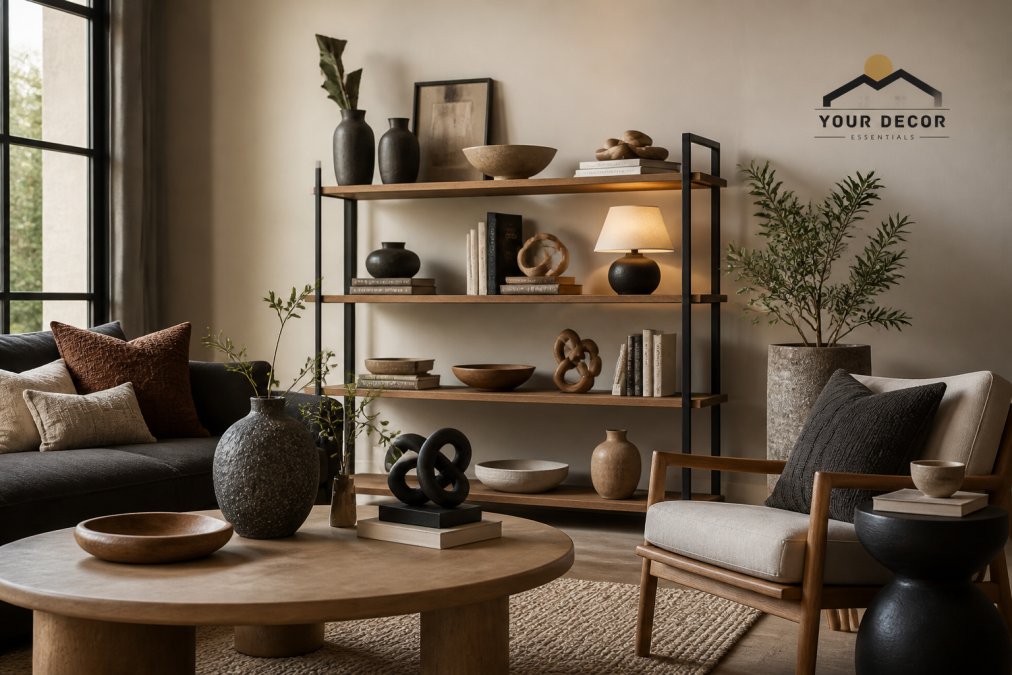
The 3-5-7 rule is a styling framework for arranging objects in odd-numbered groupings: three items on a small surface, five on a medium one, seven on a large one. Odd numbers create visual tension that even numbers flatten out.
It works because the eye reads asymmetry as natural and symmetry as staged. A shelf with three objects of different heights and textures feels collected. The same shelf with four matched objects feels like a display in a store.
Two other frameworks worth knowing:
- The one-in, one-out rule: every new piece means one existing piece leaves the room. This keeps surfaces from accumulating clutter.
- The anchor-first rule: place the largest or most meaningful piece first, then build outward in descending scale.
None of these are laws. They're starting points that stop you from overfilling a surface, which is the single most common mistake in homes that feel "decorated" rather than curated.
How to Curate a Home Aesthetic That Tells Your Story
Start by inventorying what you already own and asking one question of each piece: does this mean something, or did I buy it to fill space? The keepers become your foundation. Everything else is negotiable.
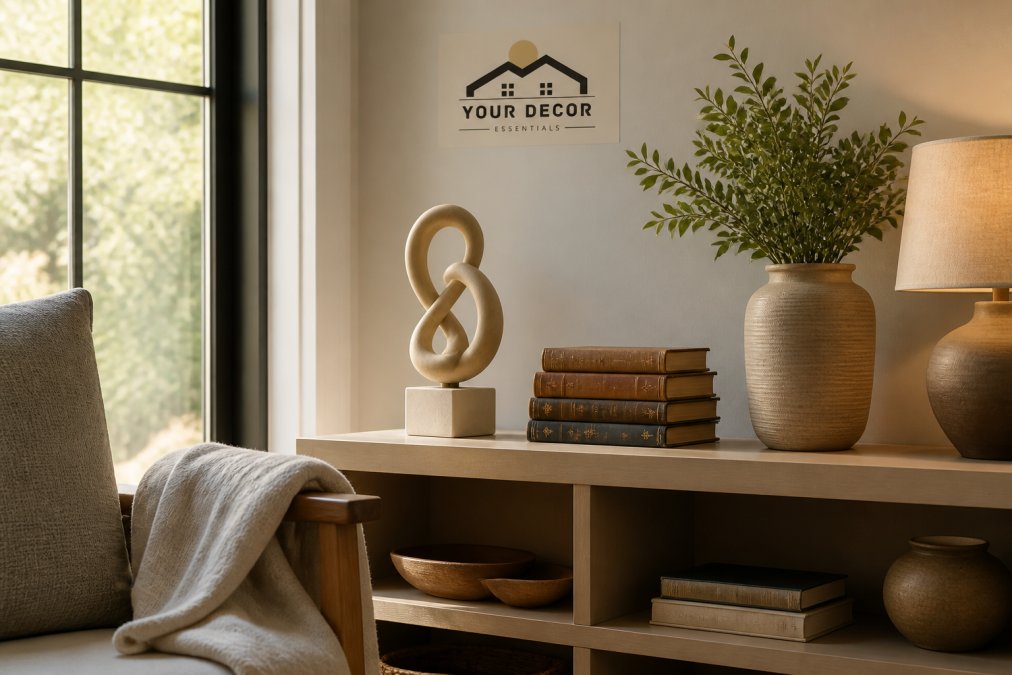
Personal storytelling in interiors comes from specificity, not from a theme. A shelf of objects from three different decades tells a better story than a shelf bought in one afternoon. That's why mixing old and new elements matters so much: contrast is what makes a room feel authored.
Practical steps:
- Pull out every object you'd rescue in a fire. Those are your anchors.
- Group them by material and scale, not by color.
- Place one anchor per main surface, then add supporting pieces in odd numbers.
- Photograph each arrangement and look at it the next day. Your eye catches problems a mirror won't.
The design narrative builds itself once you stop trying to match a catalog.
Quality Over Quantity: Why Fewer, Better Pieces Win
Fewer, better pieces win because each one carries more visual weight, so a room needs less to feel complete. Ten inexpensive objects compete for attention. Three well-made ones hold it. This is the core argument for curation over accumulation, and it has a practical financial dimension that most decorating advice skips: cost per use.
A mass-produced accent bought for a low price and replaced every year or two costs more over a decade than a single well-made piece that stays in rotation. The math is simple: if a piece costs $20 and lasts two years, that's $10 per year. A $120 piece that lasts fifteen years costs $8 per year, and it looks better the entire time. This is why budget-conscious homeowners often end up with the most curated rooms: they buy less often, but they buy pieces that hold up.
What "better" actually means in practice:
- Material honesty. Solid wood, stone, resin, and glass read as substantial. Veneer and hollow plastic read as temporary. Run your hand along an edge, if it feels like a sticker over particleboard, it will show wear within a year.
- Proportion. A piece sized correctly for its surface looks intentional. A piece that's slightly too small looks like an afterthought. Measure your surface before you shop; a common guideline is that the main object should occupy about one-third of the surface width.
- Provenance. Knowing where a piece came from, even if it's just a maker's name or the city where it was made, makes you keep it longer. Objects with a story resist replacement.
- Weight and finish. Pick up the piece. If it feels lighter than it looks, it's likely hollow or thin. A satisfying weight signals density and durability.
The sustainable angle here is not just environmental but personal: every piece you keep is one you don't have to shop for again. Curation reduces decision fatigue over time because your room stops asking you to fix it.
How to Mix Textures in Home Decor Without Clutter
Mixing textures works when you limit yourself to three materials per surface and vary their finish: one smooth, one rough, one reflective. Texture creates depth without adding objects.
The rule of three materials is the practical version of this. A grouping of matte ceramic, raw linen, and polished metal gives the eye three distinct surfaces to travel across. Add a fourth and the arrangement starts to look noisy.
How to mix textures in home decor without tipping into clutter:
- Pair a glossy resin piece with a matte textile and a raw wood element.
- Keep color within two or three tones so texture does the work instead of hue.
- Use layering deliberately: a textured throw over a smooth sofa, a rough stone tray under a glossy vase.
- Leave negative space. Empty surface area is what makes texture readable.
Spatial composition matters as much as the objects themselves. If every square inch is covered, no single texture registers.
Unique Home Decor for Housewarming Gifts They'll Actually Keep
Unique home decor for housewarming gifts works best when it's specific enough to feel chosen and neutral enough to fit a room you haven't seen. Abstract sculptures, sculptural lighting, and small resin accents hit that balance.
The gift failure mode is generic. A scented candle gets used and forgotten. A mass-produced vase gets stored in a closet. A piece with a distinct form or finish tends to stay on display, which is the whole point.
What to look for:
| Gift Type | Why It Works | Best For |
|---|---|---|
| Abstract sculpture | Reads as art, fits most surfaces | Design-minded recipients |
| Resin accent piece | Distinctive finish, hard to duplicate | Anyone building a collected look |
| Functional lighting | Useful daily, doubles as decor | New homeowners with bare corners |
| Textured ceramic vessel | Neutral enough for any palette | Unknown interior styles |
The practical move is to choose something that works on a shelf, a console, or a nightstand. Versatility beats a statement piece that only fits one wall.
Budget-Friendly Curation: Building a Collected Home for Less
Budget curation is mostly a timing and sourcing problem, not a spending problem. The homeowners who build the best rooms usually spend less per piece, not more, because they wait for the right object instead of buying the available one.
Where to source without overspending:
- Estate sales and local auctions for heirloom pieces at a fraction of retail
- Flea markets for vintage treasures that add instant age to a new build
- Secondhand marketplaces for furniture with real materials
- Small makers for one or two bespoke pieces that anchor a room
Sustainable sourcing overlaps heavily with budget sourcing. Buying secondhand keeps usable furniture out of landfills, and it gives you pieces nobody else on your street owns. Thoughtful selection beats fast purchasing every time.
The Psychology of a Curated Space (and Why It Calms You)
A curated space calms you because it reduces visual decision-making. Every object in view is one your brain has already accepted, so the room stops demanding attention.
Decorating trends work against this. Each new trend introduces objects your eye has to process and evaluate. A room built on trend cycles never quite settles. A room built on curation does, because the objects aren't going anywhere and don't need re-approving.
There's a practical side to this too. Clutter isn't just visual noise; it's a set of unfinished decisions. The pile of accessories you haven't placed yet, the shelf you keep meaning to restyle, the box of decor you bought and never used. Curation resolves those decisions. That's why a well-edited room feels like a home sanctuary even before you add anything to it.
The lived-in aesthetic people chase in photos is usually just this: fewer unresolved objects.
Maintaining Your Curation: Decluttering, Rotating, and Sustainable Sourcing
Maintenance is what separates a curated home from a decorated one over time. Without it, even a well-built room drifts back toward accumulation.
A simple maintenance routine:
- Once a season, remove one object from each main surface and live without it for two weeks.
- Rotate stored pieces in rather than buying new ones when a room feels stale.
- Repair before replacing. A loose joint or a scratched finish is usually fixable.
- Donate or sell anything that's been in storage for a full year.
- Reassess one room per month instead of trying to overhaul everything at once.
Rotating is the underrated half of this. If you own twenty good pieces and twelve display spots, you effectively have a changing collection without spending anything. That's the sustainable decor argument in one sentence: buy well once, then rearrange.
Common Mistakes That Make a Home Look Trendy Instead of Timeless
The fastest way to look dated is to buy a full room at once. Coordinated sets read as a catalog page, and catalog pages have expiration dates.
Five mistakes worth avoiding:
- Buying the whole look in one shopping trip. Real curation is spread over months and years.
- Matching everything. Cohesion comes from shared tones and materials, not identical finishes.
- Chasing a trend before it fits your space. A trend that fights your architecture will always look borrowed.
- Ignoring scale. A tiny object on a large console disappears. A large one on a small shelf overwhelms it.
- Skipping the edit. Adding without removing is how a curated room becomes a cluttered one.
Timeless style isn't about avoiding new things. It's about choosing pieces you'd still want if nobody else had them.
Building a home that reflects your own taste rather than the current season takes patience, and it helps to start with pieces substantial enough to anchor a room. Your Decor Essentials curates abstract sculptures, resin accents, functional lighting, and stylish furniture designed to introduce visual interest without turning your space into a showroom. If you're ready to move from trend-chasing to a collection that actually means something, shop the collection at Your Decor Essentials and start with one piece you'll keep for years.
Frequently Asked Questions
What is the difference between a decorated home and a curated home?
A decorated home follows trends and fills rooms with whatever is popular right now. A curated home reflects your personal story, mixing pieces you have collected over time with intention. Curated home decor prioritizes quality over quantity, so every object earns its place. The result feels lived-in and personal rather than showroom-perfect, and it holds up as decorating trends change around it.
How do I start curating my home decor if I'm not a designer?
Start with one room and one anchor piece you genuinely love, such as an abstract sculpture or a statement lamp. Build outward from there, choosing items that share a color, texture, or mood. Shop slowly, keep a running list of gaps, and avoid buying full matching sets. Following a simple framework like the 3-5-7 rule for shelf styling helps you arrange what you already own before you add more.
What are good unique home decor ideas for housewarming gifts?
Look for pieces that feel personal and useful rather than generic. Abstract sculptures, resin accents, textured ceramic vases, and small functional lamps all work well because they add visual interest without demanding a specific color scheme. A single distinctive object usually lands better than a themed gift set, since the recipient can place it in their own way and it won't duplicate what they already have.
How can I make my home look curated on a budget?
Focus on fewer, better pieces instead of filling every surface. Shop estate sales, local makers, and secondhand listings for vintage treasures with real provenance. Rearrange and rotate what you own before buying anything new, since layering existing items in new combinations often does more than an extra purchase. One well-chosen accent, like a resin decor piece or a sculptural lamp, can anchor an entire shelf or console.