 ultimate-guide
Modern Home Decor Styling Tips 2026: A Complete Guide
Table of Contents
- 2026 Design Trends Reshaping Modern Home Decor
- Moody Color Palettes and Earth-Toned Foundations
- How to Style Abstract Sculptures as Focal Points
- Best Practices for Layering Home Accessories
- Functional Lighting Design Trends That Double as Decor
- Mixing Antique Charm with Contemporary Fusion
- Sustainable Materials and Nature-Inspired Textures
- Smart Home Integration and the Psychology of Space
- Maximizing Small Living Spaces and Seasonal Refresh
- Conclusion
- Frequently Asked Questions
Last Updated: September 25, 2026
2026 Design Trends Reshaping Modern Home Decor
Modern home decor in 2026 is defined by contrast: moody color meeting natural texture, sculptural forms sitting beside heirloom pieces, and lighting that works as hard as it looks. At Your Decor Essentials, we empower homeowners to effortlessly introduce visual interest and enhance their living spaces, transforming them into more comfortable and beautifully styled environments that truly reflect their individual taste. This guide walks through the styling techniques shaping modern home decor this year, from abstract focal points to sustainable materials, with practical steps you can apply this weekend. The shift matters because rooms now double as offices, studios, and gathering spaces, so every piece has to earn its place.
Moody Color Palettes and Earth-Toned Foundations
Moody palettes work best when they sit on earth-toned foundations rather than fighting them. Think charcoal, deep olive, or oxblood on an accent wall, grounded by clay, sand, and warm taupe on larger surfaces. The trick is proportion: keep roughly three-quarters of the room in muted earth tones and let the moody shade occupy the rest. According to color guidance from the Pantone Color Institute, deep, saturated tones continue to anchor residential palettes as homeowners seek warmth over brightness. Color theory supports this. Darker hues absorb light and make a room feel enclosed and calm, which is exactly what an open-plan space usually lacks.
How to Style Abstract Sculptures as Focal Points
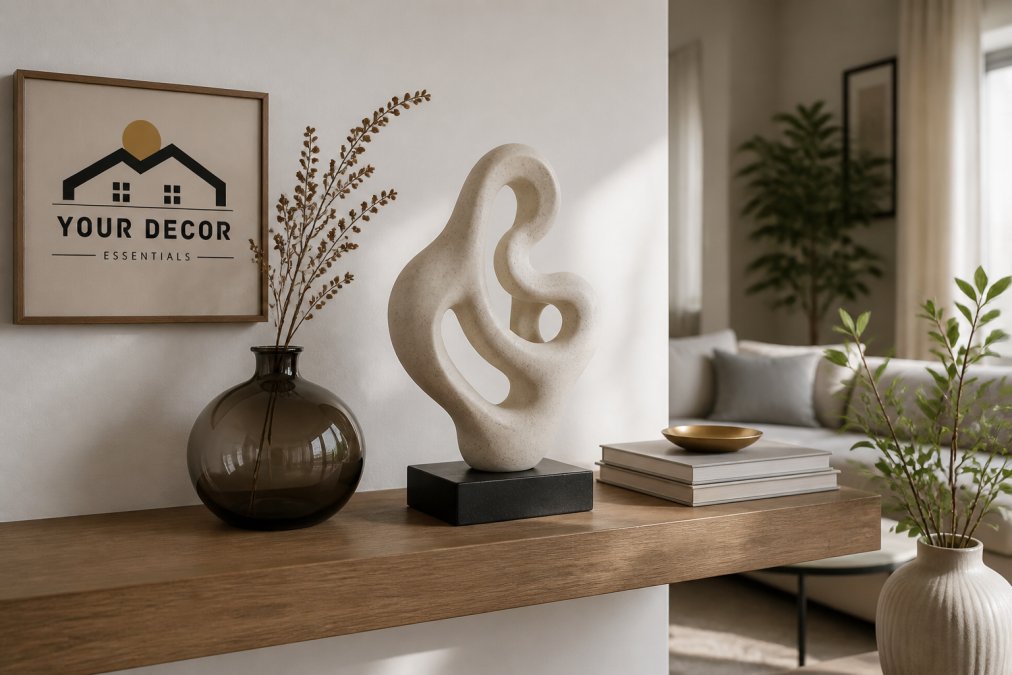
Styling an abstract sculpture as a focal point comes down to three decisions: height, negative space, and light. Place the piece so its highest point sits near eye level when you're seated, leave at least twice its width of empty surface around it, and angle a light source across it rather than directly at it. That last step is what separates a gallery look from a shelf of clutter.
Placement Strategies for Different Rooms
A common mistake is treating every room the same. In a living room, an abstract sculpture belongs on a console or coffee table where it anchors conversation seating. In a bedroom, scale down and place it on a nightstand or dresser so it reads as a quiet detail rather than a statement. Entryways reward vertical pieces that draw the eye upward. Home offices benefit from a single sculptural object positioned just outside your camera frame, adding depth to video calls without crowding the desk.
Pairing Sculptures with Resin Accents
Resin accents and sculptures pair well because they share a smooth, light-catching surface. Group two or three pieces of different heights in the same tonal family, then introduce one contrasting material such as matte ceramic or raw wood. The contrast in texture keeps the arrangement from reading as a single blob. Your Decor Essentials invites you to explore a curated selection of unique home decor, specializing in abstract sculptures and captivating resin accents, alongside stylish furniture and functional lighting. Our distinctive collection helps you create personalized interiors with thoughtful details, ensuring your home stands out with a sophisticated and artful touch.
Best Practices for Layering Home Accessories
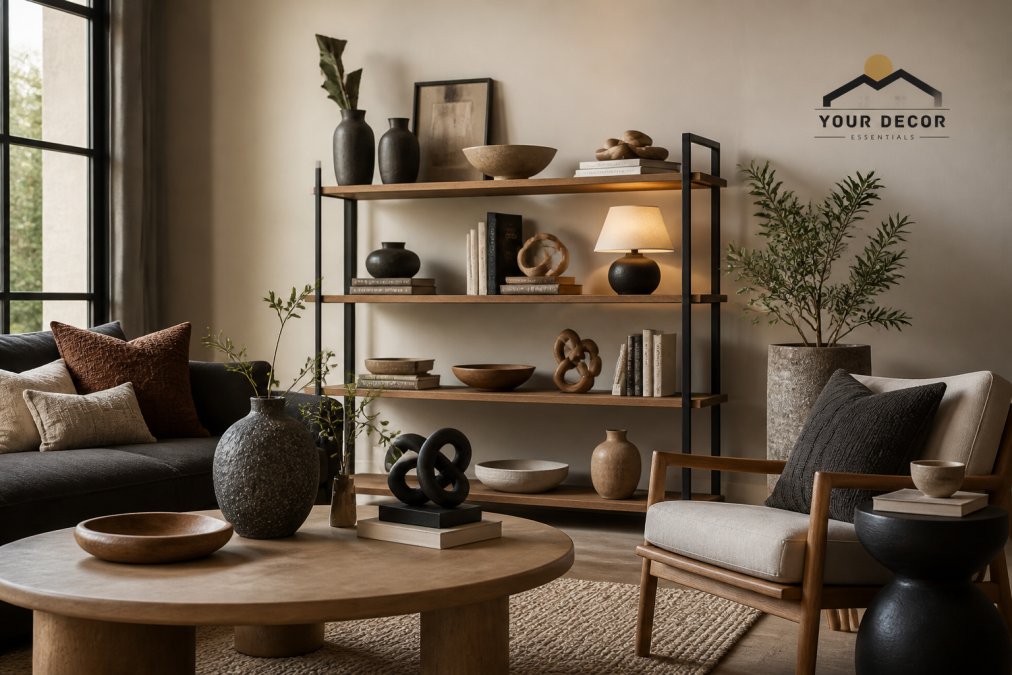
Layering home accessories follows one rule: odd numbers, varied heights, and one repeated element. Group three or five objects, vary their heights by at least a third, and repeat a single color or material across the group to tie it together. Layering fails when everything is the same size, and it fails when nothing connects. Start with the largest piece at the back, work forward in descending scale, and stop before the surface feels full. Empty space is part of the composition, not wasted room.
| Layer | What Goes Here | Height | Common Mistake |
|---|---|---|---|
| Back | Large sculpture or framed art | Tallest | Crowding the wall behind it |
| Middle | Vase, lamp, or stacked books | Medium | Matching heights exactly |
| Front | Small resin accent or tray | Shortest | Filling every gap |
Functional Lighting Design Trends That Double as Decor
Functional lighting in 2026 means fixtures that solve a problem and look intentional doing it. A floor lamp with an adjustable arm lights a reading chair and adds a vertical line to a low-ceilinged room. A sculptural table lamp warms a console while acting as the focal point that console needed anyway. The practical test is simple: turn the fixture on, stand where you'll actually sit, and check whether the light lands where you need it. If it doesn't, no amount of good looks will save it. Warm bulbs in the 2700K range flatter wood, fabric, and skin tones far better than cool white.
Mixing Antique Charm with Contemporary Fusion
Antique pieces and contemporary furniture coexist when they share a common thread: scale, color, or material. A vintage oak sideboard under a minimalist abstract sculpture works because the wood grain echoes the sculpture's organic curves. A mid-century chair beside a modern glass table works because both favor clean lines. What fails is juxtaposition for its own sake. The most common mistake is buying an antique that's the wrong scale for the room, then trying to compensate with more furniture. Measure first. A single well-proportioned heirloom does more for a room than three mismatched finds.
Sustainable Materials and Nature-Inspired Textures
Sustainable materials have moved from niche to default in modern home decor. Reclaimed wood, recycled glass, natural linen, cork, and bamboo now appear in mainstream collections rather than specialty shops. The practical benefit goes beyond environmental impact: natural materials age visibly, which gives a room the layered, lived-in quality that new synthetic finishes struggle to imitate. Textural contrast is where these materials earn their keep. Pair a rough linen cushion with a smooth resin surface, or set a glossy ceramic bowl on a raw wood table. The friction between textures is what makes a neutral room feel finished.
Smart Home Integration and the Psychology of Space
Smart home integration has quietly become a styling decision, not just a technical one. The goal in 2026 is to make technology invisible until you need it. That means hiding charging cables in a drawer with a cable management box, choosing a floor lamp with a built-in USB-C port so a side table stays clear, and using smart plugs to turn existing lamps into scheduled light sources without replacing the fixtures. The practical test: if a guest can spot the tech from across the room, it is not integrated yet.
Lighting is where smart integration pays off most. Smart bulbs let you shift a room's color temperature from bright daylight for work to warm amber for evening, which changes how the same furniture reads at different hours. A common pattern is to set three scenes: 4000K for focused work, 2700K for dining, and 1800K for winding down. Most smart bulb apps let you schedule these transitions automatically, so the room adjusts before you think to adjust it.
The psychology of space explains why this works. People read enclosed, warmly lit rooms as calm and open, cool-lit rooms as alert and clinical. A 2026 trend is to use lighting zones instead of one overhead fixture: a warm floor lamp beside a reading chair, a cooler task light over a desk, and a dimmable ambient source on a console. This gives you control over the room's emotional register without moving a single piece of furniture.
Accessibility-first design follows the same logic. Wider pathways, contrast between surfaces and objects, and light switches placed where a seated person can reach them make a room easier for everyone, not just those who need it. Smart switches and voice control add another layer: you can turn off a lamp without crossing the room, which matters for aging in place and for anyone with limited mobility. The styling takeaway is that technology should reduce friction, not add visible clutter.
Circular economy styling rounds out the picture. Refinishing a secondhand table or reupholstering a chair keeps a piece in use and gives a room a story no new purchase can match. Pair that with smart lighting that extends the life of existing fixtures, and you get a room that is both current and responsible. The unique angle here is that smart home integration is not about gadgets, it is about using technology to make the room feel more human, not less.
Maximizing Small Living Spaces and Seasonal Refresh
Small living spaces reward discipline over volume. The first rule is to measure your largest wall and choose a sofa that leaves at least 30 inches of walking space on each side. Furniture with exposed legs, a mid-century sofa, a console table with thin metal legs, creates visual space because you can see the floor underneath. A common mistake is pushing all furniture against the walls; pulling a sofa 6 inches away from the wall makes the room feel larger, not smaller.
Vertical storage does more for a cramped room than any horizontal arrangement. Install floating shelves above a desk or dresser to move books and decor up, and use a tall bookcase instead of two short ones to draw the eye upward. Mirrors opposite windows double the light, but placement matters: a mirror should reflect something worth looking at, like a plant or a piece of art, not a blank wall. For renters, adhesive mirror tiles are a low-commitment option.
Seasonal refresh is the cheapest way to keep a small space feeling new. Swap cushion covers, rotate sculptures between rooms, and change one lighting source per season. A seasonal refresh costs almost nothing and resets how the room feels without a single new furniture purchase. The 2026 twist is to treat seasonal swaps as a circular economy practice: store off-season decor in labeled bins, and before buying anything new, shop your own storage. Most people find at least three pieces they forgot they owned.
For a small space, the psychology of clutter matters as much as the layout. A single focal object per surface, one sculpture, one vase, one stack of books, keeps the room calm. When you refresh for a new season, remove one item before adding another. This keeps the visual weight constant and prevents the slow accumulation that makes small rooms feel tight. The unique angle here is that seasonal refresh is not about buying more; it is about rotating what you already have to match the light and mood of the season.
Conclusion
The hardest part of styling a home is knowing which pieces will actually work together before you buy them. Your Decor Essentials invites you to explore a curated selection of unique home decor, specializing in abstract sculptures and captivating resin accents, alongside stylish furniture and functional lighting. We empower homeowners to effortlessly introduce visual interest and enhance their living spaces, transforming them into more comfortable and beautifully styled environments that truly reflect their individual taste. Our distinctive collection helps you create personalized interiors with thoughtful details, ensuring your home stands out with a sophisticated and artful touch. Discover the perfect pieces to elevate your decor and express your unique style with ease. Shop Now
U.S. Department of Energy guidance on lighting and bulb color temperature
U.S. Environmental Protection Agency resources on sustainable materials and reuse
Frequently Asked Questions
What is the most popular home decor style in 2026?
In 2026, modern home decor leans toward warm minimalism paired with moody, earth-toned palettes and sculptural accents. Designers are mixing organic shapes, textural contrast, and sustainable materials like reclaimed wood and recycled resin. Curated living is the goal: fewer, more meaningful pieces rather than mass-produced filler. This approach blends contemporary fusion with timeless character, giving rooms a collected feel that still reads as current.
How do I incorporate abstract sculptures into modern home decor?
Start by choosing a sculpture that echoes your room's existing color palette. Place it on a console, shelf, or coffee table where it can be viewed from multiple angles. For balance, pair one large abstract piece with two smaller resin accents. Use a matte or glossy finish to create textural contrast against wood or fabric. Lighting from above or the side will cast dynamic shadows that make the sculpture feel intentional and artful.
What is the 3-5-7 rule in decorating?
The 3-5-7 rule is a styling guideline for arranging accessories in odd-numbered groupings: three, five, or seven items. Odd numbers create visual balance because the eye cannot pair them symmetrically, so it scans the whole arrangement. Vary height, texture, and material within each group. For example, combine a tall sculpture, a medium vase, and a small resin object. This technique works on shelves, mantels, and coffee tables.
How can I mix antique charm with modern furniture?
Choose one antique anchor piece, like a vintage wood console or a heritage mirror, and surround it with clean-lined modern furniture. Keep the color palette cohesive with earth-toned foundations and let the antique provide patina and texture. Avoid placing antiques in every corner; instead, treat them as statement pieces. This contrast between old and new creates the contemporary fusion look that defines 2026 interior aesthetics.
Styling a room that feels collected rather than assembled takes time, and it takes pieces worth keeping. Your Decor Essentials offers a curated selection of abstract sculptures, resin decor, stylish accents, and functional lighting built to introduce visual interest and reflect your individual taste. Get started with Your Decor Essentials and build a space that looks like yours, not a catalog's.