 how-to
5 Steps to Choosing the Right Area Rug for Small Spaces
Last Updated: October 29, 2026
Quick Summary
Choosing the right area rug for small spaces starts with measuring your room and furniture, then picking a size that anchors the seating while leaving 6 to 12 inches of visible floor around the edges. For most small living rooms, a 6 x 9 ft rug works well for a sofa and one or two chairs. Front legs on the rug often suits small rooms best.
- Measure room length, width, furniture footprint and clearance before you shop.
- Leave at least 6 to 12 inches of visible floor between the rug edge and the walls.
- A 6 x 9 ft rug is the typical fit for most small living rooms.
- Front-legs-on-rug saves money and floor space while still tying the furniture together.
- Tape the rug outline on the floor with painter's tape before buying.
Table of Contents
- Why Rug Size Matters More in a Small Room
- Measure Your Room and Furniture Before Shopping
- Area Rug Size for Small Living Room Layouts
- Small Room Rug Placement That Anchors the Furniture
- Best Rug Shape for Small Spaces
- How to Make a Small Room Look Bigger With a Rug
- Choosing Colors, Patterns and Pile Height for Compact Rooms
- Caring for a Rug in a High-Traffic Small Home
- Planning Your Rug Purchase and Next Steps at Your Decor Essentials
- Frequently Asked Questions
Why Rug Size Matters More in a Small Room
Choosing the right area rug for small spaces is harder than it looks. Many shoppers grab a rug that looks nice in the store, then get it home and find it swallows the room or floats awkwardly in the middle of nowhere. In a small room, the rug does more work than in a big one. It sets the scale of everything around it.
A rug is often the first thing that helps a space feel finished, or the first thing that gets it wrong.
The short version: in a small room, a rug that is too small makes the furniture look scattered, and a rug that is too big makes the room feel crowded. The goal is a rug that connects the seating and leaves visible floor around its edges.
Here is why size matters so much in tight spaces:
- It sets the visual boundary. The rug defines where the living area starts and stops.
- It affects how big the room feels. Too little rug shrinks the zone. Too much rug fills every inch.
- It is hard to change later. Getting the size right up front can save effort.
Measure Your Room and Furniture Before Shopping
Measure before you browse. It sounds obvious, but many people skip it and end up guessing.
Start with three measurements:
- Room length and width. Measure wall to wall, then sketch the shape on paper.
- Furniture footprint. Measure the sofa, chairs, and any coffee table.
- Clearance space. Note doorways, walkways, and any built-ins that limit where the rug can go.
A practical rule: leave at least 6 to 12 inches of visible floor between the rug edge and the walls. In a small room, that gap helps the space feel open instead of boxed in.
Tape the rug's outline onto the floor with painter's tape before you buy. This simple step shows you how much of the room it will take up.
Area Rug Size for Small Living Room Layouts
Most small living rooms work best with one of a few common rug sizes. Here are the typical options and what each one usually does:
| Rug Size | Best Fit | What It Does |
|---|---|---|
| 5 x 7 ft | Tiny living rooms, bedrooms | Anchors a small sofa or a pair of chairs |
| 6 x 9 ft | Most small living rooms | Works for a sofa and one or two chairs |
| 8 x 10 ft | Slightly larger small rooms | Holds the full seating group comfortably |
Always check these against your own measurements. Sizes in the table are starting points, not rules.
Front Legs On the Rug Versus All Furniture On the Rug
This is the most common layout question. You have two main choices:
- All furniture on the rug. Every piece sits fully on the rug. This makes the seating feel like one connected group and works well when the rug is large enough to hold everything.
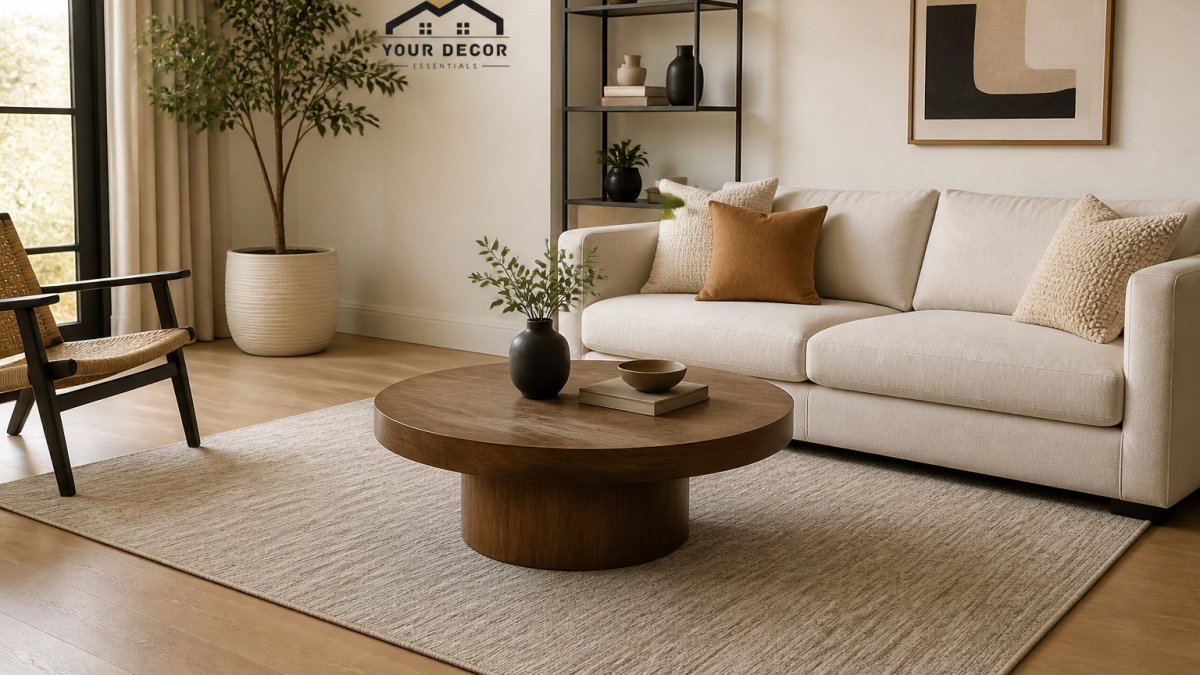
- Front legs on the rug. Only the front legs of the sofa and chairs rest on the rug, with the back legs on bare floor. This option often suits small rooms, because it lets you use a smaller rug without making the room feel cramped.
Front-legs-on-rug is often the better pick for a small room. It saves money and floor space, and it still ties the furniture together.
Small Room Rug Placement That Anchors the Furniture
Placement matters as much as size. A well-sized rug placed badly still looks off.
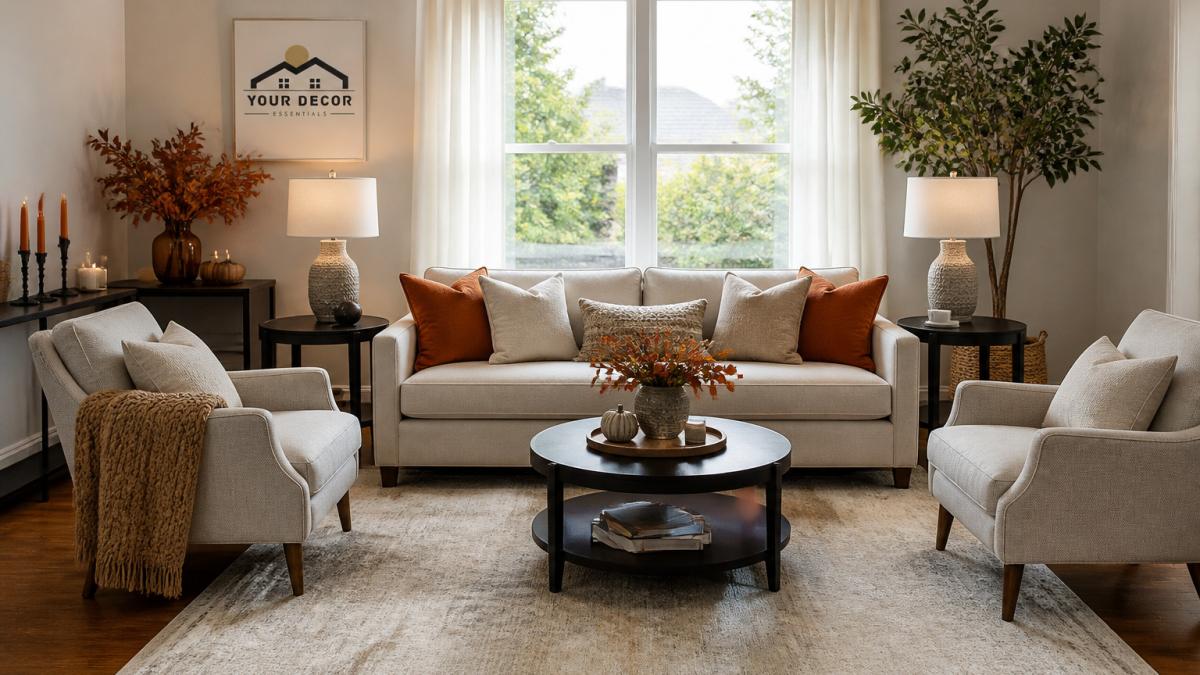
Try these placement tips:
- Center the rug on the main seating. Line it up with the sofa so the layout looks balanced.
- Keep the rug parallel to the walls. Angled rugs can make a small room look messy.
- Leave equal space on each side. Uneven margins are easy to spot.
- Avoid placing the rug under the coffee table only. If the rug is too small, the sofa will feel disconnected.
Watch out: placing a small rug in the middle of a large empty area can make the whole room look unfinished. If your rug feels lost, try moving it closer to the seating.
Good placement is also about traffic. Make sure there is still a clear path from the doorway to the seating, and that the rug won't bunch up where people walk.
Best Rug Shape for Small Spaces
Rug shape changes how a room flows, and in a small space the wrong shape can make furniture feel disconnected or block walkways. For most small rooms, a rectangle is the safest choice because it follows the lines of sofas and walls, but the right shape depends on your seating layout and the room's proportions.
Here is how the common shapes perform in compact rooms, with practical size ranges to check against your own measurements:
| Shape | Best For | Typical Small-Room Sizes | Watch-Outs |
|---|---|---|---|
| Rectangle | Sofa-and-chairs layouts, most living rooms and bedrooms | 5 x 7 ft, 6 x 9 ft, 8 x 10 ft | A rectangle that is too narrow (under 5 ft wide) can look like a runner and fail to anchor a sofa |
| Round | Circular seating, reading nooks, rooms with curved furniture | 5 ft, 6 ft, 8 ft diameter | Measure the diameter against your seating circle; a round rug should extend at least 6 inches beyond the front legs of every chair |
| Square | Symmetrical sitting areas with chairs on all sides | 5 x 5 ft, 6 x 6 ft, 8 x 8 ft | Square rugs can fight rectangular room proportions; use only when the seating is genuinely square |
| Oval | Narrow rooms where a rectangle feels too rigid | 4 x 6 ft, 5 x 8 ft | Oval rugs are less common and harder to pair with standard furniture lines |
| Runner | Hallways, galley kitchens, entryways | 2 x 6 ft, 2.5 x 8 ft, 3 x 10 ft | Runners should leave 2 to 4 inches of floor visible on each long side in a hallway |
Rectangle rules of thumb for small rooms:
- The rug should be at least as wide as the sofa it anchors. A 6-foot sofa pairs with a rug at least 6 feet wide; a 7-foot sofa needs a 7- to 8-foot-wide rug.
- Leave 6 to 12 inches of visible floor between the rug edge and the walls. In a room under 120 square feet, err toward the smaller gap so the rug does not look lost.
- Keep the rug parallel to the dominant wall. Angled rugs can make a small room look messy and complicate furniture placement.
Round and oval rugs work best when the seating is arranged in a circle or when the room has soft, curved lines. A round rug can soften a boxy room, but check that the diameter clears doorways and walkways. A 5-foot round rug fits a pair of chairs and a small side table; a 6-foot round rug can hold a loveseat and one chair with front legs on the rug.
Square rugs are less common in small living rooms but can suit a small sitting area with chairs on all sides. Measure the diagonal of your seating group; the square rug should extend at least 6 inches beyond the outermost front legs.
Runners are the most overlooked shape in small homes. A 2 x 6 ft runner in a hallway or entryway defines a path without swallowing floor space. In a galley kitchen, a 2 x 8 ft runner leaves room for cabinet doors to open. Always check that the runner leaves at least 2 inches of floor on each side so it does not curl against baseboards.
Shape and door clearance: In small rooms, the rug edge should not sit within 1 inch of a door swing. A rug that catches under a door will curl, trip people, and wear out faster. Measure the door's swing arc and keep the rug at least 2 inches clear of it.
How to Make a Small Room Look Bigger With a Rug
Yes, a rug can make a small room feel bigger. The trick is to use its color, pattern, and size together.
- Choose lighter colors. Light rugs reflect more light and make the floor feel open.
- Pick subtle patterns. Large, busy patterns can make a room feel crowded. Small or tonal patterns keep things calm.
- Extend the rug under furniture. A larger rug that holds the seating can make the zone feel more spacious than a tiny rug that sits alone.
Many people assume a dark, bold rug will make a room feel cozy. In a small space, it often shrinks the room visually. Save the bold choice for an accent chair or pillows instead.
Choosing Colors, Patterns and Pile Height for Compact Rooms
Color, pattern, and pile height all affect how a rug feels in a small room.
Colors:
- Light neutrals open up the space.
- Mid-tone colors work if the room has good natural light.
- Very dark rugs can make a small room feel heavy.
Patterns:
- Tonal or low-contrast patterns add interest without clutter.
- Large, high-contrast patterns can overwhelm a small floor.
Pile height:
- Low-pile rugs are flat and easy to move around on. They suit high-traffic rooms and make furniture easier to slide.
- High-pile rugs feel plush and cozy but take up visual weight and can make chairs wobble.
For most compact rooms, a low- or medium-pile rug in a light or mid-tone neutral is a safe, flexible choice.
Caring for a Rug in a High-Traffic Small Home
Small homes concentrate foot traffic into a few square feet, so rugs wear faster and need more deliberate care than in a large house. This section covers maintenance, rental-friendly setup, accessibility, and the everyday usability issues that most guides skip.
Rental-Friendly Setup and Floor Protection
If you rent, the rug has to protect the floor without permanent changes. A quality rug pad is the single most important purchase: it prevents slipping, adds cushioning, and keeps grit from grinding into the floor finish. Felt-and-rubber pads are the common choice for hard floors because the felt side cushions and the rubber side grips. Avoid all-rubber pads on finished wood; they can trap moisture and discolor the finish over time.
For slip prevention without adhesive, use a pad sized 1 to 2 inches smaller than the rug on each side so the pad stays hidden. If the rug still slides on a smooth floor, double-sided rug tape designed for hard floors can secure the corners without damaging the finish. Test any tape on an inconspicuous spot first.
Accessibility and Everyday Usability
Pile height and rug edges affect door clearance, mobility aids, and trip risk. In a small home, the rug often sits in the main path between rooms, so these details matter more than they do in a large house.
- Door clearance: A rug that sits within 1 inch of a door swing will catch, curl, and become a trip hazard. Measure the door's swing arc and keep the rug at least 2 inches clear. Low-pile rugs under 0.25 inch thick are the safest choice near doors.
- Mobility aids: Wheelchairs, walkers, and canes roll more easily over low-pile rugs with a firm backing. High-pile or shag rugs increase rolling resistance and can catch a cane tip. If someone in the home uses a mobility aid, choose a low-pile rug with a dense backing and secure the edges with a pad.
- Curled edges: A curled corner is a trip risk in a tight room. Reverse-roll the corner for a few days, or use rug tape designed for hard floors. A pad that is slightly smaller than the rug helps the edges lie flat.
- Trip risk in walkways: Keep at least 2 inches of bare floor between the rug edge and any walkway wall. In a narrow room, a runner that spans the full width of the path leaves no margin and will curl against baseboards.
Care, Cleaning, and Durability
Small homes get a lot of foot traffic in a limited space, so rugs wear faster. A few habits help a rug last:
- Vacuum regularly. Dirt and grit damage fibers over time, especially in high-traffic spots. Use a vacuum without a beater bar on wool and natural fibers; a beater bar is fine for most synthetics.
- Rotate the rug every few months. This spreads out wear, particularly if the rug sits near a doorway or in front of a sofa.
- Use a rug pad. A quality pad keeps the rug from slipping, adds cushioning, and extends the rug's life by absorbing impact.
- Spot clean spills quickly. Blot instead of rubbing to avoid spreading stains. For wool, use a mild detergent and cool water; for synthetics, check the manufacturer's care tag.
- Deep clean annually. In a high-traffic small home, a yearly deep clean (professional or rental machine) removes embedded grit that vacuuming misses.
Material trade-offs for high-traffic small homes:
| Material | Stain Resistance | Durability | Maintenance | Best For |
|---|---|---|---|---|
| Wool | Moderate; naturally soil-resistant | High | Professional clean recommended | Living rooms, bedrooms |
| Synthetic (polypropylene, polyester) | High; often treated | Moderate to high | Easy spot cleaning | Entryways, dining areas, pet homes |
| Cotton | Low to moderate | Moderate | Machine washable (small rugs) | Kitchens, casual spaces |
| Natural fibers (jute, sisal) | Low; absorbs spills | High | Vacuum only; avoid water | Low-traffic accent areas |
Check the care instructions that come with your rug, since materials like wool, synthetic fibers, and natural fibers each need different treatment.
Planning Your Rug Purchase and Next Steps at Your Decor Essentials
Before you buy, run through this quick checklist:
- I measured my room and furniture.
- I taped the rug size on the floor.
- I chose a shape that fits my seating layout.
- I picked a color and pattern that suit the room's light.
- I considered pile height for my traffic level.
Once you have your measurements and style in mind, pair your rug with a few curated accents, and you will have a room that feels intentional and personal from the ground up.
Frequently Asked Questions
What size area rug works best in a small living room?
For most small living rooms, an 8x10 or 5x8 rug works well, and a 5x7 can suit a tight layout. The goal is to have at least the front legs of your sofa and chairs sitting on the rug so the seating feels connected. Measure your seating group first, then leave roughly 12 to 18 inches of visible floor between the rug edge and the walls so the room still feels open. Avoid a rug so small that it floats awkwardly under a coffee table alone.
Should a rug go under the furniture in a small room?
Yes, in most cases. Placing at least the front legs of the sofa and chairs on the rug ties the seating area together and makes the room feel more intentional. Putting every piece fully on the rug works well in a larger room, but in a small space it can cover too much floor and make the room feel crowded. Start with the front legs and adjust from there based on how the room feels.
How can an area rug make a small room look bigger?
A rug in a lighter color or a subtle pattern keeps the floor visually calm, which helps the room read as larger. Showing a border of flooring on all sides, and choosing a rug sized to the seating group rather than the full room, also preserves a sense of space. Low-pile rugs tend to look neater in tight rooms, and a rug that runs in the same direction as your longest wall can help the room feel more balanced.
What rug shape is best for a small space?
Rectangular rugs are the most common choice for small living rooms because they follow the lines of sofas and walls. Round rugs can soften a compact room with angled furniture or a small seating nook, while square rugs suit square rooms. Match the shape to the layout of your furniture rather than the shape of the room alone, and check that the rug leaves comfortable walking clearance around the edges.
Ready to start? Measure your room today and bring those numbers to your next search. Shop Now at Your Decor Essentials to find pieces that bring your small room together.