 how-to
How Should You Arrange Living Room Lamps for Task Lighting?
Last Updated: October 26, 2026
Quick Summary
Place task lighting, such as a floor or table lamp, beside each place you read or work, positioned to the side of your shoulder rather than in front of your eyes. Keep the bulb out of your direct line of sight, then add ambient light so the room feels even.
- Map your living room's task zones before buying or moving any lamps.
- Keep a floor lamp 12 to 18 inches from the reading chair's arm.
- Set the shade so the bulb is hidden from your eyes when you are seated.
- Use a warm white bulb around 2700K to 3000K for a comfortable glow.
- Place lamps to the side of screens to avoid glare on laptops and tablets.
Table of Contents
- Why Placement Matters More Than the Number of Lamps
- Start by Mapping Your Living Room's Task Zones
- Floor Lamp Placement Next to a Chair
- Table Lamp Placement Beside a Sofa
- How to Layer Living Room Lighting From Task to Ambient
- Lamp Placement to Avoid Glare and Harsh Shadows
- Arranging Lamps in Small and Multi-Use Living Rooms
- Smart Controls and Cord Management for Task Lamps
- Booking Your Lighting Plan Before You Buy
- Frequently Asked Questions
Why Placement Matters More Than the Number of Lamps
Most people think a bright living room needs more lamps. It usually doesn't. The real problem is where the light lands. A room with four lamps can still feel dim at the reading chair if none of them sit where your hands and eyes need them.
Task lighting is the light you use for a specific job, like reading, writing, or sewing. Ambient lighting fills the room softly so you can walk around without bumping into things. Good placement gives you both without glare.
A simple rule is to place task lamps first, then add ambient light around them. Start with the job, then build the room's glow.
Start by Mapping Your Living Room's Task Zones
Before you buy or move anything, walk through your living room and note where you actually do things. Most rooms have two or three task zones, even if you don't think of them that way.
Common task zones include:
- The reading chair: where you read, knit, or scroll on a tablet
- The sofa: where you read or work on a laptop
- The desk or corner: where you pay bills or write notes
- The conversation area: where you play games or talk
Mark each zone on a sketch or a phone photo. Then ask one question for each: is there light close enough to see clearly without leaning forward?
If the answer is no, that zone needs a task lamp. Skip zones you rarely use. A lamp for a corner you never sit in is money better spent elsewhere.
Floor Lamp Placement Next to a Chair
A floor lamp works best beside a chair you use for reading. Put the lamp just behind and to the side of your shoulder, so light falls on the page and not on your eyes. Think of it this way: light should come from your side, not straight ahead. Direct light in your line of sight causes glare on glossy pages and screens.
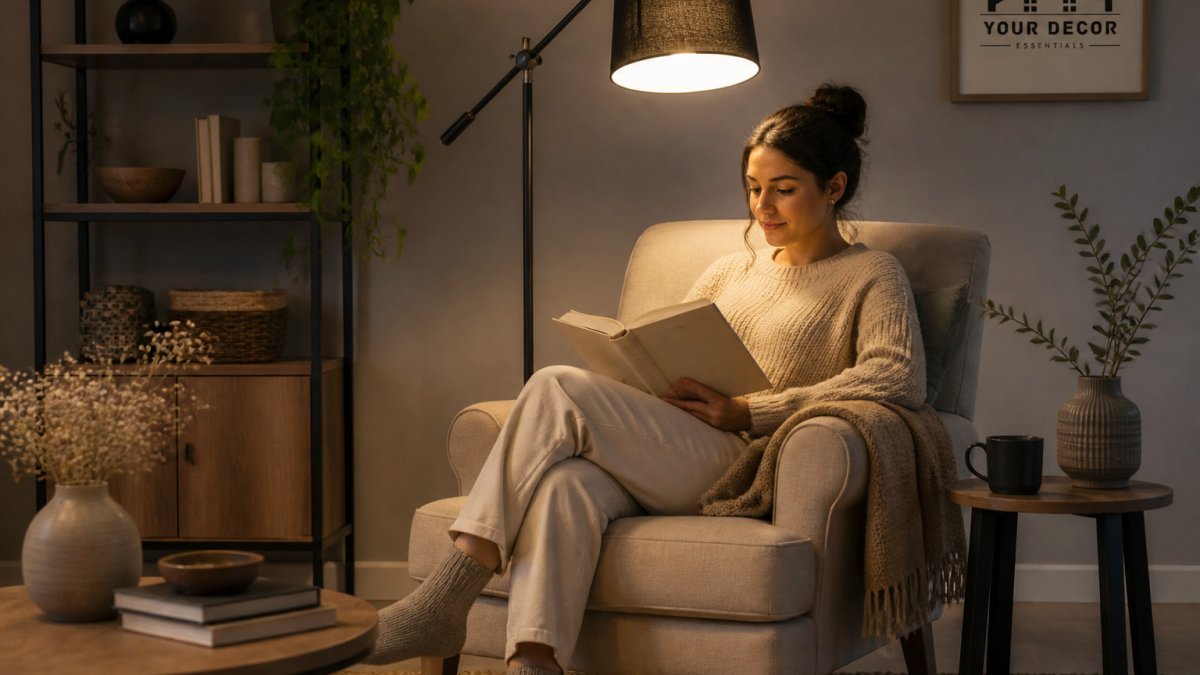
Keep the lamp about 12 to 18 inches from the chair's arm. That gap lets you reach the switch without standing up. It also keeps the cord out of your walking path.
Setting the Height and Reach for Reading
Height matters as much as distance. For a seated reader, the lamp's shade should sit roughly at or just above eye level when you're sitting down. But "eye level" is vague, and most guides stop there. Here is the specific ergonomic guideline that prevents glare: the bottom edge of the lampshade should be positioned so that when you are seated, the bulb itself is completely hidden from your direct line of sight. A simple way to check: sit in your reading chair, hold a book at your normal reading distance, and look straight ahead. If you can see any part of the glowing bulb, the lamp is too low or too far forward. Raise the lamp head or move it slightly behind your shoulder until the bulb disappears from view.
For a standard floor lamp with an adjustable head, aim the beam so the center of the light pool falls on the page, not on your hands or chest. A common pattern is to tilt the head down about 30 to 45 degrees from horizontal, which spreads light evenly across a book or tablet without creating a hot spot. If the lamp has a fixed shade, choose one with a bottom opening wide enough to cast a broad pool of light, typically a shade diameter of at least 12 inches for reading.
Use these quick checks:
- Sit in the chair and hold a book at your normal reading distance
- Have someone move the lamp until the light covers the page evenly
- Confirm the shade blocks the bulb from your eyes when you lean back
- Measure the distance from the floor to the bottom of the shade; for most seated readers, that falls between 40 and 46 inches, depending on chair height and your own height
Most floor lamps with adjustable heads let you tilt the light down onto the page. Use that feature instead of raising the whole lamp. If you share the chair with someone taller or shorter, an adjustable head is worth the extra cost because it lets you fine-tune the angle without moving the base.
The article gives specific distances and heights to aim for when placing a floor lamp beside a reading chair.
| Item | Value | Note |
|---|---|---|
| Distance from chair arm | 12 to 18 inches | Lets you reach the switch without standing |
| Lamp tilt for reading | 30 to 45 degrees | Spreads light across the page without a hot spot |
| Shade diameter for reading | At least 12 inches | Casts a broad pool of light |
| Floor to bottom of shade | 40 to 46 inches | For most seated readers |
| Bulb visibility check | Hidden from direct sight | Adjust height or position until the bulb is out of view |
Table Lamp Placement Beside a Sofa
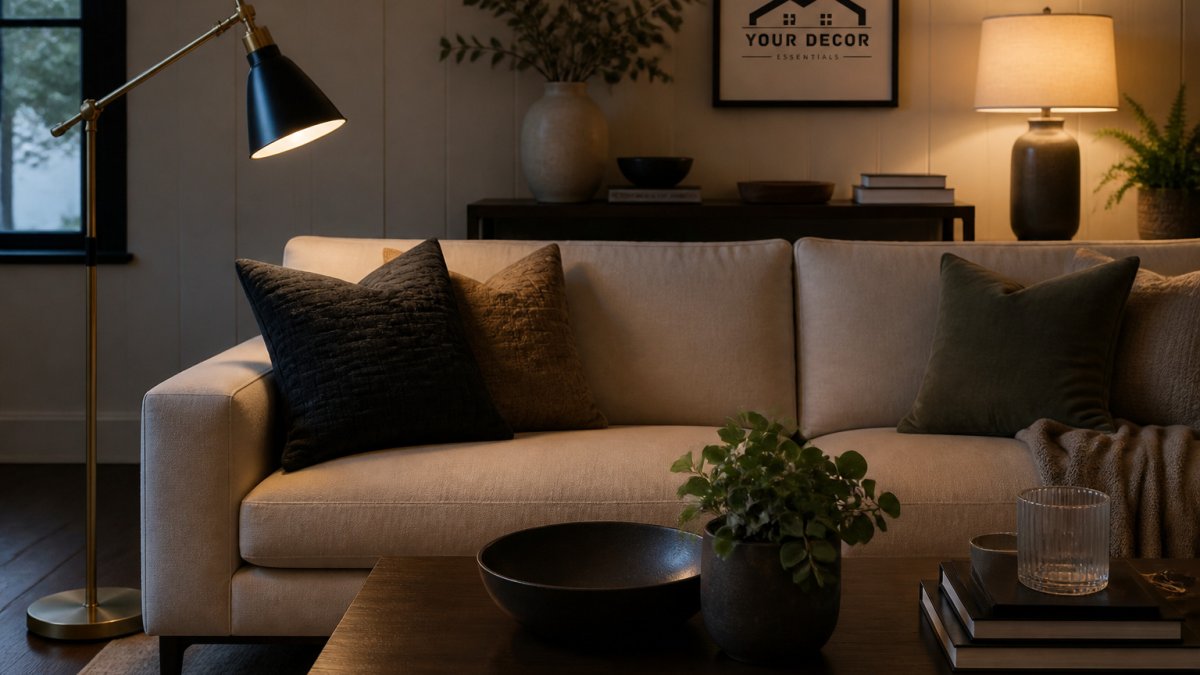
A table lamp is the easiest task light to place. Set it on an end table or side table so the shade sits roughly at shoulder height when you're seated on the sofa.
Keep these points in mind:
- Place the lamp on the side of the sofa where you usually read, so your dominant hand stays free
- Leave at least a few inches of clear space between the shade and the sofa back
- Choose a shade that diffuses light rather than one that throws a hard beam straight down
Table lamps can also crowd the room if you use too many. One lamp per seating spot is usually enough.
How to Layer Living Room Lighting From Task to Ambient
Layering means combining three light sources so the room feels balanced. Think of it as building light in layers:
- Task layer: floor and table lamps placed near reading and work spots
- Ambient layer: a ceiling fixture, wall sconces, or indirect light that fills the room evenly
- Accent layer: a small light that highlights artwork, a plant, or a shelf
Start with the task layer, since that's where your function lives. Then add ambient light so the room doesn't feel like a cave between the lamps. Finish with one or two accents for mood.
A simple check: turn off the ceiling light. If each seating area still feels usable, your task lamps are doing their job. Turn on the ceiling light again and see if the room feels even. If there are harsh dark patches, add a soft ambient source.
Lamp Placement to Avoid Glare and Harsh Shadows
Glare happens when a bright bulb reflects off a surface and hits your eyes. Shadows happen when your own body blocks the light from the page. Both are easy to fix with placement.
Common fixes:
- Keep bulbs out of your direct line of sight
- Place the lamp to the side or slightly behind you
- Use a warm white bulb around 2700K to 3000K for a soft, comfortable glow
- Choose shades that diffuse light instead of exposing the bulb
Watch out: a lamp placed directly across from a TV or window will reflect on the screen. Move it to a side wall to prevent this.
Lighting for Screen-Based Tasks
If you use a laptop or tablet in the living room, glare on the screen is a bigger problem than glare on paper. A lamp positioned in front of you or directly behind you will bounce light off the screen and into your eyes. The fix is to place task lamps to the side of your screen, not in front of or behind it. For a right-handed user, put the lamp on your left side (and vice versa) so your body blocks the light from hitting the screen directly. Keep the lamp at least 18 inches away from the screen to avoid a visible reflection.
A common pattern is to use a lamp with a fully enclosed shade or a diffuser panel that spreads light softly, rather than a bare bulb or a downlight that creates a concentrated beam. If you can see the bulb's reflection on your screen when the screen is off, move the lamp until the reflection disappears. Also, avoid placing a lamp directly behind your laptop; that backlight creates a silhouette effect that strains your eyes.
Smart Controls for Glare-Free Task Lighting
Smart bulbs and plugs can help you adjust task lighting intensity without getting up. Look for bulbs that support dimming and adjustable color temperature. For screen work, a cooler white (around 3500K to 4000K) can improve contrast on the screen, while warmer light (2700K to 3000K) is better for reading paper. A smart plug with a timer or voice control lets you switch from a bright task setting to a softer ambient glow without manually adjusting each lamp. This is especially useful in a multi-use living room where the same lamp serves reading, screen work, and conversation at different times of day.
Arranging Lamps in Small and Multi-Use Living Rooms
Small living rooms and rooms that double as offices or play spaces need careful planning. You can't always fit a lamp in every corner, so choose the spots that serve the most use.
For small rooms:
- Use one floor lamp and one table lamp instead of three small ones
- Pick slim-profile lamps that don't block walkways
- Mount wall sconces to free up floor and table space
For multi-use rooms:
- Give each activity its own light source, even if it's small
- Use a clip-on or adjustable task lamp for a desk corner
- Keep the ambient layer on a dimmer so you can shift the mood quickly
Smart Controls and Cord Management for Task Lamps
Smart bulbs and plugs can make task lamps easier to use. You can schedule a reading lamp to come on at dusk or switch it on by voice. Look for bulbs that support adjustable color temperature so you can move from bright work light to a softer evening glow.
Cords are the other practical issue. Run cords along baseboards or behind furniture, and use cord covers where needed. Keep plugs within reach of the outlet so the lamp doesn't pull on the base. A tidy cord setup also keeps your room looking intentional.
For a lamp that sits far from an outlet, a smart plug with a timer often works better than a long extension cord.
Booking Your Lighting Plan Before You Buy
Once you've mapped your task zones and sketched your layers, you're ready to shop. Bring your room measurements and a note of each zone to your search. That way you'll know the lamp height, shade width, and bulb type you need before you spend a dollar.
Pricing for lamps varies widely based on size, finish, and features, so check current prices and availability on our site before you order.
Frequently Asked Questions
How many lamps should a living room have for task lighting?
Most living rooms work well with one task lamp for each seating spot used for reading, sewing or working, plus one or two ambient sources. Count the places where someone sits to read or do close work, then give each one its own light. Two or three well-placed lamps usually cover a standard room, and adding more only helps if a corner or work area is still dim. Placement matters more than the total count, so move a lamp before buying another one.
How high should a table lamp be beside a sofa?
A table lamp beside a sofa usually sits with its shade roughly at seated eye level, which keeps the bulb out of your line of sight. Many people find that a shade bottom around 24 to 30 inches above the floor works for a standard sofa arm height. Choose a lamp base that makes the shade reach that height when seated, and check it by sitting in the spot before you settle on the final position.
Where should a floor lamp go next to a reading chair?
Place the floor lamp just behind and to the side of the chair, so light falls over your shoulder onto the page rather than in front of your eyes. Keep the shade near ear height when you are seated, and leave enough room that the lamp does not block the chair from reclining. Angling the light toward the reading surface, not the wall, gives focused task light without creating a glare spot.
How can you arrange lamps to avoid glare and shadows?
Avoid placing a lamp directly in your line of sight or opposite a television or window, since both create reflections. Position task lamps to the side and slightly behind the work surface, and use shades that diffuse light rather than bare bulbs. Layering a softer ambient source with the task lamp reduces the contrast that causes harsh shadows across the room.