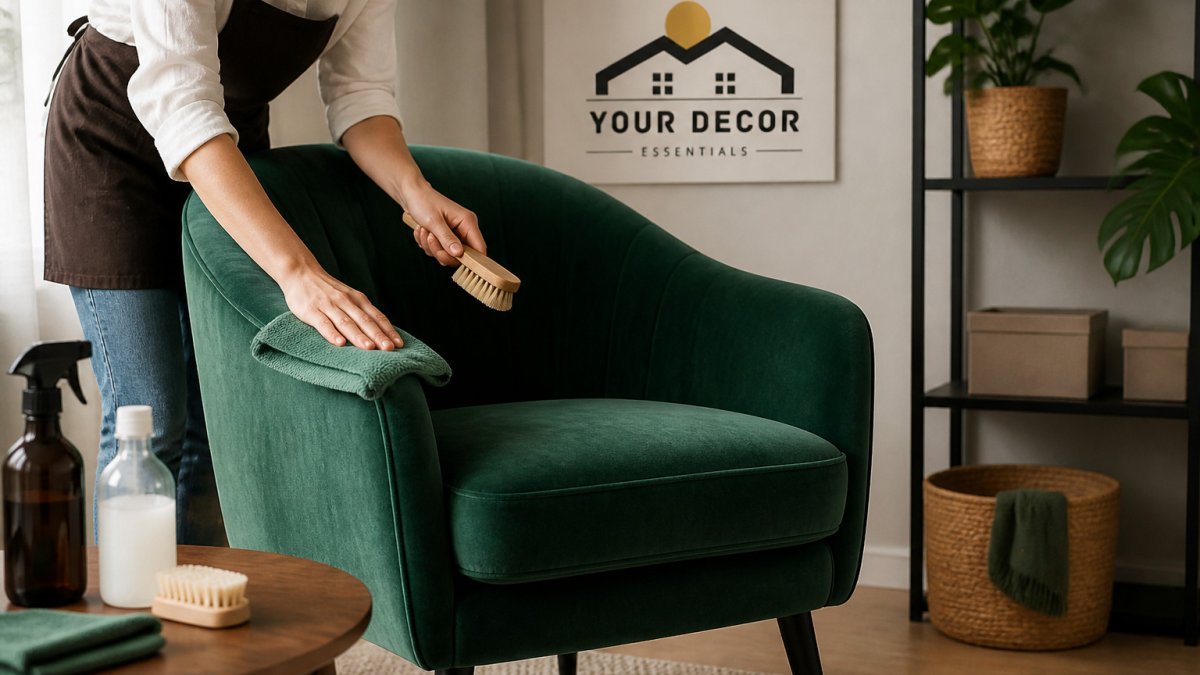
 how-to
How to Clean Velvet Accent Chairs: A Step-by-Step Guide
Quick Summary
To clean velvet accent chairs, first check the care label for a cleaning code, then vacuum with a soft brush to remove dust. Spot-clean stains with a damp microfiber cloth and a few drops of mild dish soap in lukewarm water, dabbing rather than rubbing. Always patch-test first on a hidden area.
- Check the care label first: a W code allows water-based cleaners, while S means solvent only.
- Vacuum on low suction with a soft brush, working in the direction of the nap.
- Mix about a quarter teaspoon of mild dye-free dish soap into one cup of lukewarm water.
- Dab stains gently and never soak the fabric, since excess moisture causes rings.
- Brush crushed velvet strictly along its crush direction to keep the sheen.
Table of Contents
- Check the Care Label and Identify Your Velvet Type
- What You'll Need Before You Start
- Step 1: Vacuum Dust and Debris From the Chair
- Step 2: Spot-Clean Marks, Spills and Stains
- How to Remove Water Marks From Velvet Without Making Them Worse
- How to Clean Crushed Velvet and Restore Pile Direction
- Common Mistakes to Avoid When Cleaning Velvet Chairs
- When to Call a Professional Upholstery Cleaner
- Set a Simple Schedule to Keep Your Velvet Chair Looking Its Best
- Frequently Asked Questions
Check the Care Label and Identify Your Velvet Type
Last Updated: November 1, 2026
Before you touch your velvet accent chair with a brush or a bowl of soapy water, look for the care label, since it tells you how to keep the fabric looking its best. It's usually tucked under a seat cushion, stapled to the deck under the seat, or sewn along the back panel. The label is the single most important piece of information you have, because it tells you which cleaning chemistry is safe for that specific fabric. Ignoring it is the fastest way to set a stain, shrink a cover, or leave a permanent ring.
Decode the Cleaning Codes
Upholstery care codes follow a standard set of letters. Here is what each one actually permits:
- W, water-based cleaner. You can use mild soap-and-water solutions, foam cleaners labeled for water-safe fabric, and damp-cloth spot cleaning.
- S, solvent-based cleaner only. Water can leave rings, shrink fibers, or distort the pile. Use a dry-cleaning solvent or a solvent-based upholstery cleaner, applied sparingly. Never introduce water, even a damp cloth, until you have patch-tested.
- WS, water or solvent. Either approach is safe. This is the most forgiving code.
- X, vacuum or dry-clean only. No liquid cleaner of any kind. Vacuum with a soft brush and call a professional for anything beyond surface dust.
- No code at all. Treat the chair as delicate. Patch-test every product on a hidden area before touching a visible surface.
Identify the Velvet Type
Velvet is a pile fabric, and the fiber content and pile structure determine how it responds to moisture, heat, and friction.
- Standard velvet has an even, plush pile that feels soft in every direction. It is the most straightforward to clean and responds well to the vacuum-then-dab method.
- Crushed velvet has a rippled, shiny look from pile that has been pressed in one direction on purpose. It shows water marks more readily and must be brushed strictly along the crush direction.
- Cotton velvet is durable and usually water-safe (W or WS), but it can shrink at the seams if soaked. Keep moisture minimal.
- Polyester and synthetic velvet resist water well, dry quickly, and tolerate mild soap, but heat can melt or shine the pile, so skip the hair dryer and the iron.
- Silk velvet is delicate, water-spots easily, and usually carries an S or X code. Plan on professional care for anything beyond light dusting.
Read the Fiber Content, Not Just the Code
If the label lists fiber content, use it as a second check. Fiber content is a useful second check when the care code is missing or unclear.
- Check for a care code on the label, under cushions, or on the deck
- Note whether the pile feels smooth, crushed, or directional
- Read the fiber content if it is listed
- When in doubt, treat the fabric as delicate and patch-test
What You'll Need Before You Start
You don't need a big cleaning kit. Most of what you need is already in the house. Gather these items before you begin:
- A vacuum with a soft brush or upholstery attachment
- Two clean microfiber cloths
- A soft toothbrush for stubborn spots
- A few drops of mild dish soap
- A bowl of lukewarm water
- Optional: a small amount of white vinegar for specific stains
A common mistake is grabbing harsh cleaners. Skip bleach, strong degreasers, and anything with heavy scrubbing grit.
Step 1: Vacuum Dust and Debris From the Chair
Start dry. Vacuuming first removes grit that would otherwise get pushed deeper into the fibers of your clean velvet accent chairs when you add moisture. Grit left behind can also scratch the pile as you work.
Set your vacuum to low suction. Work with the nap, meaning the direction the velvet lies when you run your hand across it. Brush gently from the top of the seat toward the bottom, then do the arms and back. Pay extra attention to the seams and the gap between the seat and the back, where crumbs collect.
Choosing a Soft Brush or Upholstery Attachment
Use a soft brush attachment, not a hard crevice tool. A soft brush lifts dust without pulling on the threads. If your vacuum only has a hard nozzle, wrap it in a thin cloth first. You can also use a clean, dry, soft-bristled clothes brush for light dust between full cleanings.
Step 2: Spot-Clean Marks, Spills and Stains
Act quickly on spills. Blot fresh liquid right away with a dry, white microfiber cloth. If the chair is drying while you clean, you can browse matching Halloween throw pillows and pillow covers for a coordinated look in the meantime. Press, don't rub. Rubbing pushes the stain deeper into the pile and roughens the fibers, which shows up as a dull patch once the fabric dries. Work from the outside of the stain toward the center so you don't spread the ring.
Mix a Mild Soap-and-Water Solution
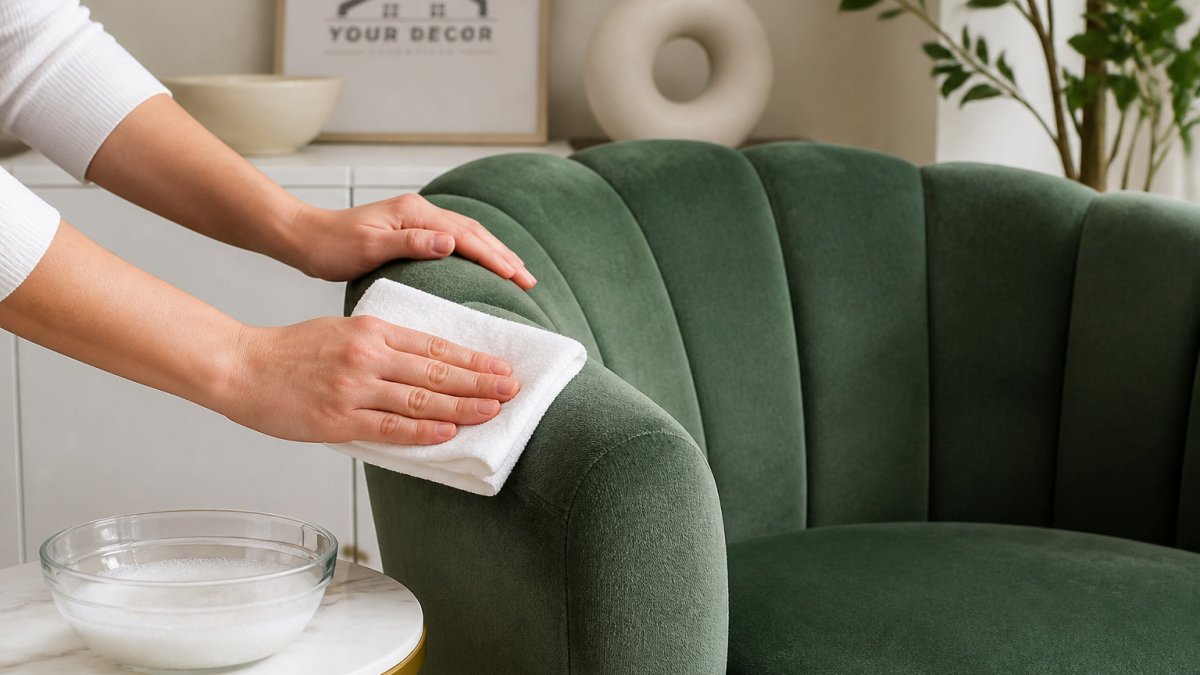
Add a few drops, roughly a quarter teaspoon, of mild, dye-free dish soap to one cup of lukewarm water. Whisk until you get light suds. Dip a microfiber cloth into the suds (not the liquid), then wring it out until it is only damp to the touch. Dab the stain gently, lifting rather than pressing. Rinse with a second cloth dampened with plain water and wrung well, then blot dry with a clean towel.
Always Patch-Test First
Test every product on an inconspicuous spot, the underside of the seat, the back of a skirt, or a hidden seam allowance. Apply a small amount, wait five to ten minutes, and check for color change, pile distortion, or a ring. Only then move to the visible area.
Stain-by-Stain Guidance
Different stains need different chemistry. Match the method to the stain:
- Food and drink (coffee, wine, juice): Blot immediately, then use the mild soapy-water method above. For red wine, blot first, then dab with a cloth dampened with a 1:1 mix of water and white vinegar, rinse, and blot dry. Do not rub.
- Grease and oil: Do not add water first, it spreads grease. Sprinkle cornstarch or baking soda over the spot, let it sit 15-30 minutes to absorb the oil, brush it off with a soft brush, then spot-clean with the soapy-water method.
- Ink and dye transfer: Dab lightly with a cloth dampened with a small amount of isopropyl rubbing alcohol. Test first, work from the outside in, and blot, never rub. Rinse with a damp cloth and dry.
- Pet accidents: Blot up as much liquid as possible, then clean with the mild soapy-water method and rinse thoroughly.
- Water marks and rings: See the water-mark section below, the fix is to even out moisture across the whole panel, not to spot-treat the ring.
- Mud and dried debris: Let mud dry completely, then brush it off with a soft brush before any moisture touches the fabric.
What Not to Do
- Never soak the fabric. Excess moisture wicks into the cushion and causes rings, mildew, and seam shrinkage.
- Never scrub with a stiff brush. It fuzzes and bald-spots the pile.
- Never use hot water or heat. Heat can permanently change the look of synthetic pile and set protein stains.
- Skip unverified internet remedies. Home remedies found online can leave residue or set stains, so patch-test any product first.
- Never use bleach, harsh degreasers, or abrasive cleaners. They strip color and flatten the pile.
- Don't over-wet the cloth. A damp cloth, not a wet one, is the target.
How to Remove Water Marks From Velvet Without Making Them Worse
Water marks appear when a damp spot dries unevenly and leaves a ring. Evening out the moisture across the section can help the edges blend, so test on a hidden area first.
Once dry, gently brush the fibers with a soft brush in the nap direction to restore the texture. Avoid using a hair dryer, which can crush the pile and leave a flat patch.
How to Clean Crushed Velvet and Restore Pile Direction
Crushed velvet looks different because its pile has been pressed in one direction on purpose. To clean it, follow the same dry-then-damp steps, but brush strictly along the crush direction. Brushing against it can flatten the sheen.
Common Mistakes to Avoid When Cleaning Velvet Chairs
- Scrubbing too hard, which fuzzes and bald-spots the fabric
- Using too much liquid, which leaves rings and soaks the cushion
- Drying with direct heat, which hardens the fibers
- Skipping the spot test on a hidden area
- Brushing against the nap, which dulls the surface
When to Call a Professional Upholstery Cleaner
Consider a professional upholstery cleaner if the label says S only and you have no solvent cleaner, if the stain is large or old, or if water marks remain after a careful attempt.
Set a Simple Schedule to Keep Your Velvet Chair Looking Its Best
Keep your chair looking fresh with a light routine. Vacuum or brush it once a week to remove dust before it settles into the pile. Spot-clean spills as soon as they happen. Do a deeper gentle clean every few months, and fluff the pile with a soft brush after each cleaning.
Regular care is easier than rescuing a stained chair later. Your velvet accent chair can stay soft, rich, and inviting for years with just a few minutes of attention.
Frequently Asked Questions
Can you use water to clean velvet chairs?
Water can be used carefully, but it is the most common cause of water marks on velvet. Use only a barely damp cloth or sponge, dab rather than rub, and test an inconspicuous area first. Avoid soaking the fabric, and let the chair air dry completely away from direct heat. If the fabric has a care code that says dry clean only or solvent only, do not use water at all.
How often should you clean velvet accent chairs?
Vacuum or brush your velvet accent chair with a soft attachment once a week to remove dust and debris, since dust settles into the pile and dulls the fabric. Spot-treat spills as soon as they happen. A deeper cleaning with a mild solution is usually only needed a few times a year or when a visible mark appears, because repeated moisture can leave water marks.
Do velvet chairs need professional cleaning?
Many velvet chairs can be maintained at home with vacuuming and careful spot-cleaning. Consider a professional upholstery cleaner if the care label recommends professional cleaning only, if a stain is large or set-in, if the chair has water marks that did not lift after gentle treatment, or if the fabric is delicate or antique. A professional can assess the fabric and choose a method that will not damage the pile.
What is the difference between velvet and crushed velvet?
Standard velvet has a short, dense, evenly raised pile that looks uniform from every angle. Crushed velvet has its pile pressed in different directions, which creates a shimmering, textured look. Crushed velvet is more prone to visible pressure marks, so cleaning should be done in the direction the pile naturally lies, and a brush can help restore its shape once it dries.