 how-to
How to Mix Modern Furniture Styles: A Design Guide
Table of Contents
- Understanding the Fundamentals of Mixing Modern Furniture Styles
- Establishing a Unifying Element Across Your Space
- Balancing Proportions and Scale in Mixed Interiors
- The Role of Contrast in Creating Visual Interest
- Choosing a Color Palette That Works Across Styles
- Mixing Textures and Materials for Depth
- Using Modern Accent Chairs to Bridge Different Styles
- How to Style a Bookshelf with Decor and Furnishings
- Budget-Friendly Strategies for Mixing Styles
- Small Space Solutions for Eclectic Design
Last Updated: August 29, 2026
Understanding the Fundamentals of Mixing Modern Furniture Styles
Mixing modern furniture styles is the practice of blending pieces from different design periods and aesthetic traditions into a cohesive, intentional interior. At Your Decor Essentials, we believe the real challenge isn't finding individual pieces you love, it's creating harmony when those pieces come from entirely different design languages. A mid-century modern sofa next to a contemporary glass table shouldn't clash. But without understanding a few core principles, it absolutely will.
The secret to making this work lies in recognizing that successful mixing isn't random. It's strategic. You're not just throwing together whatever looks interesting; you're using specific design tools to make disparate elements feel like they belong together. Think of it like cooking: individual ingredients have distinct flavors, but the right technique and balance transform them into something unified and delicious.
Most people approach mixed-style interiors by accident. They inherit furniture from different phases of their lives, buy what fits their budget in the moment, or simply gravitate toward pieces that catch their eye. The result often feels chaotic rather than curated. The difference between a room that looks thoughtfully eclectic and one that looks like a furniture showroom explosion comes down to understanding proportion, contrast, color, texture, and focal points. These aren't abstract design concepts, they're practical tools you can apply immediately.
The beauty of learning how to mix modern furniture styles is that it opens up your options dramatically. You're no longer locked into buying everything from one brand or design era. You can hunt for vintage finds, incorporate family heirlooms, invest in contemporary statement pieces, and create something entirely your own. Your space becomes a reflection of your taste rather than a catalog page.
Establishing a Unifying Element Across Your Space
Every successful mixed-style interior has an anchor, something that ties everything together visually and conceptually. Without this unifying element, your room will feel scattered no matter how beautiful the individual pieces are. Think of it as the thread running through your design narrative.
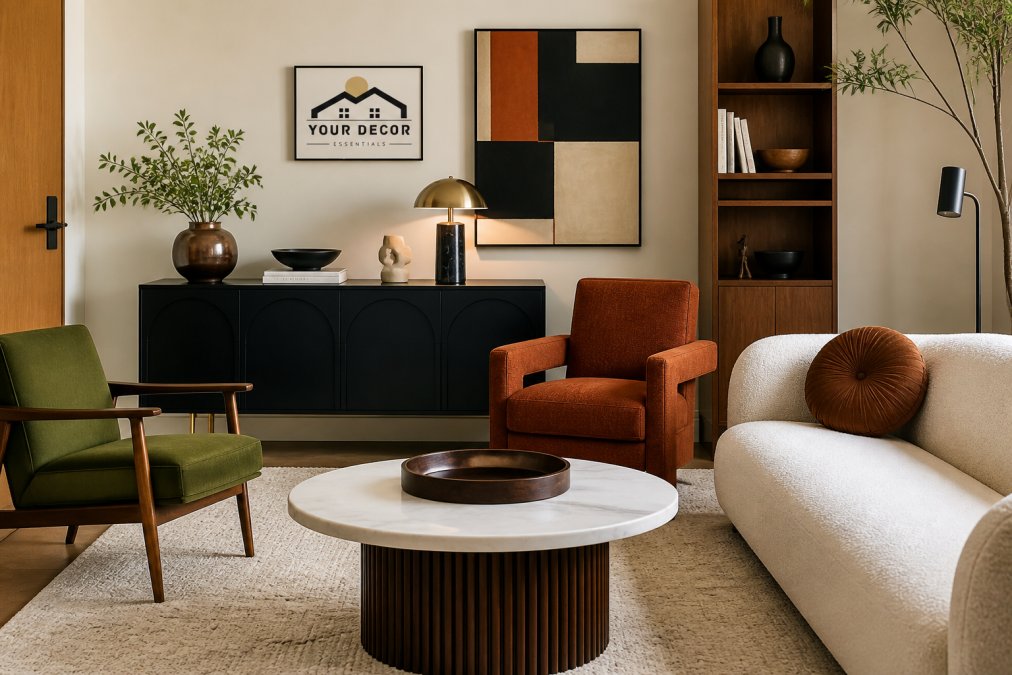
The most common unifying element is a color palette. When you commit to a specific set of colors, say, warm neutrals with deep blue accents, every piece you add, regardless of its style or era, automatically feels intentional. A vintage brass lamp, a contemporary glass coffee table, and a transitional wingback chair all feel like they belong together because they're speaking the same color language. This is where choosing a color palette that works across styles becomes absolutely critical. You're not trying to match everything perfectly; you're creating a visual thread that connects disparate elements.
Another powerful unifying element is material consistency. If you anchor your space with warm wood tones throughout, whether it's a reclaimed wood console, a mid-century dining table, or contemporary wooden shelving, you've created cohesion through material rather than style. Metal finishes work the same way. Mixing brushed brass, matte black, and polished chrome might sound chaotic, but when those metals appear consistently throughout your space on lighting fixtures, hardware, and accent pieces, they feel deliberate.
A third approach is establishing a dominant style with supporting accents. If your room is primarily contemporary with clean lines and minimal ornamentation, you can introduce vintage or transitional pieces as intentional counterpoints. The key is proportion: your dominant style should occupy roughly 60-70% of your visual space, with the other styles playing supporting roles. This prevents your room from feeling equally balanced between too many competing aesthetics.
You can also unify through a shared design principle, symmetry, for instance, or the use of geometric shapes. When pieces share a visual language at this abstract level, they feel connected even if their era and style differ dramatically. A contemporary geometric side table, a vintage geometric rug, and modern abstract wall art all speak to the same design vocabulary, creating cohesion through form rather than period.
Balancing Proportions and Scale in Mixed Interiors
Scale is where many mixed-style rooms fall apart. You can have the perfect color palette and material consistency, but if your furniture proportions are wildly mismatched, the room will feel uncomfortable, even if you can't quite articulate why.
The fundamental rule is this: in any given space, you need visual balance between large and small pieces. A tiny contemporary accent chair next to an oversized vintage sectional creates tension that reads as wrong. The eye doesn't know where to rest. Conversely, filling a room exclusively with mid-scale pieces creates a flat, uninspiring space with no visual hierarchy. You need contrast in scale, but it must be intentional and balanced.
When you're mixing modern furniture styles, pay attention to the actual dimensions of your pieces relative to your room and to each other. A statement piece, whether it's a sculptural modern chair, a large vintage credenza, or a contemporary media console, should command attention without overwhelming the space. The rule of thumb: your largest piece should take up roughly 25-30% of the visual real estate in that room. Everything else should support it.
Vertical scale matters just as much as horizontal scale. A room with only low furniture feels sprawling and disconnected. A room with only tall pieces feels cramped and claustrophobic. The most successful mixed-style interiors play with height variation: a low-profile contemporary sofa paired with tall bookshelves, a vintage high-back chair next to a low modern coffee table. This vertical rhythm creates visual interest and prevents monotony.
When combining pieces from different eras, scale consistency becomes even more important. A delicate mid-century chair next to a chunky contemporary sectional needs careful placement and supporting elements to feel intentional rather than accidental. Think about negative space, the empty space around and between your furniture. In mixed-style rooms, generous negative space prevents the eye from feeling overwhelmed by too many competing scales and styles at once.
The Role of Contrast in Creating Visual Interest
Contrast is what prevents your mixed-style room from feeling boring or overly matchy. But there's a critical distinction: contrast should be intentional, not random. The goal is visual interest, not visual chaos.
The most effective contrasts in mixed-style interiors come from opposing these elements: smooth versus textured surfaces, light versus dark tones, curved versus angular forms, ornate versus minimal details. A sleek contemporary glass table paired with a richly textured vintage rug creates contrast that feels sophisticated. A minimalist modern credenza next to an ornately carved vintage mirror does the same.
Contrast in shape is particularly powerful when you're mixing modern furniture styles. Contemporary design favors clean lines and geometric forms, rectangles, circles, straight edges. Transitional and vintage styles often feature curves, ornamental details, and organic silhouettes. When you deliberately pair these opposing shapes, you create visual tension that reads as intentional design rather than random accumulation. A contemporary angular sofa next to a curved vintage armchair, for instance, creates dynamic visual interest.
The 80/20 rule of design applies here: approximately 80% of your space should feel cohesive and calm, while 20% should introduce contrast and surprise. This prevents your room from becoming either too boring or too visually chaotic. Your neutral wall color, consistent wood tones, and coordinated upholstery create the calm 80%. Your statement piece, perhaps a bold patterned vintage rug, a contemporary sculpture, or a transitional accent chair in a contrasting color, provides that essential 20% of contrast.
Color contrast deserves its own attention. You don't need to use multiple colors to create contrast; you can use tonal contrast instead. A room done entirely in warm neutrals can still feel dynamic when you play with light and dark values. A cream sofa, warm beige walls, and dark wood flooring create contrast through tone rather than color, maintaining cohesion while avoiding monotony.
Choosing a Color Palette That Works Across Styles
Your color palette is the foundation of successful mixed-style design. It's the single most powerful tool for making disparate pieces feel intentional rather than random.
Start by choosing a neutral base, this is non-negotiable. Neutrals don't mean boring beige everywhere. Think warm creams, soft grays, warm whites, or even pale greiges. These neutrals should cover your largest surfaces: walls, flooring, and your largest furniture piece (usually your sofa). The neutral base creates visual calm and allows your mixed pieces to shine without competing with each other for attention.
From there, introduce 2-3 accent colors maximum. This is where your personality emerges, but restraint is essential. If you're mixing modern furniture styles, too many colors will emphasize the stylistic differences rather than the cohesion you're trying to create. A room with warm neutrals, deep blue accents, and warm brass metals feels curated. The same room with added pops of coral, emerald, and rose gold feels scattered.
Consider the undertones of your neutrals and accent colors carefully. Warm neutrals (creams, warm grays, warm whites) pair beautifully with warm accent colors like deep blue, terracotta, or warm greens. Cool neutrals (cool grays, cool whites) work better with cool accent colors like jewel tones or cool blues. This doesn't mean you can't mix warm and cool, you absolutely can, but do it intentionally. A room that mixes warm and cool tones without a clear strategy feels disconnected.
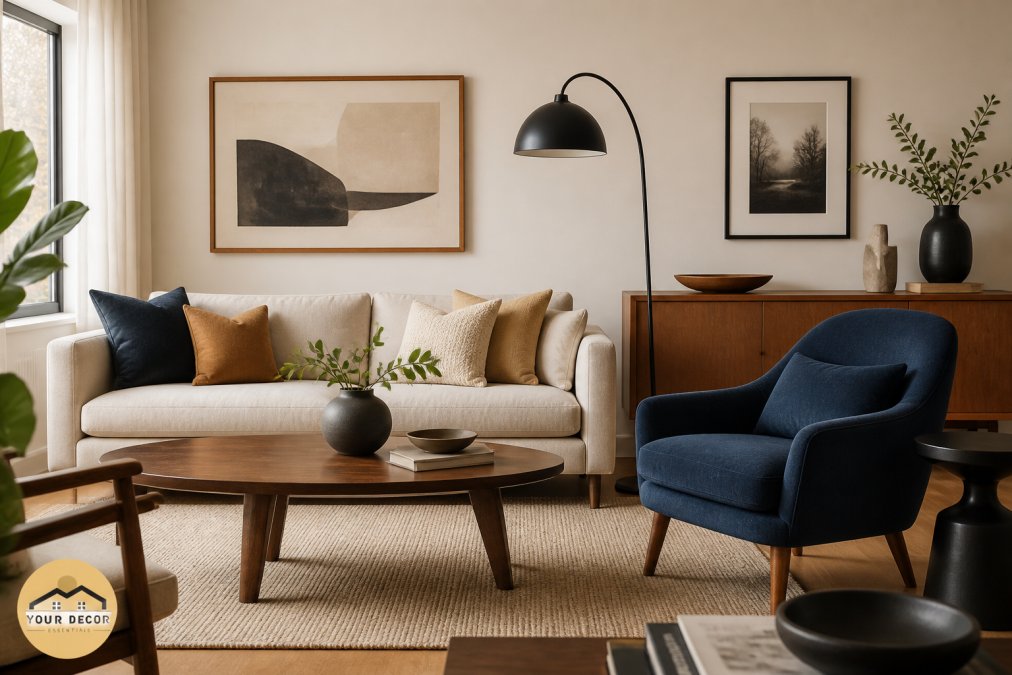
Think about where your accent colors appear. They should repeat throughout the room, in a throw pillow, a rug, wall art, and perhaps a piece of upholstered furniture. This repetition creates the visual thread that ties your mixed pieces together. If your accent color appears only once, it reads as random. If it appears in at least three places, it reads as intentional.
Don't overlook the color of your metal finishes. Brass, copper, bronze, and gold are warm metals that work with warm palettes. Chrome, stainless steel, and matte black are cool metals that work with cool palettes. Mixing warm and cool metals is possible, but again, do it strategically. If you're mixing modern furniture styles, consistency in your metal finishes, whether you choose all warm or all cool, creates an invisible thread of cohesion.
Mixing Textures and Materials for Depth
Texture is what prevents your space from feeling flat and one-dimensional. When you're mixing modern furniture styles, texture becomes even more important because it's another layer of visual interest that transcends style periods.
The most successful mixed-style interiors play with textural contrast. Smooth surfaces, glass, polished wood, leather, paired with textured surfaces like linen, wool, woven materials, and raw wood create dimension. A sleek contemporary glass side table next to a chunky vintage wool ottoman, topped with a smooth leather throw and a textured linen pillow, creates a tactile experience that feels rich and intentional.
Modern furniture often emphasizes smooth, hard surfaces: glass, polished metals, smooth upholstery. Vintage and transitional pieces frequently feature more texture: carved wood details, ornamental surfaces, natural fibers. This natural textural difference between styles actually works in your favor, it creates contrast without requiring much effort. The key is balancing these textures so one doesn't overwhelm the other.
Upholstery texture matters significantly. If all your seating is smooth leather or sleek microsuede, your space will feel cold and modern. If everything is chunky knit or heavily textured, it will feel dated. Mix smooth upholstery with textured upholstery. A contemporary sofa in smooth linen next to a vintage chair in velvet creates visual and tactile interest. Add a chunky wool area rug and suddenly your space feels layered and sophisticated.
Wood finishes contribute to texture as well. Smooth, polished wood reads as contemporary. Distressed, hand-scraped, or heavily grained wood reads as vintage or transitional. Mixing these finishes, perhaps a polished walnut credenza next to a distressed wood bookshelf, creates textural variety that supports your mixed-style approach. Raw wood, reclaimed wood, and sealed natural wood all contribute different textural qualities.
Incorporating materials like concrete, brick, or stone adds industrial texture that works beautifully in mixed-style spaces. A contemporary concrete side table, a vintage brass lamp, and a transitional upholstered chair in soft linen create a sophisticated mix of textures and materials that feels intentional.
Using Modern Accent Chairs to Bridge Different Styles
A modern accent chair is one of the most versatile tools for successfully mixing modern furniture styles. It can serve as a bridge between different design periods, introduce color or texture, and create a focal point, all while being relatively affordable compared to larger furniture pieces.
The key to using an accent chair effectively in a mixed-style space is choosing one that has clean lines and minimal ornamentation. A contemporary accent chair works as a bridge precisely because it doesn't compete stylistically with other pieces. Its simplicity allows it to coexist peacefully with vintage ornamental pieces, transitional designs, and other contemporary elements. Think of it as a visual translator between different design languages.
Color and texture in your accent chair become the main design statements. A neutral contemporary chair adds visual calm. A contemporary chair in your accent color creates a focal point. A contemporary chair in a contrasting texture, perhaps soft velvet or chunky linen when your other seating is smooth leather, adds depth without style clash.
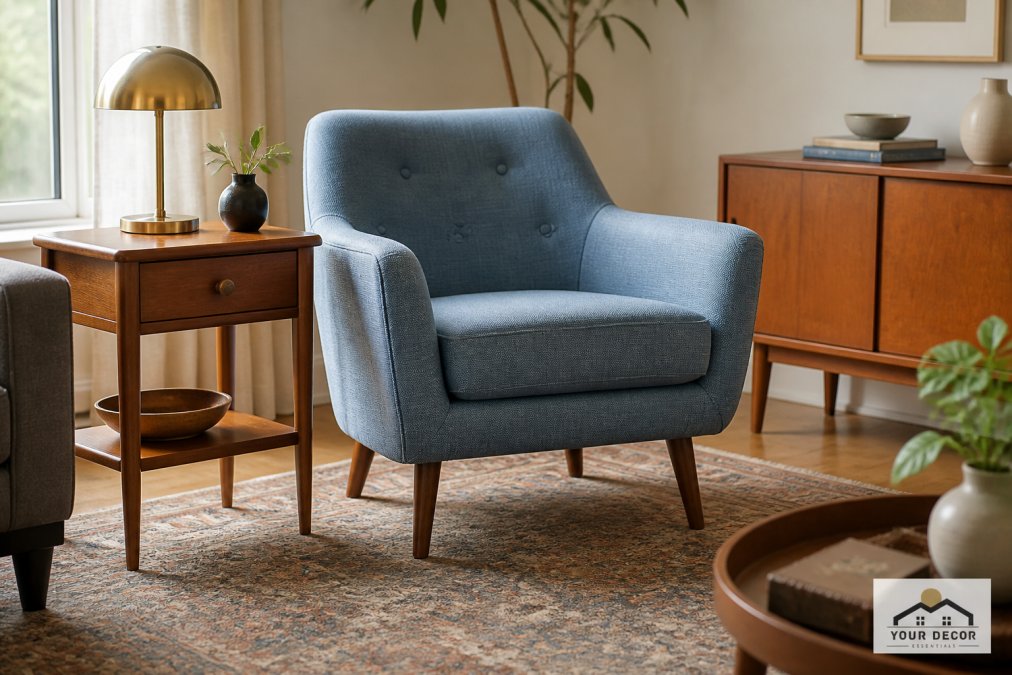
Placement matters enormously. Position your modern accent chair to create visual balance in the room. If your other seating is clustered on one side, place your accent chair opposite to create symmetry. If you're going for asymmetrical balance, position it to anchor a corner or define a secondary seating area. The accent chair shouldn't feel like an afterthought; it should feel like a deliberate design choice.
Consider the scale of your accent chair relative to your other furniture. A petite contemporary chair next to a massive vintage sectional creates awkward visual imbalance. A substantial contemporary chair commands attention and feels intentional. Your accent chair should be significant enough to hold its own visually while still being distinctly different from your other seating.
Layering is crucial here. Your accent chair alone won't create a complete mixed-style vignette. Add a side table (consider mixing materials, perhaps a contemporary glass top on vintage wooden legs), a table lamp with modern lines but warm metal finish, and a layered throw in complementary texture. Suddenly, your accent chair becomes part of a curated, intentional arrangement that demonstrates how to mix modern furniture styles successfully.
How to Style a Bookshelf with Decor and Furnishings
A bookshelf is one of the most visible design elements in your home, and it's an ideal place to demonstrate your ability to mix modern furniture styles. The principles here apply whether you're styling floating shelves, a built-in bookcase, or a standalone unit.
Start with the "rule of thirds" approach: divide your shelf space into three zones, and treat each with intention. One zone might be primarily books stacked horizontally and vertically. Another might feature decorative objects and art. The third might combine books with sculptural pieces. This creates visual interest while maintaining organization.
When mixing modern furniture styles on a bookshelf, you're essentially creating micro-vignettes. Each shelf should feel somewhat self-contained while contributing to the overall cohesion of the entire bookcase. A contemporary abstract sculpture next to a vintage brass candlestick and a stack of books in your accent color reads as intentional. The same objects arranged randomly read as cluttered.
Negative space is your friend on bookshelves. Resist the urge to fill every inch. Empty space allows the eye to rest and makes your displayed objects feel more important and curated. A common mistake is overcrowding shelves to make the bookcase feel "full." The opposite is true: strategic spacing makes your design choices feel deliberate.
Consider the visual weight of objects. Heavy, dark pieces should be balanced with lighter, airier pieces. A dark vintage wooden box next to a light contemporary ceramic vessel, with some breathing room between them, creates balance. If you cluster all your heavy pieces together, that section of the shelf will feel visually weighted down.
Height variation on shelves creates visual interest. Stack some books horizontally, stand others vertically. Place a tall sculptural piece next to a low, wide object. Vary the heights of your decorative items. This variation prevents your bookshelf from feeling static or boring.
Color coordination matters on bookshelves too. Books with coordinating spine colors create visual harmony. A few pops of your accent color, perhaps in a decorative object or a colorful book, tie the bookshelf into your overall room design. You're not trying to match everything; you're creating intentional visual connections.
Budget-Friendly Strategies for Mixing Styles
The beautiful thing about mixing modern furniture styles is that it doesn't require a massive budget. In fact, embracing mixed styles often costs less than committing to a single design aesthetic.
Start with what you already own. Before buying anything new, audit your existing furniture and decor. That vintage dresser from your parents' house, the contemporary side table you bought years ago, the transitional rug you inherited, these pieces are the foundation of your mixed-style space. Understanding what you have and how to arrange it strategically is the first step. Many people think they need to start from scratch when actually they already own the building blocks of a beautiful mixed-style interior.
Thrift stores and secondhand markets are goldmines for mixed-style design. Vintage and transitional pieces that would cost hundreds at a designer showroom often cost a fraction of that price secondhand. A beautiful vintage wooden chair, a mid-century side table, or an ornate mirror can anchor your mixed-style design for minimal investment. The key is knowing what to look for: solid construction, timeless design, and pieces that work with your color palette and overall aesthetic.
Contemporary pieces from budget-friendly retailers can bridge between your vintage finds and create the cohesion you need. A simple contemporary side table, a neutral upholstered ottoman, or minimal shelving can tie together disparate vintage pieces without requiring a significant investment. These contemporary anchor pieces don't need to be expensive; they just need to be well-proportioned and in your chosen color palette.
Focus your budget on pieces that will be most visible and frequently used. Your sofa, bed, and main seating area deserve more investment than a decorative side table. A quality contemporary sofa in a neutral color is a smart investment that will work with virtually any mixed-style design you develop around it. Smaller pieces, accent chairs, side tables, shelving, can be sourced more affordably without sacrificing the overall design impact.
DIY and upcycling can dramatically stretch your budget. Painting an old wooden dresser in a contemporary color transforms it instantly. Reupholstering a vintage chair in modern fabric bridges the gap between styles while costing significantly less than buying new. Adding new hardware to an old piece updates it without requiring replacement. These small interventions make budget-friendly pieces look intentional and curated.
Shop your own home first, then expand to thrift and secondhand sources, then invest in key contemporary pieces that tie everything together. This approach allows you to create a sophisticated mixed-style interior without the expense of furnishing everything new.
Small Space Solutions for Eclectic Design
Small spaces present unique challenges for mixed-style design, but they also offer opportunities. The constraints actually force you to be more intentional, which often results in more cohesive, curated spaces than larger rooms.
The most critical principle for small spaces is restraint. This doesn't mean your space can't be eclectic; it means every piece must earn its place. In a small room, a poorly chosen or poorly placed piece becomes glaringly obvious. In a large room, you can hide design mistakes. Small spaces demand intention.
Scale becomes even more important in small spaces. Oversized furniture will overwhelm a small room, making it feel cramped and cluttered. Conversely, everything scaled too small makes the space feel insignificant. The sweet spot is medium-scale furniture with some variation, a medium contemporary sofa, a smaller vintage side table, a sculptural accent chair. This creates visual interest without overwhelming the space.
Vertical storage is your secret weapon in small spaces. Floor-to-ceiling bookshelves, tall narrow cabinets, and wall-mounted shelving allow you to display and store more without consuming precious floor space. These vertical elements also create visual height, making small rooms feel less cramped. The opportunity here is significant: you can display more mixed-style pieces by going vertical rather than horizontal.
Color becomes more impactful in small spaces. A small room painted in a neutral color with carefully chosen accent colors feels intentional and spacious. Too many colors in a small space feel chaotic. Stick to your neutral base plus 2-3 accent colors maximum, and your small space will feel curated rather than cluttered.
Multifunctional pieces are essential in small spaces, and they work beautifully with mixed-style design. A vintage wooden console that serves as both a desk and a display surface, a contemporary ottoman that functions as storage and seating, a bookshelf that divides the room while providing display space, these pieces work harder in small spaces while contributing to your mixed-style aesthetic.
Negative space is crucial in small rooms. Resist the urge to fill every corner. Strategic empty space makes your small room feel larger and allows your carefully chosen mixed pieces to shine. A small room with breathing room feels sophisticated. A small room packed with furniture feels chaotic, regardless of how beautiful the individual pieces are.
Lighting transforms small spaces dramatically. Layered lighting, ambient, task, and accent lighting, makes a small room feel larger and more intentional. A contemporary floor lamp in one corner, vintage table lamps on shelves, and subtle accent lighting on artwork create depth and visual interest without consuming floor space.
Creating a home that reflects your personal style doesn't require committing to a single design aesthetic or spending a fortune on matching furniture sets. When you understand how to mix modern furniture styles, through color palette, proportion, texture, and intentional contrast, you can build a space that feels genuinely yours. Your Decor Essentials specializes in curated pieces that work beautifully in mixed-style interiors: abstract sculptures that serve as focal points, resin accents that add visual interest, stylish furniture that bridges different design periods, and functional lighting that transforms your space. Whether you're working with a tight budget, decorating a small space, or simply seeking pieces that feel unique and intentional, the principles of mixing styles help you to create a home that's both sophisticated and distinctly personal. Shop Now and discover how thoughtfully chosen pieces elevate your entire design vision.
Frequently Asked Questions
Can I mix traditional and modern furniture in the same room?
Yes. The key is establishing a unifying element like a consistent color palette, shared material (wood tones or metal finishes), or a cohesive design principle like symmetry. Start with one anchor piece, a modern accent chair or contemporary sculpture, and build around it with traditional pieces that share similar proportions or neutral tones. This creates intentional harmony rather than a cluttered look.
What is the 80/20 rule in mixing modern furniture styles?
The 80/20 rule suggests that 80% of your space should follow one dominant style or aesthetic, while 20% introduces contrast and visual interest through accent pieces. For modern mixing, this means if your room leans contemporary, 80% of furniture should reflect clean lines and minimalism, while 20% can include vintage finds, textured upholstery, or statement sculptures that add personality without overwhelming the space.
How do I make mismatched furniture look intentional?
Intentionality comes from repetition and balance. Repeat design elements across pieces, if you use warm wood tones in a vintage side table, echo that in another wooden accent or frame. Balance visual weight by placing heavier pieces opposite lighter ones. Use negative space strategically and ensure pieces share a common scale or proportion. Finally, incorporate curated accessories like abstract sculptures or functional lighting that tie disparate styles together through color or material.
What should I focus on when mixing modern furniture styles in a small space?
In smaller rooms, prioritize negative space and visual weight over quantity. Choose one focal point, a modern accent chair or statement piece, and keep surrounding furniture minimal and transitional. Use lighter colors and materials to avoid a cramped feeling. Vertical storage like styled bookshelves maximizes function while maintaining aesthetic appeal. Stick to 2-3 dominant materials (wood, metal, fabric) to create cohesion without clutter.
This article was written using GrandRanker
Frequently Asked Questions
Can I mix traditional and modern furniture in the same room?
Yes. The key is establishing a unifying element like a consistent color palette, shared material (wood tones or metal finishes), or a cohesive design principle like symmetry. Start with one anchor piece—a modern accent chair or contemporary sculpture—and build around it with traditional pieces that share similar proportions or neutral tones. This creates intentional harmony rather than a cluttered look.
What is the 80/20 rule in mixing modern furniture styles?
The 80/20 rule suggests that 80% of your space should follow one dominant style or aesthetic, while 20% introduces contrast and visual interest through accent pieces. For modern mixing, this means if your room leans contemporary, 80% of furniture should reflect clean lines and minimalism, while 20% can include vintage finds, textured upholstery, or statement sculptures that add personality without overwhelming the space.
How do I make mismatched furniture look intentional?
Intentionality comes from repetition and balance. Repeat design elements across pieces—if you use warm wood tones in a vintage side table, echo that in another wooden accent or frame. Balance visual weight by placing heavier pieces opposite lighter ones. Use negative space strategically and ensure pieces share a common scale or proportion. Finally, incorporate curated accessories like abstract sculptures or functional lighting that tie disparate styles together through color or material.
What should I focus on when mixing modern furniture styles in a small space?
In smaller rooms, prioritize negative space and visual weight over quantity. Choose one focal point—a modern accent chair or statement piece—and keep surrounding furniture minimal and transitional. Use lighter colors and materials to avoid a cramped feeling. Vertical storage like styled bookshelves maximizes function while maintaining aesthetic appeal. Stick to 2-3 dominant materials (wood, metal, fabric) to create cohesion without clutter.