 how-to
How to Style Abstract Sculptures in Your Living Room
Table of Contents
- Step 1: Choose the Right Scale and Proportion for Your Space
- Step 2: Create a Focal Point with Abstract Sculptures in Your Living Room
- Step 3: Sculpture Placement Tips for Coffee Tables
- Step 4: How to Arrange Home Decor Accessories Around Your Sculpture
- Step 5: Styling Resin Accents in Your Living Room
- Step 6: Match Abstract Sculptures to Your Interior Design Style
- Step 7: Maintenance, Safety, and Lighting for Abstract Sculptures in Your Living Room
- Conclusion
Last Updated: August 26, 2026
Step 1: Choose the Right Scale and Proportion for Your Space
Picking a sculpture that works in your actual room differs from choosing one that looks good online. The general rule is that a sculpture's height should be proportional to the surface it sits on and the wall space behind it. A piece that is too small reads as an afterthought; one that is too large overwhelms the room. For a standard console table or credenza, a sculpture between 12 and 24 inches tall anchors the space without dominating it. For floor placement, pieces over 30 inches create a genuine statement.
Scale is not just about height. Visual weight, the perceived mass determined by color, density, material, and form, matters equally. A dense bronze figurine reads as heavier than an open-form metal accent of the same height.
Reading Visual Weight Before You Buy
Before purchasing, ask yourself three questions: What is the dominant color palette of my room? Are my existing furnishings visually heavy or light? Where will this piece sit, and what is behind it?
A restrained palette calls for a sculpture with texture contrast or a subtle color pop. A room full of bold patterns needs a quieter, more geometric form to avoid visual chaos. According to the American Society of Interior Designers' design principles resource, balance in a space is achieved through the deliberate distribution of visual weight, not just physical symmetry.
Step 2: Create a Focal Point with Abstract Sculptures in Your Living Room
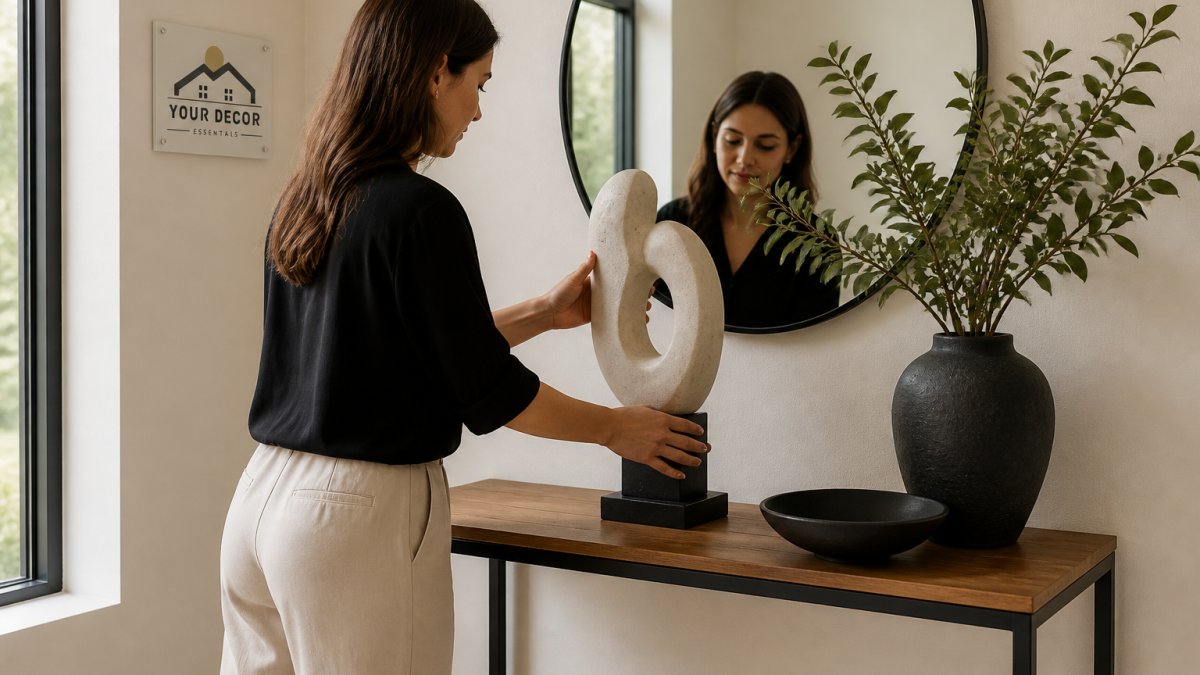
Every well-designed living room has a focal point, the visual anchor where a guest's eye lands first. Abstract sculptures are one of the most effective ways to create one. The most natural focal points are architectural features: a fireplace mantel, an empty wall, or a niche. If your room lacks those, a large console table or a well-lit corner can serve the same function.
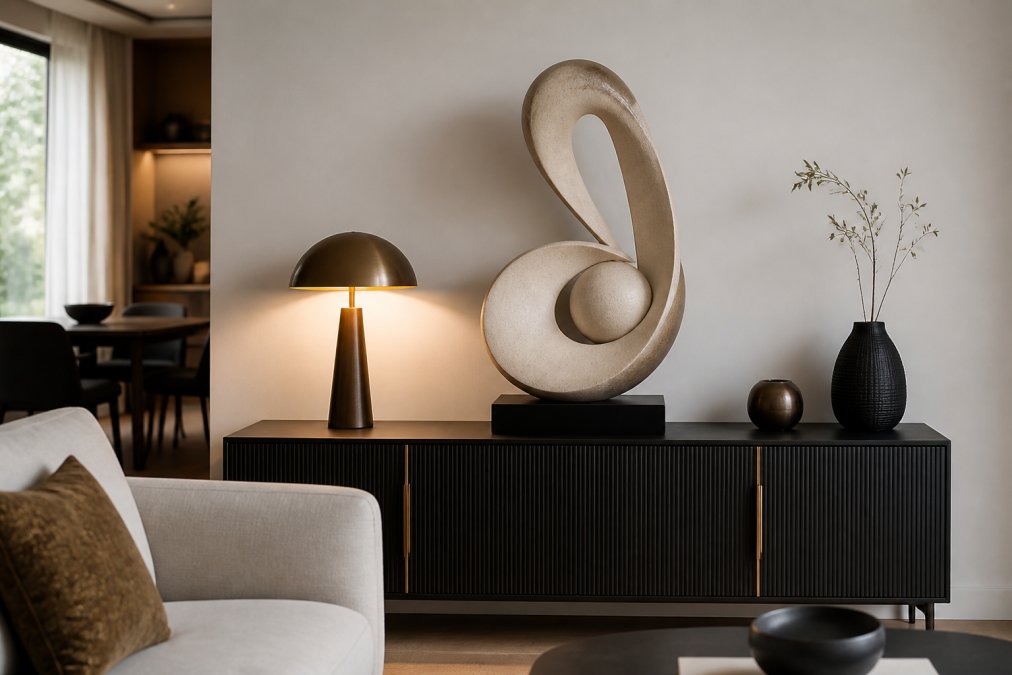
Place your most significant sculpture at the focal point, ensure lighting draws attention to it, and let everything else support rather than compete with it. The mistake most people make is treating every surface as equally important. A curated look requires hierarchy: one statement piece supported by smaller decorative objects creates depth; three equally sized sculptures competing for attention creates clutter.
Mantel and Shelf Styling as a Statement
Mantel styling is one of the highest-impact placements in any living room. An abstract sculpture placed slightly off-center on a mantel, flanked by a low candle or trailing plant, creates an intentional composition. For shelf styling, the principle of odd numbers applies: groups of three or five objects are more visually dynamic than pairs. Place your sculpture as the tallest element, add a mid-height object beside it, and finish with something low and horizontal like a small tray or stack of art books. Vary the materials: pair metal with something organic, or smooth resin with rough-textured ceramics.
Step 3: Sculpture Placement Tips for Coffee Tables
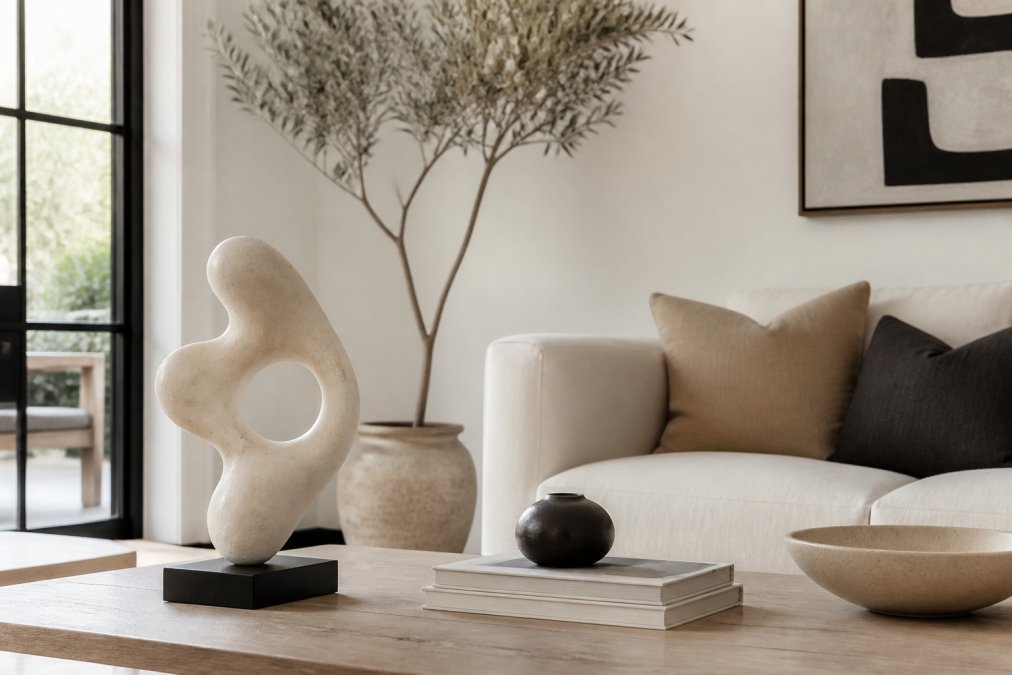
Coffee table styling requires working with a tray. A decorative tray defines the display zone and keeps the arrangement from looking scattered. Inside the tray, place your abstract sculpture as the centerpiece, surrounded by one or two supporting elements: a low candle, a small geometric object, or a single bloom in a minimal vase.
Sculpture placement tips for coffee tables come down to three principles:
- Keep it low. Pieces over 10 inches tall block sightlines during conversation. Opt for wider, lower-profile sculptures for this surface.
- Leave breathing room. Negative space is not wasted space. An overcrowded coffee table looks chaotic.
- Anchor with a tray. A tray creates a contained composition and makes it easy to move the whole arrangement when you need the table space.
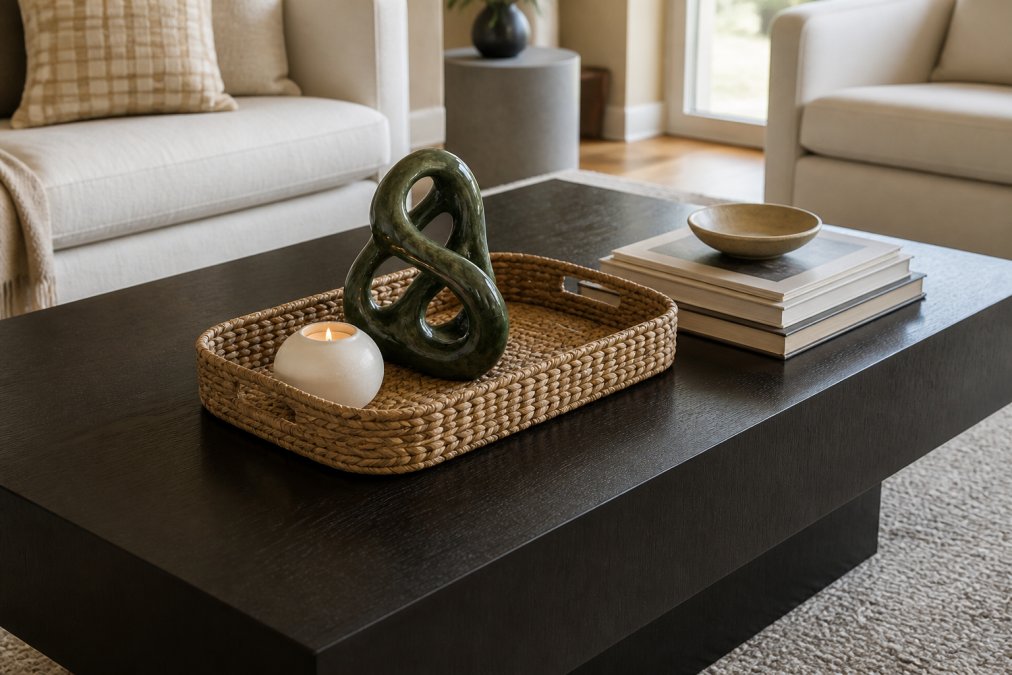
A single small sculpture on a large coffee table without supporting elements will look lost. The sculpture needs companions to create a cohesive set.
Step 4: How to Arrange Home Decor Accessories Around Your Sculpture
Knowing how to arrange home decor accessories around a sculpture separates a styled room from a furnished one. The sculpture is the anchor; everything else is in conversation with it. Identify the sculpture's dominant qualities, color, material, form, then choose two or three supporting accessories that echo at least one quality without duplicating it.
Mixing Textures, Materials, and Negative Space
Texture contrast is one of the most underused tools in home styling. A smooth, polished resin sculpture placed next to rough linen, a woven basket, or raw wood creates depth that signals a considered space. The rule of three materials works well: choose one dominant material for your sculpture, one complementary material for a supporting accessory, and one contrasting texture for dimension. A bronze figurine might sit alongside a marble tray and a woven rattan object.
Negative space deserves equal attention. Empty space around a sculpture gives it room to breathe and signals that the piece is worth looking at. According to the Smithsonian's guide to object placement in curated spaces, negative space is a deliberate compositional tool. Mix tall, medium, and low elements to create rhythm and movement.
Step 5: Styling Resin Accents in Your Living Room
Styling resin accents requires placing them where they will catch natural or ambient light. A resin accent on a windowsill during the day, or on a side table near a lamp in the evening, will show depth and color variation that disappears under flat overhead lighting.
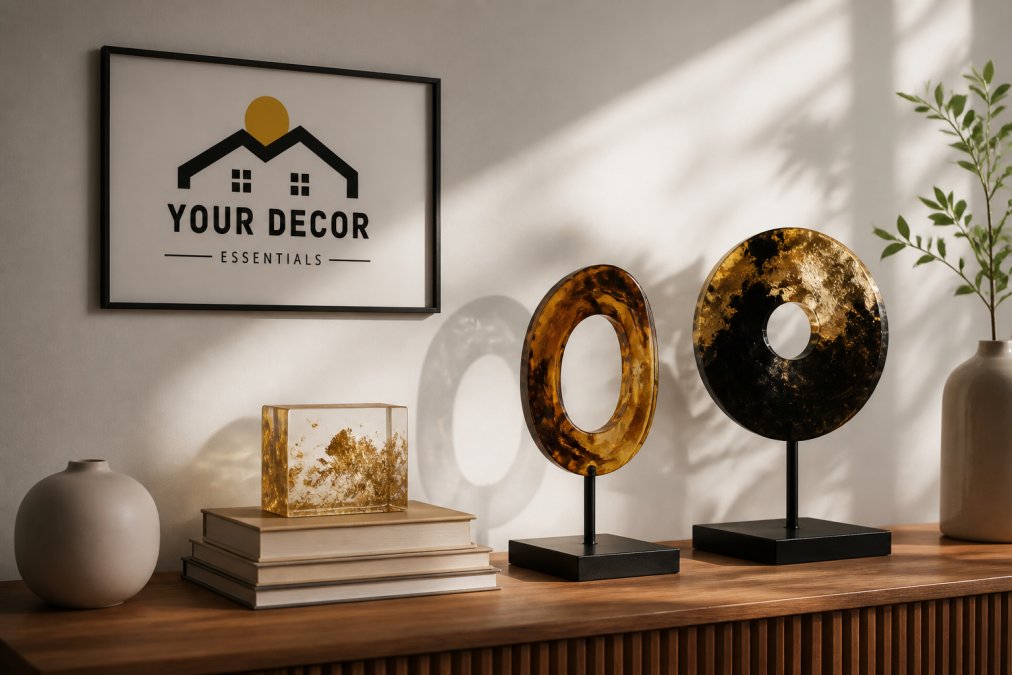
Think about color coordination carefully. Resin pieces often feature swirling, layered color effects more complex than they appear in product photography. Pull one color from the resin piece and echo it elsewhere in the room: in a throw pillow, vase, or rug. This ties the piece into the room's palette rather than letting it float as a disconnected accent.
For minimalist spaces, a single large resin piece with a restrained palette is more effective than multiple smaller pieces. For maximalist or eclectic spaces, a curated set of resin objects in complementary colors can anchor a shelf or console table beautifully.
Step 6: Match Abstract Sculptures to Your Interior Design Style
Abstract sculptures are not one-size-fits-all. Matching your sculpture to your design style ensures visual coherence.
| Interior Style | Sculpture Form | Preferred Materials | Color Palette |
|---|---|---|---|
| Mid-Century Modern | Organic, biomorphic shapes | Bronze, ceramic, wood | Warm earth tones, mustard, teal |
| Scandinavian Minimalist | Simple geometric forms | Light resin, pale stone | White, grey, natural wood tones |
| Industrial | Angular, raw-edged forms | Raw metal, concrete | Charcoal, black, rust |
| Bohemian | Freeform, expressive shapes | Mixed media, resin, rattan | Terracotta, amber, deep green |
| Contemporary/Modern | Abstract geometric patterns | Polished metal, glass resin | Monochrome with one accent color |
Mid-century modern aesthetics call for organic, biomorphic forms. Scandinavian minimalist spaces benefit from simple geometric forms in light materials. Industrial interiors carry raw metal accents and angular sculptures. Bohemian spaces welcome expressive, mixed-media forms in warm, earthy tones. The Your Decor Essentials collection offers abstract sculptures and resin accents selected to complement a range of interior styles.
Step 7: Maintenance, Safety, and Lighting for Abstract Sculptures in Your Living Room
How you maintain, secure, and light your abstract sculptures determines how long they look good and how safe they are for everyone in the household.
Lighting effects on sculpture are transformative. Directional lighting, such as a picture light mounted above a wall sculpture or an adjustable table lamp positioned to the side of a freestanding piece, creates shadow and depth that flat overhead lighting eliminates. Warm-toned bulbs in the 2700K-3000K range enhance the natural warmth of bronze, wood, and resin. Cooler light in the 4000K range suits polished metal and monochrome modern pieces.
Cleaning Different Sculptural Materials
Different materials require different care:
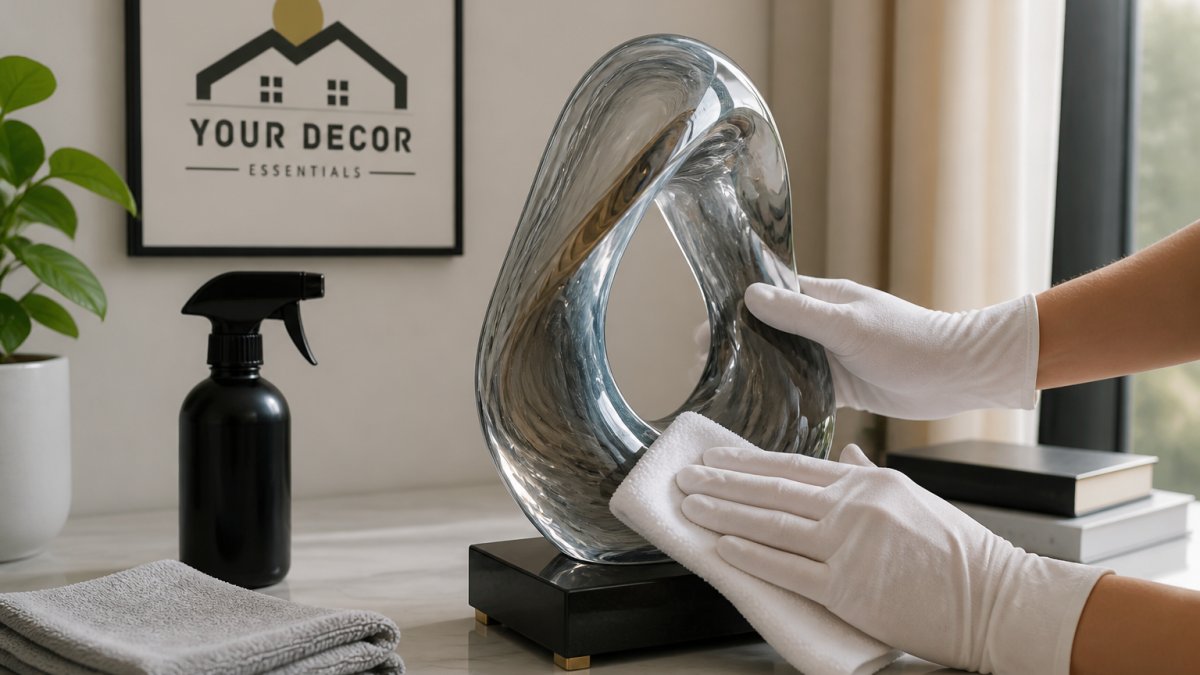
- Resin sculptures: Wipe with a soft, dry microfiber cloth. Avoid abrasive cleaners or solvents, which can cloud or discolor the surface.
- Metal accents (bronze, iron, brass): Dust regularly with a soft brush. Avoid water on unsealed metals. A light application of paste wax every few months protects the finish.
- Ceramic and stone: A damp cloth and mild dish soap handle most cleaning needs. Dry immediately to prevent water staining.
- Mixed-media sculptures: Clean each component according to its material. When in doubt, dry dusting is always safe.
According to the American Institute for Conservation's care guidelines for decorative objects, regular dry dusting is the single most effective preventive maintenance step for most decorative art materials.
Stability and Safety for Homes with Children or Pets
A sculpture that tips is a safety hazard and a loss. Floor-standing sculptures should have a wide, weighted base or be positioned in a corner where they cannot be knocked from multiple directions. For tabletop pieces, museum putty, a removable, non-damaging adhesive, anchors objects to surfaces without permanent installation.
Wall sculptures require proper mounting hardware rated for the piece's weight. Standard drywall anchors suit lightweight pieces; heavier wall art should be secured into studs. The Consumer Product Safety Commission's tip-over prevention guidance recommends anchoring any heavy decorative object that could pose a tip-over risk in homes with children under six.
For high-traffic areas, consider relocating fragile or valuable pieces to shelving with a lip or to display cabinets.
Styling abstract sculptures well requires thinking beyond placement. Scale, material, lighting, and maintenance all play a role in whether a piece elevates your room or simply occupies space. Your Decor Essentials offers a curated selection of abstract sculptures and resin accents chosen with exactly these considerations in mind, including pieces suited to a range of interior styles and surface types. Explore the collection to find statement pieces that work with your space, and shop now to bring a more intentional, artful look to your living room.
Frequently Asked Questions
What is the 3-5-7 rule and how does it apply to styling abstract sculptures?
The 3-5-7 rule is a grouping principle in interior design: arrange decorative objects in odd-numbered clusters of three, five, or seven pieces rather than pairs or even numbers. When styling abstract sculptures, group a tall sculpture with two shorter decorative objects at varying heights to create visual rhythm. The odd grouping feels organic rather than symmetrical, which suits the free-form nature of abstract art and produces a more curated, intentional look on shelves, mantels, or console tables.
How do you choose the right scale for an abstract sculpture in a living room?
Match the sculpture's height and mass to the surface and surrounding furniture. A piece placed on a coffee table should stay under one-third of the table's length so it reads as a centerpiece, not a crowding object. For floor sculptures beside a sofa, aim for a height between the sofa arm and the top of the backrest. Oversized pieces work best in rooms with high ceilings and open floor plans where the visual weight won't overwhelm the spatial balance.
Should abstract sculptures be grouped or displayed individually?
Both approaches work, but the choice depends on the sculpture's size and the room's composition. A large, complex abstract sculpture with strong geometric pattern or high visual weight reads best as a standalone statement piece with negative space around it. Smaller tabletop sculptures gain presence when grouped in odd numbers at varied heights. For shelf styling, mix one abstract sculpture with a couple of contrasting decorative objects, different textures like metal accents against a resin art piece add depth and dimension without cluttering the composition.
How can lighting enhance the look of abstract sculptures?
Directional light, from a picture light, an adjustable floor lamp, or a recessed spotlight aimed at the piece, creates shadow and highlights the sculpture's contours, which is especially effective on bronze figurines, metal accents, and textured resin art. Warm-toned bulbs (around 2700K-3000K) bring out the richness of organic materials, while cooler light suits geometric, modern aesthetic pieces. Avoid flat overhead lighting alone, as it flattens depth and dimension and reduces the visual interest the sculpture is meant to create.
This article was written using GrandRanker