 how-to
How to Verify Home Decor Quality Before You Buy
Table of Contents
- Why Most Home Decor Quality Checks Miss the Real Problems
- The 5-Minute Home Decor Inspection Checklist
- Signs of High Quality Furniture and Decor Materials
- How to Spot Cheap Home Decor: Common Defects and Red Flags
- Verifying Quality When You Shop Online
- Does Price Guarantee Home Decor Quality?
- Your Action Plan for Confident Home Decor Quality Checks
- Frequently Asked Questions
Last Updated: September 7, 2026
Most shoppers make the same mistake: they tap a piece of decor, give it a quick glance, and assume a high price tag means it will hold up for years. That assumption leads to warped resin bases, wobbly table lamps, and fabric that pills after a month. Learning how to verify home decor quality before you buy changes the outcome entirely. In this guide from Your Decor Essentials, we break down the exact inspection methods professionals use, so you can shop with confidence whether you're browsing a showroom or waiting for an online order to arrive.
Home decor quality is the sum of its materials, construction, and finish, and each of those elements can be checked in under five minutes once you know what to look for. You don't need a magnifying glass or a materials science degree. You need a focused set of tests that reveal how a piece was actually made. Below, we'll show you exactly how to run those checks, spot the defects that indicate mass production shortcuts, and avoid the disappointment of a piece that looks stunning in photos but falls apart in your living room.
Why Most Home Decor Quality Checks Miss the Real Problems
Quality inspection fails for one simple reason: shoppers evaluate appearance instead of construction. A glossy surface finish can hide a hollow core. Perfect color consistency tells you nothing about whether the hardware will strip after six months of use. The visual appeal of a piece is what sells it, but the structural integrity is what determines if it survives in your home.
Professional quality control protocols separate the two completely. Visual inspection covers surface finish, color consistency, and overall workmanship. That's the easy part. The harder evaluation involves stability tests, material verification, and functional testing of moving parts. Most consumers never perform these checks because they don't know they exist.
Take a common example: a decorative tray with a beautiful resin finish. It looks flawless on the shelf. But flip it over and check the underside. Is the material consistent, or are there thin spots and air bubbles? Mass production often cuts corners where buyers can't see. A thorough home decor quality check always includes the hidden surfaces.
The 5-Minute Home Decor Inspection Checklist
A practical inspection takes about five minutes per piece and follows a logical sequence. Work through the checklist below, and you'll catch the majority of quality defects before they become your problem. Focus on the areas that matter most for how the piece will actually be used in your home.
Visual and Workmanship Review
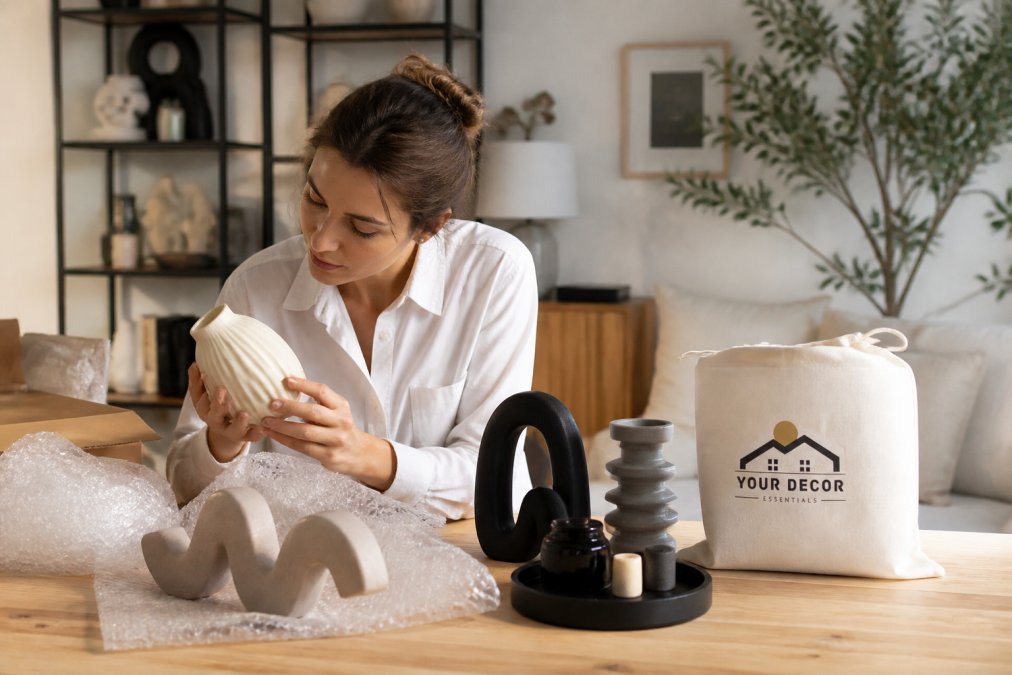
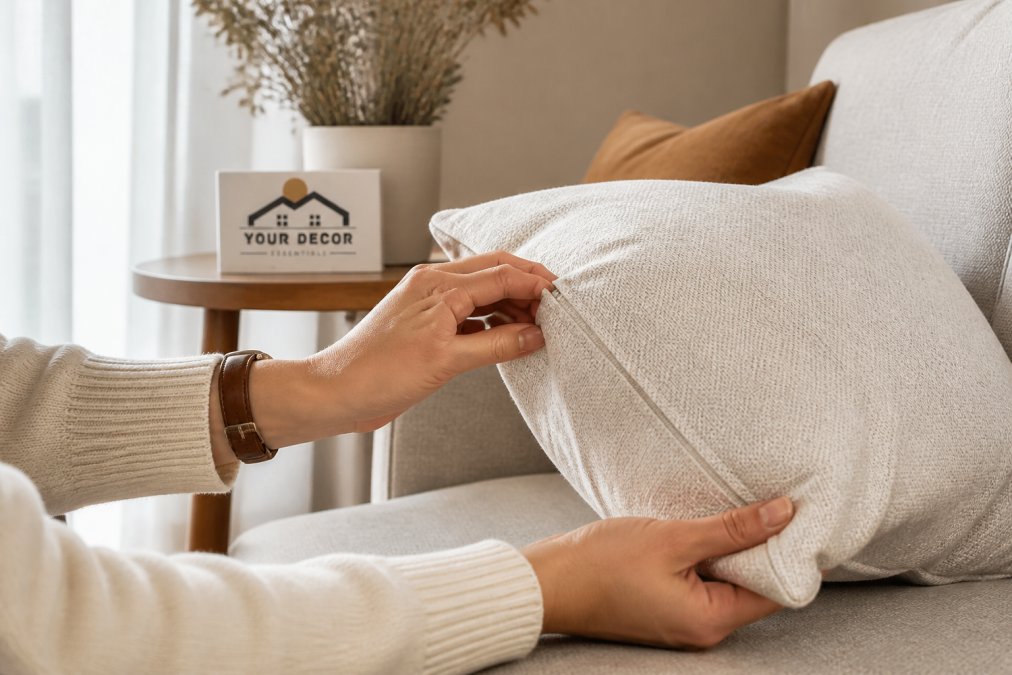
Start with a careful visual inspection of the entire piece. Look for color consistency across all surfaces, including areas that receive less light. Check seams and stitching on textiles, looking for loose threads, uneven spacing, or raw edges that suggest rushed assembly.
Examine the surface finish for bubbles, drips, or rough patches. On painted or lacquered items, the finish should be smooth and even with no visible brush marks. On metal pieces, check for pitting or uneven plating. These defects point to inadequate quality control during production.
Tactile and Stability Assessment
Your hands are powerful quality assessment tools. Run them across every surface to detect imperfections your eyes might miss. A quality piece should feel solid and substantial, not hollow or flimsy.
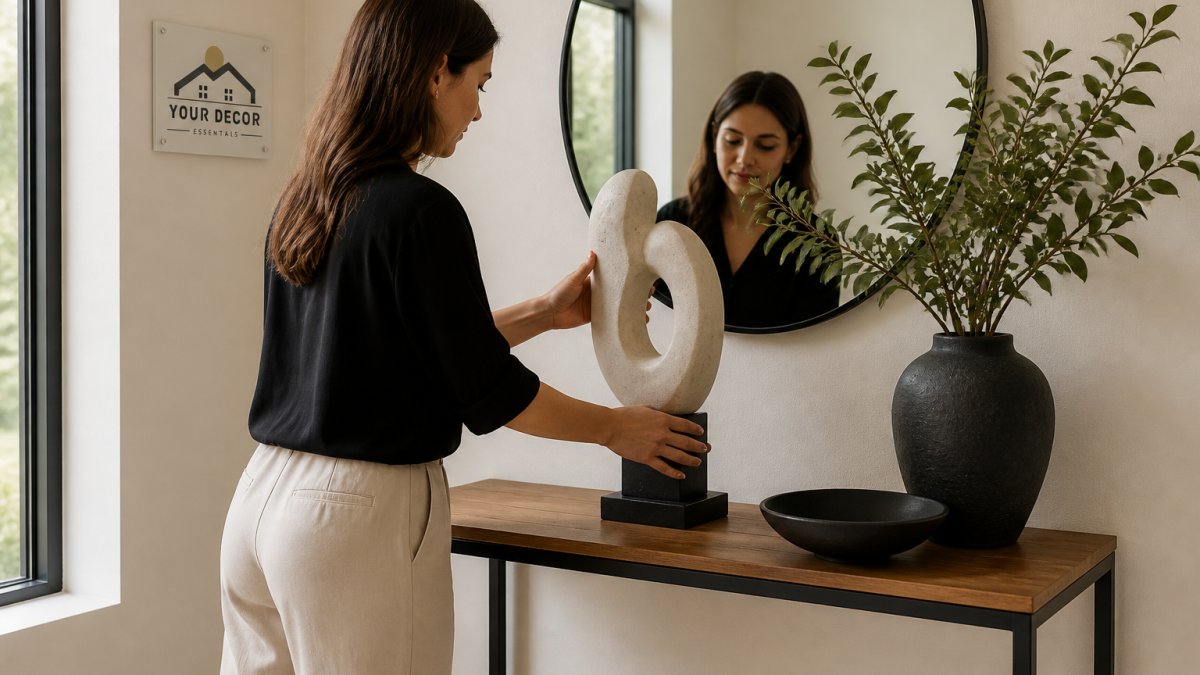
Perform a wobble test on any freestanding item. Place it on a flat, level surface and press down gently on each corner. Excessive movement indicates poor weight distribution or an uneven base. For furniture, gently apply pressure to test load-bearing capacity. A well-constructed piece should feel stable without creaking or flexing.
Signs of High Quality Furniture and Decor Materials
Quality materials aren't just about how they feel; they're about verifiable composition. While most guides stop at 'it feels heavy,' a professional-grade check digs into the material's origin, structure, and environmental claims. This is especially critical now, as 'eco-friendly' and 'sustainable' labels are applied to everything from particleboard to reclaimed hardwoods. Learning to verify these claims is the new frontier in home decor quality assessment.
Verifying 'Eco-Friendly' and 'Sustainable' Material Claims
The greenest-sounding label isn't always the most sustainable choice. To verify claims, you must look for third-party certification, not just marketing language.
- Forest Stewardship Council (FSC) Certification: For solid wood or wood composites, an FSC label is the gold standard. It certifies that the wood comes from responsibly managed forests. If a piece claims to be 'sustainable wood' but lacks an FSC number, the claim is unverifiable marketing.
- Formaldehyde Emission Standards: For any engineered wood (MDF, plywood, particleboard), check for CARB Phase 2 or TSCA Title VI compliance. These are U.S. regulatory standards that limit formaldehyde emissions. A quality piece made with engineered wood will have a label indicating compliance. If it doesn't, it likely contains high levels of urea-formaldehyde, a known irritant that off-gasses into your home.
- Material Transparency: A manufacturer confident in its sustainable sourcing will state the specific origin (e.g., 'FSC-certified oak from the Appalachian region'). Vague claims like 'eco-friendly wood' or 'recycled materials' without specifics are red flags. Ask the retailer for the material Safety Data Sheet (SDS) or specific sourcing documentation.
Distinguishing Solid Wood from Veneers and Composites
The 'solid wood vs. veneer' distinction is a classic quality test, but it requires more than a glance. Here’s the professional method for verification:
- Check the Grain Pattern: Look at the end grain (the cut edge). Solid wood will show a continuous, consistent grain pattern that wraps around the edge. Veneer, which is a thin slice of real wood glued over a composite core, will show a repeating pattern on the surface that abruptly stops at the edge, often revealing a visible seam or a different material underneath.
- The Weight and Sound Test: Solid hardwoods like oak, maple, and walnut are dense. Knock on the surface. Solid wood produces a solid, resonant 'thud.' A hollow or high-pitched 'tick' sound indicates a hollow core or a lightweight composite underneath a veneer.
- Look for 'Furniture Grade' vs. 'Cabinet Grade' Plywood: If you see exposed plywood on an underside or inside a drawer, check the number of plies. 'Furniture grade' plywood has 7 to 13 thin plies, making it strong and stable. 'Cabinet grade' or 'shop grade' has fewer, thicker plies and is more prone to warping. The more plies, the higher the quality and dimensional stability.
The Density Test for Resin, Ceramic, and Glass
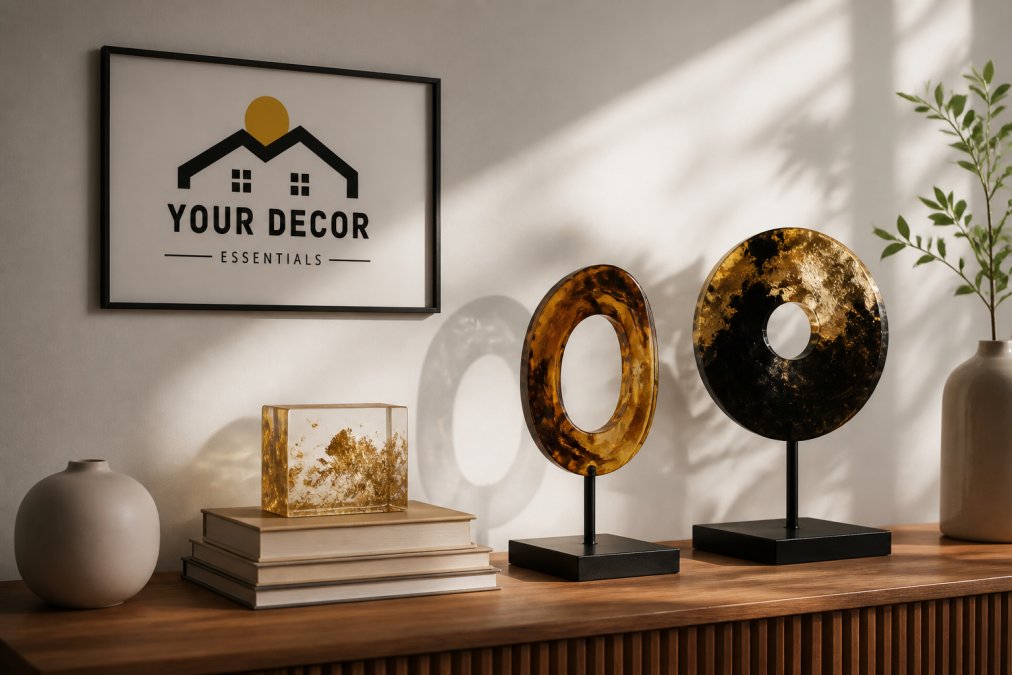
For cast materials like resin and ceramic, density is a direct proxy for quality. A high-quality piece uses a solid, mineral-filled resin or a high-fired ceramic body. A cheap piece uses a foamed or hollow resin core to save on material costs.
- The 'Tap' Test: Gently tap the piece with your knuckle. A dense, high-quality ceramic or resin will produce a clear, ringing tone. A low-density piece will produce a dull, flat 'thud.'
- Weight-to-Size Ratio: A 12-inch tall vase made of quality ceramic should feel surprisingly heavy. If it feels light for its size, it's likely hollow or made with a porous, low-fire clay that is more susceptible to chipping and cracking.
- Check the Base: Look at the unglazed foot of a ceramic piece. High-quality ceramics have a smooth, clean, unglazed foot that shows the true color of the clay body (e.g., white porcelain vs. tan earthenware). A rough, gritty, or uneven foot suggests a lower firing temperature and a more brittle final product.
By applying these specific tests, you move beyond a 'gut check' and into verifiable material science, ensuring your decor is not only beautiful but also built from materials that are safe, sustainable, and will genuinely last.
How to Spot Cheap Home Decor: Common Defects and Red Flags
Learning how to spot cheap home decor means recognizing the patterns that appear when manufacturers prioritize cost over craftsmanship. These defects are consistent across product categories, and once you've seen them a few times, you'll spot them instantly.
Asymmetric details. Check that patterns, handles, and decorative elements align properly. Misaligned components indicate poor quality control during assembly. Visible adhesive. Quality pieces use mechanical fasteners or precisely applied glue. Excess adhesive oozing from joints signals rushed production. Inconsistent finish. Color variation across a single piece, especially on visible surfaces, suggests substandard raw materials or inadequate quality control protocols.
Lightweight construction. Pick up the piece and assess its weight. Items that feel disproportionately light for their size often use hollow cores or thin materials that won't withstand regular use. Poor weight distribution. A piece that tips easily when bumped indicates the base isn't properly weighted for the overall design. This defect appears frequently in vases, lamps, and sculptures.
Verifying Quality When You Shop Online
Online shopping presents a unique challenge: you must assess structural integrity, material density, and finish quality without physical access. The top-ranking advice often stops at 'check the reviews.' A more effective approach treats the product listing as a dataset to be audited. By applying a systematic framework to photos, specs, and seller communication, you can de-risk an online purchase more effectively than a casual in-store glance.
The Photo Forensics Audit
Professional quality control relies on visual evidence. Online, that evidence is in the product photos. You must learn to read them like a QC report.
- Audit the Angles: A quality listing will have at least 8-10 photos, including close-ups of hardware, seams, zippers, and the underside of the piece. If a listing only shows the product from 3-4 flattering, wide-angle shots, the seller is likely obscuring poor workmanship on hidden surfaces.
- Look for 'Lifestyle' vs. 'Studio' Shots: Studio shots on a clean background are useful for scale, but lifestyle shots (in a staged room) are often edited to hide imperfections. Look for 'in-situ' photos that show the piece against a wall or on a floor, which provide a more honest representation of color and texture.
- Zoom In on the Details: Use your browser's zoom function to inspect the seams on a sofa, the joint where a table leg meets the apron, or the stitching on a throw pillow. Look for the same red flags you would in person: misaligned patterns, uneven stitching, visible adhesive, or gaps in joints.
- Check for Video Evidence: Listings with video are 40% more likely to be from a seller confident in their product. A video that shows the piece being assembled, a drawer sliding open, or a door closing provides functional proof that still photos cannot.
The Specification Decoder: What the Listing Isn't Telling You
The product description is a legal document of intent. Vague language is a deliberate choice. Here’s how to decode it:
- Material Specificity: 'Wood' is a red flag. 'Solid Mango Wood' or 'White Oak Veneer' is a quality signal. 'Metal' is vague; 'Powder-coated Steel' or 'Brushed Brass' is specific. If the material is listed as a blend (e.g., 'Wood Composite'), search for the specific type of composite (MDF, particleboard, plywood).
- Weight as a Proxy for Density: A listing that provides the item's weight in pounds is a huge advantage. Use this to calculate density. A 30-inch tall console table that weighs 25 lbs is likely made of hollow-core materials. A similar table weighing 60 lbs suggests solid wood or high-quality plywood construction.
- The 'No-Dimensions' Trap: Quality listings provide exact dimensions (L x W x H) and often include the dimensions of the packaging. If a listing only says 'Large' or 'Medium,' it's a sign of a dropshipper who doesn't have physical access to the product.
The Pre-Purchase Interrogation Protocol
Don't just rely on the listing; use the retailer's customer service as a quality verification tool. This is a unique angle most guides miss because it turns the seller into your inspector.
- Ask for Specific Photos: Send a message asking for 'a close-up of the back panel,' 'a photo of the inside of the drawer showing the joint,' or 'a picture of the underside of the base.' A seller with a quality product will have these on hand or can take them quickly. A seller who makes excuses or sends generic marketing photos is hiding something.
- Ask About Certifications: Directly ask: 'Does this item have FSC certification for the wood?' or 'Is this CARB Phase 2 compliant?' A knowledgeable representative will answer directly. A vague answer or a question like 'What is that?' is a definitive red flag.
- Probe the Return Policy: Don't just read the policy; ask about the process for a quality-related return. Ask: 'If the item arrives with a defect, who pays for return shipping?' A company confident in its quality control will have a clear, no-hassle process for this. A company that hesitates or has a restocking fee is passing the risk onto you.
By treating the online listing as a dataset to be audited and the seller as a source of verifiable information, you can perform a 'remote inspection' that is often more rigorous than a physical one. This systematic approach is the only way to verify home decor quality when you can't touch the piece.
Does Price Guarantee Home Decor Quality?
Price correlates with quality, but it doesn't guarantee it. You can find overpriced pieces with poor construction and reasonably priced items built to last. The relationship between cost and quality breaks down because pricing reflects branding, marketing, and distribution costs as much as material quality.
What higher prices typically buy you is better raw materials and more careful quality control. They don't automatically buy better design or greater durability. A well-made piece from a smaller studio can outperform a mass-produced item at twice the price. This is why learning to verify home decor quality yourself matters more than relying on price as a proxy.
The real question isn't "how much does it cost?" but "how was it made?" A piece that passes your inspection checklist will serve you well regardless of its price point. Understanding what makes decor durable also helps you maintain your pieces properly, extending their lifespan and protecting your investment.
Your Action Plan for Confident Home Decor Quality Checks
| Check | What to Look For | Red Flag |
|---|---|---|
| Visual inspection | Even color, smooth finish, aligned details | Bubbles, drips, misaligned patterns |
| Tactile assessment | Dense feel, substantial weight | Hollow sound, flimsy construction |
| Stability test | No wobble on flat surface | Rocking, flexing, creaking |
| Hardware check | Smooth operation, tight joints | Sticking, grinding, loose screws |
| Hidden surfaces | Clean construction, no excess adhesive | Raw edges, visible glue, thin spots |
Apply your inspection skills to every purchase, whether you're shopping in person or online. For online orders, document the condition of packaging when it arrives and inspect each piece against your checklist before the return window closes. Many retailers stand behind their curated collections with clear return policies if something doesn't meet your expectations.
Remember that home decor quality involves both objective construction standards and your personal satisfaction. A well-made piece that doesn't fit your aesthetic is still the wrong choice. Trust your inspection results, but also trust your eye. The goal is finding pieces that combine solid craftsmanship with the distinctive style that makes your home feel like yours.
Every piece you bring into your home should earn its place through both quality and character. At Your Decor Essentials, we curate abstract sculptures, resin accents, and functional lighting with the inspection standards we've outlined here, so you can shop with confidence. Our collection emphasizes pieces that introduce visual interest and reflect a thoughtful, personalized style. Find decor that passes your quality checks and transforms your space. Shop the collection at Your Decor Essentials and bring home pieces built to last.
Frequently Asked Questions
What are the signs of high-quality home decor craftsmanship?
Look for consistent color and surface finish, aligned seams, and secure hardware. High-quality pieces have even weight distribution and no visible glue residue. Check that edges are smooth and patterns match at the seams. A stable base with no wobble during a stability test indicates solid structural integrity. Quality pieces also use dense raw materials that feel substantial, not hollow or flimsy.
How can I tell if furniture or decor is made with durable materials?
Perform a tactile assessment: solid wood feels warm and shows natural grain, while veneers over particleboard often sound hollow when tapped. For metal pieces, check the weight and finish for signs of cheap plating. Press on surfaces to test density. Durable materials resist scratching and have a consistent texture. Ask the seller about the material composition if you cannot verify it in person.
How do I inspect resin and sculpture pieces for quality defects?
Examine the piece under direct light to spot air bubbles, uneven coloring, or rough patches. Run your fingers over the surface to feel for sharp edges or tacky spots that signal incomplete curing. Check the base for flatness and stability. Quality resin pieces have a smooth, consistent finish with no cloudiness. Verify the weight feels appropriate for the size, as overly light pieces may signal cheap filler materials.
What are the red flags of low-quality home decor?
Watch for visible defects like misaligned patterns, uneven paint lines, or loose hardware. Fabric that feels thin or pills easily indicates low-grade material. Strong chemical odors can signal cheap manufacturing processes. Hardware that feels light or wobbly will likely fail with regular use. If the item wobbles on a flat surface or seams are pulling apart, these are clear signs of poor workmanship and structural integrity issues.