 ultimate-guide
Impact of Ethical Manufacturing on Home Decor
Table of Contents
- What Ethical Manufacturing Means for Home Decor
- How Ethical Manufacturing Affects Product Quality and Durability
- The Worker and Community Impact of Ethical Production
- Environmental Benefits of Ethically Made Home Furnishings
- How to Shop for Sustainable Home Decor
- Eco-Friendly Home Decor Materials and Their Advantages
- Verifying Ethical Manufacturing Claims and Standards
- Trade-Offs and Practical Considerations for Ethical Home Decor
- Ethical Home Decor Brands Worth Your Attention
- Frequently Asked Questions
Last Updated: October 19, 2026
What Ethical Manufacturing Means for Home Decor
Ethical manufacturing is the practice of producing goods in ways that prioritize fair treatment of workers, safe working conditions, and responsible environmental stewardship throughout the supply chain. For home decor, this means the abstract sculptures, resin accents, lighting fixtures, and furnishings you bring into your space were created with intentional care, not just for aesthetics, but for the people who made them and the planet they inhabit.
The impact of ethical manufacturing on home decor extends far beyond the finished product. When you choose pieces made through ethical production practices, you're supporting artisans and craftspeople who receive fair wages, work in safe environments, and have reasonable working hours. You're also reducing the likelihood of child labor exploitation, which remains a concern in some regions of the home decor and furniture industry.
Most people don't think about who made their decor or how it was produced. They see a sculptural accent or functional lighting fixture and focus on whether it fits their space. But the story behind each piece, the hands that crafted it, the materials used, the working conditions, fundamentally shapes what you're actually bringing home. This is where ethical production becomes personal.
How Ethical Manufacturing Affects Product Quality and Durability
Products made through ethical manufacturing practices often demonstrate superior quality and durability compared to mass-produced alternatives. This isn't coincidental. When craftspeople work at a sustainable pace with proper tools and materials, they have time and incentive to do meticulous work. They're not racing against impossible quotas or using substandard components to cut costs.
Artisan-made home decor pieces, whether abstract sculptures, resin accents, or functional lighting, typically use higher-grade materials selected for longevity. Ethical manufacturers invest in materials that will last because their reputation depends on customer satisfaction and repeat business, not on volume. A handcrafted resin accent created by someone paid fairly and working in safe conditions will likely outlast a cheaply produced equivalent by years.
Thoughtful design is another hallmark of ethically produced home furnishings. When production isn't driven by the need to maximize output at minimum cost, designers and makers can focus on durability, functionality, and aesthetic refinement. This means fewer weak points, better joints, and finishes that hold up to daily use. The result: pieces that don't just look good initially but maintain their appearance and structural integrity over time.
The Worker and Community Impact of Ethical Production
The human dimension of ethical manufacturing shapes entire communities. When home decor is produced through fair wages and safe working conditions, it creates economic stability for artisans and their families. Fair wages mean workers can afford housing, healthcare, and education, fundamentals that ripple through local economies and reduce poverty cycles.

Safe working conditions protect people from injury and long-term health damage. In ethical manufacturing environments, workers have proper ventilation when handling materials, ergonomic workspaces to prevent repetitive strain injuries, and access to protective equipment. Reasonable working hours prevent burnout and allow people to maintain work-life balance. These conditions are foundational to human dignity and directly affect the wellbeing of the people creating your home decor.
Ethical production also supports artisan communities and preserves traditional craftsmanship. When handicrafts are valued and fairly compensated, younger generations see viable careers in these skills. Local production strengthens community bonds and cultural heritage. Supporting ethical manufacturers means investing in the continuation of these traditions and the livelihoods they sustain.
Environmental Benefits of Ethically Made Home Furnishings
Ethical manufacturing practices typically align with environmental responsibility because both share common values: long-term thinking and respect for resources. Sustainable materials, recycled content, natural fibers, responsibly harvested wood, feature prominently in ethically produced home decor. These choices reduce reliance on petroleum-based plastics and virgin resource extraction.
The environmental footprint of ethically made pieces often reflects careful material selection and efficient production. Rather than generating excess waste to meet aggressive timelines, ethical manufacturers optimize their processes. Scrap materials get repurposed or recycled. Packaging uses minimal plastic and prioritizes recyclable or biodegradable options. This waste reduction compounds across an entire production run.
Circular design principles appear more frequently in ethically produced home furnishings. Products are designed for durability and repairability, extending their useful life and reducing the need for replacement. Some ethical manufacturers even offer take-back programs or design their pieces to be easily disassembled and recycled at end-of-life. This contrasts sharply with disposable decor designed for a single season or trend cycle.
Air quality and chemical use also improve under ethical manufacturing standards. Responsible sourcing means avoiding materials treated with harmful chemicals or dyes that pollute water systems. Workers benefit from reduced chemical exposure, and the finished products are safer for your home environment. This matters especially for pieces like resin accents or functional lighting that spend months or years in your living space.
How to Shop for Sustainable Home Decor
Start by researching brands before you buy. Look for companies that publicly share information about their supply chain, manufacturing locations, and labor practices. Transparency is the first indicator of ethical commitment. Brands that hide their production process or refuse to discuss working conditions warrant skepticism.
Prioritize durability over trend-chasing. A timeless abstract sculpture or functional lighting fixture that you'll use for years has far less environmental impact than buying new decor seasonally. Ask yourself whether a piece will still appeal to you in five years. If the answer is no, it's probably not a sustainable purchase.
Consider the material composition. Natural materials, recycled content, and metal alternatives to petroleum-based plastics all reduce environmental impact. Understand what you're buying: Is it solid wood or veneer? Is the resin accent made from recycled materials? Does the lighting use energy-efficient components? These details matter.
Support local and artisan-made options when possible. Local production reduces shipping emissions and supports community economies. Handcrafted pieces often carry stories, you know who made them and under what conditions. This connection makes the purchase more meaningful and reinforces your commitment to ethical consumption.
Eco-Friendly Home Decor Materials and Their Advantages
Recycled materials reduce demand for virgin resources and divert waste from landfills. Recycled glass, metal, and plastic all appear in contemporary home decor. These materials perform identically to virgin alternatives while carrying significantly lower environmental cost. A resin accent made from recycled content has the same aesthetic appeal as one made from new resin, but with reduced carbon footprint.
Natural materials like wood, stone, and ceramics offer durability and timeless appeal. Responsibly sourced wood from sustainably managed forests supports forest conservation. Natural stone requires minimal processing and lasts indefinitely. Ceramics and clay are abundant, non-toxic, and fully biodegradable at end-of-life. These materials age beautifully, developing character over time rather than degrading.
Metal alternatives to plastic offer longevity and recyclability. Brass, copper, and stainless steel fixtures and accents resist corrosion and maintain appearance for decades. Metals are infinitely recyclable without quality loss, making them ideal for functional lighting and sculptural elements. The initial cost is often higher, but the lifespan justifies the investment.
Organic textiles in furnishings and accents avoid synthetic dyes and pesticides. Organic cotton, linen, and wool are grown and processed with environmental consideration. These materials breathe naturally, age gracefully, and biodegrade completely. They're also typically produced under conditions that protect farmer health and community ecosystems.
Verifying Ethical Manufacturing Claims and Standards
Most home decor marketing uses the same vocabulary: ethical, sustainable, artisan-made, responsibly sourced. Those words are not regulated in the United States, so a label alone tells you very little. The practical question is what a brand can document. This section gives you a verification framework you can apply in ten minutes at a product page or in a store.
Start with third-party certifications, not brand claims
Certifications matter because an independent body audits the supply chain rather than the marketing department. For home decor, the most relevant ones fall into three buckets:
- Labor and social standards. SA8000 (Social Accountability International) is a workplace standard covering fair wages, working hours, child labor prohibitions, and health and safety, verified through factory audits. Fair Trade USA certifies agricultural and manufactured products against fair-wage, forced-labor, and child-labor criteria. B Corp Certification (administered by B Lab) is a company-level standard that requires a verified social and environmental assessment and a legal commitment to stakeholder governance.
- Forest and fiber sourcing. The FSC (Forest Stewardship Council) label indicates wood and paper traced from responsibly managed forests. GOTS (Global Organic Textile Standard) covers organic fiber content and processing chemicals for textiles. OEKO-TEX Standard 100 tests finished textiles for harmful substances.
- Environmental management and chemicals. ISO 14001 is a certifiable environmental management system standard. Cradle to Cradle Certified assesses material health, circularity, and renewable energy across a product.
A credible brand will name the certifying body, the specific standard, and often the certificate number or facility. "We care about the environment" is not a certification. "FSC-certified walnut, certificate number on request" is.
Ask for supply-chain specifics, not adjectives
A useful test is whether the brand can answer four concrete questions:
- Where was the piece made? A country is a start; a factory or workshop name is better. Brands that cannot name their production partners usually do not have traceability.
- Who made it, and how are they paid? Look for a stated wage policy relative to local living wages, not just "fair wages." Some brands publish wage ladders or audit summaries.
- What audits exist, and how recent are they? Social audits are typically annual. A three-year-old audit is a snapshot, not a current guarantee.
- What happens when a problem is found? Mature programs describe corrective-action processes. Brands that claim zero issues are usually not measuring.
Read the documentation trail
Request or look for:
- A code of conduct that names prohibited practices (forced labor, child labor, harassment) and the audit mechanism behind it.
- Restricted substance lists for finishes, dyes, and resins, which matter for pieces that sit in living spaces.
- Traceability documents such as chain-of-custody certificates for wood or fiber.
- Public progress reports if the brand is a B Corp or participates in a multi-stakeholder initiative.
FSC certificate database
Watch for the common red flags
- Certifications displayed as logos with no certificate number or scope.
- "Eco-friendly" or "green" used as the primary proof point.
- Supply-chain questions answered with a general sustainability page instead of specifics.
- A single audit used to imply continuous oversight.
- Claims that a product is "carbon neutral" without a stated methodology or boundary.
Use a simple scoring approach
Score each candidate piece on four yes/no questions: (1) Is there at least one relevant third-party certification with a verifiable number? (2) Can the brand name the production location and the auditing body? (3) Is there a public code of conduct or wage policy? (4) Does the brand describe how it handles corrective actions? Three or four yes answers indicates a documented program. One or zero indicates marketing language. This framework will not make you an auditor, but it separates brands that can prove their claims from those that cannot.
Trade-Offs and Practical Considerations for Ethical Home Decor
Ethical production is not a free upgrade. It involves real trade-offs in cost, availability, durability, and environmental impact, and treating every sustainable label as equivalent leads to poor decisions. This section lays out the trade-offs plainly and gives you a framework for weighing them.
Why ethical pieces usually cost more
The price gap is not a marketing premium. It comes from identifiable cost drivers:
- Labor. Paying living wages, limiting overtime, and maintaining safe conditions raise unit labor cost, especially in categories like ceramics, glass, and hand-finished wood where labor is a large share of cost.
- Materials. FSC-certified wood, GOTS-certified textiles, and low-VOC finishes typically cost more than conventional equivalents.
- Scale. Smaller production runs mean less purchasing power and higher per-unit overhead.
- Compliance. Audits, certifications, and traceability systems carry fees and administrative cost.
The practical implication is that the lowest sticker price rarely reflects the full cost of production. The question is not whether an ethical piece costs more, but whether the higher upfront price is offset by longer life and lower replacement frequency.
Durability is a trade-off, not a guarantee
It is tempting to assume ethical equals durable. That is not always true. A hand-thrown ceramic may be beautiful and fairly made but more fragile than a molded industrial piece. A natural fiber rug may biodegrade at end of life but wear faster in high-traffic areas. Conversely, some conventional mass-produced furniture is highly durable.
The useful comparison is cost per year of use, not sticker price. A piece that costs more but lasts twice as long can be the lower-cost and lower-impact choice. A fairly made piece that wears out quickly is not automatically the better environmental option.
Environmental trade-offs are real and often counterintuitive
Material choice involves trade-offs that are easy to oversimplify:
- Natural vs. synthetic. Natural fibers biodegrade but may require more water and land to produce. Some synthetics are recyclable and durable but depend on petrochemicals.
- Local vs. efficient. Local production reduces transport emissions, but transport is often a small share of a product's total footprint compared with material extraction and manufacturing. A locally made piece from high-impact materials can have a larger footprint than an efficiently produced piece shipped from farther away.
- Recycled content vs. recyclability. A product made from recycled content is not necessarily recyclable at end of life, and a recyclable product is not necessarily made from recycled material.
A common pattern is that the biggest environmental lever is how long you keep the piece, not which label it carries. Extending a product's life by several years usually outweighs the difference between two similar materials.
Availability, lead times, and customization
Ethical producers tend to run smaller batches, which means narrower assortments, less frequent restocks, and longer lead times for made-to-order pieces. Custom and handcrafted work can take weeks. For buyers accustomed to immediate delivery, this requires planning. The upside is that limited runs discourage impulse purchases and often produce more distinctive pieces.
Care and maintenance trade-offs
Natural and handcrafted materials sometimes need more attention: oiling wood, avoiding harsh cleaners on stone, and protecting textiles from prolonged sun. Higher maintenance is a real cost in time and supplies. It also extends product life, which is where much of the environmental benefit comes from. Factor care requirements into the purchase decision rather than discovering them afterward.
A practical decision framework
Use these questions in order:
- Do I need this, or am I buying for a trend cycle? Buying less is the highest-impact choice.
- Will I keep it for at least five years? If not, the sustainability case weakens regardless of materials.
- What is the cost per year of expected use? Compare that figure across options.
- Which trade-off matters most here: labor, materials, transport, or end of life? Prioritize based on the piece and your values.
- Can I verify the claims? Apply the verification framework from the previous section.
- Can I repair, resell, or recycle it later? End-of-life options extend the value of the purchase.
Where ethical production is not the answer
Ethical manufacturing improves worker outcomes and often reduces environmental harm, but it does not make consumption impact-free. A fairly made piece you do not need still carries a footprint. The most defensible position is to buy fewer, better-documented pieces, maintain them, and plan for repair or resale rather than replacement.
Ethical Home Decor Brands Worth Your Attention
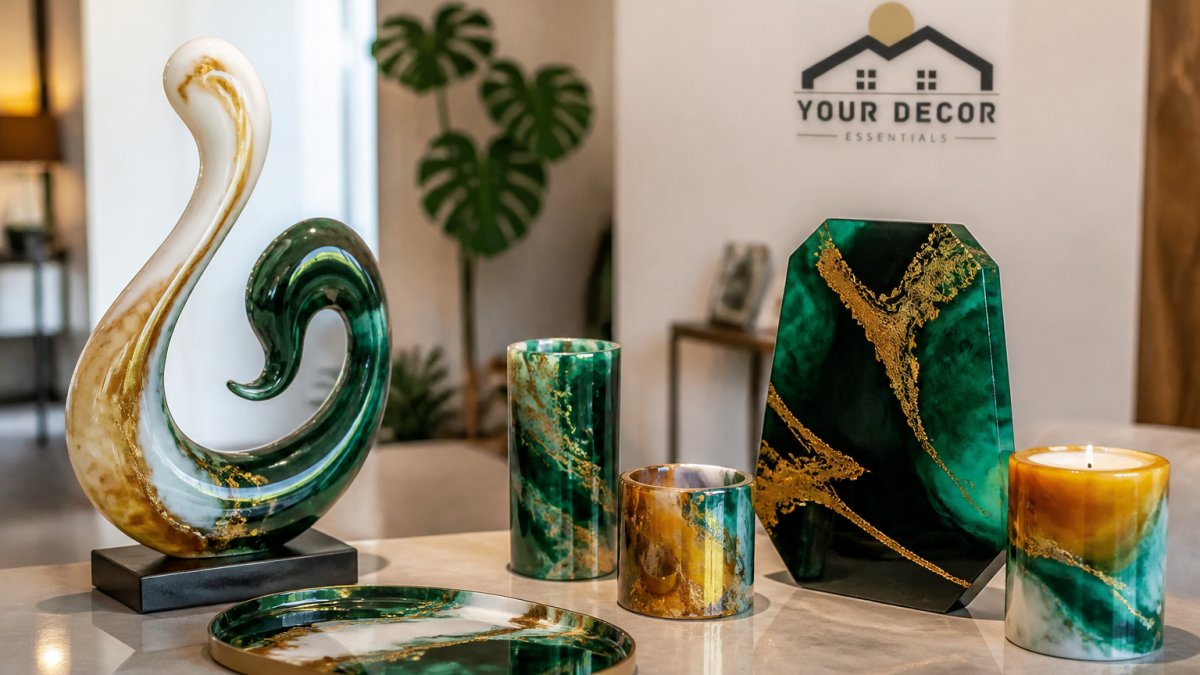
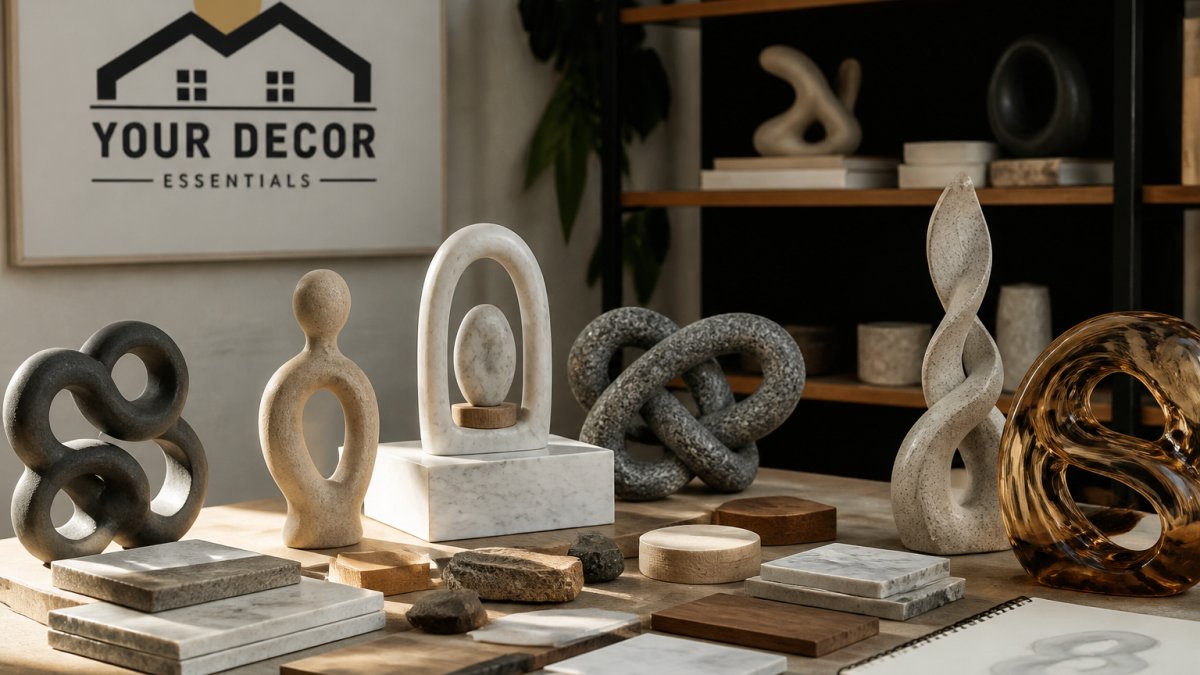
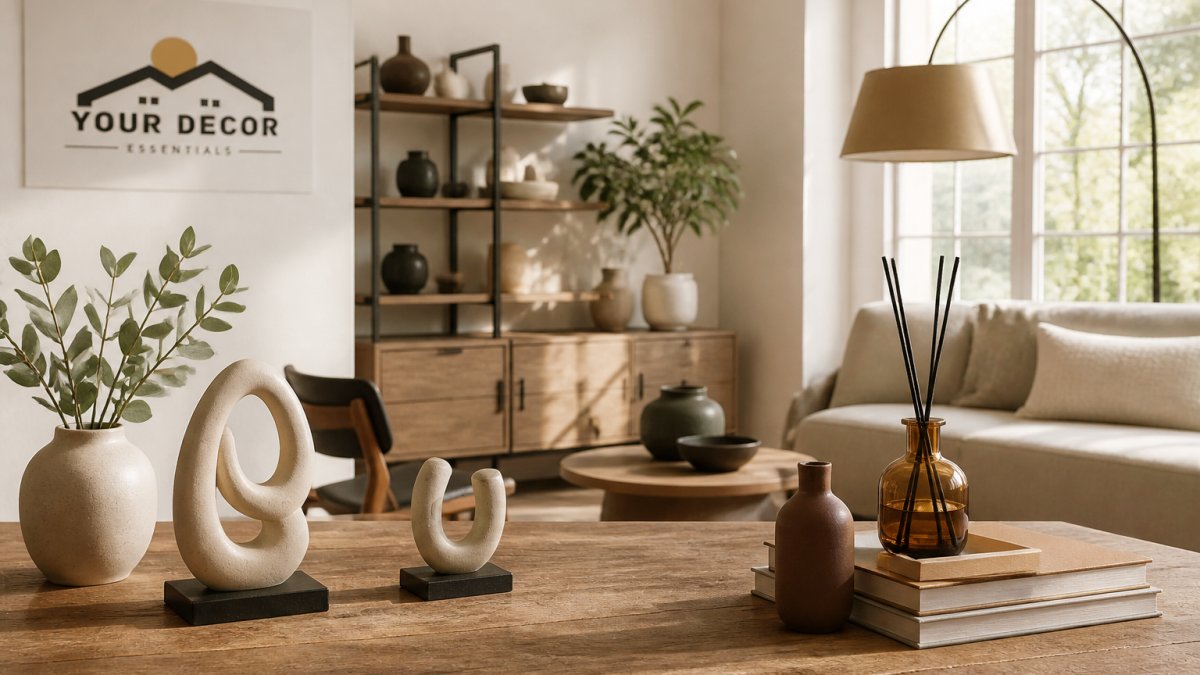
Our collection of abstract sculptures and captivating resin accents emphasizes quality craftsmanship and thoughtful design. We focus on pieces that introduce visual interest while maintaining the durability and aesthetic integrity you expect from home furnishings. Our stylish furniture and functional lighting are selected for both beauty and longevity, ensuring your investment in your space pays dividends for years.
When evaluating any home decor brand, apply the framework discussed throughout this guide. Research their supply chain transparency, material sourcing, and labor practices. Review customer experiences and longevity reports. Compare what they claim against what they document. Brands that can clearly articulate their ethical practices and back those claims with verifiable information deserve your consideration.
The most important factor is alignment between the brand's values and your own. Different ethical priorities matter to different people. Some prioritize fair wages above all else. Others focus on environmental impact or support for artisan communities. The right brand for you is one whose practices reflect what matters most to you.
Shopping for home decor that reflects your values doesn't mean compromising on beauty or style. When you choose ethically manufactured pieces, you're investing in quality that lasts, supporting fair labor practices, and reducing environmental impact. Explore our curated collection of abstract sculptures, resin accents, and functional lighting, each selected for craftsmanship and ethical production. Start transforming your space with pieces that look beautiful and feel good to own.
Frequently Asked Questions
What does ethical manufacturing mean for home decor?
Ethical manufacturing in home decor refers to production practices that prioritize fair wages, safe working conditions, reasonable working hours, and the elimination of child labor. It also encompasses responsible sourcing of materials, transparent supply chains, and environmental stewardship. When home decor is ethically manufactured, it means workers involved in creating your pieces are treated fairly, the materials come from accountable sources, and the production process minimizes harm to the environment and communities.
How can shoppers tell whether a home decor brand manufactures ethically?
Look for third-party certifications and transparent supply chain information on a brand's website. Reputable ethical home decor brands publish details about their production facilities, worker conditions, and material sourcing. Ask brands directly about their manufacturing practices, certifications (such as Fair Trade or B Corp status), and whether they conduct independent audits. Brands committed to ethical production are typically willing to share this information and explain how their processes differ from conventional manufacturing.
Is sustainable home decor more durable than conventional decor?
Ethically manufactured home decor often emphasizes durability and quality craftsmanship, which can extend product lifespan compared to mass-produced alternatives. Responsible sourcing and thoughtful design typically result in pieces built to last, reducing waste and the need for frequent replacement. However, durability depends on specific materials and construction methods rather than ethical manufacturing alone. Quality artisan-made pieces, whether abstract sculptures or functional lighting, often outlast cheaper alternatives due to superior craftsmanship and material selection.
What environmental benefits come from ethically made home decor?
Ethical manufacturing often reduces greenhouse gas emissions, chemical use, and resource consumption compared to conventional production. Brands focused on responsible sourcing prioritize natural and recycled materials, minimize waste during production, and reduce air pollution through cleaner processes. Thoughtful design in ethical production also encourages durability and circular design principles, meaning pieces last longer and can be repurposed or recycled at the end of their life, lowering overall environmental footprint.