 Comparison
Mass Market vs Boutique Decor: Choosing What Fits
Quick Summary
Choose mass market decor for pieces you replace often and boutique decor for the focal pieces people notice. Boutique pieces come from smaller makers or limited collections and often feel more personal and cohesive. Mass-market pieces offer breadth and convenience but can make homes look alike.
- Mass-market retailers offer breadth, letting you match lamps, rugs, and wall pieces in one visit.
- Boutique collections are narrower, so each piece is chosen for how it fits with the rest.
- Divide the price by expected years of use to compare cost per year, not just sticker price.
- Check weight, finish, joins, and care instructions before buying any accent piece.
- Anchor each room with one standout piece and let simpler items support it.
Table of Contents
- Mass Market vs Boutique Decor: What Actually Differs
- Selection Breadth, Curation and Personal Style
- Materials, Craftsmanship and Durability
- Artisan vs. Mass-Market Decor: Price, Value and Total Cost
- A Decision Framework: Budget, Room and Priorities
- How to Mix High and Low Home Decor
- Curated Home Decor Shopping Tips and a Quality Checklist
- Choosing Your First Pieces From Your Decor Essentials
- Frequently Asked Questions
Mass Market vs Boutique Decor: What Actually Differs
Choosing between mass market and boutique decor comes down to three things: how unique a piece is, how well it's made, and how much it costs over the years you own it. Mass-market pieces are often produced in large runs and sold through big retailers. Boutique and artisan pieces often come from smaller makers or limited collections. Neither is automatically better. The right choice depends on what you need from each room.
New homeowners often buy a full set of matching accessories and end up with a room that looks like every other room. A few distinctive pieces, mixed with reliable everyday items, usually produce a more personal result.
National Association of Home Builders, housing and consumer spending research tracks how homeowners spend on furnishings and remodeling, which is useful context when you set a decor budget.
Selection Breadth, Curation and Personal Style
Mass-market retailers offer breadth. You can find a matching lamp, rug, and wall piece in one visit, usually in the same tones and styles. That convenience is real, but it also means many homes end up looking alike.
Boutique sellers work differently. A curated collection has fewer pieces, and each one is chosen for how it fits with the rest. That narrower focus is why a boutique collection often feels more cohesive and more personal.
Curation also matters for gift buying. A housewarming gift from a small collection is less likely to appear in the recipient's friends' homes. If you want that kind of originality, a curated selection is the better place to shop.
Our rule of thumb: Buy mass market for things you replace often, and boutique for the pieces people notice.
Materials, Craftsmanship and Durability
Material and construction are where price differences show up most clearly. A mass-market resin accent may look good in photos but feel light, and its finish can chip or fade after a few years of sun and handling.
When you compare items, check these details:
- Weight and stability: heavier bases and sculptures tend to be sturdier and less likely to tip.
- Finish: look for even coloring and smooth edges, not just a glossy photo.
- Joins and seams: these are the first places a cheap piece fails.
- Care instructions: a piece that needs special cleaning may not suit a busy household.
For example, a resin sculpture with a dense, even finish will generally outlast a thin, hollow one, even if the thin one looks similar on a shelf. Check the product description for materials and dimensions before you buy, and treat any claim you cannot verify with caution.
Artisan vs. Mass-Market Decor: Price, Value and Total Cost
Sticker price is only part of the cost. Artisan and mass-market decor differ in what you pay now and what you pay over time.
Pricing for boutique items depends on the maker, materials, quantity, and delivery. Check current pricing directly on the product page or request a quote, since pricing depends on quantity, dates, and delivery. Mass-market prices are usually lower up front, but they may need replacing sooner.
Cost per Year of Use
Divide the price by the number of years you expect to keep the piece. An accent you replace every two years costs half its price per year. A piece priced higher that lasts ten years may cost less per year, even though it is more expensive at checkout. This simple calculation is often the clearest way to compare the two options.
Maintenance, Replacement and Returns
Factor in upkeep, replacement, and returns before you decide. Mass-market pieces are easy to replace, which is convenient if you move or change your style. Boutique pieces are harder to replace with an identical item, since the collection may be limited. Check the return policy and any warranty before you order, especially for online purchases where you cannot see the piece in person.
A Decision Framework: Budget, Room and Priorities
Use this framework to decide where mass-market decor is sufficient and where a boutique piece earns its place. The goal is not to pick a side but to allocate your budget by room and priority.
Step 1: Set a Room-Level Budget
Decide how much you can spend on the room overall, not just on one item. One approach is to set aside a larger share of the room budget for one or two focal pieces and spread the rest across supporting items. This prevents a single splurge from leaving the room unfinished.
Step 2: Identify the Focal Point
Pick one or two pieces that will draw the eye, a sculpture, a statement lamp, or a distinctive wall piece. These are the items where boutique craftsmanship is most visible and most likely to be noticed by guests. Mass-market pieces work well for everything that supports the focal point.
Step 3: Match the Piece to the Room's Use
High-traffic areas such as living rooms and entryways need sturdier pieces that can handle bumps and daily wear. A guest room or a shelf above eye level can safely use more delicate or affordable items. Consider how often the piece will be touched, moved, or exposed to sunlight.
Step 4: Weigh the Trade-Offs
Every choice involves trade-offs. Boutique pieces offer uniqueness and often better finishing, but they may have longer lead times, limited stock, and harder replacement if damaged. Mass-market pieces are readily available and easy to replace, but they are more likely to appear in other homes and may need replacing sooner. Write down which trade-off matters more for each room.
Step 5: Use a Decision Checklist
- Does this room need a focal point, or is it a supporting space?
- Will the piece be handled or exposed to sunlight often?
- Is the item in stock now, or will I wait for a made-to-order piece?
- Can I replace it easily if it breaks?
- Does the price per year of expected use favor one option?
Step 6: Test Before You Commit
Compare the piece with what you already own using photos or a simple room layout. Measure the space and confirm the piece will fit the wall, table, or corner. For lighting, check the dimensions and bulb specifications before buying.
Watch out: A boutique piece with a long lead time can leave a room unfinished for weeks; order focal pieces first so supporting items can be chosen around them.
How to Mix High and Low Home Decor
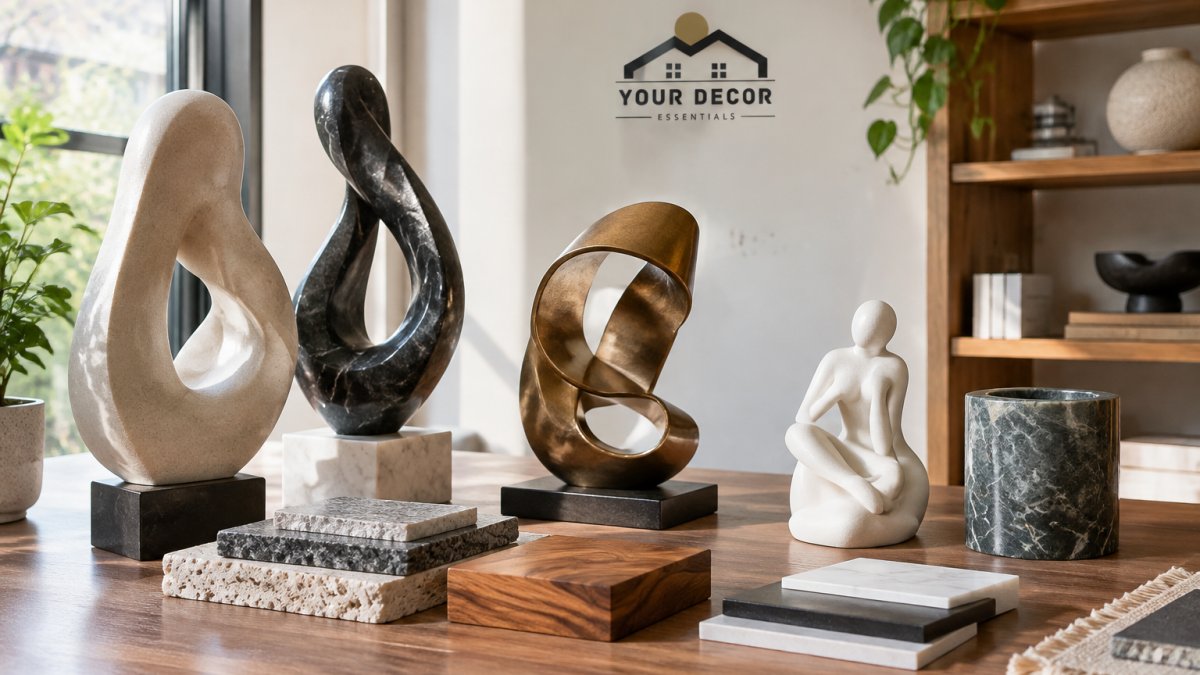
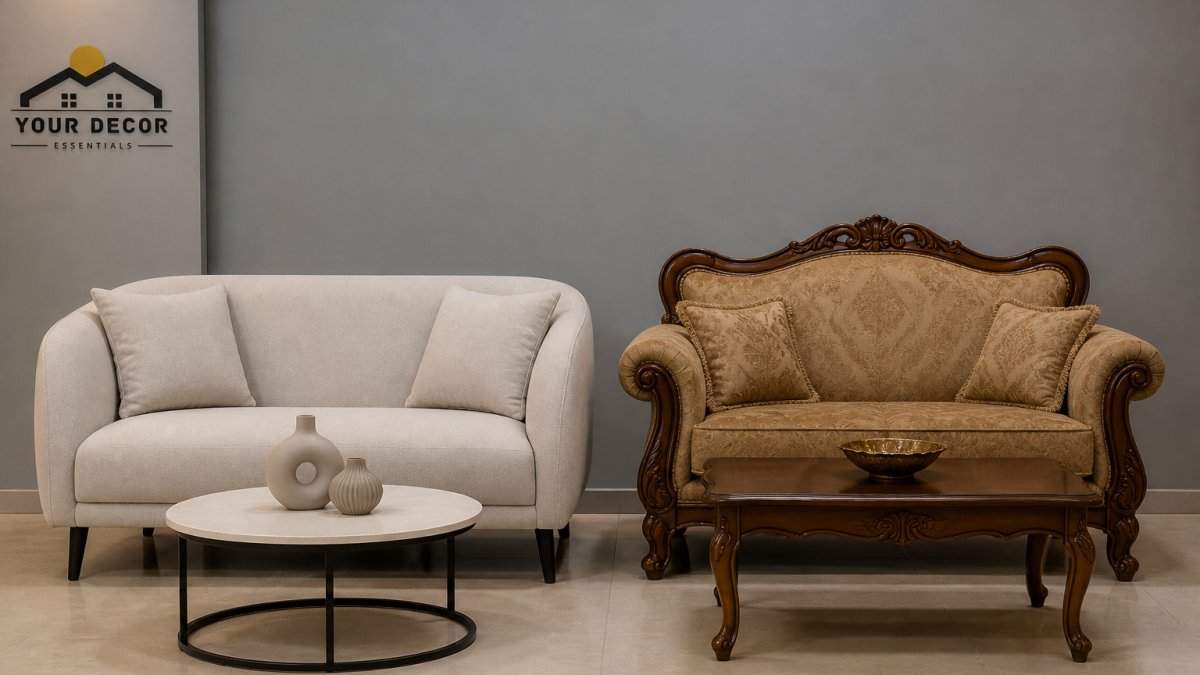
Most rooms look best when they combine price points. A mid-priced sofa beside a single abstract resin sculpture and a mass-market lamp can look intentional, because the sculpture gives the room a clear focal point.
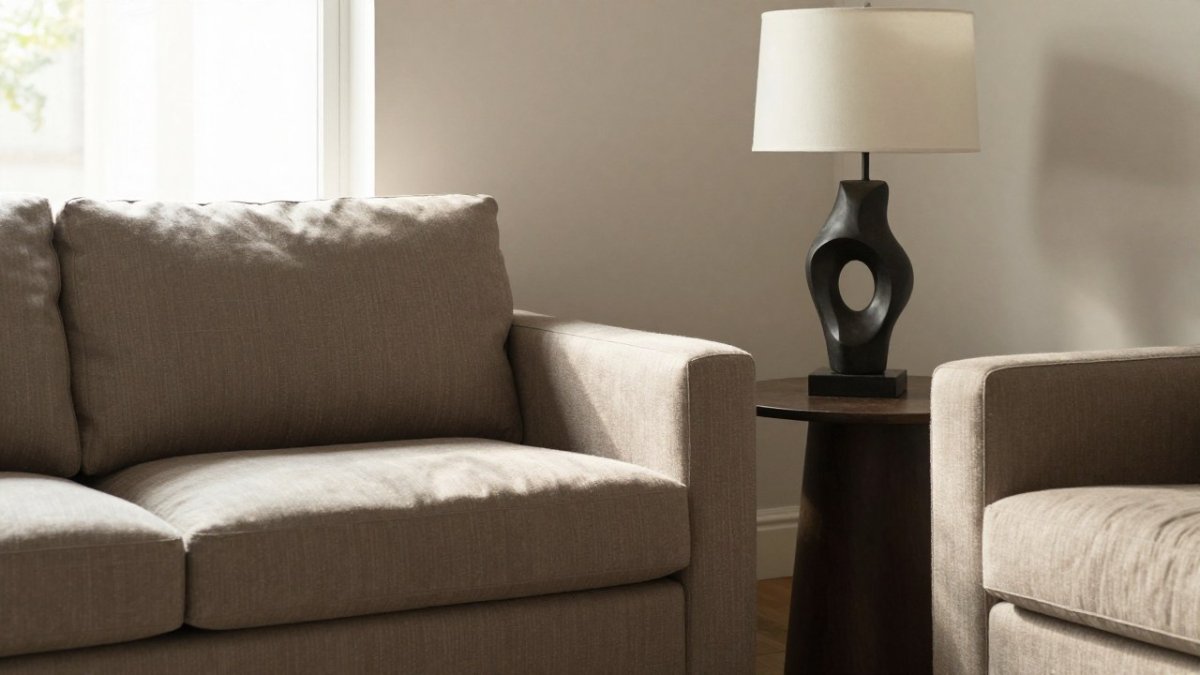
Here are some simple mixing rules:
- Anchor with one standout piece in each room, and keep the rest simpler.
- Repeat a color or material across both high and low pieces so they feel connected.
- Vary the scale so large items balance small ones.
- Keep the everyday pieces neutral, so the boutique pieces can stand out.
Mixing works best when the boutique piece is the one people ask about, and the mass-market pieces quietly support it.
Curated Home Decor Shopping Tips and a Quality Checklist
Shopping curated decor online requires more scrutiny than buying in a store. Use this checklist to assess construction, materials, and care before you order.
Materials and Construction
- Weight and stability: Heavier bases and sculptures tend to be sturdier and less likely to tip. If the product description lists weight, compare similar-sized pieces.
- Finish: Look for even coloring and smooth edges. A glossy photo can hide thin or uneven finishes.
- Joins and seams: These are the first places a cheap piece fails. Check photos for visible seams or gaps.
- Care instructions: A piece that needs special cleaning may not suit a busy household. Confirm the care requirements before buying.
Sourcing and Provenance
Ask where and how the piece was made. Boutique sellers often provide details about the maker, materials, and production methods. Mass-market items may have less information available. Do not assume boutique is automatically more sustainable, assess materials, production practices, and shipping distance for yourself.
Customization and Lead Times
Made-to-order pieces offer customization but come with longer lead times and limited return options. Confirm the production timeline and return policy before committing. In-stock boutique items may ship quickly but can sell out and be hard to replace.
Online Shopping Checklist
- Read the full materials and dimensions.
- Look for photos of the piece in a real room, not only on a plain background.
- Check the return policy and any warranty.
- Ask about delivery times and packaging for fragile items.
- Compare the color in photos with a known reference, since screens vary.
- Confirm the piece fits your measured space.
- Verify care instructions and replacement availability.
Watch out: A generous return policy can mask high shipping costs for returns; confirm who pays return shipping before you order.
Choosing Your First Pieces From Your Decor Essentials
If you are furnishing a first home, start with a few pieces you will still like in five years. Choose one focal point, such as an abstract sculpture or a well-made lamp, and build around it with simpler, more affordable items.
At Your Decor Essentials, our collection is built around abstract sculptures, resin accents, stylish furniture, and functional lighting. Browse the collection to find a focal piece for your main living area, then add supporting pieces as your budget allows. Check current pricing and product details on each page before you decide, and reach out if you need help choosing a size or style for your space.
Frequently Asked Questions
What is the difference between mass-market and boutique home decor?
Mass-market decor is produced in large volumes to a standard design, so the same piece appears in many homes and is usually sold through big-box retailers and national chains at lower prices. Boutique decor comes from smaller makers, independent designers or limited runs, and tends to be more distinctive and sometimes handmade. The gap is less about whether one is good and more about how many people will own the same object and how much the piece costs per year of use.
Is boutique home decor better quality than mass-market decor?
Not automatically. Boutique pieces often use more hand finishing and more deliberate materials, but quality varies within both categories. Check materials, joinery, finish, weight and the maker's warranty or return terms rather than relying on the label. A well-made mass-market piece can outlast a poorly made boutique one, so compare the specific item.
Can you mix boutique decor with mass-market furniture?
Yes, and most rooms look better for it. Use a repeating color or material, such as a shared wood tone or metal finish, to tie the pieces together. Put one or two boutique accents, like a sculpture or a resin tray, next to everyday furniture so the distinctive items read as intentional rather than scattered. Limiting each room to one focal boutique piece keeps the mix balanced.
How do I choose between boutique and mass-market decor for a first home?
Start with budget and how long you plan to keep each piece. Spend more on items you use daily or that anchor the room, such as a sofa or lighting, and choose boutique accents for the pieces you want to stand out. Buy mass-market items where replacement is cheap and the style is less important. Measure each space and confirm dimensions, lighting output and return terms before ordering online.