 Comparison
Ceramic vs Glass Floor Vases: Which Suits Your Home Styling
Last Updated: November 25, 2026
Quick Summary
Ceramic floor vases win for most rooms because they hide stems, resist tipping, and bring warmth that glass cannot match. Glass floor vases earn their place when you want to show off a sculptural branch or a clean modern line. The choice comes down to what goes inside, who shares the room, and how much visual weight the corner needs.
- Dried stems and pampas grass belong in ceramic, which hides the crowded bundle of stems at the neck.
- Fresh flowers suit glass, where you can check water level and clarity at a glance.
- Choose a ceramic vase with a broad footprint and low center of gravity if stability is your priority.
- A 6-inch opening needs at least 12 to 15 stems to read as intentional.
- Keep at least 18 inches of clearance from any walkway so a vacuum or running child does not clip the vase.
Table of Contents
- Ceramic vs glass floor vases for home styling: which one belongs in your room?
- How to choose a decorative vase: a decision framework by use case
- Ceramic vs glass: key differences in appearance, durability, and maintenance
- What to put in a floor vase: fresh flowers, dried stems, or nothing at all
- How to style a floor vase so it looks intentional
- Floor vase placement in living room: where it works and where it doesn't
- Vase dimensions and arrangement compatibility
- Cleaning and care for ceramic and glass floor vases
- Safety and household suitability: kids, pets, and high-traffic areas
- Finding the right floor vase for your space at Your Decor Essentials
- Frequently Asked Questions
Ceramic vs glass floor vases for home styling: which one belongs in your room?
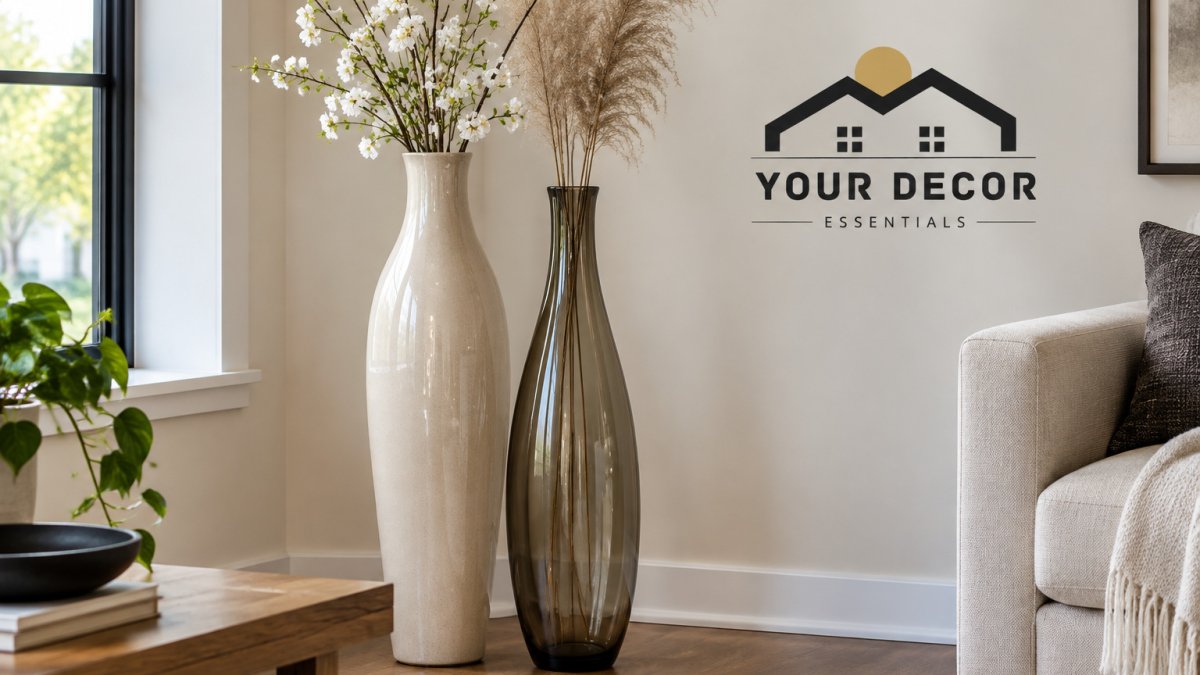
Ceramic floor vases win for most rooms because they hide stems, resist tipping, and bring warmth that glass cannot match. Glass floor vases earn their place when you want to show off a sculptural branch or a clean modern line. The choice usually comes down to three things: what goes inside, who shares the room, and how much visual weight the corner needs.
Here is the part most guides skip. A floor vase is furniture, not a tabletop accent. It sits at eye level with your sofa arm, it gets bumped by vacuum cleaners and toddlers, and it holds arrangements tall enough to topple. Material decides how that story ends.
Below, we walk through a decision framework, the real differences between ceramic and glass, and room-by-room guidance so you can pick once and stop second-guessing.
How to choose a decorative vase: a decision framework by use case
Start with the arrangement, not the vase. What you plan to display determines the material before style enters the conversation.
- Dried stems, pampas grass, or branches: ceramic. Opaque walls hide the bundle of stems at the neck, which is rarely pretty.
- Fresh flowers you change weekly: glass. You can see the water level at a glance and catch murky water before it smells.
- Nothing at all, just sculptural form: either material works. Judge it as standalone decor and pick the finish that suits the room.
- High-traffic corner with kids or pets: ceramic with a heavy base. A wide footprint resists tipping far better than a slim glass cylinder.
- Small room that needs light: glass. Transparent walls keep sightlines open and stop a tall piece from feeling like a wall.
One more question worth asking: will you move it? A large glazed ceramic floor vase is heavy and awkward to lift alone. If you rearrange often, factor that in.
Ceramic vs glass: key differences in appearance, durability, and maintenance
The short answer: ceramic brings warmth, texture, and privacy for stems, while glass brings light, transparency, and easy water monitoring. Everything else flows from those two facts.
Appearance, style, and visual impact
Glazed ceramic reads as furniture. A matte or textured finish absorbs light and adds tactile texture, which is why fired clay pieces settle so comfortably into modern style rooms with wood and linen. Ceramic floor vases also carry visual weight, meaning they anchor a corner and make a tall arrangement look deliberate.
Glass does the opposite. A clear glass vase nearly disappears, so the flowers or branches become the display. That transparency suits minimalist and contemporary interiors, and it keeps small rooms feeling open. The trade-off is honesty: glass shows every stem, every leaf, and the water line.
Durability and breakage risk
Ceramic chips and cracks; glass shatters. Those are different failure modes. A chip on a glazed ceramic floor vase is often a small scar you can turn toward the wall. A crack from thermal stress or impact damage can spread.
Glass thickness matters here. Thin glass cracks under impact damage or sudden temperature change, and a heavy arrangement can stress the walls over time. Ceramic fired clay is generally tougher against knocks, though a dropped ceramic piece will still break.
Watch out: never fill a cold glass vase with hot water or move it from a sunny windowsill to a cool sink. Thermal stress cracks glass with no warning.
Weight, stability, and tipping
A heavy base is the single best defense against tipping risk. Ceramic floor vases tend to weigh more and sit lower, and many have a wide, weighted foot. Glass floor vases are often lighter and narrower at the base, which makes them easier to knock over with a broom handle or a wagging tail.
If stability is your priority, choose a ceramic vase with a broad footprint and keep the arrangement's center of gravity low. Tall, top-heavy branches in a slim glass cylinder is the classic tipping setup.
| Feature | Ceramic floor vase | Glass floor vase |
|---|---|---|
| Visual effect | Warm, opaque, anchors a corner | Light, transparent, opens a room |
| Stem visibility | Hidden | Fully visible |
| Water monitoring | Requires lifting or checking inside | Visible at a glance |
| Breakage mode | Chips, cracks | Shatters, thermal stress |
| Stability | Heavier, wider base | Lighter, needs care |
| Cleaning | Damp cloth, gentle soap | Glass cleaner, water spots |
| Best for | Dried stems, standalone decor | Fresh flowers, branches |
What to put in a floor vase: fresh flowers, dried stems, or nothing at all
Fresh flowers belong in glass, dried stems belong in ceramic, and nothing at all is a legitimate third option. That is the simple version.
Fresh flowers need water you can monitor. Stem visibility and water clarity are features, not flaws, when you are changing water every few days. A clear glass floor vase lets you spot cloudy water before bacteria build up.
Dried flowers, pampas grass, and bare branches look better in ceramic. The bundle of stems crowded at the neck of a tall vase is the least attractive part of any dried arrangement, and opacity solves it. A matte finish also suits the soft texture of dried materials.
Then there is the empty vase. A sculptural ceramic floor vase holding nothing but its own shape is one of the easiest ways to fill an awkward corner. Not every vessel needs contents.
How to style a floor vase so it looks intentional
Style a floor vase by treating it as a piece of furniture: give it a job, group it with one or two companions, and let the arrangement echo the room's height lines. Random placement is what makes a floor vase look like it wandered in from another house.
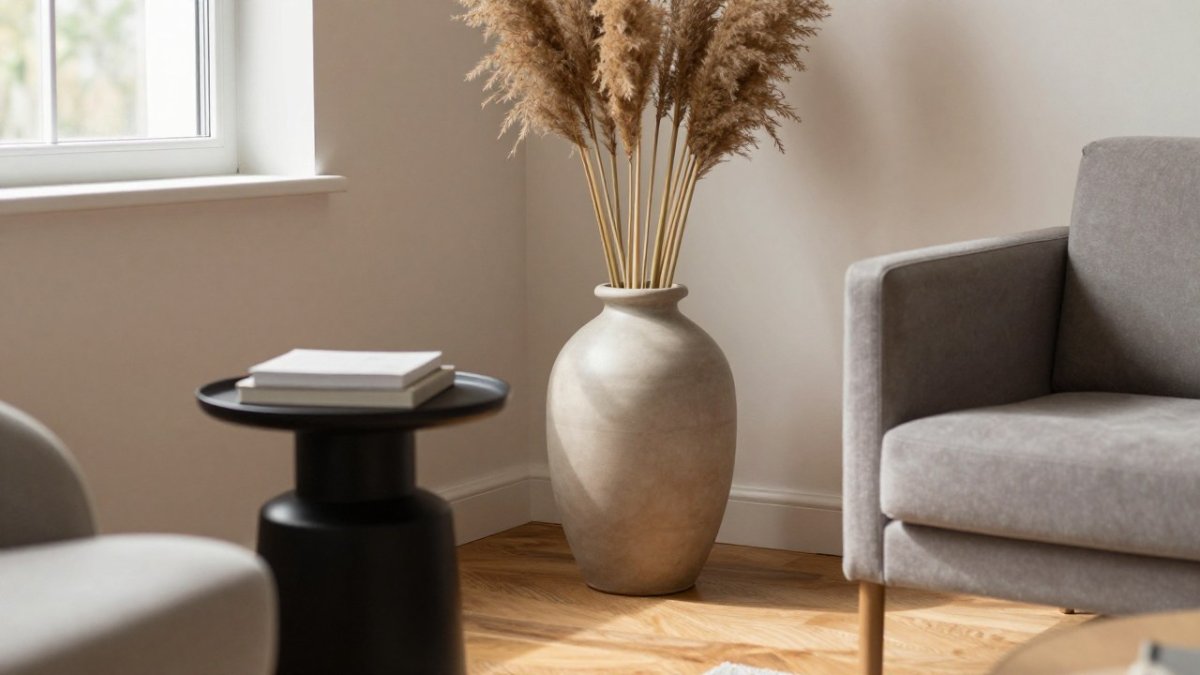
A few styling moves that work in almost any room:
- Pair heights. Put a tall floor vase near a lower object, like a side table or floor lamp, so the eye steps up rather than jumping.
- Use odd numbers. One large vase plus two small accessories beats four identical pieces.
- Match the arrangement to the ceiling. Tall rooms can take tall branches; low ceilings want shorter, denser stems.
- Leave breathing room. A floor vase pushed tight against a sofa looks accidental. Give it a little space.
For more placement and pairing ideas, our guide to decorative floor vases: 9 styling ideas for 2026 walks through specific arrangements room by room.
Floor vase placement in living room: where it works and where it doesn't
Floor vases work best in living rooms at the ends of a sofa, beside a fireplace, in empty corners, and flanking a console. They fail when they block a walkway, crowd a small rug, or sit where a door swings.
The corner behind a sofa is the classic spot. So is the dead space beside a fireplace or between two armchairs. A floor vase also earns its keep beside a console table, where it adds height without taking surface area.
Where it goes wrong: narrow paths between furniture, the swing zone of any door, and tight spots where a tall piece makes the room feel smaller. In a small living room, a glass floor vase keeps the sightline open; a large opaque ceramic piece can feel like a wall.
Floor space and rug size matter more than most people expect. If you are working out how much room you have around a seating area, our guide on choosing the right area rug for small spaces covers the floor-plan basics that apply to any tall piece.
Vase dimensions and arrangement compatibility
Match the vase height to the arrangement, and match the opening width to the stem count. A floor vase should generally reach somewhere between the sofa back and the top of a nearby lamp, so it reads as part of the furniture rather than an afterthought. For a standard sofa with a 32- to 36-inch back, that means a floor vase in the 28- to 40-inch range before stems are added. A vase shorter than the sofa arm disappears; one taller than the lamp shade competes with the lighting.
Opening width decides what the vase can hold. A narrow neck of 2 to 3 inches holds a few clean stems and looks refined. A wide mouth of 6 inches or more suits pampas grass, full branches, or a loose bundle, but it needs more stems to look full. As a rule of thumb, a 6-inch opening needs at least 12 to 15 stems to read as intentional, while a 3-inch opening looks complete with 5 to 7 stems. Underfill a wide mouth and the arrangement looks like a mistake.
Scale and proportion do the rest. A short, wide vase beside a tall floor lamp creates an odd step. A slim, tall glass vase next to a bulky armchair can look flimsy. The classic proportion is for the vase to be roughly one-third the height of the arrangement it holds, so a 30-inch vase supports stems that finish around 90 inches total. For floor vases holding branches, keep the total height at least 12 inches below the ceiling to avoid a cramped look.
Stem length matters as much as stem count. Dried pampas grass stems often run 36 to 48 inches, so a 30-inch vase leaves 6 to 18 inches of plume above the rim, which is the sweet spot. Fresh flower stems should be cut so the blooms sit 1.5 to 2 times the vase height above the floor. If you are coordinating several tall statement pieces, our piece on styling sculptural floor lamps as statement decor explains how to balance heights so the room reads as one composition.
Watch out: a floor vase with a mouth narrower than 2 inches will not accept most branch bundles, and forcing them in can crack the neck.
Cleaning and care for ceramic and glass floor vases
Ceramic wants a soft damp cloth and mild soap; glass wants glass cleaner and a lint-free cloth. Skip abrasive pads on both, and never let water sit in either for weeks.
For glazed ceramic, wipe the outside with a damp cloth and dry it to avoid water spots on the glaze. For matte or textured finishes, use a soft brush to lift dust from the texture rather than scrubbing. Inside, rinse with warm water and a little mild soap, then let it air dry fully before storing.
Glass needs a bit more attention because water spots show. Use a glass cleaner or a mix of warm water and a drop of dish soap, then buff dry. Hard water leaves mineral rings, so dry the inside after each water change. Check the water level and clarity every few days for fresh arrangements.
One care note for both: keep them out of direct, harsh sun if the finish matters to you. Long exposure can dull some finishes over time.
Safety and household suitability: kids, pets, and high-traffic areas
Households with young kids, curious pets, or busy foot traffic should lean toward ceramic with a weighted base, placed out of the main path. Glass floor vases are beautiful but demand a spot where nothing swings, runs, or rolls into them. The difference matters most at floor level, where a tipped vase can send sharp fragments across a walkway or trap a pet.
A few practical safeguards:
- Put the vase in a corner or against a wall rather than mid-room, and keep at least 18 inches of clearance from the edge of any walkway so a vacuum or a running child does not clip it.
- Choose a heavy base and a wide footprint over a slim cylinder. A ceramic floor vase that weighs 15 pounds or more with a base wider than 8 inches resists a hip check far better than a 5-pound glass cylinder.
- Keep the arrangement's center of gravity low so a bump does not topple it. Fill the bottom quarter of the vase with sand, pebbles, or a weighted insert before adding stems.
- Secure tall arrangements with floral putty or a weighted filler at the bottom, and avoid top-heavy branches that extend more than twice the vase height above the rim.
Glass deserves special caution in homes with toddlers and pets. When glass breaks, it shatters into small fragments that can hide in carpet and cut paws or bare feet. Tempered glass is more resistant to impact but still breaks, and any glass floor vase should sit where it cannot be knocked into a table edge or door frame. Ceramic chips and cracks rather than shattering, which makes it the safer default for high-traffic rooms, though a dropped ceramic piece will still break into sharp pieces.
Watch out: a tall, slim glass vase placed beside a sofa arm is the most common tipping setup in family rooms, because the arm gives kids and pets something to push off against.
If durability is your main concern, our guide on choosing durable resin home accessories covers how different materials hold up to daily life, which helps you judge breakage risk before you commit.
Finding the right floor vase for your space at Your Decor Essentials
The right floor vase is the one that fits your arrangement, your floor plan, and the people who live there. Ceramic earns the corner in most homes; glass earns it when light and transparency are the point. Either way, buy for the room you have, not the one in the photo.
Browse the Your Decor Essentials collection, compare finishes and scale, and pick the piece that makes your corner feel finished.
Choosing a floor vase should feel like the fun part, not another decision to second-guess. Start with what you want to display, then let material, scale, and placement follow. Explore the curated decor at Your Decor Essentials and find a piece that anchors your room with a look that feels like yours.
Frequently Asked Questions
What are the key differences between ceramic and glass vases?
Ceramic vases are opaque, fired clay with glazed, matte, or textured finishes, so they hide stems and water while adding visual weight and warmth. Glass vases are transparent, letting you monitor water clarity and stem health, but they show every refill and require more frequent cleaning. Ceramic tends to be heavier and more chip-resistant; glass is lighter but can crack under thermal stress or impact. Your choice depends on whether you prioritize opacity and durability or visibility and a light, modern look.
Can you put real flowers in a ceramic floor vase?
Yes, as long as the interior is glazed or sealed. Unsealed fired clay is porous and can absorb water, which may cause sweating or damage over time. Use a liner or a watertight insert if the opening is wide, and check the water level every two to three days since you cannot see through the walls. For fresh flowers, a glazed ceramic floor vase works well; for dried stems or branches, any ceramic floor vase is fine because no water is needed.
Which floor vase is more stable: ceramic or glass?
Ceramic floor vases are generally more stable because the fired clay body is heavier and often paired with a broad, heavy base. Glass floor vases can be stable too, especially thick-walled designs with weighted bottoms, but tall, slim glass vases are more prone to tipping if bumped. In households with pets or young children, place either type against a wall or in a corner, and use a non-slip pad underneath to reduce movement on hard floors.
How do you style a tall floor vase without flowers?
Tall floor vases work as standalone decor when the vase itself is the statement. Choose a ceramic floor vase with a matte or textured finish and place it in a bare corner, beside a fireplace, or next to a console. Add height with curly willow, dried branches, or pampas grass for a natural look, or leave it empty and let the shape and glaze carry the visual weight. Group it with a sculpture or a floor lamp to build a layered vignette.