 comparison
Best Abstract Sculpture Materials for Modern Homes
Last Updated: November 5, 2026
Quick Summary
The best sculpture materials for modern homes are metal and stone for durability, wood and ceramic for warmth and texture, and resin or fiberglass for lightweight scale and bold color. Most modern rooms look best with two materials in conversation rather than five competing for attention.
- Wood sculptures should stay in stable, conditioned rooms away from direct sun and heating vents.
- Bronze sits at the top of the value ladder and can last generations while holding intricate abstract forms.
- Resin and fiberglass weigh a fraction of stone and can sit on a standard console without extra support.
- Homes with young children should choose metal, resin, or fiberglass on high surfaces and skip low ceramic.
- Shipping costs for heavy stone or bronze pieces can add 20-30% to the purchase price.
Table of Contents
- Why Material Choice Makes or Breaks an Abstract Sculpture
- The Sculpture Materials List Every Buyer Should Know
- 5 Materials Used in Sculpture and How They Perform Indoors
- Side-by-Side Material Comparison for Indoor Modern Homes
- Resin Sculptures for Home Decor: What They Do Well and Where They Fall Short
- Matching Material to Room and Household Needs
- Scale, Weight, and Installation by Material
- Care, Repair, and How Each Material Ages
- Total Cost and Value by Material
- Abstract Sculpture Ideas to Try in Your Space
- Frequently Asked Questions
Why Material Choice Makes or Breaks an Abstract Sculpture
The best abstract sculpture materials for modern homes balance three things at once: how the piece looks in your light, how it holds up in daily life, and how much effort it asks from you. Get that balance right and a single piece can carry a whole room. Get it wrong and you own an expensive object that never quite fits.
The material question comes up more than any other when matching sculpted forms to real living spaces. Wood brings warmth to a white-walled room. Polished metal sharpens a soft palette. Stone anchors a corner with weight and texture. Resin lets a maker bend a shape that wood or marble would refuse to hold.
Here is the part most buying guides skip: material determines where a piece can live, who can safely be around it, and how it ages. Below, we break down the sculpture materials list, compare them side by side, and show you how to match each one to your rooms and your household.
The Sculpture Materials List Every Buyer Should Know
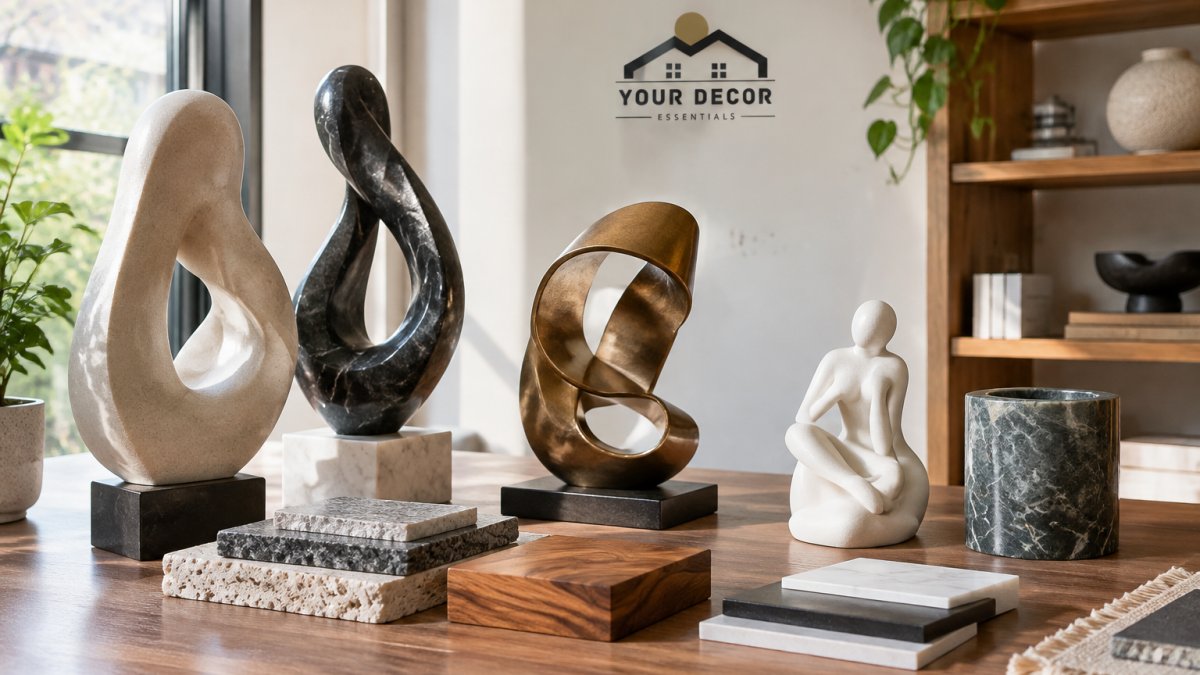
A complete sculpture materials list for modern interiors covers five families: wood, ceramic and clay, metal, stone, and resin or fiberglass. Each family splits into subtypes with different behavior indoors.
- Wood: walnut, oak, maple, and sustainably harvested species with natural grain
- Ceramic and clay: fired clay, earthenware, stoneware, and epoxy clay for fine detail
- Metal: stainless steel, bronze, aluminum, copper, and Corten steel
- Stone: marble, travertine, limestone, and alabaster
- Resin and fiberglass: cast resin, epoxy resin, and fiberglass composites
Mixed media pieces combine two or more of these, often a stone base with a metal form or a wood body with resin accents. For a closer look at how these options translate into finished pieces, our guide to luxury abstract sculptures for home decor puts each material into real product context.
5 Materials Used in Sculpture and How They Perform Indoors
These 5 materials used in sculpture cover nearly every abstract piece you will see in a modern home. The sections below explain how each one behaves once it leaves the studio and settles into your living room.
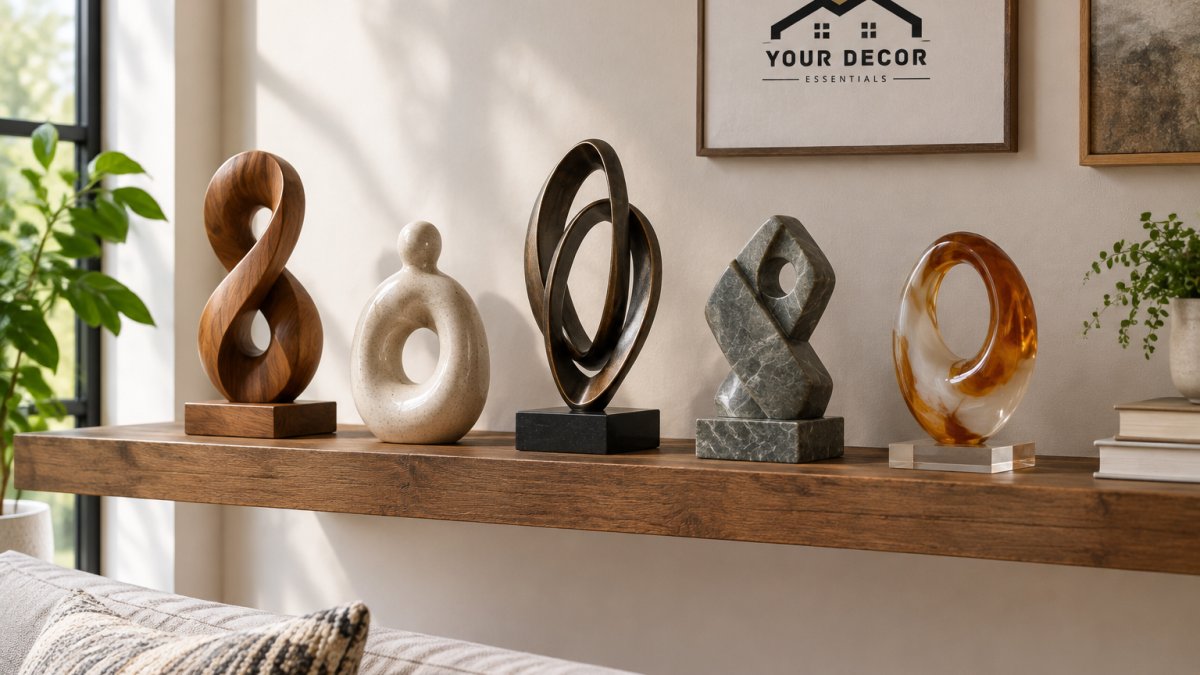
Wood: Warmth and Organic Grain
Wood is the friendliest material for a modern interior. Natural grain patterns add warmth to rooms that lean cold and minimal, and hand-carved organic shapes soften hard lines from furniture and architecture.
The trade-off is climate sensitivity. Solid wood expands and contracts with humidity, so a piece near a heating vent or in a steamy bathroom can warp or crack over time. Keep wood sculptures in stable, conditioned rooms and away from direct sun.
Ceramic and Clay: Texture and Handcrafted Character
Ceramic and clay deliver texture that mass-produced decor cannot copy. Fired stoneware holds crisp geometric forms, while hand-built pieces keep the maker's fingerprints and tool marks visible.
Clay is brittle. A ceramic sculpture on a low shelf in a house with toddlers is a genuine risk. Epoxy clay, a newer option, sets harder and holds finer detail than traditional clay, which makes it popular for small tabletop pieces. Treat ceramic as display-first decor for stable surfaces.
Metal: Steel, Bronze, Aluminum, and Copper
Metal is the durability leader. Stainless steel resists rust, bronze develops a rich patina over decades, aluminum stays lightweight, and copper brings a warm tone that shifts with the light.
Bronze sits at the top of the value ladder, since the material can last generations and holds intricate abstract forms. The catch is weight and cost. A large bronze piece needs a sturdy surface and careful placement. Polished finishes also show fingerprints, so plan on occasional wiping.
Stone: Marble, Travertine, Limestone, and Alabaster
Stone gives a sculpture sculptural presence that lighter materials cannot match. Marble brings veining and cool elegance, travertine adds earthy texture, limestone offers a matte softness, and alabaster glows when backlit.
Every stone piece is unique because natural variation runs through the block. That is the appeal and the caveat: the veining you see in a photo will differ from what arrives. Stone is heavy and unforgiving on hard floors, so use felt pads and place pieces where they will not be bumped.
Resin and Fiberglass: Lightweight and Moldable
Resin and fiberglass solve the problems stone and metal create. Cast resin holds complex, sharp-edged abstract geometries, takes pigment in almost any color, and weighs a fraction of stone. Fiberglass brings a high strength-to-weight ratio that makes large-scale pieces practical indoors.
What resin lacks is the tactile weight of natural material. A resin piece can feel less premium in the hand than marble or bronze. If you are weighing that trade-off, our article on why resin art is popular in modern design explains what drives the trend.
Side-by-Side Material Comparison for Indoor Modern Homes
This comparison table summarizes how each material performs on the factors that matter most indoors. Use it to narrow your shortlist before you shop.
| Material | Durability | Weight | Care Level | Indoor/Outdoor | Typical Price Range (USD) | Installation Needs | Best For |
|---|---|---|---|---|---|---|---|
| Wood | Moderate | Light-medium | Low | Indoor only | $50-$500 | Shelf or floor, felt pads | Warm, organic, minimalist rooms |
| Ceramic/clay | Low-moderate | Light | Moderate | Indoor only | $30-$300 | Stable surface, museum putty | Textured tabletop accents |
| Metal (steel, bronze, aluminum) | High | Medium-heavy | Low | Indoor/outdoor (varies by finish) | $100-$2,000+ | Sturdy surface, possible anchoring | High-traffic, statement pieces |
| Stone (marble, travertine, limestone) | High | Heavy | Low-moderate | Indoor/outdoor (sealed) | $150-$3,000+ | Reinforced floor or pedestal, two-person lift | Focal points, pedestal display |
| Resin/fiberglass | Moderate-high | Light | Low | Indoor (UV-stabilized for outdoor) | $40-$800 | Any stable surface, easy to move | Large forms, bold color |
The short version: metal and stone are generally the most durable, wood and ceramic offer warmth and texture, and resin offers scale and shape freedom. Most modern rooms look best with two materials in conversation rather than five competing for attention.
When comparing, pay attention to the installation column. A heavy stone piece may require a reinforced floor or a custom pedestal, which adds to the effective cost. Resin and fiberglass, by contrast, can often be placed on a standard console or shelf without extra support. For a deeper look at how these materials translate into finished pieces, see our guide to luxury abstract sculptures for home decor.
Resin Sculptures for Home Decor: What They Do Well and Where They Fall Short
Resin sculptures for home decor excel at color, curve, and scale. A maker can cast a flowing organic form or a sharp geometric piece that would be fragile or impossibly heavy in stone. Resin also takes a high-gloss or matte finish, so it fits both polished and soft modern palettes.
Where resin falls short is in perceived value. It does not have the density or cool touch of marble, and cheaper castings can look flat up close. Look for pieces with depth in the pigment and clean edges rather than hollow-feeling shells. Resin also yellows under prolonged direct sunlight, so keep pieces out of harsh window exposure.
For most buyers, resin is the right call for a large, colorful statement on a budget or for a shape no other material could hold.
Matching Material to Room and Household Needs
Room conditions should drive the material decision more than photos do. A few practical rules we give customers:
- Living room: stone or metal for the focal piece, wood for warmth nearby
- Bedroom: wood and ceramic for calm, low-glare texture
- Entryway: metal or resin, both forgiving of bumps and quick to wipe
- Home office: resin or aluminum for lightweight pieces that are easy to move
- Homes with young children: metal, resin, or fiberglass on high surfaces; skip low ceramic
- Humid rooms: metal and stone only; wood and unsealed clay suffer
Once you have picked a material, styling becomes the next step. Our guide on how to style abstract sculptures in your living room walks through placement, scale, and grouping.
Scale, Weight, and Installation by Material
Weight decides where a sculpture can safely live. Resin and fiberglass pieces are light enough to move alone and sit happily on a console or floating shelf. Wood and ceramic fall in the middle. Stone and bronze are the heavyweights and need a solid floor, a reinforced pedestal, or professional help to reposition.
Scale matters too. A large resin form can fill a tall corner without structural worry, while a large stone piece in the same spot may need floor protection and a two-person lift. Measure your surface, check the weight rating on shelves, and use museum putty or felt pads on anything that sits on a hard floor.
Care, Repair, and How Each Material Ages
Every material ages, and knowing how each one changes helps you choose something you will still love in five years.
- Wood: dust with a dry cloth, re-oil occasionally, keep away from humidity swings
- Ceramic: dust gently; chips are difficult to repair invisibly
- Metal: wipe fingerprints, let bronze patina develop, avoid abrasive cleaners
- Stone: seal porous stones, blot spills quickly, accept that patina is part of the look
- Resin: wipe with mild soap, avoid solvents and prolonged sun
Resin is the material buyers ask about most, since its aging behavior is less familiar than wood or stone. Our 2026 longevity guide to geode resin art durability covers how resin holds up over time in detail.
Total Cost and Value by Material
Cost tracks material rarity, labor, and weight. Wood and resin sit at the accessible end, ceramic and aluminum in the middle, and stone and bronze at the top, where hand-casting and quarrying drive the number up. But the sticker price is only part of the story. Shipping, installation, and long-term care add to the total cost of ownership, and those vary widely by material.
Pricing depends on quantity, dates, and delivery, so check the website for current prices.
- Wood: $50-$500. Lightweight and easy to ship; no special installation. Care is minimal, occasional dusting and re-oiling.
- Ceramic/clay: $30-$300. Fragile, so shipping insurance is wise. Chips are hard to repair, which can shorten the piece's useful life in busy households.
- Metal (aluminum, steel): $100-$800. Moderate weight; may need sturdy shelving. Low maintenance, but polished finishes show fingerprints.
- Bronze: $500-$2,000+. Heavy and often requires professional installation or a reinforced pedestal. Shipping is costly due to weight. However, bronze develops a patina and can last generations, so the cost per year of enjoyment can be low.
- Stone (marble, travertine, limestone): $150-$3,000+. Heavy; shipping and placement are the biggest hidden costs.
- Resin/fiberglass: $40-$800. Lightweight and cheap to ship. May yellow under prolonged sun exposure, so keep out of direct light. Repairability is limited.
Value is a different question. A bronze or marble piece bought once can last decades and hold its presence through redecorating. A resin piece delivers a bold look for less and may be replaced when your style shifts. Neither is wrong. Think about whether you are buying a permanent anchor or a piece you will enjoy for a season, and let that decide where your budget goes.
Watch out: shipping costs for heavy stone or bronze pieces can add 20-30% to the purchase price, and some sellers do not include insurance. Always confirm shipping terms and inspect the piece upon delivery.
For current pricing, visit the Your Decor Essentials website.
Abstract Sculpture Ideas to Try in Your Space
A few directions that work in modern homes right now:
- Monochrome trio: three small ceramic or resin forms in one tone on a console
- Stone and wood pairing: a heavy travertine base beside a carved wood piece for contrast
- Shelf vignette: five mini sculptures, one per material, as a collected display
- Floor statement: a large fiberglass or resin form in a bare corner
- Mixed media: a metal form on a stone plinth for a gallery feel
If you want designer-level direction on arranging these, our guide on how to style abstract home sculptures like a designer gives you a repeatable method.
Choosing sculpture materials comes down to matching a piece to your light, your rooms, and the way your household actually lives. At Your Decor Essentials, we curate abstract sculptures and resin accents with exactly that in mind, so you can find a piece that introduces visual interest, enhances comfort and style, and reflects a more distinctive look without guesswork. Browse our collection and find the sculpture that finishes your room.
Get started with Your Decor Essentials and bring a piece home that makes your space feel unmistakably yours.
Frequently Asked Questions
Which sculpture materials work best in a modern home?
It depends on the room. Wood and ceramic add warmth to minimalist spaces, while metal and stone suit rooms with clean architectural lines. Resin and fiberglass work well for large or high-shelf pieces because they are lightweight. Compare sculpture materials by durability, care needs, and how the piece will be displayed before you buy, and match the finish to your existing furniture tones.
Is resin a good material for home decor sculptures?
Resin sculptures for home decor are a practical choice when you want complex shapes, glossy finishes, or larger pieces that stay light enough to move. Resin holds fine detail and resists moisture, but it can scratch and may yellow with long sun exposure. Dust resin pieces with a soft cloth to keep the surface looking fresh.
What is the difference between metal and resin sculptures?
Metal sculptures, including bronze, stainless steel, aluminum, and copper, carry more weight and a tactile solidity that reads as premium. They resist wear and can last decades. Resin and fiberglass are lighter and easier to install, and they cost less for large forms, but they lack the same heft and can show scratches. Choose metal for heirloom pieces and resin for bold shapes on shelves or in rented spaces.
How do you clean and care for abstract sculptures?
Dust every piece weekly with a soft microfiber cloth. Wood needs occasional conditioning and should stay away from radiators and humid bathrooms to prevent warping. Stone should be wiped with a damp cloth and sealed if it sits near a sink. Metal may need a gentle polish to slow tarnish. Resin and fiberglass clean up with mild soap and water, but avoid abrasive cleaners that dull the finish.