 how-to
How to Style Abstract Home Sculptures Like a Designer
Last Updated: November 4, 2026
Quick Summary
To style abstract home sculptures, treat the piece as the anchor of the arrangement and build the surface around it. Choose a size that feels intentional for the surface, add two supporting objects at most, leave negative space, and light the form from one side so shadow defines it.
- Pick one hero sculpture per surface and add no more than two supporting objects.
- On a console or entry table, choose a piece roughly one-third the width of the table.
- Group objects in odd numbers, since three usually looks more natural than two or four.
- Side lighting at roughly 30 to 45 degrees off vertical rakes across the form and deepens recesses.
- Dust pieces with a soft, dry cloth every week or two and lift heavy pieces rather than dragging them.
Table of Contents
- Start With the Sculpture, Not the Shelf
- Choosing the Right Size Sculpture for a Room
- How to Display Sculptures at Home Without Clutter
- How to Style a Console Table With Sculptures
- How to Decorate Shelves With Sculptures
- Balancing Visual Weight and Negative Space
- Lighting and Shadow Play for Abstract Home Sculptures
- Caring for Resin and Stone Pieces So They Last
- Styling on a Budget With Pieces You Already Own
- Pick One Piece and Build the Vignette Around It
- Frequently Asked Questions
Start With the Sculpture, Not the Shelf
Most people style a room backwards. They buy the shelf, fill it, then hunt for something to put on it. Designers do the opposite, and it changes everything.
A common problem in room photos is a beautiful space with a sculpture tucked in a corner like an afterthought. Styling abstract home sculptures often works best when the piece comes first and the surface serves it.
Here is the core idea. An abstract sculpture is not filler. It is a sculptural form with its own weight, lines, and shadow. Treat it as the anchor and everything else becomes easier to place.
Below, we walk through sizing, placement, lighting, and care, step by step. You will know exactly where to put each piece and what to pair with it.
Choosing the Right Size Sculpture for a Room
Sizing comes down to one rule: the piece should feel intentional, not accidental. A sculpture that is too small disappears on a large surface. One that is too big crowds the room.
Start with the surface, then work outward:
- Console or entry table: a piece roughly one-third the width of the table reads as balanced
- Shelf: leave at least a hand's width of empty space on each side
- Floor corner: a tall piece that reaches about chest height fills the gap without blocking the view
- Mantel: keep the top of the sculpture below eye level when you stand in the room
Height matters as much as width. A tall, thin piece adds vertical interest to a low room. A wide, low piece grounds a tall space.
If you are sizing a piece for a specific surface, our guide on how to size abstract sculpture for a console table breaks down the proportions in detail.
Here is how the piece should scale to each common surface.
| Surface | Sizing rule |
|---|---|
| Console or entry table | Roughly one-third the width of the table |
| Shelf | At least a hand's width of empty space each side |
| Floor corner | Tall piece reaching about chest height |
| Mantel | Top of sculpture below eye level when standing |
How to Display Sculptures at Home Without Clutter
Clutter is not about having too much. It is about having too many pieces competing for the same attention. The fix is simple: give each sculpture breathing room.
Follow these steps:
- Pick one hero piece per surface. Let it be the tallest or boldest object there.
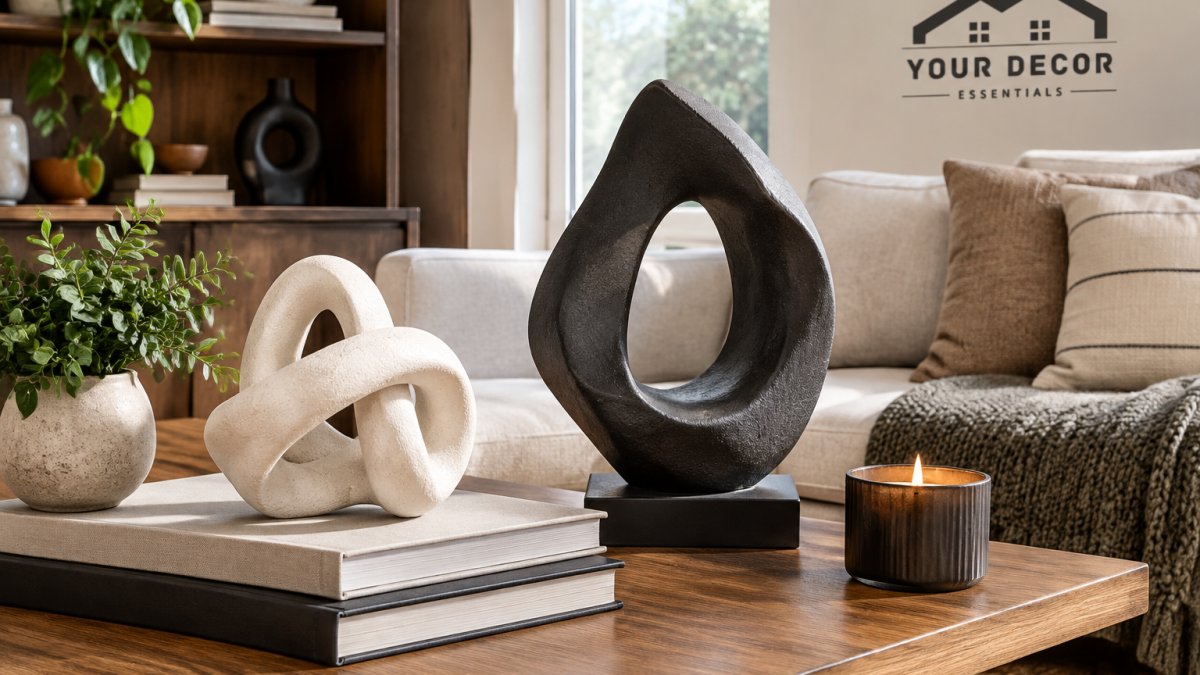
- Add two supporting objects at most. A book stack, a small bowl, a candle.
- Leave negative space. Empty space is part of the design, not a gap to fill.
- Group by odd numbers. Three objects usually look more natural than two or four.
- Repeat a color or material once. This ties the arrangement together.
A common mistake is filling every shelf edge to edge. One strong piece with air around it often reads as more intentional than several crowded together.
If you want more placement ideas for resin accent pieces, our guide on displaying resin accents covers additional setups.
How to Style a Console Table With Sculptures
A console table is the easiest place to start, and the most visible. The goal is a curated vignette that reads left to right.
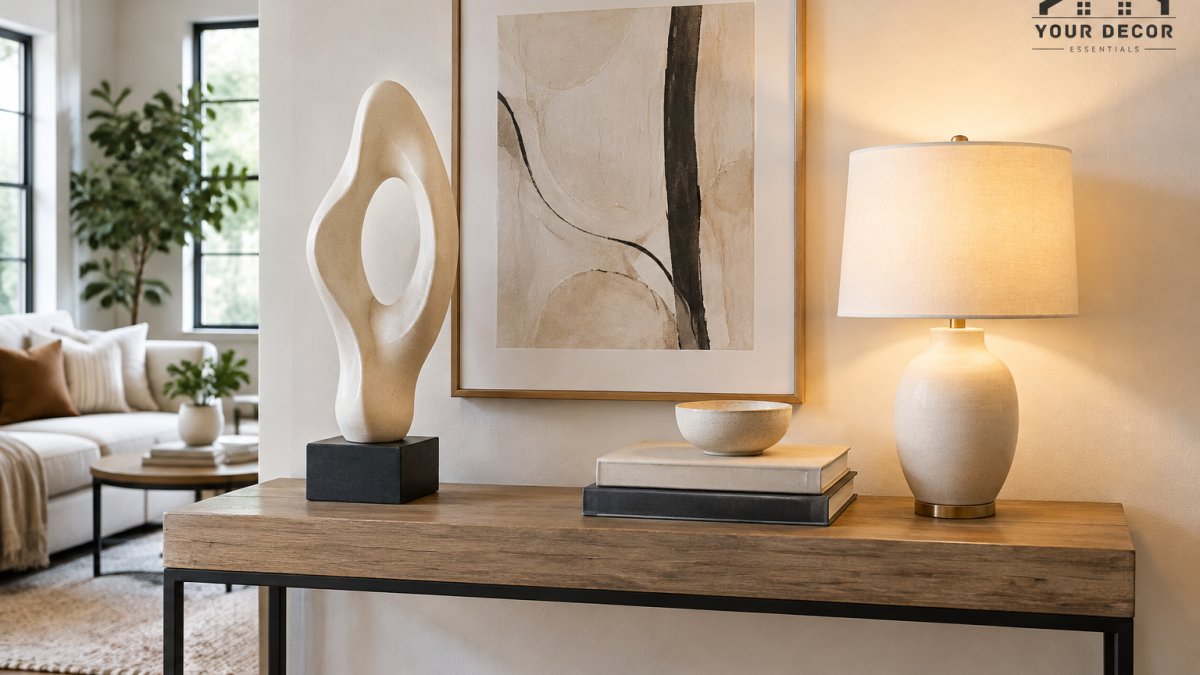
Build it in this order:
- Anchor one side with the sculpture, set slightly off-center
- Balance the other side with a lamp or a stack of books
- Add a low object in the middle, like a bowl or tray
- Hang art behind it so the sculpture sits against a backdrop, not a blank wall
- Step back and check the silhouette from the doorway
Keep the height varied. A tall sculpture, a medium lamp, and a low bowl create a triangle your eye can follow. Three objects of the same height look flat.
The sculpture should sit forward of the wall, not pressed against it. A few inches of space lets light wrap around the form and cast a shadow.
How to Decorate Shelves With Sculptures
Shelves reward restraint. The trick is to treat each shelf as its own small composition, then let the whole unit read as one.
Work shelf by shelf:
- Place the largest sculpture first on a middle shelf at eye level.
- Add one or two smaller objects beside it, offset to one side.
- Vary the height across shelves so the eye moves up and down.
- Leave one shelf mostly empty to break up the pattern.
- Repeat a material like wood or stone on each shelf to tie them together.
A common mistake is lining up objects like soldiers, evenly spaced on every shelf. Offset them instead. Push some toward the front, some toward the back.
Books work well as risers. Stack two or three flat and set a small sculpture on top to lift it to eye level.
Balancing Visual Weight and Negative Space
Visual weight is how heavy an object feels to the eye, regardless of its actual mass. A dark, dense piece feels heavier than a light, open one. Balance is about distributing that weight.
Use these principles:
- Dark and light: pair a dark sculpture with lighter objects nearby
- Solid and open: an open, airy form balances a solid block
- Tall and low: offset a tall piece with something low and wide
- Busy and calm: a detailed piece needs calm space around it
Negative space is the empty area around and between objects. It gives the eye a rest and makes each piece stand out. Crowd it and everything competes.
Think of the arrangement as a scale. If one side feels heavy, add weight to the other side or remove something. Trust your eye over any rule.
Lighting and Shadow Play for Abstract Home Sculptures
Lighting is where abstract pieces come alive. An abstract sculpture has no face or subject to read, so light and shadow do the storytelling. Change the light and you change the piece.
The key variables are angle, beam width, and color temperature. Each one changes how the eye reads the form.
Angle. A light placed directly overhead flattens an abstract piece because it eliminates the shadow that defines its edges. Side lighting from roughly 30 to 45 degrees off the vertical axis is a common approach: it rakes across the surface, deepens recesses, and throws a shadow onto the wall or floor that doubles the visual interest. For a floor piece in a corner, aim the beam across the form rather than down onto it.
Beam width. A narrow spot (roughly 15 to 25 degrees) creates a dramatic pool of light and a hard shadow, good for a single hero piece on a console. A wider flood (40 degrees or more) softens the transition and suits a grouping where you want the whole vignette lit evenly. Mixing one narrow spot with ambient fill is a common pattern: the spot defines the piece, the fill keeps the surrounding objects from going black.
Color temperature. Warm light (around 2700K to 3000K) brings out the glow of translucent resin and the grain of wood. Cooler light (3500K to 4000K) reads cleaner on stone and metal and makes a white or pale piece look crisp rather than yellowed. Avoid mixing temperatures in the same vignette, a warm bulb next to a cool one makes both look wrong.
Practical moves that work in real rooms:
- Use a directional fixture, a small adjustable spotlight or a picture light, rather than a ceiling downlight, so you can aim the beam.
- Place the light on the side you want the shadow to fall away from. The shadow is part of the composition; decide where it lands before you commit.
- Keep the light source out of the sightline from the doorway. You want to see the lit form, not the bulb.
- Place near a window for shifting natural light through the day, but rotate the piece periodically, since one side will take more sun.
- Add a small spotlight for a floor piece in a dark corner; an unlit corner reads as storage, not display.
Watch out: a hard spotlight aimed straight at a glossy resin piece can create a hot glare spot that hides the form instead of revealing it. If you see a bright reflection rather than a shadow, move the light off-axis.
For a deeper look at setting up lights around abstract pieces, see our guide on lighting abstract art sculptures at home.
Caring for Resin and Stone Pieces So They Last
Resin and stone are forgiving, but they are not indestructible. The failure modes are different for each material, and knowing the mechanism is what separates a piece that lasts decades from one that dulls in a year.
Resin. Resin is a polymer, and two things degrade it: ultraviolet light and solvent-based cleaners. UV exposure causes the surface to yellow and can make the piece brittle over time, which is why a resin piece in a bright south-facing window will shift color faster than one across the room. Solvents, ammonia-based glass cleaners, acetone, alcohol, can cloud or craze the finish. Stick with a damp cloth and a drop of mild dish soap, then dry it fully so water spots do not etch the surface. Dust with a soft, dry microfiber cloth every week or two; grit dragged across resin can leave fine scratches.
Stone. Stone is porous, and the enemy is staining from the inside out. Spills, oil, wine, coffee, can soak in and leave a mark that no surface wipe will remove. Use a coaster or felt pad under pieces on wood surfaces, and wipe spills promptly with a damp cloth. Avoid acidic cleaners (vinegar, lemon-based products), which etch calcium-based stone like marble and travertine. Keep stone out of direct sun to slow fading, and rotate the piece now and then so one side does not weather faster than the other.
Metal and mixed pieces. If a sculpture combines materials, clean each part according to its own rules rather than treating the whole piece as one. A metal base may need only a dry cloth while the stone above it tolerates a damp wipe.
A simple routine that covers most pieces:
- Dust with a soft, dry cloth every week or two.
- Wipe resin with a damp cloth and mild soap, then dry it fully.
- Keep stone out of direct sun and wipe spills promptly.
- Use a coaster or felt pad under pieces on wood surfaces.
- Lift, don't drag, when you move a heavy piece, dragging can scratch both the sculpture and the furniture.
Watch out: harsh cleaners and abrasive pads can dull a resin finish or scratch stone. Skip them and stick with mild soap and a soft cloth.
For a full breakdown of how each material behaves, our collector's guide to abstract sculpture materials explains what to expect from resin, stone, and wood.
Styling on a Budget With Pieces You Already Own
You do not need to buy anything to restyle a room. Most homes already hold the makings of a good vignette. The trick is recombining what you have.
Try this:
- Gather candidates from around the house: vases, bowls, books, candles, small sculptures
- Clear one surface completely so you start fresh
- Pick one anchor and build around it
- Shop your own shelves for a second and third object
- Swap pieces between rooms to make each feel new
A stack of books under a small sculpture lifts it to eye level for free. A tray corrals loose objects into a tidy group. A single bold piece moved to a new spot can change a whole room.
Budget styling is really about editing. Remove what does not earn its place, and the pieces you keep look better.
Pick One Piece and Build the Vignette Around It
The fastest way to style like a designer is to commit to one strong piece and let it lead. Everything else supports it.
Here is one way to do it:
- Choose a statement sculpture that fits your surface and your room's scale
- Pick a color or material to repeat once nearby
- Add two supporting objects at different heights
- Leave negative space so the piece can breathe
- Light it from one side to bring out shadow
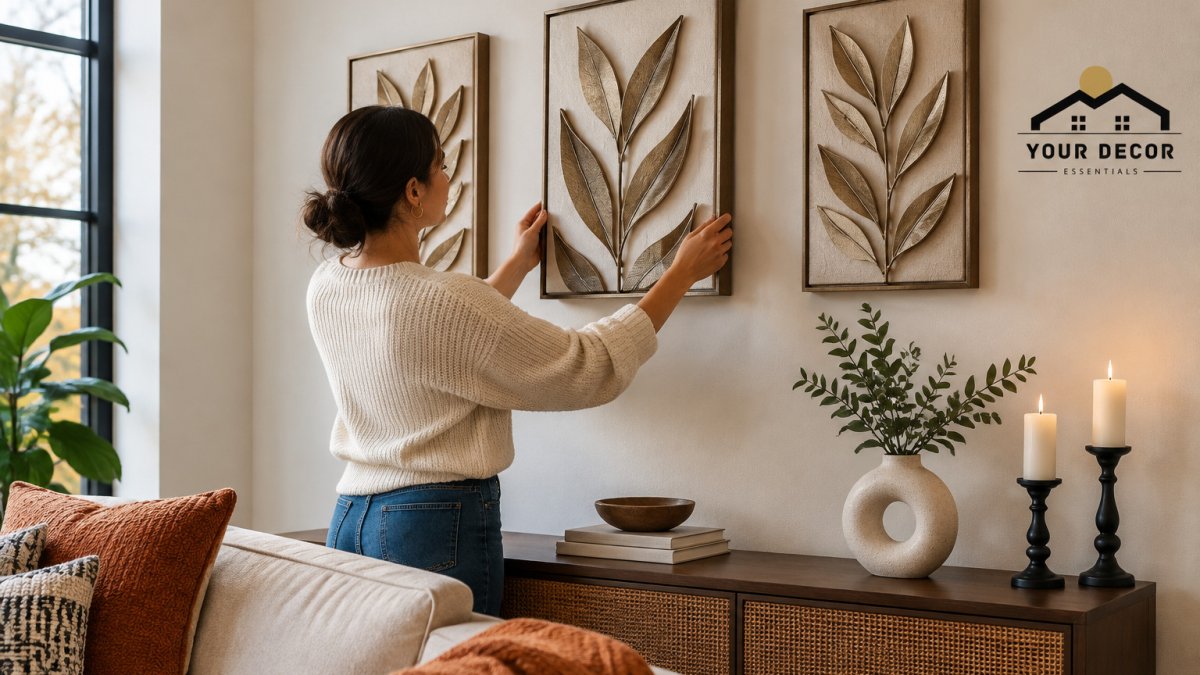
Your Decor Essentials offers a curated selection of unique home decor, including abstract sculptures, resin accents, stylish furniture and functional lighting. If you want a ready-made starting point, our modern wooden wall sculpture set gives you a trio to build a vignette around.
Get started with Your Decor Essentials and turn one well-chosen piece into a room that feels collected, not decorated.
Frequently Asked Questions
Where should you place an abstract sculpture in your home?
Put it where the eye lands when you enter a room: a console table, a mantel, or an open shelf at roughly eye level. Abstract home sculptures work best against a plain wall so the silhouette reads clearly. Avoid corners where the shape gets lost, and keep at least a few inches of breathing room on either side. In a bedroom or hallway, a smaller piece on a side table or dresser gives you the same effect without crowding the walkway.
How do you choose the right size sculpture for a room?
Match the piece to the surface and the wall behind it. On a console table, a sculpture around one-third the table's height looks balanced. On open shelves, keep the piece shorter than the shelf gap above it so it does not feel crammed. In a large room with high ceilings, a taller statement piece holds its own; in a small room, a cluster of two or three smaller pieces reads better than one oversized form.
How do you clean and care for resin sculptures?
Dust resin pieces weekly with a soft microfiber cloth, and use a slightly damp cloth for fingerprints. Skip harsh cleaners, acetone, and abrasive pads, which can dull the finish. Keep pieces out of direct sun for long stretches, since UV exposure can fade color over time. For stone or marble, use a pH-neutral cleaner and dry immediately. Place felt pads under the base to protect furniture and prevent scratches.
What should you put next to an abstract sculpture?
Pair it with objects that contrast in texture and height rather than compete with it. A stack of two or three books, a small bowl, a candle, or a single stem in a slim vase works well. Keep the palette to two or three tones so the sculpture stays the focal point. Avoid grouping several busy patterns or another sculpture of similar size right beside it, which splits attention and makes the vignette feel cluttered.
The hardest part is not the styling. It is trusting one piece to carry a whole surface. Start with a single sculpture that fits your space, light it well, and give it room to breathe. Browse the Your Decor Essentials collection to find the piece that anchors your next vignette.