 how-to
How to Style Sculptural Floor Lamps as Statement Decor
Last Updated: November 5, 2026
Quick Summary
Sculptural floor lamps work as statement decor when you treat the base as functional art: choose a bold silhouette and scale that holds its own beside large furniture, then let it be the only loud piece in the corner. Place it so the shade sits just above seated eye level, and keep nearby decor simple.
- A sculptural lamp is art first and fixture second, with its base on display.
- Next to a sofa, aim for a lamp around 58 to 64 inches tall.
- Use 2700K to 3000K bulbs for accent light and avoid bulbs above 4000K.
- In small apartments, pick a slim, tall base and keep the shade smaller than the sofa seat.
- Place an arc lamp's base behind the sofa so the curve reaches over seating.
Table of Contents
- What Makes a Floor Lamp Sculptural
- Floor Lamps as Functional Art: Why Statement Decor Changes a Room
- Materials That Carry the Look: Metal, Ceramic, Wood, and Textured Finishes
- Choosing Floor Lamps for Small Apartments Without Overcrowding
- The Right Floor Lamp Height Next to a Sofa (and How to Measure It)
- Arc Floor Lamp Placement: Where the Curve Belongs
- How to Layer Lighting in a Living Room Around a Statement Lamp
- Styling a Sculptural Lamp With Decor You Already Own
- Shop the Statement Lighting Collection at Your Decor Essentials
- Frequently Asked Questions
What Makes a Floor Lamp Sculptural
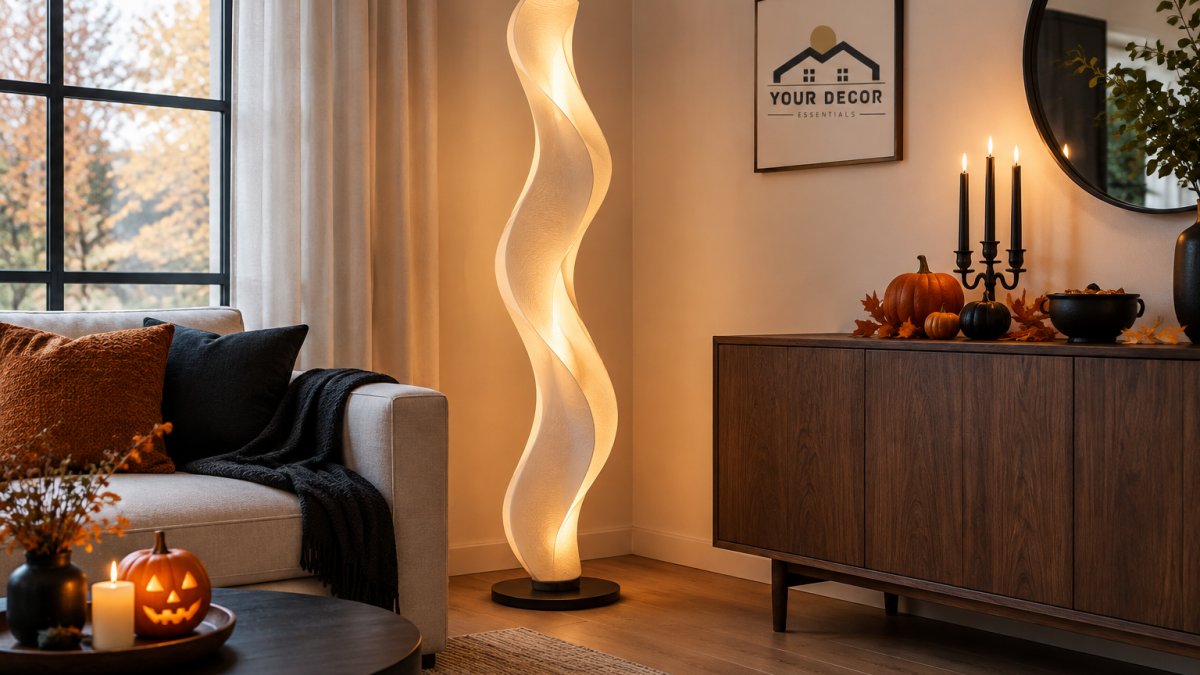
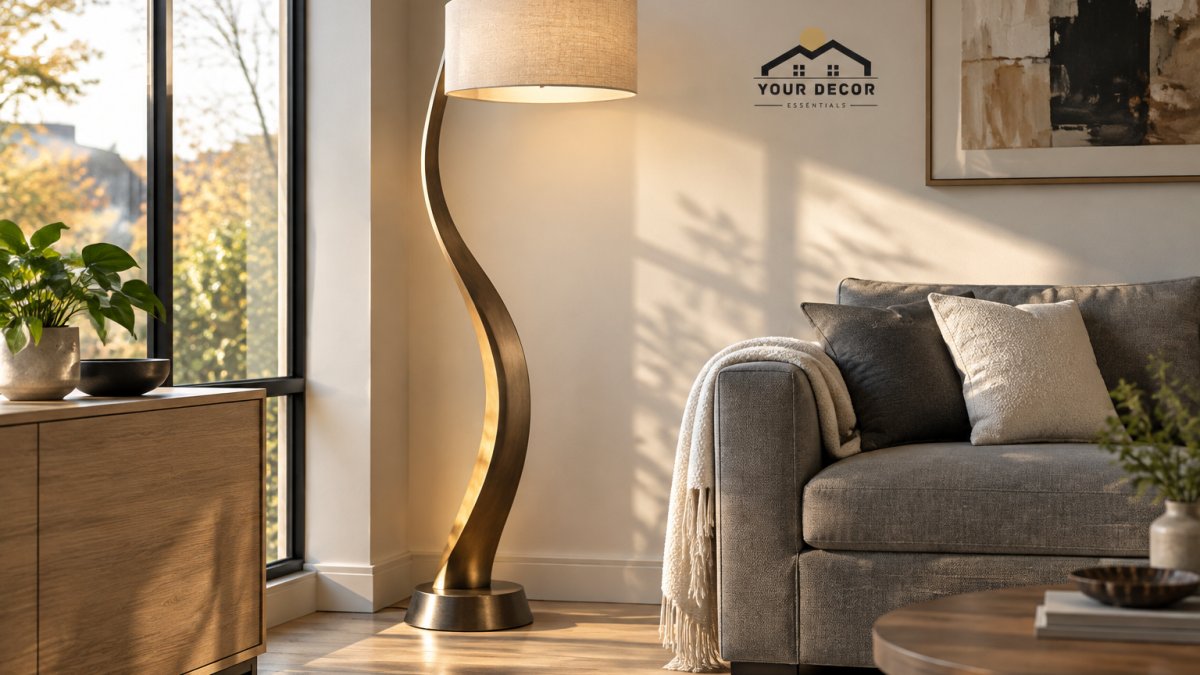
A sculptural floor lamp is a light source designed as a piece of art first and a fixture second. For a deeper guide to modern sculptural lighting styles and examples, see our full article. Its shape, base, and shade are meant to be looked at, not hidden behind a couch.
This guide from Your Decor Essentials covers how to pick, place, and style sculptural floor lamps. Below, we'll show you exactly how to choose sculptural floor lamps as statement decor pieces that fit your room, your light needs, and your budget.
Three things separate a sculptural lamp from a plain one:
- Silhouette: the outline reads as art from across the room
- Scale: it holds its own next to big furniture
- Base design: the foot of the lamp is the sculpture itself
A plain lamp hides its base. A sculptural one puts it on display.
Silhouette, Scale, and the Base That Does the Work
The base is where most of the design lives. Look for a unique base with soft curves, a bold silhouette, or an oversized form. A twisted column, a stacked ceramic shape, or a slender metal stem all count.
Scale matters just as much. A lamp that's too short next to a tall sofa looks lost. One that's too wide crowds a narrow corner. Measure your space before you fall for a shape.
Floor Lamps as Functional Art: Why Statement Decor Changes a Room
Statement decor changes a room because it gives the eye one clear place to land. A sculptural lamp does that while also lighting the space. That's the whole appeal: functional art.
Most rooms have a flat feel. Everything sits at the same height, in the same tones. A bold, room-defining lamp breaks that pattern. It becomes a visual anchor, and the rest of the room organizes around it.
What most guides miss is that a statement piece works best when it's the only loud thing in the corner. Two competing focal points cancel each other out. Pick one, then let the room breathe.
If you want more ideas for pieces that carry a room, our guide to best statement pieces for modern living walks through the options.
Materials That Carry the Look: Metal, Ceramic, Wood, and Textured Finishes
Refined materials decide whether a lamp reads as elegant or cheap. Metal, ceramic, wood, and textured finishes each bring a different mood.
- Metal: sleek and modern; great for warm modern and industrial rooms
- Ceramic: soft and organic; pairs well with boho chic and wabi-sabi styling
- Wood: warm and grounded; adds texture without shine
- Textured finishes: matte, ribbed, or stone-look surfaces that catch the light
A common mistake is mixing too many finishes in one corner. Two is plenty. A brushed metal base with a linen shade, or a ceramic body with a wood tripod foot, both work.
For a deeper look at pairing tones, see our guide to mixing metal finishes in modern lighting.
Choosing Floor Lamps for Small Apartments Without Overcrowding
Floor lamps for small apartments work best when they go tall and narrow, not wide and low. Vertical shapes add height without eating floor space.
In a tight room, follow these rules:
- Pick a slim base over a wide one
- Keep the shade smaller than the seat of your sofa
- Place it in a corner or beside a chair, not mid-floor
- Choose one statement lamp, not three
Overcrowding happens fast. A lamp, a plant, a side table, and a stack of books in one corner is too much. Give the lamp room to be seen.
If you're working with a compact space, our guide to choosing abstract sculptures for small spaces shares the same space-saving logic.
The Right Floor Lamp Height Next to a Sofa (and How to Measure It)
The right floor lamp height next to a sofa puts the shade just above eye level when you're seated. For most people, that means a lamp around 58 to 64 inches tall.
Here's how to measure before you buy:
- Sit on your sofa and have someone mark your eye level on the wall
- Measure from the floor to that mark
- Add a few inches so the shade sits above your sightline
- Check the lamp's total height against that number
A shade that sits at eye level glares. One that sits too low disappears behind the sofa arm. Aim for the shade to land just above your seated eye line.
Watch out: a tall lamp with a heavy shade can tip if it's bumped. Set it against a wall or in a corner, and keep the cord out of walkways.
Arc Floor Lamp Placement: Where the Curve Belongs
Arc floor lamp placement works best when the curve reaches over a seating area, not a walkway. The arc is meant to hang light over a sofa, chair, or reading spot.
Picture the arc as a bridge. The base sits behind or beside the furniture, and the shade reaches out over it. That keeps the floor clear and puts light where you need it.
A few placement tips:
- Put the base behind the sofa, not in front of it
- Aim the shade over a coffee table or reading chair
- Keep the arc clear of doorways and traffic paths
- Check that the shade doesn't block a TV or sightline
The arc also adds a soft curve to a room full of straight lines. That's part of why it reads as sculptural.
How to Layer Lighting in a Living Room Around a Statement Lamp
Layering lighting in a living room means combining three sources: ambient, task, and accent. Your statement lamp can play any of the three roles, but it usually works best as accent or task light. The difference between a room that feels flat and one that feels layered often comes down to the bulb you put in the lamp, not the lamp itself.
Here's a simple layering plan:
- Ambient: overhead lighting for general brightness
- Task: a floor or table lamp for reading and detail work
- Accent: your sculptural lamp, adding warmth and a focal point
The goal is warmth and ambiance, not a single bright blast. Turn off the overhead light in the evening and let the lamps carry the room. The contrast is what makes a space feel cozy.
Bulb Choice, Color Temperature, and Beam Direction
Most guides stop at "add a warm bulb." The specifics matter more than that. For a sculptural floor lamp used as accent light, a bulb in the 2700K to 3000K range gives a warm, inviting glow without turning skin tones orange. For task lighting over a reading chair, 3000K to 3500K keeps text crisp while still feeling residential. Avoid bulbs above 4000K in living spaces; the cooler cast reads as office lighting and fights the warmth the rest of the room is building.
Brightness is measured in lumens, not watts. A 60-watt-equivalent LED (roughly 800 lumens) is a common starting point for a floor lamp in a living room. If the lamp has a shade that diffuses light, you can go higher; if the bulb is exposed, stay lower to avoid glare. Dimmable bulbs and a dimmer switch or smart plug let one lamp shift from task to accent as the evening moves on.
Beam direction depends on the shade. An open-top drum shade throws light up and down, which suits accent use. A directional shade or adjustable head aims light at a specific spot, which suits task use. A sculptural lamp with an exposed bulb works best as accent light because the bulb itself becomes part of the composition.
Watch out: a bulb that is too bright for an exposed fixture creates glare that undermines the sculptural effect. Match lumen output to whether the bulb is hidden or visible.
For more on arranging lamps for reading and detail work, see our guide to arranging living room lamps for task lighting.
Here are the bulb and lighting specifics the article recommends for a statement floor lamp.
| Item | Value | Note |
|---|---|---|
| Accent light color temperature | 2700K to 3000K | Warm, inviting glow without orange skin tones |
| Task light color temperature | 3000K to 3500K | Keeps text crisp, still residential |
| Bulbs to avoid in living spaces | Above 4000K | Cooler cast reads as office lighting |
| Common starting brightness | Roughly 800 lumens | 60-watt-equivalent LED for a living room lamp |
| Open-top drum shade | Throws light up and down | Suits accent use |
| Directional or adjustable head | Aims light at a specific spot | Suits task use |
| Exposed bulb | Best as accent light | Bulb becomes part of the composition |
Styling a Sculptural Lamp With Decor You Already Own
Styling a sculptural lamp with what you own is about restraint and proportion. Let the lamp lead, and keep the pieces around it simple. The goal is a corner that looks collected over time, not staged in an afternoon.
Try this approach:
- Clear the corner first; remove clutter
- Add one textured throw or pillow for softness
- Stack two or three books at the base, no more
- Place a single vase or object nearby, not a crowd
- Keep colors in the same family as the lamp
The lamp should feel like the anchor, with everything else supporting it. If a piece competes for attention, move it.
Balancing Scale, Color, and Visual Weight
A sculptural lamp reads as a statement piece when its visual weight is balanced against the furniture around it. A common pattern is to match the lamp's height to the nearest large piece: a lamp beside a sofa should stand roughly as tall as the sofa back, or slightly taller. A lamp next to a low chair can be shorter, but it should still clear the chair back so the shade is visible.
Color is where most corners go wrong. If the lamp is a strong shape in a neutral finish, let it be the one bold element and keep nearby decor in the same tonal family. If the lamp is already a saturated color, pull the surrounding pieces toward neutrals so the lamp stays the focal point. Two strong colors in one corner split attention.
Visual weight works like a scale. A heavy ceramic base needs lighter companions, a linen throw, a glass vase, an open book stack. A slender metal lamp can handle a heavier woven basket or a solid wood side table without feeling crowded. The mistake is matching heavy with heavy or light with light; contrast is what makes the arrangement read as intentional.
Watch out: a lamp placed in front of a large artwork or mirror creates a double focal point. Move the lamp to the side so the artwork and the lamp support each other instead of competing.
Our curated selection of abstract sculptures and resin accents is built for exactly this kind of pairing. A sculptural lamp next to a resin piece creates a corner that looks collected, not bought all at once.
Shop the Statement Lighting Collection at Your Decor Essentials
The challenge is simple: most rooms have light, but few have a piece that defines them. A sculptural lamp closes that gap. It lights the space and gives it a focal point at the same time.
At Your Decor Essentials, we curate unique home decor with a focus on abstract sculptures, resin accents, and functional lighting. Our collection helps you add visual interest and build a room that reflects your own taste. Every piece is chosen to work together, so you're not guessing.
Start with one lamp. Measure your space, pick your material, and let it anchor the corner. Then build around it.
Get started with Your Decor Essentials and find the statement lighting piece that transforms your room.
Frequently Asked Questions
What makes a floor lamp sculptural?
A sculptural floor lamp is designed to be looked at, not just switched on. The defining traits are an artistic silhouette, a base or stem with visible form (curves, angles, stacked shapes, or open negative space), and a shade that reads as part of the composition rather than an afterthought. Materials matter too: metal, ceramic, wood, and textured finishes give the piece presence. If the lamp still looks interesting when it is turned off, it qualifies as sculptural.
How tall should a floor lamp be next to a sofa?
Measure from the floor to the top of your sofa back, then look for a lamp whose shade sits roughly level with or slightly above that line when you are seated. A common target is a total height in the 58 to 64 inch range for standard sofas, but the real test is the shade position relative to your shoulder when seated. Too low and the light glares; too high and it stops feeling connected to the seating.
Can a sculptural floor lamp provide enough light for reading?
Yes, if you match the bulb and shade to the task. A downward-facing or adjustable shade with a bulb around 800 to 1100 lumens in a warm white (2700K to 3000K) gives comfortable reading light. Open, airy shades spread light around the room but concentrate less of it on the page, so pair those with a second task source. Check the fixture's maximum wattage before buying a bulb.
How do you choose a floor lamp for a small apartment?
Prioritize footprint over height. A base under about 12 inches across keeps floor space usable, and a slim stem lets the lamp rise without blocking sightlines. Vertical interest is your friend in small rooms: a tall, narrow sculptural lamp draws the eye upward and makes ceilings feel higher. Place it in a corner or beside a sofa rather than mid-room, and keep the shade light-colored so it does not read as a heavy block.
Ready to make your living room feel finished? Browse our statement lighting collection and pick the sculptural floor lamp that fits your space, your light needs, and your style. Shop Now.