 how-to
DIY Home Decor Projects for First-Time Homeowners
Last Updated: November 6, 2026
Quick Summary
DIY home decor projects for first-time homeowners should start small: paint an accent wall, hang a gallery wall, or install floating shelves. These beginner projects need few tools, cost little in materials, and teach you how your new house works before you take on bigger changes.
- Buy mid-range tools, not the cheapest set, because a wobbly drill makes every project harder.
- Anchor shelves and hooks into studs; drywall alone will pull out under the weight of books.
- Apply two thin coats of paint rather than one thick coat to avoid brush marks.
- Sequence projects after move-in: clean and repair, then paint, lighting, shelves, wall decor, and accents.
- Call a professional for electrical wiring, wall removal, gas lines, roof work, and major plumbing changes.
Table of Contents
- Why DIY Home Decor Projects Suit First-Time Homeowners
- Beginner DIY Home Decor Tools to Buy Before You Start
- Easy DIY Home Decor Projects for Beginners
- DIY Home Decor Projects on a Budget
- DIY Home Decor Ideas for the Living Room
- Weekend and One-Day Projects You Can Finish Fast
- How to Make DIY Decor Look Cohesive Throughout Your Home
- Safety, Tools, and When to Hire a Professional
- Ordering Your Projects After Move-In: What to Do First
- Shop Statement Accents to Finish Your DIY Rooms
- Frequently Asked Questions
Why DIY Home Decor Projects Suit First-Time Homeowners
DIY home decor projects give first-time homeowners a way to make a new house feel like theirs without replacing everything they own. A fresh coat of paint, a row of shelves, or a gallery wall costs far less than new furniture, and you learn your home's quirks along the way.
At Your Decor Essentials, we hear the same story from new owners: the rooms feel blank, and the budget is already stretched. Small, doable projects fix both problems.
Here's the honest version most guides skip. Your first year is about learning the house, not perfecting it. Watch how light moves through each room. Note which walls are crooked and which outlets you actually use. That knowledge makes every later project easier.
DIY also protects your wallet. Many new owners find that a weekend of painting and shelf-building delivers more visual change than one big furniture purchase.
Beginner DIY Home Decor Tools to Buy Before You Start
Start with a small kit. You do not need a full workshop to hang art or paint trim. These basics cover most beginner projects:
- Tape measure and level for anything that hangs on a wall
- Stud finder so shelves and hooks hit wood, not drywall alone
- Drill and bit set for anchors, brackets, and hooks
- Putty knife and sanding block for patching before paint
- Painter's tape and drop cloths to protect floors and edges
- Safety glasses and a dust mask for sanding and drilling
Buy mid-range tools, not the cheapest set on the shelf. A wobbly drill makes every project harder.
Watch out: skipping the stud finder is the mistake we see most. A shelf anchored into drywall alone will pull out once you load it with books.
Easy DIY Home Decor Projects for Beginners
The best beginner projects share three traits: few tools, one afternoon, and mistakes you can hide. Start here and build confidence before you touch anything structural.
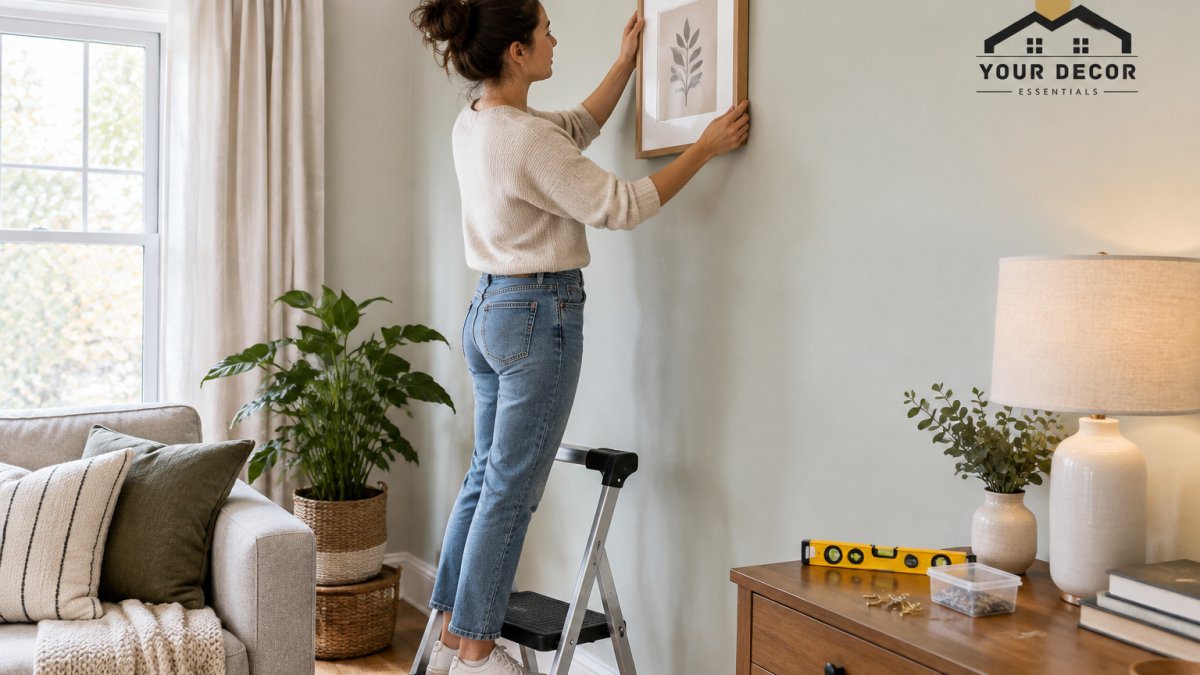
Gallery Wall With Removable Hooks
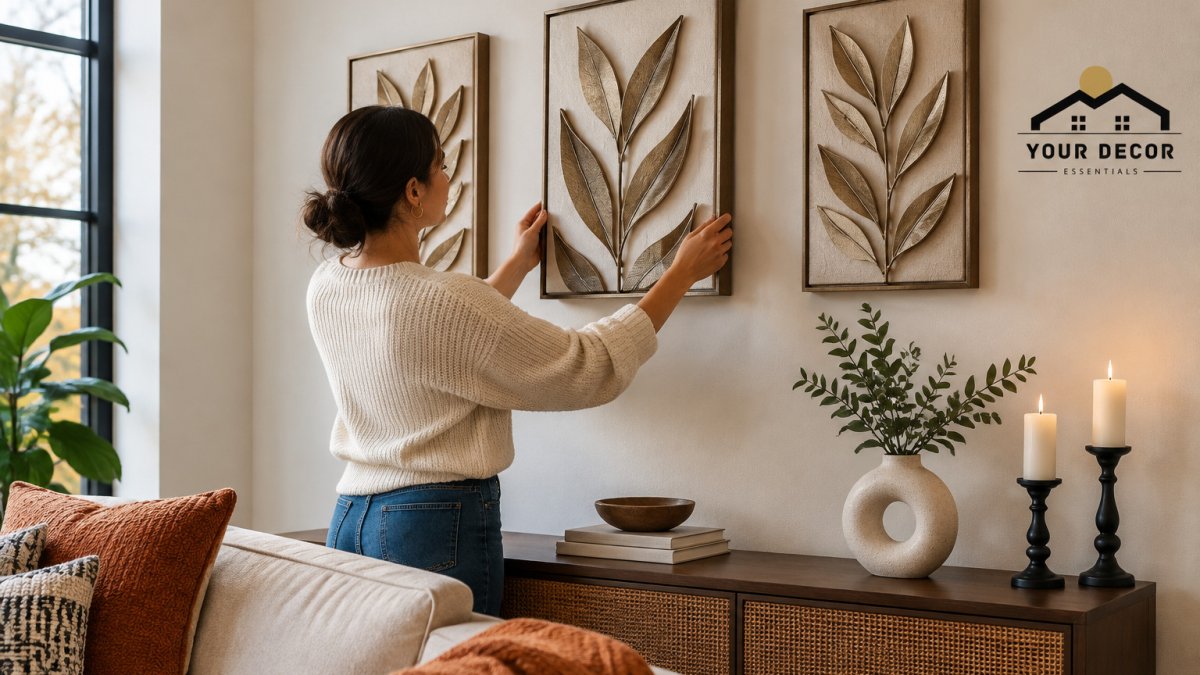
A gallery wall is the fastest way to fill a large blank wall. Lay your frames on the floor first and arrange them until the spacing looks right. Then trace each frame onto paper, tape the paper to the wall, and hammer your hooks through the paper. Removable adhesive hooks work well for light frames and come off cleanly, which matters if you rent or plan to rearrange.
For layout help, see our guide on how to style a gallery wall with modern art.
Painted Trim and Accent Moldings
Painting trim is cheap and transforms a room in a day. Clean the trim, sand lightly, tape the edges, and apply two thin coats rather than one thick one. Thin coats dry faster and show fewer brush marks.
A common mistake is painting over dirty trim. Paint will not stick to grease or dust, and it peels within months.
Floating Shelves and Built-In Shelves
Floating shelves add storage and display space without eating floor area. Anchor the brackets into studs, check level twice, and load the shelf from the back. Built-in shelves cost more and take longer, but they add real value to a room.
If you want display ideas before you build, browse these DIY shelf art display ideas for beginners.
DIY Home Decor Projects on a Budget
Budget decorating comes down to materials, not talent. Here is where the savings live, with realistic cost ranges for common beginner projects. Prices vary by region and retailer, but these ranges reflect what most first-time homeowners spend on materials alone.
| Project | Typical Material Cost | Where to Save | Where Not to Skimp |
|---|---|---|---|
| Accent wall (one gallon + supplies) | $35-$75 | Paint samples, one good brush | Primer and painter's tape |
| Gallery wall (6-9 frames) | $40-$120 | Thrifted frames, printed art | Hooks and anchors |
| Floating shelves (per shelf) | $25-$60 | Lumber offcuts, open shelving | Brackets and studs |
| Painted trim (one room) | $30-$60 | One quart of trim paint | Painter's tape and sanding block |
| Swapping lamp shades | $15-$40 | Reuse existing bases | Wiring and installation |
Typical Material Cost
Paint is the single best value in budget decorating. One gallon covers a small accent wall and costs far less than new furniture. A quart of trim paint often covers the baseboards and door casings in a single room.
For gallery walls, thrifted frames plus printed art can cut costs by half compared with new frames. Check salvage yards and estate sales for frames, mirrors, and small furniture. Refinishing a solid wood piece usually beats buying new particle board.
Watch out: buying the cheapest anchors and brackets is a false economy. A shelf that pulls out of drywall costs more to repair than the few dollars you saved on hardware.
If you want to stretch a small budget further, prioritize projects that change the most visible square footage first, usually the wall you see when you walk in the door.
DIY Home Decor Ideas for the Living Room
The living room carries the most visual weight in your home, so small changes read big here. Start with one wall and one focal point.
Ideas that work for beginners:
- Paint one accent wall in a deeper shade
- Hang a gallery wall above the sofa
- Add floating shelves on either side of the TV
- Layer a rug over existing flooring
- Swap lamp shades for a warmer look
- Group three objects of different heights on a console
Statement accents finish the room. A single abstract sculpture or a resin piece on a shelf gives the eye somewhere to land. Explore resin decor for the living room to see how accent pieces pull a DIY room together.
Weekend and One-Day Projects You Can Finish Fast
Some projects fit in a single afternoon. Others need a full weekend. Here is how they break down:
- One-day projects: painting an accent wall, hanging a gallery wall, swapping hardware, installing floating shelves, restyling a bookshelf
- Weekend projects: painting a whole room, building built-in shelves, refinishing a small furniture piece, installing a new light fixture with help
Plan the messy steps first. Sanding and painting need drying time, so start early and let each coat set.
Quick improvements matter too. Cleaning grout, replacing outlet covers, and touching up scuffed trim take an hour and make a room feel cared for.
How to Make DIY Decor Look Cohesive Throughout Your Home
Cohesion comes from repetition, not matching sets. Pick two or three colors and repeat them in every room. Repeat one material too, like wood tones or black metal.
Then vary the scale. A large piece in one room pairs well with a cluster of small pieces in the next.
Another trick: carry one object style through the house. If you love abstract shapes, use them in the living room, the bedroom, and the entryway.
A common mistake is buying room by room with no plan. You end up with pieces that clash. For a deeper walkthrough, read our advice on coordinating home decor for a cohesive look.
Safety, Tools, and When to Hire a Professional
Some jobs are fine to do yourself. Others are not worth the risk. For first-time homeowners, the goal is to know which is which before you pick up a tool.
Call a professional for:
- Anything involving new electrical wiring or panel work
- Removing a wall or changing structural framing
- Gas line work of any kind
- Roof work or anything at height outdoors
- Major plumbing changes
For everything else, follow three rules. Wear safety glasses when drilling or sanding. Keep a fire extinguisher nearby when using heat tools. And never drill into a wall before you know what is behind it.
A simple decision rule helps: if the project requires opening a wall, changing a utility line, or working above head height on a ladder, treat it as a professional job until you have done it once with someone experienced. Painting, hanging, shelving, and swapping hardware are the safe beginner zone.
Watch out: drilling into a wall with hidden wiring or plumbing causes real damage. Use a stud finder with wire detection, and shut off power to the circuit before you cut. If you are unsure what is behind a wall, stop and call an electrician.
Tool safety matters too. A drill with a sharp bit and a charged battery is safer than a dull bit on a struggling drill. Keep your work area clear, and clamp small pieces before sanding or cutting.
Ordering Your Projects After Move-In: What to Do First
Sequence matters more than speed. Do these in order:
- Clean and repair before you decorate. Patch holes and fix leaks first.
- Paint before furniture arrives. Empty rooms are easier to paint.
- Add lighting next, since it changes how every color reads.
- Build shelves and storage once paint is dry.
- Hang wall decor last, when the room's layout is settled.
- Layer accents at the end, once the big pieces are in place.
New owners often want to decorate first and repair later. That order costs more, because paint and furniture get damaged during repairs.
If you want a wider list of first-apartment ideas to prioritize, our guide to artful home decor for a first apartment covers the full sequence.
Shop Statement Accents to Finish Your DIY Rooms
Your DIY work handles the walls, shelves, and paint. The finishing layer is where a room starts to feel personal.
At Your Decor Essentials, we curate abstract sculptures, resin accents, and functional lighting that add visual interest without competing with what you built. Our pieces are chosen to work together, so a single shelf or console can carry a small grouping that looks intentional.
A few ways to finish a room:
- Group two or three sculptures of different heights on open shelving
- Add a resin accent to a console for a hit of color and shine
- Swap in a functional light fixture that suits the room's scale
Start with one room, one wall, one piece. Get started with Your Decor Essentials and give your DIY rooms the finishing touch they have been missing.
Your first year in a new home is a series of small wins. Patch the wall, paint the trim, hang the shelves, then add the pieces that make it yours. Pick your first project this weekend, and let Your Decor Essentials help you finish the room.
Frequently Asked Questions
What is the 3-5-7 rule in decorating?
The 3-5-7 rule is a styling guideline for arranging decorative accents in odd-numbered groups of three, five, or seven items. Odd counts tend to look more natural than even pairs. Group a tall object, a medium one, and a small one on a shelf or console, then vary height and texture. It works well for DIY home decor projects because you can build groupings from pieces you already own and add one statement accent, like a resin sculpture, to anchor the arrangement.
What DIY home decor projects can first-time homeowners do in a weekend?
Pick projects with short dry times and minimal demolition. Painting trim or a single accent wall, installing floating shelves, hanging a gallery wall, swapping cabinet hardware, and refreshing a dated light fixture are all realistic weekend builds. Measure and buy materials first so you are not making trips mid-project. Skip anything that requires drying between multiple coats or moving plumbing and electrical, and save those for a longer window or a licensed pro.
How can I personalize a new home with simple DIY decor?
Start with pieces that carry meaning: family photos in matching frames, a shelf of books and objects from trips, or a handmade textile. Repeat two or three colors and one material, such as natural wood or resin, across rooms so the look reads as intentional. Add one or two statement accents, like an abstract sculpture on a console, to give each room a focal point. Personalizing is about editing, so remove anything that does not fit the palette.
Which beginner DIY home decor tools should I buy first?
A tape measure, a level, a stud finder, a cordless drill with bits, a hammer, a putty knife, sandpaper, painter's tape, drop cloths, and a good brush and roller set cover most beginner projects. Add a utility knife and safety glasses for shelf and trim work. Buy mid-range versions of tools you will use repeatedly and borrow or rent specialty items. Good tools make beginner DIY home decor projects safer and produce cleaner results.