 blog
Decorating Transition Spaces: Hallway Tips That Work
Last Updated: November 2, 2026
Quick Summary
Good hallway decor starts with measuring walking clearance before buying anything, then layering ambient, task and accent light along the run. Keep the main path clear, use a low-pile runner to define it, and give the end wall one bold focal point instead of a crowded gallery.
- Open every door and mark its swing arc before placing furniture or hanging art.
- Space ceiling fixtures every 6 to 8 feet in a long, narrow hallway.
- Mount wall sconces about 60 to 66 inches from the floor in windowless passages.
- Choose a low-pile runner that leaves a small strip of bare floor on each side.
- Save the gallery wall for long walls and let the end wall hold one statement piece.
Table of Contents
- Why Hallway Decor Deserves a Real Plan
- Start With Walking Clearance, Not Shopping
- Hallway Lighting Ideas That Match the Layout
- Small Hallway Decorating Ideas for Tight Footprints
- How to Decorate a Long Narrow Hallway Without Clutter
- Runners and Rugs That Define the Path
- End of Hallway Wall Decor Ideas That Give the Eye a Rest
- Paint, Trim and Color Schemes That Tie Rooms Together
- Budget Tiers, Renters and Low-Risk Updates
- Choosing Pieces for Your Hallway at Your Decor Essentials
- Frequently Asked Questions
Why Hallway Decor Deserves a Real Plan
A hallway is the one space in your home every guest walks through, yet it often gets the leftover furniture and a single forgotten frame. Good tips for decorating transition spaces like hallways start with one shift in thinking: treat the passage as a room, not a corridor. The entryway often gets attention. The hallway gets ignored. That is a missed chance, because a hallway sets the mood for everything a visitor sees next. It is also the hardest space to style well, since you are working with narrow width, doors that swing, and traffic that never stops. This guide walks through clearance, lighting, rugs, art, and paint in the order that actually matters.
Start With Walking Clearance, Not Shopping
Measure the floor before you buy a single thing. Walking clearance is the open strip of floor a person needs to pass through without turning sideways, and it decides what furniture your hallway can hold. Skipping this step is a common reason hallway makeovers end with a console that looks great and a passage you have to squeeze past.
How Much Floor Space to Keep Open
Aim to keep the main path clear from wall to wall where you can. In a narrow hall, that usually means keeping furniture shallow and hugging one wall. A deep cabinet that eats half the width will make the whole house feel cramped. Measure the width, subtract the depth of anything you plan to place, and check that what remains still feels like a path, not a slot. Our rule of thumb: if two people cannot pass with a small nod and a smile, the piece is too big.
Door Swing and Corner Checks
Doors are the silent decor killers. Before you place anything, open every door in the hall, including closet doors, and mark where the swing lands. A console under a swing is a bruised shin waiting to happen.
- Open all doors fully and note the swing arc
- Check that drawers and cabinet doors clear the walking path
- Leave space at corners so turns feel easy, not tight
- Confirm wall outlets and switches stay reachable
Watch out: hanging art or a mirror where a door handle swings back is the most common hallway mistake. The handle hits the frame, the frame chips, and the wall behind it takes the damage.
Hallway Lighting Ideas That Match the Layout
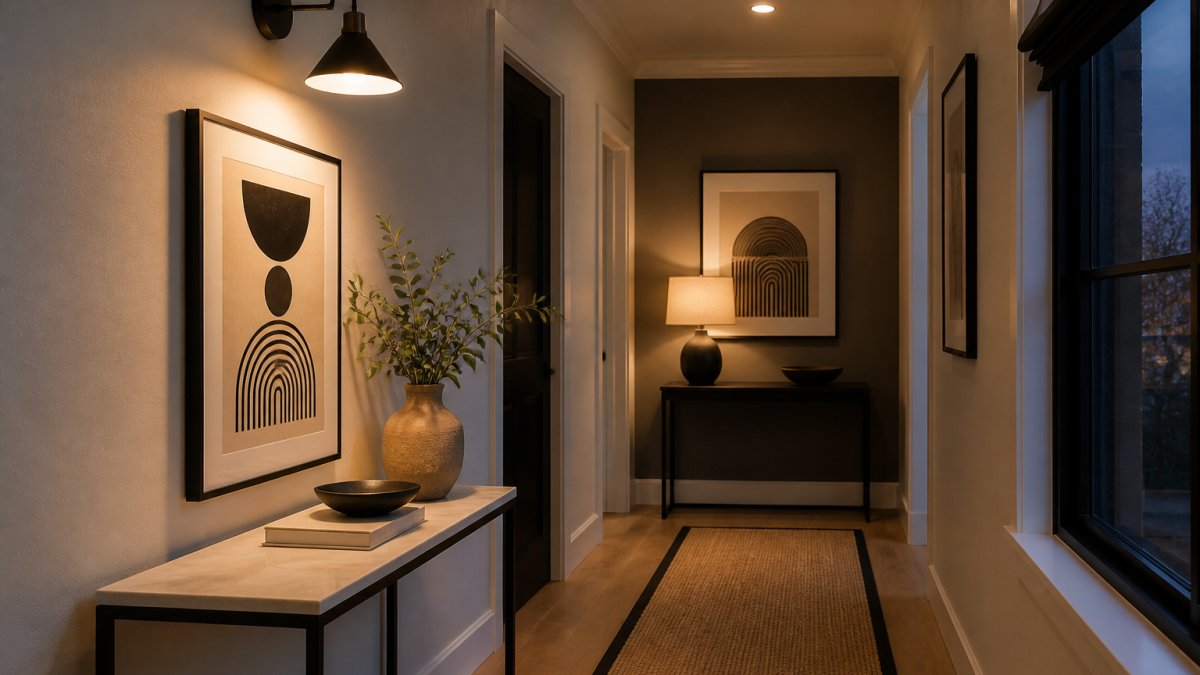
Match the lighting to the shape of the hall, not to a trend. A long passage needs light spread along its length, while a short entry hall can get away with one warm ceiling fixture and a lamp. Light the ends first, because that is where the eye travels.
Layering Ambient, Task and Accent Light
Three layers do the work. Ambient light is your ceiling fixture or flush mount, the base glow. Task light covers what you need to see, like a key tray or a mirror for a last check before you leave. Accent light adds the mood, and wall sconces or a small accent lamp on a console do this well. Renters can also consider a rechargeable motion-sensor light, which needs no wiring. Check the bulb temperature before you commit: warmer bulbs feel cozy in a hallway, while cooler bulbs read as crisp and clean. Pick one temperature and keep it consistent down the run.
Fixture Placement and Spacing for Different Hallway Shapes
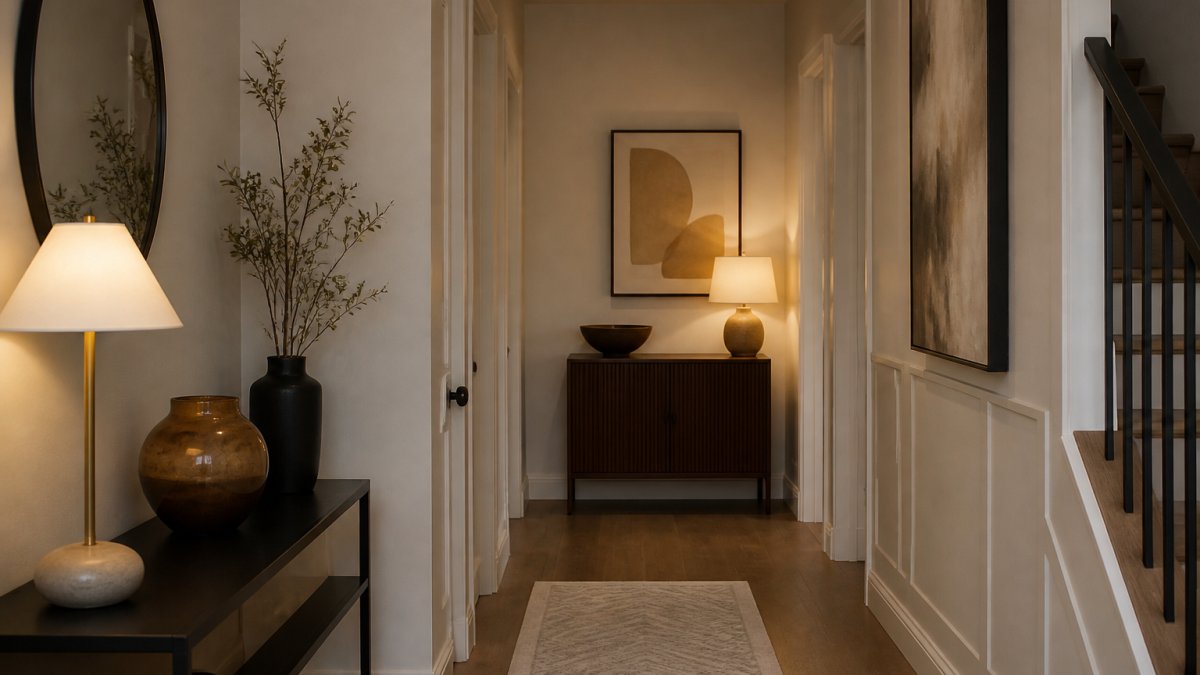
The shape of the hall dictates where fixtures go. In a long, narrow hallway, space ceiling fixtures every 6 to 8 feet so the light overlaps and eliminates dark pockets. For a short entry hall, one centered fixture plus a table lamp is enough. In an L-shaped hallway, place a fixture at the corner turn to guide the eye and prevent a shadowy bend. Windowless passages benefit from wall sconces mounted at about 60 to 66 inches from the floor, which puts light at eye level and washes the wall without glare. If you have a single ceiling fixture, add a floor lamp or a plug-in wall sconce at the far end to balance the light.
Bulb Specifications That Actually Matter
Bulb choice makes or breaks a hallway. For ambient light, look for a warm color temperature around 2700K to 3000K, which feels inviting. Cooler temperatures can make a hallway feel like an office. Use dimmable bulbs and a dimmer switch so you can adjust from bright for cleaning to soft for evening. A common pattern is to use 2700K bulbs throughout the hallway and adjacent rooms to create a seamless flow.
Watch out: mixing color temperatures in the same hallway, say, a cool ceiling fixture and a warm table lamp, creates a patchy, uncomfortable look that no amount of decor can fix.
Here are the lighting specs the article recommends for different hallway layouts.
| Item | Value | Note |
|---|---|---|
| Ceiling fixture spacing, long narrow hall | Every 6 to 8 feet | Overlap light to eliminate dark pockets |
| Wall sconce height, windowless passages | About 60 to 66 inches from floor | Puts light at eye level without glare |
| Ambient bulb color temperature | Around 2700K to 3000K | Feels inviting, not like an office |
| Consistent bulb pattern | 2700K throughout hallway and adjacent rooms | Creates a seamless flow |
| Short entry hall lighting | One centered fixture plus a table lamp | Enough for a short hall |
| L-shaped hallway fixture | One at the corner turn | Guides the eye, prevents shadowy bend |
Small Hallway Decorating Ideas for Tight Footprints
Small hallway decorating ideas work best when they go up rather than out. A tight footprint punishes furniture but rewards vertical thinking. Narrow floating shelves, a slim mirror, and a single piece of art can work well in a small hall. Keep the palette light so the walls feel farther apart. Choose pieces with open frames or glass so light passes through. And resist the urge to fill every surface. In a small hall, one strong focal point beats five small ones fighting for attention.
How to Decorate a Long Narrow Hallway Without Clutter
To decorate a long narrow hallway, break the run into short visual beats instead of one endless stretch. A long hall with nothing in it feels like a tunnel. A long hall stuffed with decor feels like a storage unit. The middle ground is rhythm: repeat a few elements at set intervals so the eye has something to land on as it moves.
Breaking Up the Run With Rhythm
Pick one repeating element and space it evenly. A pair of matching frames, a row of small sconces, or two slim console tables at opposite ends all create rhythm. Vary the height so it does not read as a factory line. Group art in a loose gallery wall rather than a perfect grid, and let one piece sit slightly off-center for interest. Keep the floor path clear the whole way down. The goal is a hallway that pulls you forward, not one that makes you want to hurry through.
Runners and Rugs That Define the Path
A runner is the cheapest way to make a hallway feel finished. It softens the hard floor, absorbs sound, and draws a line straight down the passage. In a high-traffic area, pick a low-pile runner that handles footfall and vacuums easily. Size matters more than pattern: the runner should leave a small strip of bare floor on each side so the path still reads clearly. When choosing a runner, check that it fits your exact length before you fall for a print. Browse our washable hallway runners to find one sized for your space. If you are choosing between sizes and styles, our guide on how to pick the right area rug for small spaces walks through the measurements.
End of Hallway Wall Decor Ideas That Give the Eye a Rest
The end of a hallway is the payoff. It is the spot the eye lands on from the moment someone enters, so give it one clear focal point. End of hallway wall decor ideas work best when they are bold and singular: one large abstract piece, a sculptural mirror, or a single statement object on a slim shelf. Resist the gallery wall here. Save the grouping for the long walls and let the end wall breathe. A single statement piece can anchor the view and add texture without clutter. Before you choose one, read about the benefits of metal wall art in modern homes. The rest of the run should point toward it, not compete with it.
Paint, Trim and Color Schemes That Tie Rooms Together
Paint is what makes a hallway feel like part of the house instead of a gap between rooms. Pull one color from an adjacent room and use a lighter version of it on the hallway walls. That creates a bridge the eye follows. Light paint colors keep a narrow space feeling open, while a deeper accent color on the end wall adds depth and drama. Trim and picture-frame moulding add structure and read as intentional, and peel-and-stick versions can suit renters. If you are tying the hall to the rooms around it, our guide on coordinating home decor pieces shows how to carry a color scheme from one space to the next without it feeling themed.
Budget Tiers, Renters and Low-Risk Updates
You do not need a full renovation to change a hallway. Start with the free moves: clear the clutter, measure the clearance, and move one piece of art to eye level. Then layer in low-risk updates that travel with you if you rent. The tiers below give you a realistic range so you can plan without guesswork.
- No-spend: declutter, rehang art at eye level, swap a bulb for a warmer tone
- Low-cost: add a washable runner, a slim mirror, or a motion-sensor rechargeable light
- Mid-tier: a slim console table, a pair of plug-in sconces, or a gallon of paint for one accent wall
- Higher investment: built-in trim or picture-frame moulding, new flooring, or a statement sculpture
Renters should favor peel-and-stick trim, plug-in sconces, and removable hooks. Every one of these comes down without a trace. For lighting, plug-in wall sconces let you add layered light without an electrician. If you are unsure where to start, the low-cost tier can deliver a noticeable visual change for modest spend.
Watch out: peel-and-stick trim can pull paint off walls when removed, so test a small corner first or apply it to a primed surface.
Choosing Pieces for Your Hallway at Your Decor Essentials
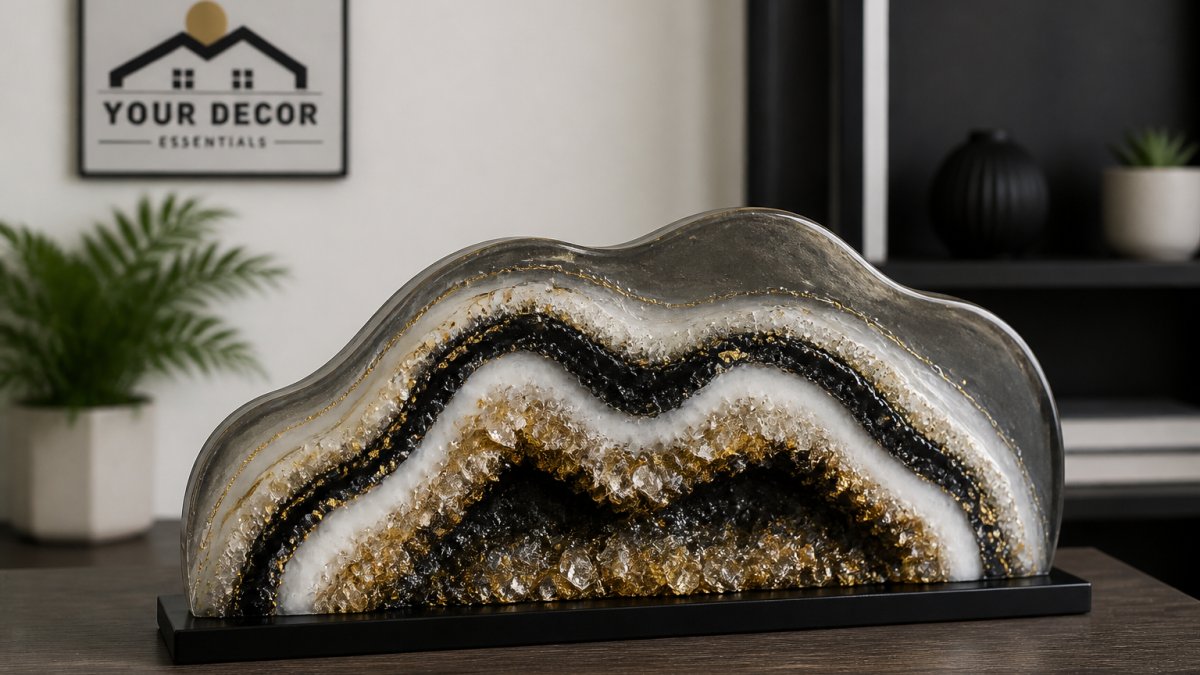
A hallway rewards a few well-chosen pieces over a lot of small ones. That is where we come in. Our curated selection focuses on abstract sculptures, resin accents, and functional lighting. If you are unsure whether a piece will work in your hall, start with something sculptural and small, then build around it. Browse the full range and find the details that make your transition space feel finished.
Frequently Asked Questions
What is the 3-5-7 rule in decorating?
The 3-5-7 rule is a styling guideline for grouping accessories in odd numbers, usually three, five or seven items of varying heights. In hallway decor it works best on a console top: a tall lamp, a medium sculpture and a low bowl, for example. Odd counts keep the eye moving and stop a display from looking symmetrical and stiff. Scale the count to the surface, because a narrow console fits three pieces better than seven.
How do you decorate a short, narrow hallway?
Keep the floor and walls as open as possible. Use a shallow console or skip furniture entirely, hang art at eye level, and choose a runner that leaves visible floor on both sides. Light walls and a mirror bounce light into the space. For small hallway decorating ideas, favor vertical interest such as a slim sculpture on a wall shelf rather than wide pieces that eat into walking clearance.
How can you make a small hallway feel larger?
Light paint on the walls and ceiling, a mirror opposite a light source, and consistent flooring all reduce visual boundaries. Keep decor low-profile: shallow furniture, one or two pieces of art rather than a crowded gallery wall, and a runner sized to the hall. Brightening the far end with a lamp or sconce also draws the eye down the hall, which makes the distance read as longer than it is.
How do you make hallway decor feel cohesive with the rest of your home?
Repeat two or three elements from adjoining rooms: the same metal finish, a shared accent color, or a similar frame style. Treat the hallway as a transition space that borrows from both ends rather than a separate room. A console in the same wood tone as your living room furniture, plus lighting with matching bulbs, ties the spaces together. Cohesion comes from repetition, not from matching everything.
Decorating a hallway is really a test of restraint and measurement, not taste. Get the clearance right, light the ends, and let one focal point do the talking. When you are ready to add the finishing pieces, Your Decor Essentials can help with curated sculptures, resin accents, and lighting that fit a narrow space. Get started with Your Decor Essentials and turn your hallway into the room guests remember.